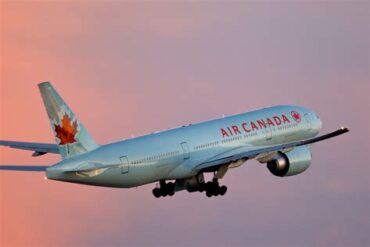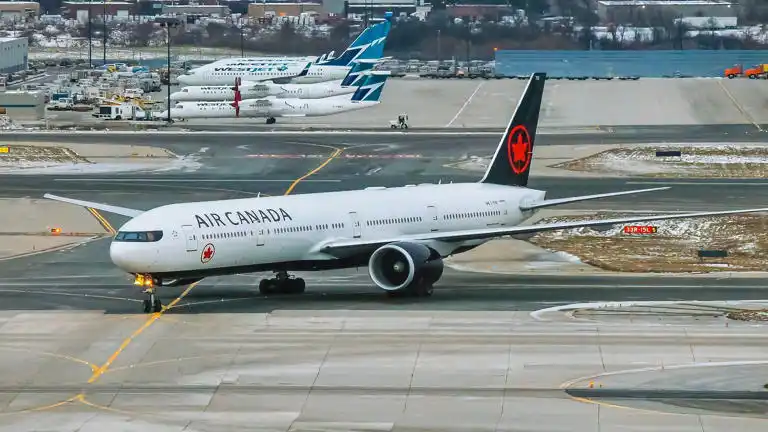
Air Canada is quietly rewriting the rules of ultra-long-haul aviation. In 2026, the airline is not just expanding—it is stretching the very limits of what commercial flight durations look like. With a schedule averaging around 120 daily long-haul departures between May and December, Air Canada cements itself as one of the world’s most formidable intercontinental operators, outpacing several globally recognized carriers in long-haul reach and operational scale.
This growth is not accidental. By leveraging multiple hubs across Canada and optimizing fleet deployment, the airline now accounts for roughly 36% of the country’s long-haul capacity, a figure that climbs to nearly half when Star Alliance partners are factored in. But the real story lies in the sheer endurance of its routes—flights that push toward, and in some cases nearly touch, the 24-hour threshold.
The Longest Flight: Toronto to Sydney via Vancouver
At the top of Air Canada’s ultra-long-haul portfolio sits a route that feels more like a marathon than a journey. The Toronto–Vancouver–Sydney service, operated under a single flight number, reaches a staggering 23 hours and 35 minutes in maximum block time during winter operations.
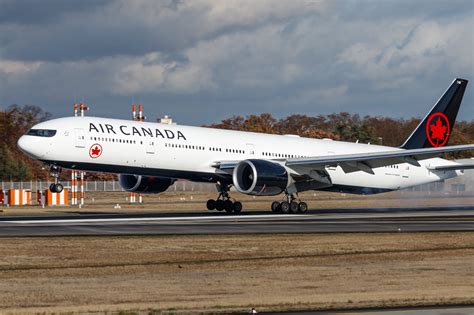
This isn’t just a long flight—it’s a logistical masterpiece. The journey combines a domestic leg with a transpacific crossing, all seamlessly integrated into one continuous passenger experience. Operated by the Boeing 777-200LR, the aircraft is specifically designed for such endurance missions, offering the range and efficiency needed for extreme distances.
Seasonality plays a major role. During northern winter months, stronger headwinds extend the journey significantly, while summer schedules bring it closer to 22 hours. Still, even at its shortest, this route remains among the longest commercial services globally.
A Network Built for Distance and Demand
Air Canada’s ultra-long-haul strategy is not just about prestige—it’s driven by demand patterns across key global corridors. The airline connects major Canadian cities to high-density markets in Asia, the Middle East, and beyond, often bridging continents with minimal or no stops.
The return of the Toronto–Sydney same-plane service highlights a broader shift: passengers increasingly value fewer connections, even if it means longer time onboard. This demand has fueled the expansion of routes that prioritize convenience over traditional hub-based segmentation.
Notably, these routes are built around widebody aircraft like the Boeing 777 and 787 Dreamliner families, which combine fuel efficiency with long-range capability. Their role is central to making such ambitious operations economically viable.
Second to Fifth Longest Routes: Dominating the Indo-Pacific Corridor
While the Sydney route captures headlines, several other services closely follow in endurance and importance. The Delhi–Toronto nonstop flight, clocking in at up to 17 hours and 5 minutes, stands as the airline’s longest direct route. This corridor reflects strong passenger demand, with hundreds of thousands traveling annually between the two regions.
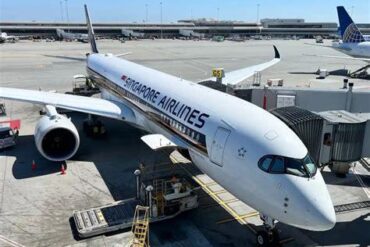
Close behind are routes that reinforce Air Canada’s deepening presence in Asia-Pacific markets. The Vancouver–Singapore service, reaching nearly 16 hours and 45 minutes, exemplifies the airline’s ability to connect North America directly with Southeast Asia. Similarly, Montreal–Delhi and Vancouver–Bangkok routes extend the carrier’s reach into high-growth regions where direct connectivity is increasingly valuable.
These routes are more than just long—they are strategically vital. They serve business travelers, diaspora communities, and tourism flows, all while positioning Air Canada as a key bridge between continents.
Reshaping Routes Amid Global Challenges
Geopolitics continues to influence aviation in subtle but impactful ways. The planned resumption of the Toronto–Shanghai Pudong route in 2026 illustrates this perfectly. Once a staple of Air Canada’s network, the route returns after a six-year hiatus—but with a twist.
Due to restrictions on Russian airspace, flights must now take longer alternative paths, adding approximately 90 minutes to total block time. This adjustment transforms an already long journey into an even more demanding operation, requiring careful planning in fuel management and crew scheduling.
Despite these challenges, the airline remains committed to restoring key international links, signaling confidence in long-term global travel demand.
Expanding South America and Middle East Connectivity
Air Canada’s ultra-long-haul ambitions are not limited to Asia. The Toronto–São Paulo–Buenos Aires route, with a maximum duration of 15 hours and 30 minutes, extends its footprint deep into South America. This one-stop service enables efficient connectivity between Canada and two major Latin American economic centers.
Equally significant is the Dubai–Toronto route, which operates in partnership with Emirates. This collaboration highlights a different strategy—leveraging alliances to enhance global reach. Nearly 50,000 passengers connected via Dubai in a single year, demonstrating the effectiveness of this model.
Meanwhile, routes like Toronto–Seoul Incheon and Vancouver–Brisbane further diversify the airline’s long-haul offerings, each pushing the limits of what passengers expect from nonstop or near-nonstop travel.
Aircraft That Make It Possible
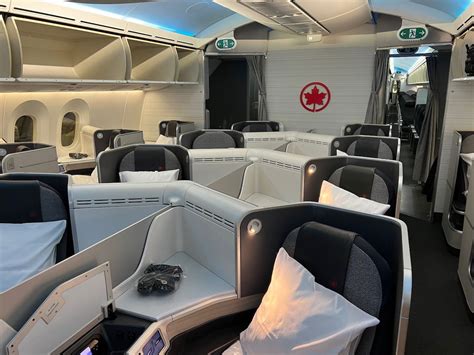
None of these routes would exist without the technological backbone provided by modern aircraft. The Boeing 777-200LR and 777-300ER deliver unmatched range and passenger capacity, while the 787-9 Dreamliner offers a balance of efficiency and comfort ideal for slightly shorter ultra-long-haul sectors.
These aircraft are engineered for endurance. Advanced aerodynamics, fuel-efficient engines, and passenger-focused cabin designs make it feasible to keep travelers comfortable for flights approaching an entire day in duration.
Cabin innovations also play a role. Improved pressurization, higher humidity levels, and quieter interiors reduce fatigue, making ultra-long journeys more tolerable than ever before.
The Future of 24-Hour Flying
Air Canada’s 2026 network signals a broader industry trend: the normalization of ultra-long-haul travel. What once seemed extreme is becoming increasingly routine, driven by passenger demand for direct connections and enabled by advances in aircraft technology.
As airlines continue to explore even longer routes, the concept of a “24-hour flight” may soon shift from headline-worthy to standard offering on select global corridors. Air Canada, with its aggressive expansion and strategic positioning, is clearly aiming to be at the forefront of this evolution.
In the end, these routes are more than just numbers on a schedule. They represent a new era of aviation—one where distance becomes less of a barrier, and the world feels just a little bit smaller with every ultra-long-haul departure.