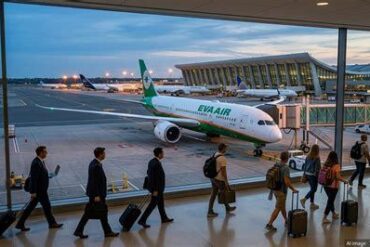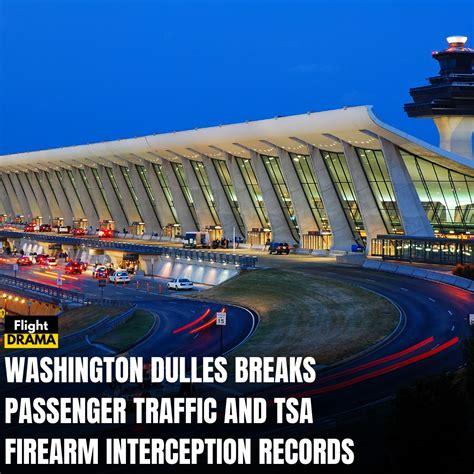
Washington Dulles International Airport has quietly stepped into the elite circle of global ultra-long-haul hubs. With the launch of EVA Air’s new nonstop service between Taipei Taoyuan International Airport (TPE) and Washington Dulles (IAD), the U.S. capital now claims one of the most ambitious commercial routes in operation—stretching more than 7,100 nautical miles across the North Pacific and clocking in at over 17 hours gate-to-gate during winter operations.
This is not merely another international route announcement. It is a strategic recalibration of long-haul aviation, linking political power, technology corridors, and diaspora communities through a direct air bridge that bypasses traditional transit hubs. Ultra-long-haul flying has become aviation’s modern endurance sport, and Dulles is now competing at the highest level.
The new service begins June 26 and will initially operate four times weekly using the Boeing 787-9 Dreamliner, an aircraft purpose-built for marathon routes. EVA Air’s expansion elevates Washington to its eighth U.S. destination and tenth North American gateway, reinforcing Taiwan–United States connectivity at a scale that few carriers can match.
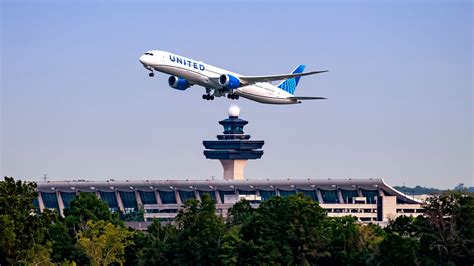
EVA Air’s 17-Hour Washington–Taipei Route: A Strategic Leap Across the Pacific
The Taipei–Washington nonstop service represents more than impressive flight time. It underscores EVA Air’s deliberate growth strategy within the U.S. market. Washington Dulles joins an already robust portfolio that includes Chicago O’Hare (ORD), Dallas/Fort Worth (DFW), Houston (IAH), Los Angeles (LAX), New York JFK, San Francisco (SFO), and Seattle (SEA), alongside Canadian gateways Toronto (YYZ) and Vancouver (YVR).
By adding Washington, EVA Air becomes the largest carrier by number of destinations served between Taiwan and the United States. This is a competitive distinction in a market where geopolitical relevance and business travel demand are deeply intertwined.
The scheduled timings reveal the operational complexity of ultra-long-haul flying. Flight BR004 departs Taipei at 7:30 p.m., arriving in Washington at 10:30 p.m., with a summer duration of approximately 15 hours and winter block times extending to 17 hours. The return service, BR003, departs IAD at 1:50 a.m., arriving in Taipei early the following morning after nearly 17 hours aloft in winter conditions.
Seasonal variation reflects the realities of global wind patterns. Westbound Pacific routes often benefit from tailwinds, while eastbound services encounter stronger headwinds, especially when Russian airspace avoidance requires a longer routing over the North Pacific. This geopolitical constraint has reshaped flight paths across Asia–North America corridors, adding both time and operational planning complexity.
Washington Dulles’ Longest Route: A New Benchmark in Endurance Flying
With its 17-hour winter block time, the new EVA Air flight becomes Washington Dulles’ longest scheduled commercial route. That distinction previously belonged to other intercontinental links, but this Taipei service now sits firmly at the top of IAD’s distance rankings.
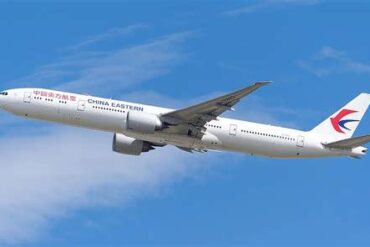
Close behind is Air China’s nonstop service to Beijing Capital International Airport (PEK), operated twice weekly with the iconic Boeing 747-8. While impressive, it falls just short of the Taipei route in duration.
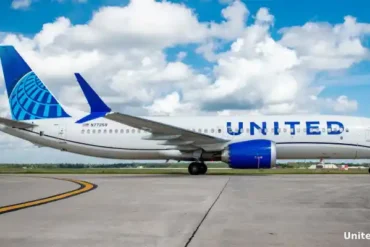
The third-longest route from Dulles is operated by United Airlines, connecting Washington to Cape Town International Airport (CPT). That nearly 16-hour service—also flown by the Boeing 787-9—highlights how Dulles has evolved into a genuine long-haul powerhouse rather than merely a transatlantic gateway.
Ultra-long-haul operations demand more than distance capability. Crew rotations, fuel planning, passenger comfort engineering, and maintenance cycles must align with almost surgical precision. Every extra hour in the air magnifies operational complexity. That EVA Air chose Dulles for such a route speaks volumes about the airport’s infrastructure readiness and regional demand.
The Boeing 787-9 Dreamliner: Engineered for 17-Hour Missions
The aircraft assigned to the Taipei–Washington route, the Boeing 787-9, is a cornerstone of modern ultra-long-haul strategy. Built with lightweight composite materials and advanced aerodynamics, the Dreamliner achieves significant fuel efficiency compared to older wide-body aircraft. For airlines, this means long routes become economically viable. For passengers, it means quieter cabins, higher humidity levels, and improved cabin pressurization—subtle factors that reduce fatigue on flights approaching 17 hours.
EVA Air’s configuration emphasizes premium comfort alongside competitive economy offerings, targeting business travelers, diplomatic traffic, and the substantial Taiwanese and Asian-American communities along the U.S. East Coast. The capital region’s political ecosystem, combined with Northern Virginia’s technology sector, creates consistent demand for nonstop Asia connections.
In ultra-long-haul aviation, efficiency is survival. Aircraft must balance payload limits with fuel weight across 7,000-plus nautical miles. The Dreamliner’s range flexibility allows carriers like EVA Air to navigate around restricted airspace while maintaining commercial viability.
North America Becomes EVA Air’s Core Growth Engine
The Washington launch follows EVA Air’s recent addition of Dallas/Fort Worth, where it now operates up to four weekly flights. That move made EVA Air the only Asian carrier serving more than one Texas destination, pairing Dallas with Houston. Such network layering signals strategic depth rather than opportunistic expansion.
Competitors trail behind in breadth. China Airlines, Taiwan’s flag carrier, operates to six U.S. gateways, while Starlux Airlines continues building a smaller but growing American footprint. On the U.S. side, only Delta Air Lines and United Airlines maintain direct Taiwan services, primarily from Seattle, Guam, and San Francisco.
By comparison, EVA Air’s ten North American gateways create resilience. Multiple entry points distribute demand and mitigate seasonal fluctuations. In the volatile world of aviation economics, network diversification is not optional—it is essential.
A Capital Hub with Expanding Asian Connectivity
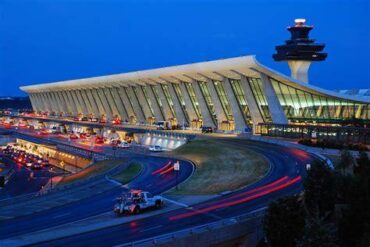
The Taipei addition also strengthens Washington Dulles’ Asian portfolio. Beyond EVA Air, the airport hosts services from All Nippon Airways (Tokyo Haneda), Korean Air (Seoul), United Airlines (Tokyo Haneda), Air China (Beijing), and soon Air Premia. The capital’s geographic position on the U.S. East Coast offers balanced connectivity between Europe, Africa, and Asia.
In practical terms, the new 17-hour flight eliminates the need for West Coast transfers. Passengers traveling between Taiwan and Washington can now bypass Los Angeles or San Francisco layovers, reducing total journey time and minimizing disruption risk.
Ultra-long-haul aviation represents a fascinating paradox. Technology shrinks the globe, yet the flights themselves stretch longer than ever. The cabin becomes a temporary ecosystem—part office, part restaurant, part time machine—carrying travelers across hemispheres in a single arc.
Washington Dulles’ ascent into the ultra-long-haul elite signals a broader transformation in global aviation networks. Direct city pairs once considered too distant are now commercially viable. As aircraft technology advances and geopolitical factors reshape air corridors, the map of nonstop possibilities continues to expand.
Seventeen hours in the sky is no small commitment. But in a world where diplomacy, business, and culture move at planetary scale, such endurance routes are no longer extraordinary—they are the new frontier.