The assumption that bigger aircraft automatically provide a better economy-class experience has shaped passenger expectations for decades. Widebody jets are associated with long-haul comfort, spacious cabins, and premium travel, while regional jets are often viewed as smaller compromises designed only for short flights. However, modern cabin design has created a surprising exception: the Embraer E-Jet family.
Despite being classified as regional aircraft, Embraer’s E-Jets offer something many larger aircraft cannot provide: wider economy seats, a more open cabin layout, and no middle seats. In an era when airlines continue searching for ways to fit more passengers onto every flight, Embraer took a different approach by prioritizing personal space.
The result is an aircraft family that challenges traditional ideas about comfort. A passenger sitting in economy class on an Embraer E190 or E195 can enjoy more shoulder room than travelers flying on some much larger intercontinental aircraft. The difference comes from one simple but important design choice: a four-across cabin instead of the industry-standard three-by-three narrowbody layout.
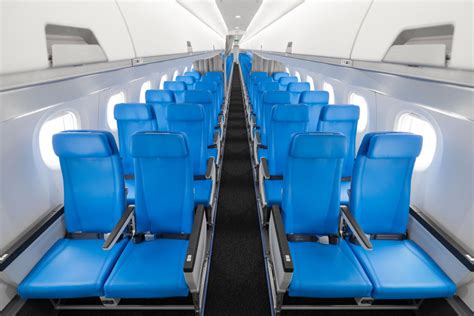
Why Some Widebody Economy Seats Became Smaller
Widebody aircraft were once considered the ultimate symbol of passenger comfort. Their larger fuselages gave airlines the ability to install wider seats, larger aisles, and more spacious cabins. Aircraft such as the Boeing 747 and early Boeing 777 models became famous for offering a generous economy experience compared with smaller aircraft.
However, airline economics gradually changed that philosophy. As competition increased and operating costs became more important, carriers began searching for additional revenue opportunities. One of the easiest solutions was adding more seats.
The Boeing 777 provides one of the clearest examples of this shift. Originally designed around a nine-seat economy configuration, many airlines eventually moved to a ten-abreast layout. The extra seat increased capacity but reduced individual passenger space. Economy seats that once approached comfortable dimensions became narrower, with many configurations offering widths around 17 inches.
A similar trend affected the Boeing 787 Dreamliner. The aircraft was promoted as a modern passenger-friendly design, but many airlines selected nine-abreast economy seating rather than the originally envisioned eight-abreast arrangement. The result was a cabin that offered advanced technology but less personal space than some passengers expected.
For travelers, this created an unusual situation. A person boarding a large international aircraft might expect a superior experience, only to discover that their seat is narrower than one found on a smaller regional jet.
Embraer E-Jets Take A Different Approach To Cabin Comfort
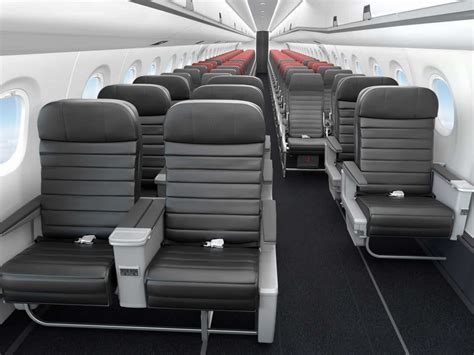
Embraer approached aircraft design from a different perspective. Instead of maximizing the number of seats in every row, the Brazilian manufacturer focused on creating an efficient cabin where each passenger receives more usable space.
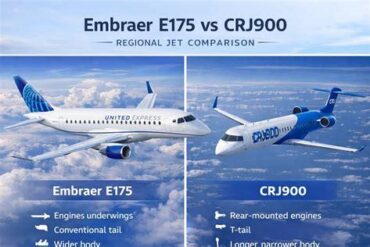
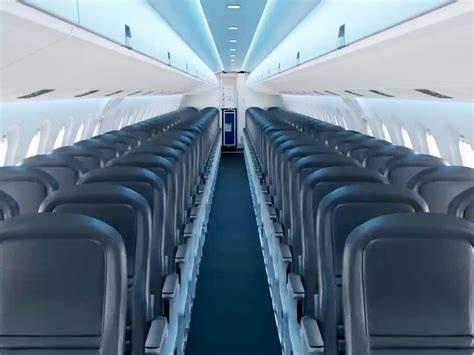
The Embraer E-Jet family, including the E170, E175, E190, and E195, uses a two-by-two economy layout. This means every row contains four seats instead of five or six. There is no middle seat, no passenger trapped between two strangers, and no competition for armrests.
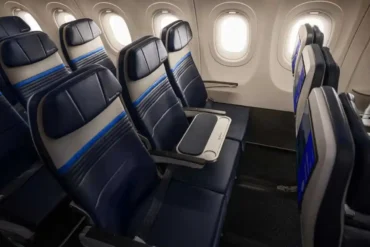
The standard economy seat width on many E-Jets reaches approximately 18.25 inches (46.4 cm). That measurement is impressive because it exceeds the width available on some larger aircraft operating international routes.
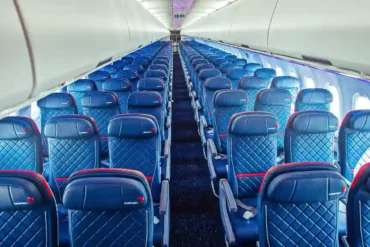
By comparison, many Airbus A320 and Boeing 737 configurations offer economy seats around 17 to 18 inches wide depending on airline choice. The numerical difference may appear small, but even an extra inch can significantly improve comfort during a flight.
Passengers notice the difference immediately. Wider seats provide additional hip room, reduce shoulder contact with neighboring travelers, and create a more relaxed feeling throughout the journey.
The Double-Bubble Fuselage Creates More Usable Space
Seat width is only one part of passenger comfort. Cabin shape plays an equally important role.
Many traditional regional aircraft use a circular fuselage design. While structurally efficient, this shape causes the cabin walls to curve inward sharply near the seats. Window passengers often lose usable shoulder space because the sidewall moves closer to their body.
Embraer solved this problem through its double-bubble fuselage design. Instead of relying on a simple circular cross-section, the aircraft structure creates a wider and flatter passenger cabin.
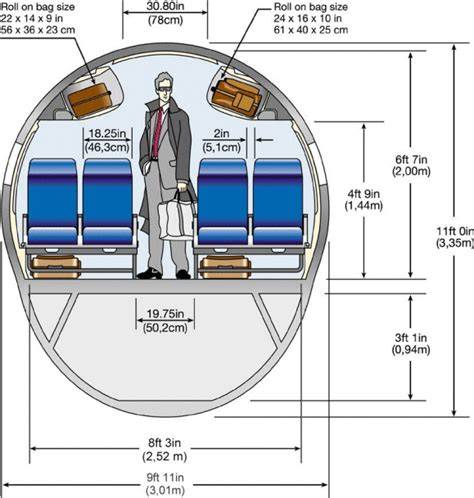
The advantage is especially noticeable for window passengers. The sidewalls remain more vertical, creating additional space around shoulder height. Travelers can sit naturally without feeling pushed inward by the aircraft wall.
The design also improves the space beneath the seats. Passengers have more room for their feet and personal belongings, reducing the cramped feeling common in smaller aircraft cabins.
This demonstrates that passenger comfort does not always depend on aircraft size. Intelligent engineering decisions can sometimes create a better experience inside a smaller airframe.
The Elimination Of The Middle Seat Changes Everything
For many economy passengers, the middle seat represents the biggest frustration in commercial aviation. On standard narrowbody aircraft, the three-seat arrangement creates a situation where one passenger must accept the least desirable position.
The middle-seat passenger loses direct window access, must share armrests, and often feels restricted throughout the flight. On longer journeys, this small design compromise becomes increasingly noticeable.
The Embraer E-Jet removes this problem completely.
Every passenger receives either a window seat or an aisle seat. Approximately half of travelers can enjoy the view outside, while the other half can access the aisle without disturbing anyone.
This simple configuration creates a more balanced passenger experience. No seat feels like the unwanted option.
The benefits also extend beyond passenger comfort. Boarding becomes smoother because fewer travelers need to move past others to reach their seats. Flight attendants can move more easily during service, and passengers experience less congestion in the aisle.
Why Airlines Around The World Value The E-Jet Cabin
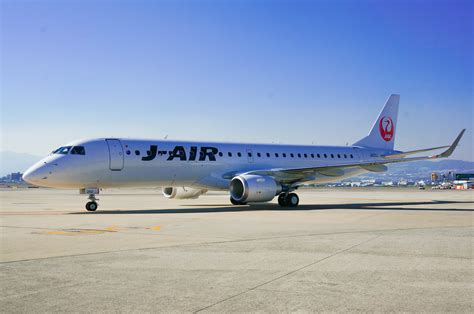
The Embraer E-Jet family has become especially successful in markets where passenger experience matters. Airlines in Japan, Canada, and other regions have recognized that a comfortable regional aircraft can become a competitive advantage.
Japanese carriers have traditionally placed strong emphasis on efficiency, reliability, and passenger satisfaction. Airlines such as J-AIR use Embraer aircraft to connect regional cities while maintaining a premium feeling inside the cabin.
In Canada, Porter Airlines has used the Embraer E195-E2 as a major part of its strategy. The airline operates the aircraft with an all-economy two-by-two configuration, allowing passengers to experience a level of personal space uncommon among larger competitors.
These examples show that regional jets do not have to represent a lower-quality experience. Instead, they can provide a more comfortable alternative when airlines choose thoughtful cabin layouts.
The E2 Generation Improves The Formula
Embraer continued developing its passenger-focused approach with the E190-E2 and E195-E2. These aircraft preserve the key cabin advantages of the original E-Jets while introducing improvements in efficiency, noise reduction, and passenger convenience.
The E2 aircraft use advanced Pratt & Whitney geared turbofan engines, which reduce fuel consumption and create a quieter cabin environment. For passengers, this means a calmer experience during flight.
The redesigned overhead bins also address one of the biggest complaints about smaller aircraft: limited carry-on space. Larger rotating bins allow more passengers to store standard roller bags onboard, reducing the need for gate checking.
These upgrades show that regional aircraft can evolve beyond their traditional role. The E2 family is not simply a smaller airplane; it represents a different philosophy about how passengers should experience air travel.
Aircraft Size Is Not Always A Measure Of Comfort
The Embraer E-Jet family proves that aircraft size alone does not determine passenger comfort. A widebody aircraft may have a larger exterior, but airline cabin decisions ultimately decide what travelers experience.
A tightly packed economy cabin on a large aircraft can feel far less comfortable than a carefully designed regional jet with wider seats and no middle seat.
For passengers choosing flights, aircraft type has become an increasingly important factor. The difference between a cramped three-by-three cabin and a spacious two-by-two layout can influence the entire journey.
The Embraer E-Jet family remains one of aviation’s best examples of passenger-centered design. It demonstrates that thoughtful engineering can outperform size, proving that sometimes the smaller aircraft offers the bigger experience.