Premium economy has transformed from a niche cabin into one of the most competitive products in commercial aviation. As airlines continue squeezing more seats into economy cabins while business class fares remain out of reach for many travelers, premium economy has emerged as the ideal compromise. It offers meaningful comfort upgrades without demanding the premium price of a lie-flat seat.
Most airlines compete by improving meal service, adding priority airport benefits, or introducing larger entertainment screens. While these enhancements certainly improve the overall journey, there is one feature passengers notice immediately after taking their seat: personal space. No gourmet meal or luxury amenity can compensate for feeling cramped during a flight lasting twelve hours or longer.
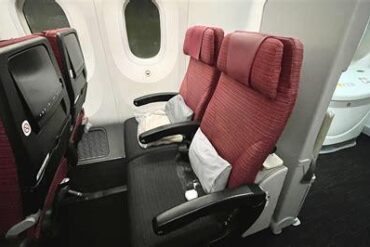
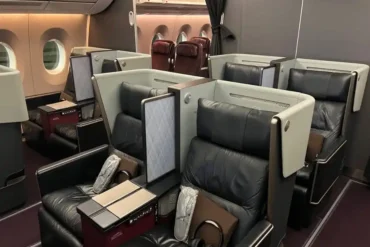
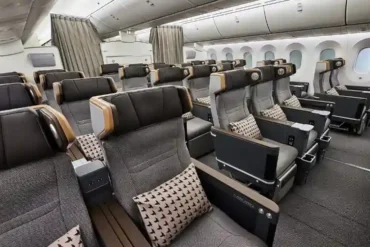
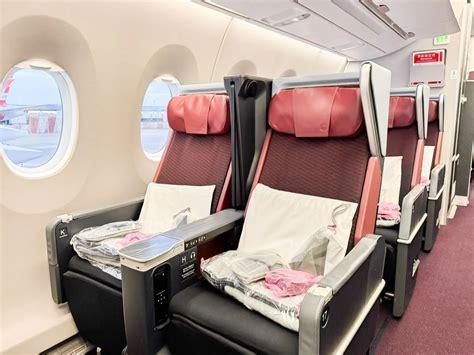
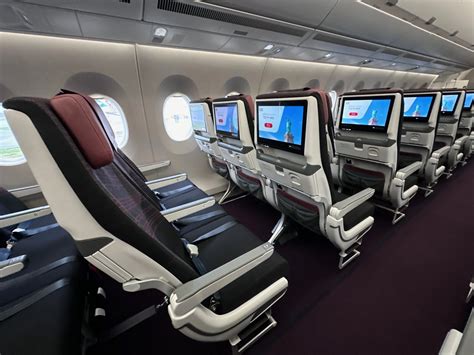
Among the world’s leading carriers, Japan Airlines (JAL) has taken an unusually straightforward approach. Instead of relying solely on premium branding or award recognition, the airline has focused on delivering something passengers can physically measure. Its premium economy cabin provides an impressive 42-inch seat pitch, giving travelers four additional inches of legroom compared with the highly acclaimed premium economy cabins offered by Emirates and Qantas.
That difference may appear insignificant on paper. In reality, it completely changes how a long-haul journey feels.
Why Seat Pitch Matters More Than Most Travelers Realize
When discussing airline seating, seat pitch is often misunderstood. It does not measure the actual size of the seat itself. Instead, it represents the distance from one point on a seat to the identical point on the seat directly in front.
This measurement directly determines how much room passengers have for:
- Stretching their legs
- Crossing their knees
- Using a laptop comfortably
- Getting in and out of the seat
- Sleeping without feeling confined
For shorter domestic flights, a few inches may not seem important. However, on overnight routes lasting ten to fourteen hours, those additional inches become increasingly valuable.
Standard economy cabins on many international airlines now offer between 30 and 32 inches of pitch. Premium economy generally increases that measurement to approximately 38 inches, creating noticeably better comfort.
Japan Airlines goes even further.
Its 42-inch pitch currently ranks among the most generous in commercial aviation.
Rather than simply marketing luxury, JAL delivers measurable additional space that every passenger experiences throughout the entire journey.
Japan Airlines Offers Industry-Leading Premium Economy Legroom
While numerous airlines advertise premium economy as a bridge between economy and business class, Japan Airlines backs that promise with actual cabin dimensions.
Its premium economy seat pitch exceeds many competitors by a significant margin.
| Airline | Premium Economy Seat Pitch |
|---|---|
| Japan Airlines | 42 inches |
| Emirates | 38 inches |
| Qantas | 38 inches |
A four-inch advantage may sound modest.
In practice, those extra inches dramatically improve freedom of movement.
Passengers can recline more comfortably without severely affecting the traveler behind them. Taller travelers have more room to stretch their legs, reducing stiffness during overnight flights. Those working onboard gain additional space for laptops, tablets, and documents.
Perhaps most importantly, passengers simply feel less confined.
That sense of openness becomes increasingly valuable as airlines continue maximizing cabin density.
Premium Economy Is Available Across Multiple Aircraft
Japan Airlines has expanded its premium economy product across several flagship aircraft rather than limiting it to only one fleet type.
Current premium economy availability includes:
| Aircraft | Premium Economy Seats |
|---|---|
| Airbus A350-1000 | 24 |
| Boeing 777-300ER | 40 |
| Boeing 787-9 (Version 1) | 35 |
| Boeing 787-9 (Version 2) | 21 |
This broad deployment ensures travelers flying many international routes can enjoy the same spacious seating regardless of aircraft assignment.
Consistency has become one of the airline’s strongest competitive advantages.
More Than Just Extra Legroom
Although the generous seat pitch attracts the most attention, Japan Airlines has invested heavily throughout the entire premium economy experience.
Instead of creating a slightly improved economy seat, JAL has developed what many frequent flyers describe as a Business Class Lite experience.
Passengers enjoy numerous enhancements before, during, and after boarding.
These improvements include:
- Complimentary Sakura Lounge access on eligible routes
- Priority boarding
- Larger entertainment displays
- Improved dining service
- Additional baggage allowance
- Better recline
- Larger tray tables
- Increased storage space
- Premium cabin service
Combined together, these upgrades create an experience that feels considerably more refined than traditional economy.
Sakura Lounge Access Adds Real Value
Airport lounges have traditionally remained exclusive to business and first-class passengers.
Japan Airlines breaks that convention by including access to its Sakura Lounge for eligible premium economy travelers.
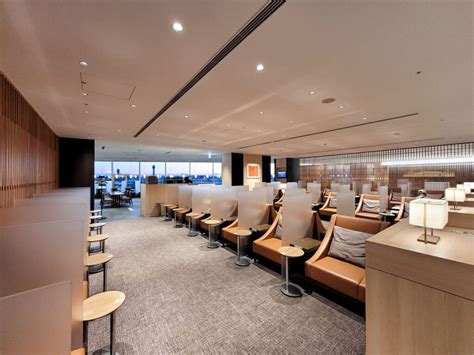
For many passengers, this benefit significantly improves the travel experience before boarding even begins.
Instead of waiting in crowded departure halls, travelers can enjoy:
- Complimentary meals
- Drinks
- Quiet seating
- Business workspaces
- Charging stations
- High-speed Wi-Fi
- Relaxed boarding environment
On long international itineraries, beginning the journey in a calm lounge often reduces travel fatigue before passengers even reach the aircraft.
Many competing premium economy products still do not include lounge access.
The Airbus A350-1000 Raises the Standard Even Further
Japan Airlines’ newest Airbus A350-1000 represents the airline’s latest cabin philosophy.
Rather than making incremental improvements, JAL redesigned nearly every aspect of premium economy.
The aircraft introduces several premium features rarely found outside business class.
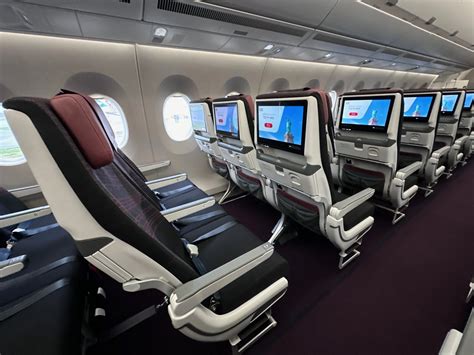
Most noticeable is the 16-inch 4K entertainment display.
The larger, sharper screen delivers significantly improved viewing quality while also providing Bluetooth connectivity, allowing passengers to pair their own wireless headphones without cumbersome adapters.
The seat itself has also evolved.
Electrically operated horizontal leg rests offer better lower-body support than traditional footrests, helping reduce fatigue during overnight flights.
Large privacy partitions create greater personal space without completely enclosing each passenger.
Together, these upgrades produce an experience that feels substantially closer to business class than conventional premium economy.
Emirates and Qantas Still Deliver Outstanding Premium Economy
None of this diminishes the achievements of Emirates or Qantas.
Both airlines consistently rank among the world’s finest premium economy operators.
Their cabins receive praise for:
- Excellent onboard service
- Attractive cabin design
- Comfortable seating
- High-quality catering
- Professional cabin crews
- Premium entertainment systems
Industry awards continue recognizing both carriers for delivering exceptional passenger experiences.
However, measurable cabin dimensions tell a different story.
When comparing seat pitch alone, neither airline currently matches Japan Airlines.
That makes JAL particularly attractive for passengers whose highest priority is physical comfort rather than onboard presentation.
Why Four Inches Feel Much Larger Than They Sound
Many travelers initially underestimate the practical effect of four additional inches.
Human perception does not measure cabin comfort mathematically.
Instead, passengers notice how easily they can move.
Four inches can mean:
- Standing without disturbing neighbors
- Sleeping with less knee pressure
- Opening a laptop comfortably
- Crossing legs naturally
- Reclining with greater comfort
- Reducing lower back fatigue
These small improvements accumulate over twelve or thirteen hours.
By landing, passengers often feel noticeably less exhausted.
For taller travelers above six feet, the improvement becomes even more significant.
Seat Width Remains Competitive
Although legroom headlines most comparisons, seat width also contributes to comfort.
Japan Airlines offers premium economy seats measuring approximately 18.5 to 18.9 inches, depending on aircraft configuration.
This places JAL firmly within the premium economy standards established by leading international airlines.
While seat width differences between major carriers remain relatively small, the airline’s generous seat pitch creates a much greater overall feeling of spaciousness.
Passengers often perceive the cabin as substantially larger despite similar seat widths.
Premium Economy Makes Increasing Financial Sense
Choosing premium economy ultimately comes down to value.
Business class frequently costs two to four times more than economy.
Premium economy, by comparison, generally commands a much smaller premium while delivering meaningful comfort improvements.
Japan Airlines often prices premium economy approximately 30 percent above standard economy, although fares naturally fluctuate according to season, demand, and route.
For travelers spending twelve or more hours onboard, that additional investment frequently proves worthwhile.
The upgrade provides:
- Significantly greater comfort
- Better sleep
- Improved productivity
- Faster boarding
- Lounge access
- Enhanced meals
- Reduced travel fatigue
When these benefits are combined, premium economy becomes one of the strongest values in long-haul travel.
Ultra-Long-Haul Flights Showcase JAL’s Biggest Advantage
Routes connecting Japan with Europe, North America, and Australia regularly exceed twelve hours.
Examples include flights linking Tokyo with London, New York, Los Angeles, Sydney, and Paris.
During these journeys, passengers remain seated for extended periods with limited opportunities to move freely.
That is precisely where JAL’s additional legroom delivers its greatest benefit.
Eating becomes easier.
Sleeping becomes more comfortable.
Working becomes more practical.
Even simple activities such as reading or watching movies become more relaxing when passengers are not constantly adjusting their posture.
Over an entire long-haul journey, the comfort difference becomes surprisingly substantial.

Premium Economy Continues to Evolve
Demand for premium economy continues growing worldwide.
Corporate travelers whose companies no longer approve business class increasingly select premium economy.
Leisure travelers also recognize that spending slightly more can dramatically improve lengthy international flights.
As a result, airlines continue investing heavily in this cabin.
Some emphasize luxury finishes.
Others focus on gourmet dining.
Many introduce upgraded entertainment technology.
Japan Airlines has chosen a slightly different strategy.
Rather than relying solely on premium aesthetics, it has prioritized something fundamentally more valuable: space.
That philosophy resonates particularly well as economy cabins become progressively denser across the industry.
Industry Recognition Reinforces JAL’s Reputation
Although measurable legroom remains its biggest competitive advantage, Japan Airlines has also earned substantial industry recognition.
The carrier received Skytrax World’s Best Premium Economy Class in 2024 and later secured Best Premium Economy Class in Asia in 2025.
These awards acknowledge more than comfortable seating.
They recognize:
- Consistently attentive service
- High-quality catering
- Thoughtful cabin design
- Excellent passenger satisfaction
- Strong airport experience
Together with its class-leading cabin dimensions, these accolades reinforce Japan Airlines’ reputation as one of the world’s premier premium economy providers.
Final Verdict: Physical Space Still Wins
Premium economy has become one of aviation’s fiercest competitive battlegrounds, with airlines introducing increasingly sophisticated seats, upgraded dining, and exclusive airport services.
Yet despite technological improvements and luxury enhancements, one factor continues to influence passenger comfort more than almost any other: personal space.
Japan Airlines has recognized this reality by building its premium economy around an industry-leading 42-inch seat pitch, offering four more inches of legroom than the award-winning cabins of Emirates and Qantas.
Those extra inches may appear modest in marketing materials, but during an overnight journey stretching across continents, they become one of the most valuable upgrades a traveler can buy.
Combined with Sakura Lounge access, refined cabin service, spacious seating, advanced entertainment technology, and the impressive Airbus A350-1000 interior, Japan Airlines delivers a premium economy experience that prioritizes comfort in ways passengers can genuinely feel from takeoff to landing.
For travelers who want substantially more comfort without paying business class prices, Japan Airlines’ premium economy stands among the strongest value propositions in global long-haul aviation today.