The F-22 Raptor and F-35 Lightning II represent two of the most advanced combat aircraft ever fielded by the United States. Both brought fifth-generation warfare into operational service with combinations of stealth, advanced sensors, data fusion, precision weapons, and network connectivity that fundamentally changed how fighter aircraft operate. Yet the very technologies that made these aircraft revolutionary are now becoming the foundation for something even more ambitious.
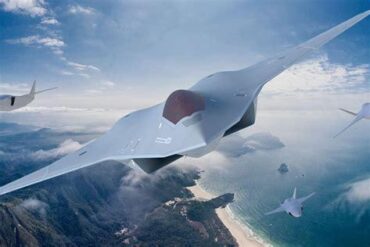
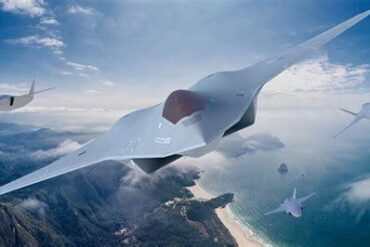
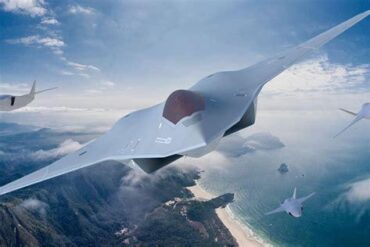
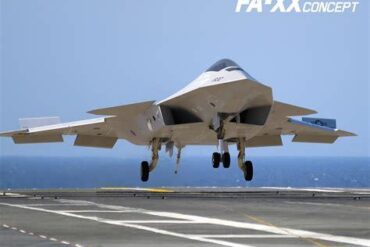
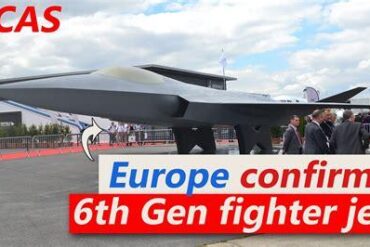
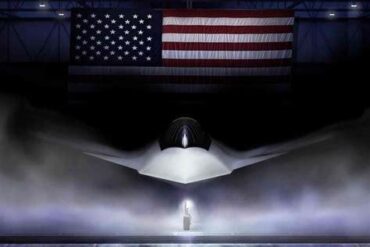
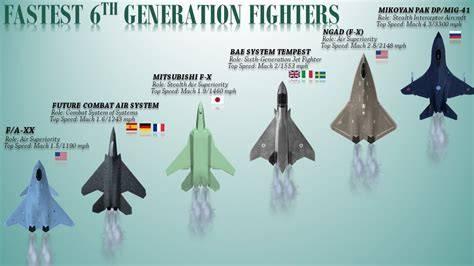
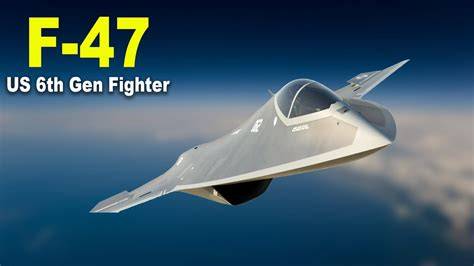
The emerging sixth-generation fighter is not simply expected to be a faster, stealthier replacement for the F-22 and F-35. Instead, it is being designed as part of a much larger combat architecture in which the aircraft itself becomes a node within a distributed network of crewed aircraft, uncrewed systems, satellites, ships, ground stations, and other sensors. Programs such as the U.S. Air Force’s Next Generation Air Dominance (NGAD) effort, including the Boeing F-47, and Britain’s GCAP/Tempest program illustrate this shift toward a system-of-systems approach.
The result could be a fighter that does not merely outperform the F-22 or F-35 in individual specifications. It could change what we mean by fighter aircraft altogether.
1. Distributed Electronic Warfare Will Transform Battlespace Awareness
Electronic warfare will be one of the most important areas in which sixth-generation fighters could outclass today’s fifth-generation aircraft. The F-35 already possesses an exceptionally sophisticated electronic warfare architecture, centered on its AN/ASQ-239 system, allowing the aircraft to detect, identify, locate, track, and respond to threats across the electromagnetic spectrum.
Sixth-generation aircraft are expected to take this concept considerably further. Rather than concentrating sensing and electronic warfare functions around a relatively small number of major apertures, future fighters could distribute sensors and emitters throughout the airframe. This would allow the aircraft to collect information from multiple directions simultaneously while reducing its dependence on any single sensor.
That distinction matters because modern combat increasingly depends on control of the electromagnetic environment. Radar emissions, communications signals, electronic interference, infrared signatures, data links, and hostile emitters can all reveal information about an adversary. A fighter that understands this environment faster than its opponent can potentially make better decisions before the opponent even realizes it has been detected.
The sixth-generation approach could therefore merge radar, electronic support measures, communications, electronic attack, and passive sensing into one coordinated architecture. Instead of treating each function as a separate subsystem, the aircraft could use its entire electromagnetic signature and sensor suite as an integrated combat instrument.
This could give future pilots a much richer understanding of threats around them. More importantly, the aircraft would not necessarily need to perform every sensing mission by itself.
A semi-autonomous uncrewed aircraft could move closer to an adversary, collect electronic signals, identify radar activity, or investigate an uncertain contact. That information could then be transmitted back to the crewed fighter and other assets. The most dangerous sensing tasks could therefore be distributed across multiple platforms instead of placing a single expensive aircraft at unnecessary risk.
This is a fundamental evolution beyond the F-22 and F-35. Fifth-generation fighters are already highly networked, but sixth-generation aircraft are expected to make distributed electronic warfare a core operating principle, rather than simply another capability.
2. Greater Range Will Matter More in a Missile-Dominated Pacific
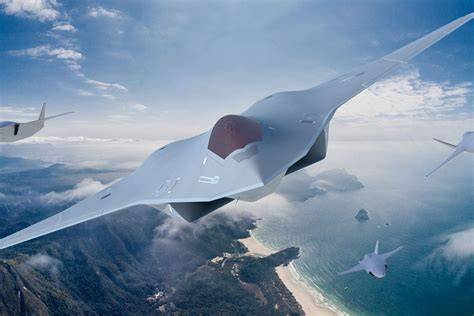
The second major advantage will likely be range and persistence. The geography of a future high-end conflict makes this particularly important.
Aircraft carriers and air bases remain essential to American airpower, but they are no longer sanctuaries simply because they are far from the immediate battlefield. Long-range ballistic and cruise missiles have made fixed bases and large naval formations increasingly vulnerable. In a major conflict in the Indo-Pacific, the ability to operate from distant locations while reaching contested airspace could become one of the most valuable characteristics of a combat aircraft.
The F-22 and F-35 were designed for a different strategic environment. They possess impressive combat ranges for tactical fighters, but sixth-generation programs are being shaped around the expectation that future operating areas could be enormous and heavily contested.
The reported objectives surrounding the F-47 point toward a platform capable of combining substantial range with high performance. Open-source reporting has suggested a potential combat radius or range around the 1,000-nautical-mile class, while projected performance may include speeds exceeding Mach 2. Exact operational specifications remain classified or subject to change, but the underlying design philosophy is clear: future air dominance fighters need to travel farther and remain relevant in the battlespace longer.
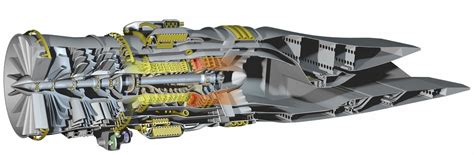
A major contributor could be the adaptive-cycle engine. Unlike a conventional turbofan optimized around a narrower range of operating conditions, an adaptive engine can modify airflow through the engine to balance competing requirements.
During combat, it could prioritize thrust. During cruise, it could emphasize fuel efficiency. Under demanding sensor and weapons loads, it could also provide increased thermal-management capacity.
That final characteristic is especially important. Modern fighters generate enormous amounts of heat through avionics, sensors, computing systems, communications equipment, and electronic warfare hardware. Future aircraft may need even more electrical power and cooling capacity as their electronic systems become increasingly sophisticated.
An adaptive engine therefore represents more than an attempt to make a fighter faster. It could become the energy-management foundation of the entire aircraft.
Greater range would also reduce dependence on vulnerable forward bases and potentially allow fighters to launch from more distant locations. That gives commanders additional operational flexibility and complicates an adversary’s targeting calculations.
3. The Traditional Nose Radar Could Become Only One Part of the Sensor Network
The third transformation concerns one of the most recognizable components of a modern fighter: its radar.
The F-22 and F-35 already integrate radar data with infrared sensors, electronic warfare systems, communications, and other sources. Sixth-generation aircraft could push sensor fusion so far that the traditional nose-mounted radar becomes only one element of a much broader sensing architecture.
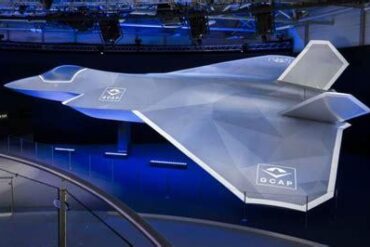
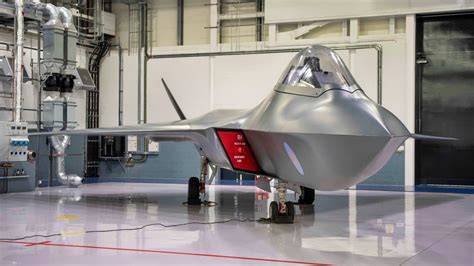
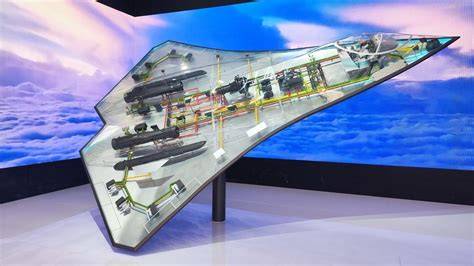
The emerging Tempest concept under the Global Combat Air Programme (GCAP) provides an important illustration. Its planned Integrated Sensing and Non-Kinetic Effects architecture is intended to combine radar, electro-optical and infrared sensors, electronic support measures, and electronic warfare capabilities into an integrated system.
Sensors can potentially be embedded throughout the aircraft rather than concentrated primarily in the nose. Miniaturized components could provide the aircraft with additional observation angles, while onboard computing systems combine those observations into a unified picture.
This could fundamentally alter how a pilot interacts with information.
Instead of asking a radar to find a target, an aircraft could continuously build an environmental model from multiple passive and active sources. Information from another aircraft, an uncrewed vehicle, a ship, or a space-based sensor could become part of the same tactical picture.
The result is sometimes described as a system of systems. The fighter is no longer simply a platform carrying sensors. It becomes a processor and decision node that can consume information from a huge number of sources and distribute useful information back to the wider force.
The Royal Aeronautical Society has described ambitions for Tempest involving the ability to process extremely large volumes of information at extraordinary speed. Whether individual performance claims ultimately translate into operational capability, the direction is unmistakable: sixth-generation aircraft will need computing architectures capable of handling vastly more information than today’s fighters.
That could make the aircraft less dependent on any single sensor. If an adversary jams one radar frequency, the aircraft could potentially rely on other apertures, passive detection methods, offboard sensors, or information supplied by another platform.
In that environment, stealth remains important, but information superiority becomes equally decisive.
4. Directed-Energy Weapons Could Change the Fighter’s Weapons Equation
The fourth way sixth-generation fighters could outclass the F-22 and F-35 is through directed-energy weapons.
Lasers and high-powered microwave weapons have moved beyond science fiction and into serious military development. Naval vessels and ground vehicles are already being developed or tested with directed-energy systems, although integrating comparable weapons into a high-performance fighter remains a far more difficult engineering challenge.
The biggest obstacle is not simply producing a powerful beam. A fighter needs enough electrical generation, thermal management, cooling, space, and structural integration to operate such a system without compromising the aircraft’s primary mission.
This is where sixth-generation propulsion becomes particularly interesting.
Adaptive-cycle engines could provide substantially greater electrical generation and thermal-management potential. Those capabilities could eventually make it practical to integrate directed-energy weapons into an aircraft architecture designed around them from the beginning.
A laser could potentially be used against incoming missiles, drones, or other aircraft. High-powered microwave systems could offer another method of attacking electronics or disrupting systems. The precise capabilities and engagement ranges of future airborne directed-energy weapons remain uncertain, but their potential advantage is obvious: they do not rely on a conventional finite magazine in the same way missiles do.
A fighter carrying a limited number of air-to-air missiles has to carefully manage its ammunition. Every launch reduces the number of remaining opportunities to engage another target.
A sufficiently powerful laser changes that calculation. As long as the aircraft has available electrical power and adequate cooling, it could potentially conduct repeated engagements without physically expending a missile.
That does not mean missiles would disappear. Far from it. Long-range missiles will remain extremely important for targets outside the effective range of an onboard directed-energy weapon. Instead, a future fighter could use a layered weapons architecture in which lasers handle certain defensive or short-range threats while conventional missiles are preserved for high-value engagements.
Artificial intelligence could also help manage the system. An onboard AI assistant could monitor incoming threats, prioritize targets, calculate engagement parameters, and recommend or assist with defensive actions while the human pilot concentrates on the broader tactical situation.
The most important change, therefore, may not be the laser itself. It could be the combination of more electrical power, better cooling, autonomous decision support, and networked targeting that makes directed energy practical.
5. Collaborative Combat Aircraft Will Give One Pilot a Larger Battlespace Footprint
The fifth and perhaps most dramatic advantage is manned-unmanned teaming.
A traditional fighter pilot controls one aircraft. A sixth-generation pilot could increasingly become the commander of a small group of aircraft.
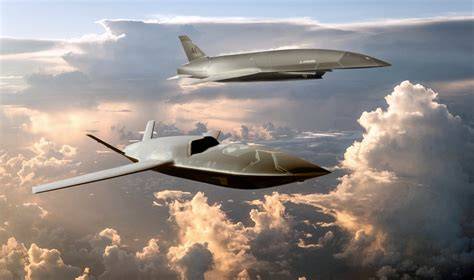
The U.S. Air Force’s Collaborative Combat Aircraft (CCA) program is central to this concept. Rather than treating drones simply as remotely controlled substitutes for conventional fighters, the CCA concept envisions semi-autonomous aircraft operating alongside crewed platforms.
The crewed sixth-generation fighter could assign objectives to these aircraft while retaining human authority over critical decisions. Depending on their configuration, CCAs could perform air-to-air missions, strike missions, electronic warfare, reconnaissance, surveillance, and other specialized tasks.
This creates an entirely different tactical equation.
Imagine a sixth-generation fighter approaching a heavily defended battlespace. Instead of exposing itself to every threat, the pilot could send an uncrewed aircraft forward to investigate. Another could carry additional sensors. A third could perform electronic warfare. Another might create a weapons opportunity.
The crewed fighter would remain the central decision-making platform while the uncrewed aircraft extend its reach.
The concept also introduces something fifth-generation fighters cannot easily achieve on their own: affordable mass.
An F-22 is an extraordinarily capable aircraft, but its complexity and cost make it impossible to deploy in the numbers of a relatively inexpensive autonomous aircraft. A future force could therefore combine a smaller number of extremely capable crewed fighters with larger numbers of lower-cost uncrewed platforms.
The U.S. Air Force has discussed acquiring large numbers of CCAs across multiple increments. The Anduril YFQ-44A Fury and General Atomics YFQ-42A are among the platforms associated with the first phase of the program.
The strategic advantage is difficult to overstate. An adversary facing one sixth-generation fighter might be able to plan against one aircraft. An adversary facing one fighter plus several autonomous aircraft must account for multiple sensors, weapons, electronic warfare systems, decoys, communications nodes, and potential attack vectors.
That makes targeting much harder.
It also allows commanders to accept risks with uncrewed systems that would be unacceptable with a human pilot. A drone could potentially enter a dangerous area first, forcing an adversary to reveal radar positions, launch weapons, or activate electronic warfare systems.
The sixth-generation fighter then uses that information to make a more informed decision.
Why the F-22 and F-35 Still Matter
Despite these advances, saying that sixth-generation fighters will outclass the F-22 and F-35 does not mean that fifth-generation aircraft will suddenly become obsolete.
The F-22 remains a highly capable air-superiority platform with exceptional aerodynamic performance, stealth, sensors, and air-to-air capabilities. The F-35, meanwhile, has become one of the world’s most important multirole fighters because of its stealth, sensor fusion, networking, and ability to operate across a large international force structure.
Sixth-generation aircraft will likely work alongside these platforms rather than replace them overnight.
The more plausible future is a layered force in which F-22s and F-35s continue contributing their existing strengths while new aircraft introduce greater range, sensing, electronic warfare, energy generation, and autonomous teaming.
The transition will also take time. Advanced aircraft are extraordinarily complex, and ambitious technologies often encounter engineering, cost, software, testing, and production challenges before becoming operational capabilities.
Nevertheless, the direction of travel is becoming increasingly clear.
The Fighter Is Becoming a Combat Network
The most important distinction between fifth- and sixth-generation combat aircraft may ultimately have little to do with speed.
The real breakthrough is likely to be the transformation of the fighter from an individual weapons platform into a networked combat commander.
Greater range allows it to operate farther from vulnerable bases. Distributed sensors allow it to see beyond the limitations of a single radar. Advanced electronic warfare lets it manipulate the electromagnetic environment. Greater electrical power could enable directed-energy weapons. Collaborative Combat Aircraft multiply its presence across the battlespace.
These capabilities reinforce one another.
A drone can detect a threat. Distributed sensors can identify it. Electronic warfare can interfere with it. The network can pass targeting information to another platform. A missile or directed-energy weapon can then engage it while the crewed fighter remains farther from danger.
That is why sixth-generation fighters could eventually outclass the F-22 and F-35 in ways that cannot be captured by a simple specification sheet.
The F-22 and F-35 were designed to dominate an increasingly connected battlespace. Their successors are being designed to command that battlespace.
If the technology matures as planned, the defining feature of the sixth-generation fighter will not simply be that it is stealthier, faster, or more heavily armed. It will be that one aircraft can coordinate an entire web of sensors, weapons, electronic warfare assets, and autonomous aircraft.
In that sense, the next generation of airpower may not be about building a better fighter.
It may be about building a fighter that makes every aircraft around it more dangerous.