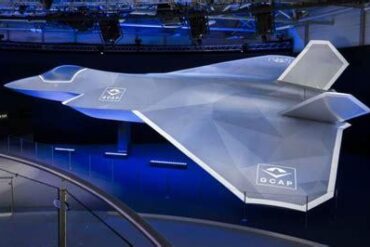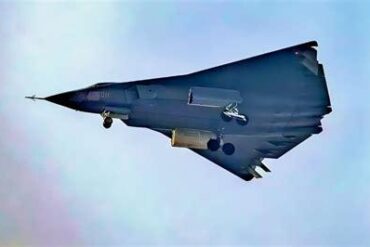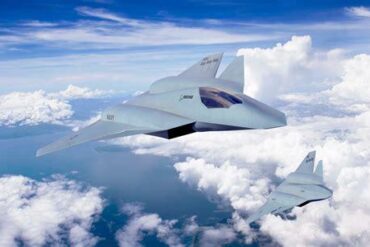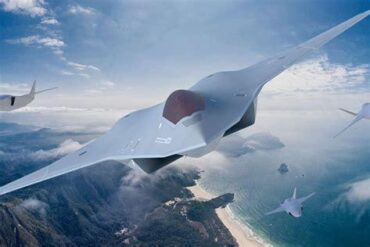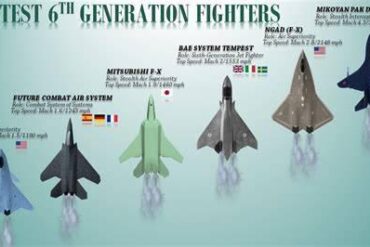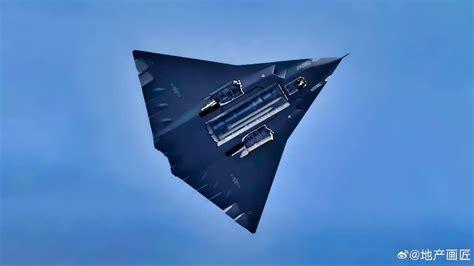
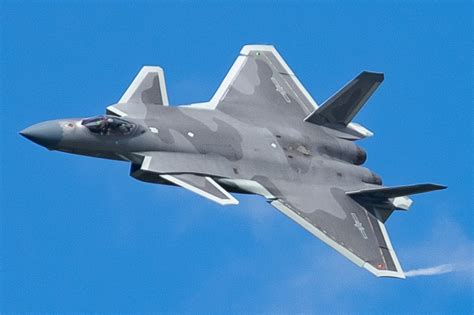
In recent years, the aerospace world has witnessed a fascinating divergence between how China and the United States handle the visibility of their next-generation military aircraft. Enthusiasts and analysts alike have noted an influx of videos and images showing Chinese 6th-generation jets in action—rolling down runways, flying over dense urban areas, or parked at airbases. Meanwhile, the United States’ equivalent, such as the F-47 NGAD, remains enshrouded in silence and secrecy. This stark contrast raises an urgent question: Why is China so visible with its top-secret aircraft, while the U.S. hides behind a curtain of classification?
Deliberate Disclosure vs. Strategic Silence
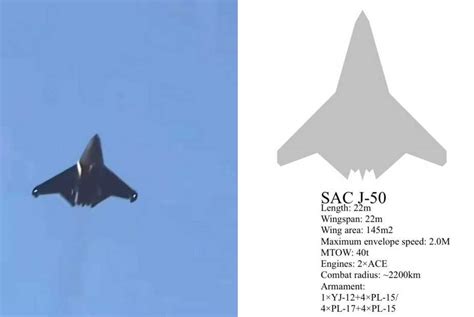
A common misconception is that China is simply loose with operational security. However, evidence from various experts and insiders indicates that the visibility of aircraft like the J-36 or J-50 is not accidental. It is intentional and timed.
Chinese aerospace testing occurs in cities like Chengdu, a sprawling metropolis where fighter jets cannot operate without being seen and recorded by thousands. As noted by a Chinese user, the deliberate decision to fly these jets in visible zones suggests that leaks are carefully orchestrated, not mishandled. These aircraft are often tested in quieter, remote regions during early phases—but when it comes time for PR or strategic signaling, flights happen in plain sight.
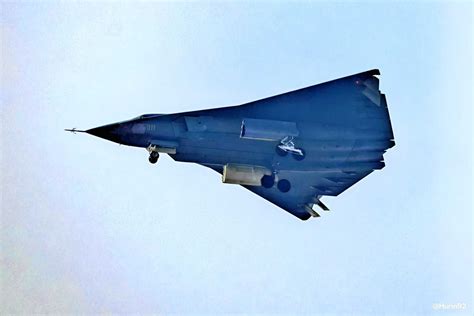
In contrast, the United States conducts early and late-stage tests in isolated environments, notably in Nevada or the California desert, where photography is tightly controlled. Facilities like Groom Lake (Area 51) and Edwards AFB remain fortresses of secrecy. The result? Virtually no public images of the F-47, despite claims that full-scale prototypes have flown.
Program Phases Shape Visibility
China’s disclosure patterns align with a repeatable model. During the design and feasibility phases, programs are completely silent. It isn’t until aircraft enter the test flight phase—often close to full readiness—that visibility increases. This same trajectory was followed with the J-20, which had its maiden flight in 2011 after years of total blackout.
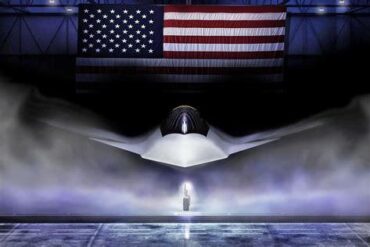
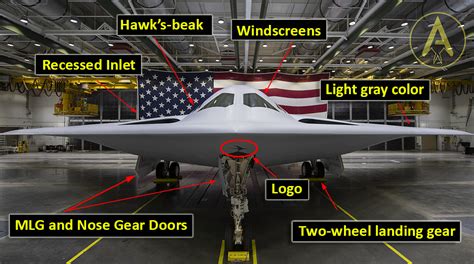
In contrast, the U.S. sometimes goes public earlier—but only selectively. Take the B-21 Raider for example. High-quality images, including staged ground shots and hangar photos, were released even before its first flight. However, these were official releases, not random phone captures. The lack of such imagery for the F-47 suggests it’s either still deep in testing or considered more sensitive than the B-21.
What Counts as 6th Gen? A Blurred Line Between Bombers and Fighters
The definition of a 6th-generation aircraft is still evolving. Traditionally, the term applied strictly to fighters, but the B-21 has been positioned by some in the U.S. as a 6th-gen platform due to features like:
- Integration with Collaborative Combat Aircraft (CCA)
- Advanced avionics and stealth
- Use of Ultra-Low Observability (ULO) techniques
Some argue that if the B-21 can control drones and operate as a network node, it qualifies. On the Chinese side, the J-20S, with its second seat reportedly designated for drone coordination, is also being interpreted as exhibiting partial 6th-gen capability.
The Expanding CCA Ecosystem and Secret Platforms
The 6th-gen story is incomplete without discussing the rise of Collaborative Combat Aircraft (CCA)—AI-enabled, unmanned wingmen designed to fly with manned aircraft. The U.S. has a deep bench of potential CCA platforms:
- General Atomics YFQ-42
- Anduril YFQ-44
- Kratos Valkyrie
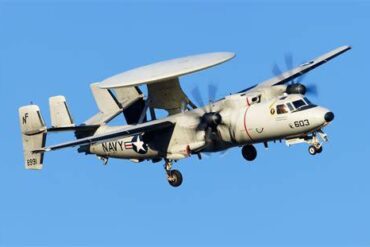
- Boeing MQ-25 & MQ-28
- Northrop Grumman’s Project Lotus
- Lockheed Martin’s Vectis and other black projects
- Shield AI X-Bat
This ecosystem expands the scope of what the U.S. considers “stealth technology,” many of which will never be seen publicly until deployment. The same may hold true for China, though their approach appears more flexible when it comes to public exposure.
NGAD, Miscommunication, and the Race to Fly First
A fascinating subplot emerged when China’s Chengdu Aircraft Corporation (CAC) reportedly misread U.S. statements about the NGAD program. When U.S. officials hinted that NGAD had flown, CAC interpreted this as a sign of U.S. flight testing and rushed forward its own J-36 prototypes (36011 and 36022). As it turned out, both flew before the F-47, suggesting China had an edge in speed, if not secrecy.
Smartphones, Urban Sprawl, and the Inevitable Leak
One practical reason for the abundance of Chinese aircraft footage is technological and urban:
- Smartphones now record HD video everywhere.
- Cities like Chengdu and Shenyang have expanded, enveloping once-remote airfields.
Even if China wanted tighter secrecy, the logistics of hiding a massive fighter jet in such environments are nearly impossible. Conversely, the U.S. continues to use remote facilities specifically chosen for secrecy, a legacy of Cold War priorities.
Is the U.S. Behind, or Just Playing Quiet?
This is the most debated question. Some experts believe the U.S. is lagging behind, pointing to the complete absence of F-47 footage. Others argue this is part of a long-play secrecy strategy, noting that similar secrecy once surrounded platforms like the F-117 Nighthawk, which was operational for nearly a decade before being acknowledged.
What’s clear is that when mass production begins, secrecy naturally decreases. The B-21 and China’s new jets fall into this category. Aircraft intended for low-rate niche missions, like the RQ-180 or certain drones, remain unseen because their scale doesn’t justify disclosure.
Geopolitical Signaling: The Power of a Public Prototype
China’s openness about its new aircraft is not just operational—it’s political. By revealing advanced airframes in full view, Beijing sends a message:
- “We are prepared.”
- “We have the technology.”
- “Do not underestimate us.”
As one analyst put it, it’s akin to flashing a weapon before a negotiation. This visual deterrent plays into trade war dynamics, alliance-building, and internal propaganda designed to boost morale and attract foreign tech talent.
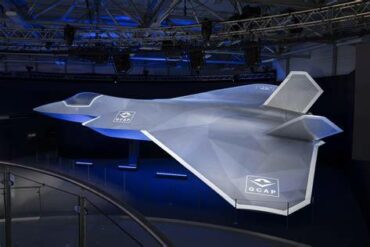
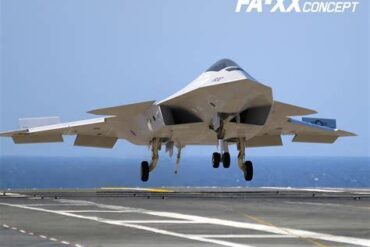
In May 2025, former President Trump’s massive announcement about multiple stealth platforms (F-47, F/A-XX, F-35 “NASCAR” and “Ferrari” upgrades, YFQ-42 and YFQ-44) triggered a wave of Chinese leaks—including drones paraded through the streets, some believed to be mockups or airshow decoys. The messaging was clear: “You show yours, we’ll show ours.”
Cultural Attitudes Toward Secrecy and Security
Differences in engineering and bureaucratic culture shape each nation’s stance. In China, many insiders believe that the energy spent on guarding secrets could be better spent on advancing tech. In the U.S., by contrast, an over-classification culture—often influenced by legal liability and inter-agency politics—dominates. Both countries are capable of deep secrecy, but their thresholds for disclosure differ.
Furthermore, the U.S. is heavily shaped by its Cold War legacy, where air dominance was paramount. Stealth became a doctrine. In contrast, China focuses more on balanced force composition, including missiles, ships, space, and UAVs, where secrecy might be more selectively applied.
When Visibility Is Strategy, Not Weakness
Chinese footage of advanced aircraft—far from being a slip—should be understood as strategic theater. The CCP knows exactly when to turn visibility into an advantage. When images appear of J-50s flying over megacities, it’s not just aviation news. It’s psychological messaging.
The U.S., for its part, is still capable of turning secrecy into spectacle, as it did with the B-21’s theatrical reveal. The F-47 will likely follow a similar path—a sudden debut, preceded by silence, shrouded in mythology.
Conclusion: The Visibility Gap Is Deliberate, Not Deficient
Ultimately, the asymmetry in public imagery between China and the United States is the result of divergent strategic choices, not technical inferiority or superiority. China’s 6th-gen aircraft are shown when and where they want them to be seen—for signaling, morale, and recruitment. The U.S. maintains radio silence until it suits its own narrative arc, choosing strategic mystery over public display.
As the global balance of power shifts, the skies may be the stage where both superpowers script their technological theater—one with visible actors, and the other hidden in the wings, waiting for the final reveal.