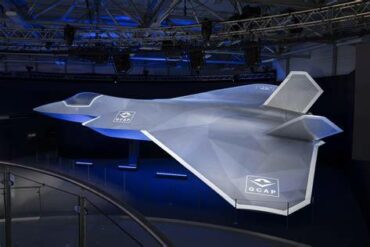
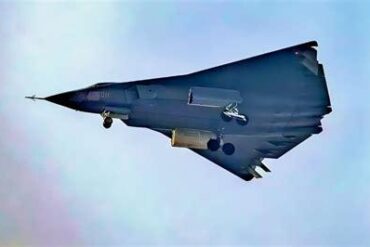
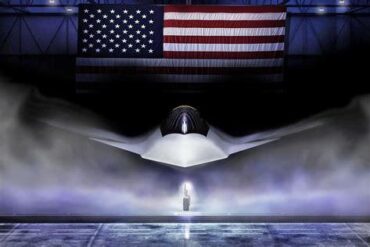
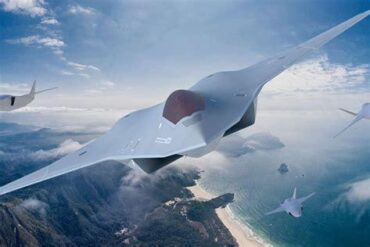
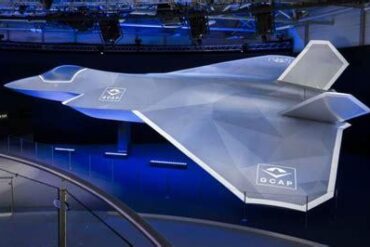
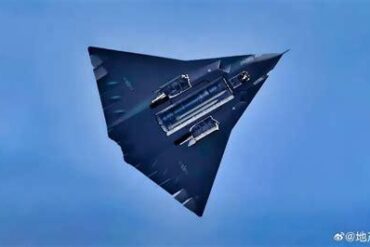
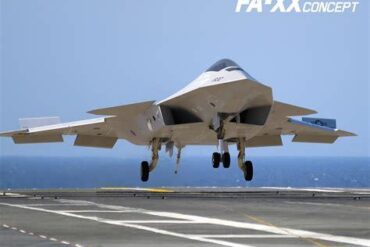
The race for aerial supremacy is entering a new era. With the United States declaring that its 6th Generation Fighter Jet will be ready for service by 2029, global defense dynamics are set for a tectonic shift. This aggressive timeline, if realized, would leapfrog U.S. airpower capabilities far ahead of rivals like China and Russia, and risk leaving aspiring powers like India a generation behind.
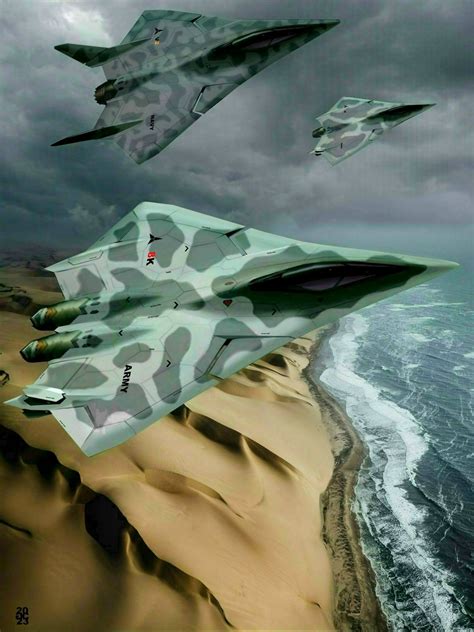
US Defense Strategy: The Dawn of the NGAD Era
The Next Generation Air Dominance (NGAD) program, spearheaded by the United States Air Force (USAF), represents the pinnacle of modern aerospace innovation. Born out of a strategic need to replace the F-22 Raptor and complement the F-35 Lightning II, the NGAD initiative has reportedly been in active development for more than a decade. It is designed to outclass current platforms in every domain—stealth, speed, maneuverability, weapons integration, and networked warfare.
NGAD is not just a fighter. It is an ecosystem—a “family of systems” that includes manned jets, autonomous drones, sensor fusion, and directed energy weapons. The aircraft at its center is expected to deliver a generational leap in aerial combat. A demonstrator has already flown, and defense officials confirmed its existence in 2020, emphasizing that the project was far beyond mere PowerPoint stages.
Defining the 6th Generation: What Sets It Apart?
While the world debates what exactly constitutes a 6th Gen fighter, several core features are becoming clear:
- Optional Manned Capability: The aircraft could fly with or without a pilot.
- Multi-Spectral Stealth: Low observability across radar, IR, and electronic spectrums.
- Advanced Propulsion: Adaptive-cycle engines enabling supercruise and high efficiency.
- AI and Machine Learning: Onboard systems for decision support, threat prioritization, and autonomous behavior.
- Drone Wingmen: Networked unmanned aerial vehicles (UAVs) working in formation.
- Energy Weapons: Integration of lasers or microwave-based systems for missile defense.
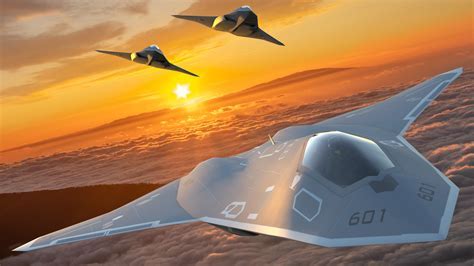
These features enable “first-sight, first-shot, first-kill” capabilities, making NGAD a strategic deterrent as much as an operational tool.
China and Russia: Following or Competing?
China, as the U.S.’s primary pacing threat, is not far behind. Reports suggest that Beijing has initiated tests of its own 6th Gen fighter, potentially dubbed the J-36, likely developed by Chengdu Aerospace Corporation. While visual evidence remains scant, U.S. intelligence and satellite observations confirm advanced jet prototypes under evaluation at facilities in Sichuan.
Russia, still struggling to serially produce its 5th Gen Su-57 Felon, has floated the Su-75 “Checkmate”, a supposed 5th or 5.5 Gen platform. However, these projects lack transparency, consistent funding, and international credibility. Moscow’s deteriorating industrial base, compounded by sanctions and war expenditure, severely undercuts its ability to field a true 6th Gen competitor.
India’s AMCA: A Decade Behind the Curve
Meanwhile, India’s Advanced Medium Combat Aircraft (AMCA) program, led by the Aeronautical Development Agency (ADA) and DRDO, plans its first flight by 2029 and induction by 2035. Though often touted as a 5.5 Gen fighter, even this classification remains ambiguous. With AMCA aiming to bridge India’s yawning capability gap, its slow progress, underfunded design bureaus, and talent attrition hamper competitiveness.
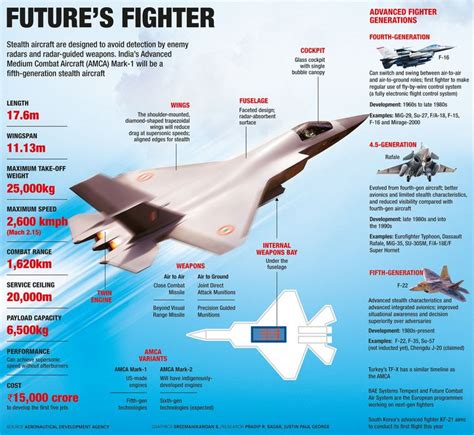
India’s biggest hurdle isn’t ambition—it’s execution. Unlike the U.S. with its multi-billion-dollar R&D budgets and vast industrial-military complex, India is still developing its domestic ecosystem. Challenges include:
- Jet engine reliance: India lacks indigenous engines powerful enough for AMCA. HAL depends on U.S. GE F414 engines or uncertain foreign partnerships.
- Avionics and EW systems: Indigenous systems are still in early stages or lag behind global benchmarks.
- Stealth and materials: RAM (Radar Absorbent Materials) and stealth shaping expertise remain underdeveloped.
- Talent and pay gaps: Engineers in DRDO and HAL are severely underpaid compared to global peers, resulting in chronic brain drain.
The Exponential Innovation Curve and India’s Dilemma
Defense analysts often describe a learning curve in high-tech aerospace domains. Initial progress is slow, followed by exponential innovation once foundational knowledge is mastered. The U.S. crossed this inflection point decades ago. China, through reverse engineering and focused state investment, has climbed it rapidly.
India, however, is stuck in the early stages—marked by slow incrementalism, political red tape, and underinvestment. The Tejas program took over 25 years from concept to squadron deployment, and the Tejas Mk2 timeline is already slipping despite partial funding.
India’s hope lies in sustained investment and reform in institutional culture—DRDO and HAL must move from bureaucratic mindsets to agile, innovation-driven development models.
Budget, Politics, and National Priorities
While the U.S. spends over $800 billion annually on defense, India’s budget hovers near $75 billion, with much of it earmarked for salaries, pensions, and imports. Critics argue that misaligned spending priorities—such as disproportionate allocations to AYUSH (traditional medicine systems)—drain critical resources from defense R&D.
Experts suggest increasing defense R&D spending 5–10×, raising engineer salaries, and fostering private-sector participation. Without these, AMCA risks becoming irrelevant before it even takes off.

Is the 2029 US Timeline Realistic?
Skeptics rightly point out that defense timelines are often optimistic. Even the F-22 Raptor, developed in a less complex technological era, faced delays. Boeing’s transformation of the 777 into the 777X—a civilian aircraft—took over five years. Developing a new fighter from scratch typically spans 15–25 years.
Yet the NGAD program is different. First flight of a demonstrator occurred in 2020. Contracts were awarded years ago, and component technologies—like AI-driven cockpits, adaptive engines (like GE’s XA100), and smart munitions—are maturing fast. Crucially, U.S. procurement will begin with limited numbers (~200), allowing focused deployment and upgrades without mass production constraints.
The Strategic Significance: More Than Just Technology
The true power of a 6th Gen platform is not in stealth or speed, but in battlefield dominance through integration. NGAD will serve as a command node, coordinating with space assets, surface vessels, and autonomous drones. This aligns with the U.S. vision of Joint All-Domain Command and Control (JADC2)—a strategy China and Russia can’t match today.
In this paradigm, network warfare trumps dogfights. The fighter’s role expands from hunter to orchestrator. India’s AMCA may enter service as a capable stealth jet—but in a battlespace ruled by coordinated swarms, satellite-backed targeting, and electronic suppression, it may be tactically outmoded.

The Road Ahead: Incremental or Revolutionary?
India faces a crossroads. With 6th Gen platforms emerging globally and 7th Gen technologies (like AI-autonomous fleets and orbital drones) under speculative development, the AMCA must avoid becoming a “too-late, too-little” project.
Instead of racing the U.S. head-on, India should pursue a hybrid strategy:
- Integrate 6th Gen features into AMCA Mk2/Mk3: Enhanced sensors, network warfare tools, and optionally unmanned modes.
- Partner on select technologies: Collaborate with allies for AI systems, propulsion, or stealth materials.
- Invest in asymmetric capabilities: Smart missiles, hypersonic platforms, and electronic warfare assets.
- Prioritize industrial self-reliance: Build domestic engine, radar, and avionics capabilities to escape foreign dependence.
Conclusion: Air Dominance is National Security
The United States’ march toward a 6th Gen fighter by 2029 is both an engineering marvel and a strategic chess move. For nations like India, it’s a wake-up call—not just to accelerate development, but to reform the very foundations of their defense innovation ecosystems. The skies of the 2030s will be shaped not just by stealthy silhouettes, but by nations that dared to innovate boldly and execute decisively.