Israel is closely monitoring a shifting defense landscape in the Middle East as several regional players — including Turkey, the UAE, Saudi Arabia, Qatar, Bahrain, Egypt, and Morocco — pursue the acquisition of the F-35 Lightning II, a move that could challenge Israel’s long-held Qualitative Military Edge (QME). The Israeli Ministry of Defense (MoD) is reportedly eyeing the sixth-generation F-47 fighter jet as a potential counterbalance, ensuring its air dominance remains unchallenged in a rapidly modernizing region.
Rising Concerns Over Regional F-35 Access
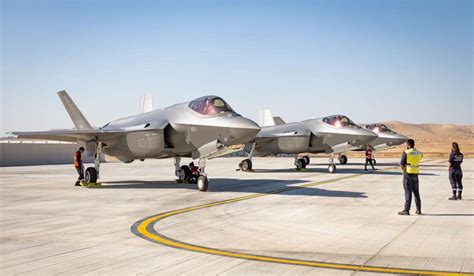
Israel is currently the sole operator of the F-35 in the Middle East, flying the highly customized F-35I Adir, an advanced variant integrated with Israeli-designed systems for radar, electronic warfare, and mission-specific enhancements. This has granted Israel unmatched aerial superiority and intelligence-gathering capabilities, making it the first nation to use the platform in combat, including its recent operations against Iranian targets.
However, according to reports in the Jerusalem Post, Israel views the growing regional interest in the F-35 with alarm. Discussions between the U.S. and countries like Saudi Arabia, Qatar, and Turkey could lead to expanded F-35 sales. The UAE and Bahrain, bolstered by recent multibillion-dollar defense deals, remain persistent in their pursuit of the aircraft. If these states gain access to the platform, Israel’s air dominance — a cornerstone of its national security — could face unprecedented challenges.
U.S. policy dictates that any military equipment sold to Israel must be superior to that sold to neighboring states, ensuring Israel’s QME. This policy has historically shaped arms sales in the region. Yet, as geopolitical alliances evolve and defense diplomacy deepens, the U.S. may find it increasingly difficult to balance Gulf ambitions with Israel’s security needs.

Turkey, UAE, and Saudi Arabia: A Renewed Push for the F-35
The most significant recent development comes from Turkey, whose President Recep Tayyip Erdogan has expressed optimism about rejoining the F-35 program, from which Ankara was expelled in 2019 following its acquisition of the Russian S-400 missile defense system. Similarly, Saudi Arabia has rekindled discussions with Washington about purchasing the stealth fighter, with the UAE and Qatar also maintaining strong lobbying efforts.
While the U.S. has so far resisted these demands, insiders suggest a recalibration may be on the horizon, particularly if Washington sees strategic value in reinforcing defense ties with these Gulf states amid shifting alliances in the Middle East. Yet, this would inevitably require some form of capability downgrading of any F-35 sold to Arab nations to preserve Israel’s edge — a compromise that may make the jet less appealing to prospective buyers given its high costs and maintenance demands.

Enter the Sixth-Generation F-47 Fighter
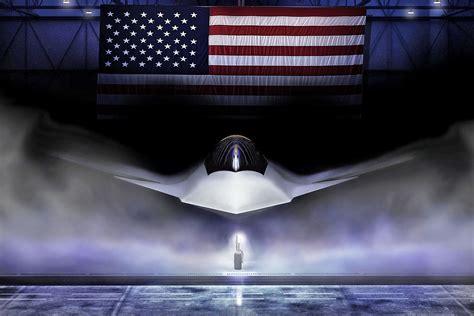
Against this backdrop, Israel is evaluating the F-47, a sixth-generation stealth aircraft currently in development by Boeing. This next-gen platform, awarded a development contract in March 2025, promises to surpass the F-35 in nearly every performance metric. With an operational range exceeding 1,800 kilometers, speeds over Mach 2, AI-driven combat systems, and ‘stealth++’ technologies, the F-47 represents a massive leap in capability.
President Donald Trump, announcing the F-47 development contract, hinted at exporting a “toned-down” variant, much like earlier U.S. policies for selling advanced fighters to allies. For Israel, however, a full-capability F-47 could be the natural successor to the F-35I, maintaining its technological superiority even if neighboring nations acquire downgraded F-35 models.
Bridging the Gap: F-35 Fifth-Plus Generation Upgrade
In addition to the F-47, Lockheed Martin is advancing a fifth-plus generation F-35 variant, integrating Next Generation Air Dominance (NGAD) technologies. CEO Jim Taiclet described this upgrade as transforming the F-35 into a “Ferrari,” incorporating advanced stealth, sensor fusion, and AI capabilities. This platform aims to deliver 80% of sixth-generation performance at half the cost, providing a cost-effective interim solution until the F-47 becomes fully operational between 2025 and 2029.
For Israel, procuring the upgraded F-35 could be a strategic move to rapidly bolster its fleet while awaiting the F-47’s arrival. Such interoperability between the F-35I Adir and the fifth-plus F-35 would enhance operational efficiency and combat readiness, ensuring seamless integration into existing IAF structures.

Implications for Regional Security
Should Washington approve F-35 sales to Arab states, it will undoubtedly recalibrate the military balance in the Middle East. Israel may then find the acquisition of the F-47 — or the upgraded F-35 variant — not just preferable but essential. This potential arms race could accelerate regional militarization, pushing countries like Iran to deepen defense cooperation with Russia and China.
Moreover, U.S. decisions on these sales will carry long-term implications for American influence in the Middle East. Granting Gulf states access to the F-35 may strengthen ties, but it risks undermining Israel’s trust — a longstanding pillar of U.S. strategy in the region.
Looking Ahead: Israel’s Strategic Calculus
The Israeli MoD’s close tracking of the F-47 program underscores its commitment to preemptively safeguarding its QME. If regional F-35 acquisitions are approved, Israel could swiftly pivot toward securing the F-47 or upgraded F-35 variants to maintain its decisive edge. Ultimately, the U.S.-Israel defense partnership will remain central to this evolving dynamic, with Washington carefully balancing its regional commitments against Israel’s security imperatives.
For now, Israel is preparing for every scenario — from lobbying against expanded F-35 sales to fast-tracking next-generation acquisitions — ensuring that its air force remains unmatched in capability and readiness across the Middle East.