J-36 Emerges as a Strategic Game-Changer in the Indo-Pacific Skies
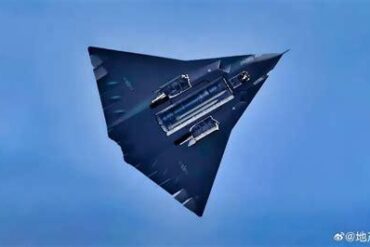
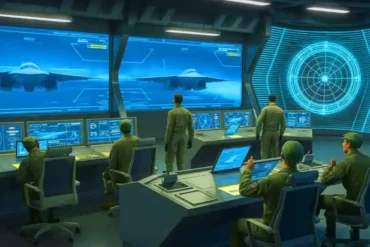
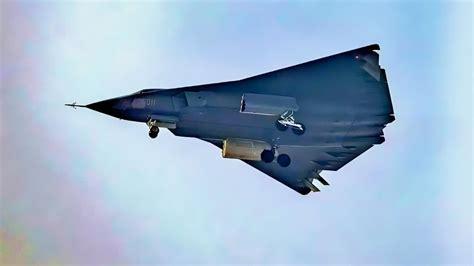
In the evolving theater of geopolitical power projection, China’s upcoming sixth-generation fighter jet, the J-36, has emerged as a central pillar in Beijing’s efforts to challenge U.S. air dominance over the Western Pacific. Described in a recent edition of Shipborne Weapons, a Chinese military journal, the J-36 is envisioned as a stealth air superiority fighter with the ability to neutralize threats like the American B-21 Raider and disrupt U.S. operations as far as 1,000 kilometers from China’s coastline.
The strategic intent behind the J-36 project is precise: to deny the United States air superiority along the first island chain—a key battleground in any hypothetical conflict over Taiwan. The fighter is reportedly equipped with advanced stealth, supersonic cruise, and long-range weapons designed to enforce temporary airspace blockades, providing critical operational windows for the People’s Liberation Army (PLA) to execute military maneuvers without U.S. interference.
Neutralizing the B-21 Raider’s Strategic Reach
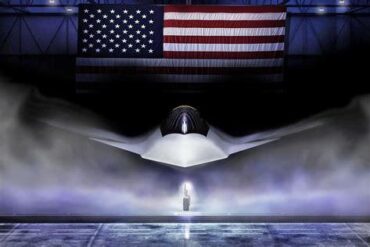
At the core of this arms race is the Northrop Grumman B-21 Raider, the world’s first operational sixth-generation stealth bomber. Capable of loitering in contested airspace and deploying precision stand-off munitions, the B-21 represents a strategic asset for the U.S. Air Force’s deep-strike capability. According to U.S. defense officials, the B-21 can fly over 2,000 kilometers from Guam and maintain a persistent aerial presence near the first island chain.
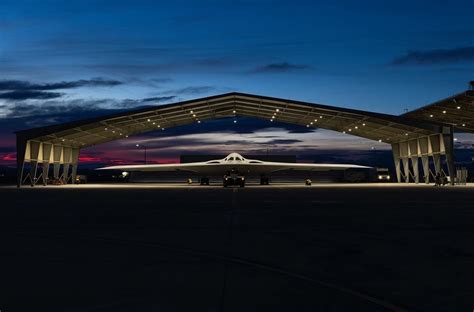
The PLA views this as an existential threat. The Shipborne Weapons article asserts that even China’s current fleet of J-20 stealth fighters cannot adequately counter the B-21. The J-20 suffers from limited range, modest stealth in non-forward aspects, and a reliance on airborne early warning platforms. These shortcomings led Chinese planners to pursue a next-generation solution—a fighter capable of sustaining stealth at all angles, deploying long-range precision weapons, and achieving autonomous combat performance deep in hostile territory.
Strategic Implications of J-36’s 1,000-Kilometer Reach
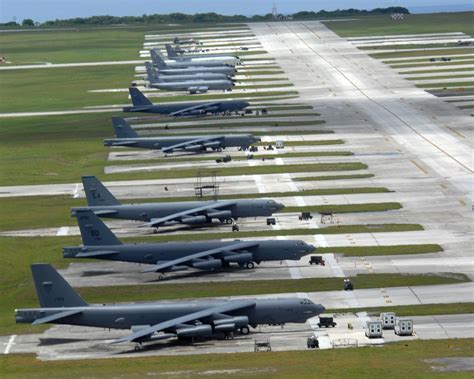
A critical claim in the article is the J-36’s ability to enforce airspace denial up to 1,000 kilometers from China’s coast. This reach includes key strategic sites such as Guam, which hosts U.S. air bases like Andersen Air Force Base, a hub for long-range bombers and reconnaissance missions. By conducting “two-hour” air denial operations, the J-36 could delay or disrupt U.S. sortie launches, logistical chains, and ISR (intelligence, surveillance, reconnaissance) coverage.
Such operations are designed not to establish permanent control of the skies—a feat neither side is expected to achieve—but rather to create critical windows of air superiority that enable or thwart decisive action. As Admiral Samuel Paparo, Commander of U.S. Indo-Pacific Command, acknowledged in a Senate Armed Services Committee hearing, China’s developments now make it plausible to contest or even deny U.S. air superiority within the first island chain.
“If you do not hold the high ground along the first island chain, you are vastly limited in your ability to operate,” Paparo said. “Ceding air superiority is not an option.”
J-36: A Sixth-Generation Fighter with Strategic Depth
The J-36, still under active development at Chengdu Aircraft Industry Corporation, is believed to incorporate a suite of sixth-generation features. These likely include multi-spectral stealth, advanced artificial intelligence for autonomous mission support, sensor fusion across domains, and high-energy weapons integration. While exact specifications remain classified, its conceptual architecture is designed to address every limitation observed in the J-20 platform.
Notably, the J-36’s reported range and larger internal weapons bay suggest it can carry long-range air-to-air and air-to-ground munitions, possibly including hypersonic missiles. Combined with enhanced supersonic cruise capabilities, this would enable deep strike missions, electronic warfare operations, and persistent patrols in highly contested zones—all from standoff distances.
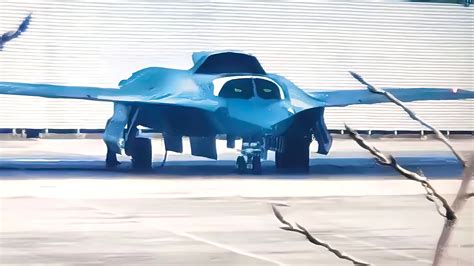
The J-36 also supports China’s larger doctrine of “informationized warfare”, where integrated systems across land, sea, air, and space allow faster decision-making and coordinated attacks. Its deployment will amplify China’s ability to enforce local air dominance and conduct precision joint operations across the South and East China Seas.
US Concerns: Eroding Technological Superiority in the Pacific
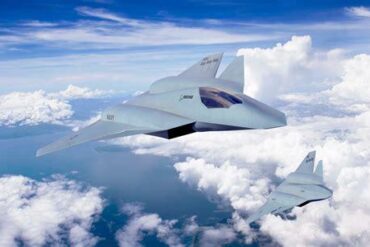
For the United States, the rise of the J-36 presents a clear challenge to its airpower primacy in the Indo-Pacific. The U.S. Department of Defense has fast-tracked the development of its own sixth-generation fighter, the F-47, under the Next Generation Air Dominance (NGAD) program. Awarded to Boeing earlier this year, the F-47 is intended to complement the B-21 Raider and sustain American edge in contested environments.
However, defense experts argue that platform parity alone will not ensure superiority. Success will hinge on speed of deployment, integration with existing assets, and regional basing strategies. Unlike previous conflicts—such as those in the Middle East, where the U.S. enjoyed total air dominance—any future engagement with China will be highly contested, dynamic, and technology-intensive.
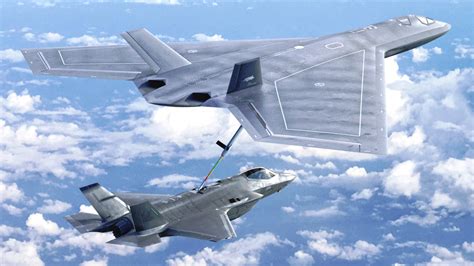
Both sides are also expected to deploy large numbers of unmanned systems, cyber capabilities, and space-based ISR networks to complement manned fighters. This pushes the conflict away from simple dogfights and toward a more complex battle for electromagnetic spectrum, satellite links, and AI decision-making superiority.
Temporary Supremacy, Not Total Control
Military strategists widely acknowledge that neither China nor the U.S. is likely to achieve continuous air supremacy in the Western Pacific. Instead, both forces will compete for limited windows of aerial dominance, sufficient to enable strike packages, disrupt enemy defenses, or protect key installations.
Admiral Paparo emphasized this evolving reality: “Air supremacy is the complete mastery of the air. Neither side will enjoy that. But it will be my job to contest air superiority, to protect those forces that are on the first island chain … and also to provide windows of air superiority to achieve our effects.”
This acknowledgement marks a shift from traditional U.S. doctrine, which long relied on unchallenged control of the skies. It underscores a growing realization within the Pentagon that the era of guaranteed air dominance is over, and future wars will be defined by brief but decisive aerial battles, supported by long-range fires and synchronized multi-domain warfare.
Toward 2030: J-36 May Enter Service Before US Counterpart
The Chinese magazine article hints at an ambitious timeline, suggesting the J-36 could become the world’s first operational sixth-generation fighter by 2030. If realized, this would mark a historic milestone for the PLA Air Force and shift the balance of power across the Indo-Pacific. The F-47 and other NGAD platforms may not reach full operational capability until the early 2030s, giving China a temporary but pivotal advantage.
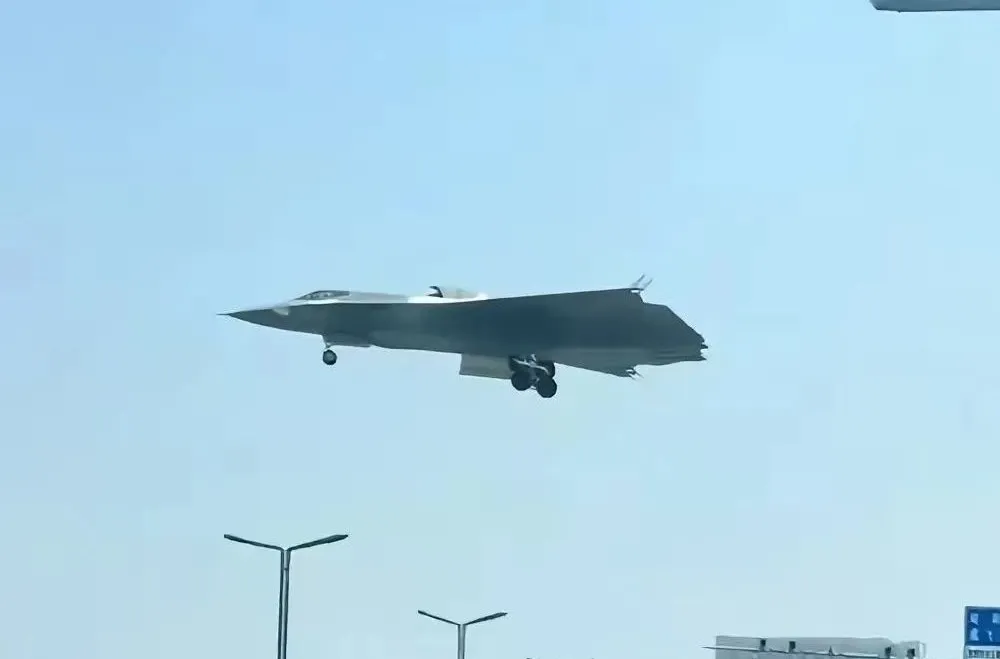
In strategic terms, the J-36 is more than a new fighter jet. It represents a symbol of China’s technological ascendancy, its growing industrial-military complex, and its determination to reshape the regional security order. By directly threatening high-value assets like the B-21 and denying access to forward-operating bases, the J-36 adds a critical layer to China’s broader anti-access/area denial (A2/AD) strategy.
As the skies above the Western Pacific grow increasingly crowded, the world edges closer to an era where sixth-generation air combat platforms decide the balance of power. Whether the J-36 delivers on its promise remains to be seen—but its very development already signals a tectonic shift in air warfare doctrine and deterrence dynamics in the 21st century.