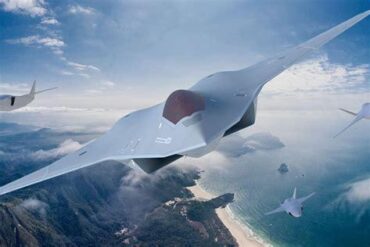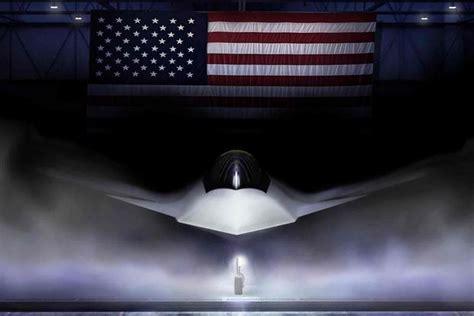
The announcement of the F-47, the crewed centerpiece of America’s Next-Generation Air Dominance (NGAD) program, was meant to be a statement of inevitability. It was supposed to signal that the United States had already crossed the threshold into a new era of air combat—one defined by extreme range, AI-driven warfare, and near-total battlespace awareness. Instead, it triggered something far messier: a transcontinental war of narratives. On one side stood Donald Trump, freshly returned to the Oval Office, promising unmatched air superiority. On the other stood Chinese state media, coolly dismissing the aircraft as small, technically compromised, and built by what they openly called an “unreliable contractor.”
The clash was not merely about aerodynamics or stealth coatings. It was about credibility, industrial competence, and who gets to define the future of airpower. The F-47 instantly became less a fighter jet and more a symbol—of ambition, risk, and geopolitical rivalry played out at Mach 2.
The naming alone hinted at the aircraft’s symbolic weight. Officially, F-47 was framed as a tribute to the P-47 Thunderbolt and the founding year of the U.S. Air Force in 1947. Yet few observers missed the political subtext. Trump, the 47th President of the United States, seemed perfectly comfortable letting the coincidence linger. Then, almost as abruptly, he wasn’t. Speaking at the World Economic Forum in Davos, Trump suggested he might strip the aircraft of its name altogether if it no longer suited him. In defense circles, that moment landed with a thud. Fighter designations are rarely treated as accessories.
By that point, however, the real storm was already brewing across the Pacific.
The Strategic Promise of the F-47
The U.S. Air Force has been unusually direct—by its standards—about what the F-47 is supposed to achieve. This aircraft is not a simple successor to the F-22 Raptor or a more capable cousin of the F-35 Lightning II. It is designed as the command node of a distributed combat ecosystem, orchestrating manned and unmanned assets across thousands of kilometers.
At the heart of that promise is range. With a projected combat radius exceeding 1,000 nautical miles, the F-47 fundamentally changes how the United States could fight in the Indo-Pacific, where distances dwarf those of Europe or the Middle East. For comparison, the F-22’s combat radius sits around 590 nautical miles, while the F-35 stretches to roughly 670. The jump is not incremental—it is doctrinal.
That extra reach allows prolonged loiter time in contested airspace, persistent intelligence, surveillance, and reconnaissance, and the ability to strike without relying on vulnerable forward bases. When paired with Collaborative Combat Aircraft (CCAs)—AI-enabled drone wingmen like the YFQ-42A from General Atomics and YFQ-44A from Anduril—the effective footprint expands even further. The F-47 is less a lone hunter and more a conductor, directing a lethal orchestra of autonomous systems.
Speed and survivability remain central. The aircraft is expected to exceed Mach 2, matching the Raptor and comfortably outpacing the F-35. More important, the USAF has hinted at “stealth++”, an intentionally vague term suggesting advances beyond the already formidable low-observable characteristics of fifth-generation jets. Adaptive-cycle engines, advanced electronic warfare suites, and broadband stealth shaping are all widely assumed, even if officially unconfirmed.
Yet it was precisely this blend of ambition and secrecy that gave China an opening.
China’s Sixth-Generation Countermove
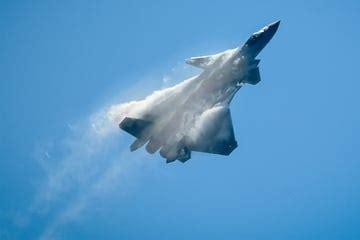
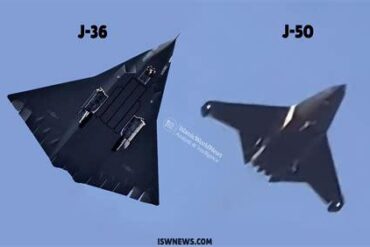
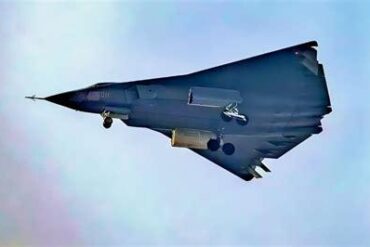
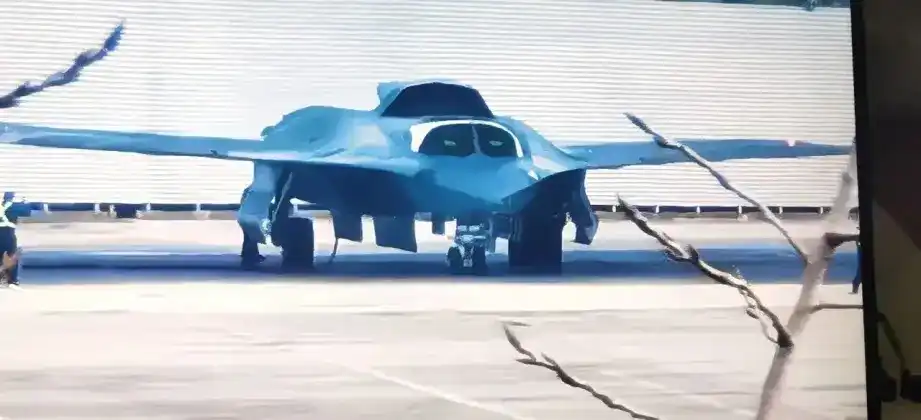
While Washington was unveiling renderings and guarded talking points, Beijing was flying metal. Since December 2024, China has conducted test flights of not one but two sixth-generation prototypes: the J-36 and the J-50. Both aircraft feature tailless delta or flying-wing configurations, optimized for multispectral stealth across radar, infrared, and electronic domains.
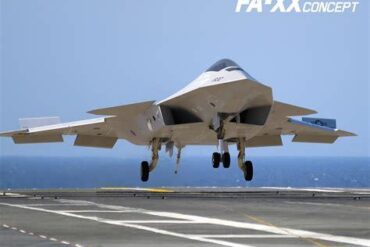
Chinese analysts wasted little time drawing contrasts. In commentaries carried by Global Times and CCTV, the F-47 was acknowledged as a genuine sixth-generation concept—but with caveats sharpened to a blade’s edge. The aircraft, they argued, appeared visually small, potentially limiting payload and mission flexibility. Its design choices, particularly the presence of canards, were portrayed as a throwback rather than a breakthrough.
Zhang Xuefeng, a prominent Chinese military analyst, noted that eliminating vertical tails is now considered a defining trait of sixth-generation fighters, reducing radar reflections from multiple angles. While the F-47 appears to follow that trend, Zhang argued that relying on canards for control represented an “outdated solution”, especially when compared to China’s own tailless platforms that reportedly avoid such compromises entirely.
The criticism went beyond shape and size. Wang Ya’nan, editor of Aerospace Knowledge, suggested that the F-47 was closer in scale to the F-22, positioning it as a tactical fighter rather than a campaign-level aerial system. By contrast, he described the J-36 as a large, multipurpose platform capable of executing sustained operations across entire theaters of war.
Boeing Under the Microscope
Design debates might have remained academic if not for the contractor behind the F-47. The decision to award Boeing the NGAD contract reignited long-simmering doubts about the company’s ability to deliver on cutting-edge military aviation programs.
Chinese state media was blunt. Boeing, they argued, had not won a major fighter contract in decades. Programs like the KC-46 Pegasus tanker were plagued by delays and technical flaws. The 737 MAX crisis was cited not just as a commercial failure, but as evidence of systemic quality-control issues. Entrusting such a company with America’s most advanced fighter, Chinese analysts claimed, was “very risky.”
The timing of Beijing’s messaging was surgical. Just two days after the F-47 contract award in March 2025, Chinese broadcasters aired grainy footage purportedly showing a J-36 test flight. The quality was poor, but the message was crystal clear: while Washington talked, China flew.
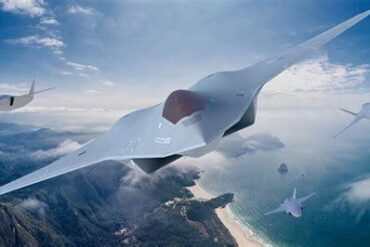
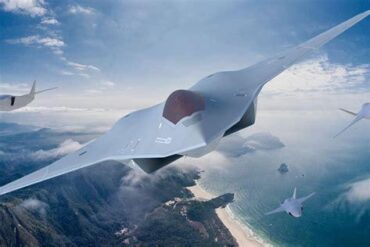
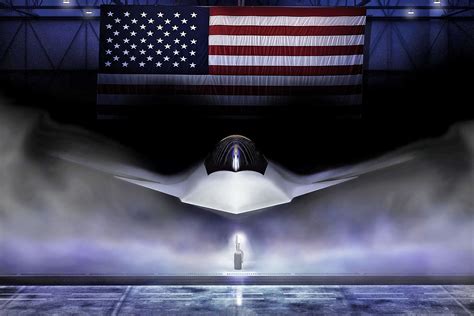
Compounding the skepticism was the absence of hard evidence for U.S. claims that sixth-generation demonstrators had been flying for nearly five years. “Even the pictures depicting the F-47 are artists’ renderings rather than photos,” one Global Times article pointed out, with barely concealed relish.
A Race of Narratives, Not Just Aircraft
By late 2025, Chinese engineers were publicly asserting that their development pipeline had surpassed the United States by years. Yang Shuifeng of the Chengdu Aircraft Design Institute claimed China had cracked the code for rapid, reliable sixth-generation production, leveraging experience from the J-20 stealth fighter and refined management practices.
Western analysts were unimpressed by the bravado. They countered that secrecy itself was America’s advantage. According to this view, the NGAD ecosystem has been evolving quietly since 2014, with experimental aircraft flying as early as 2020. Public restraint, they argue, protects breakthroughs in metamaterial stealth, AI-assisted decision-making, and adaptive propulsion—areas where the U.S. has historically excelled.
One acknowledged vulnerability remains the Next Generation Adaptive Propulsion (NGAP) program. Delays in finalizing the engine that will power the F-47 have fueled speculation about timelines and performance. Without a mature propulsion solution, even the most elegant airframe risks becoming a promise deferred.
Canards, Secrecy, and Strategic Misdirection
The fiercest design critique—the presence of canards—has sparked its own counter-narrative. Western aerospace engineers point out that canards are not inherently anti-stealth. When integrated with advanced shaping and materials, they can enhance lift and maneuverability with minimal radar penalty. Some even suggest that the renderings released by the USAF may be intentionally misleading, a form of strategic theater designed to provoke exactly the kind of criticism now emanating from Beijing.
That possibility underscores a deeper truth. Sixth-generation fighters are not judged solely by what is visible. Their true power lies in software, sensor fusion, and the ability to dominate the electromagnetic spectrum. In those realms, public images reveal almost nothing.
More Than a Fighter Jet
What makes the F-47 controversy so revealing is that neither side is entirely wrong. China has demonstrated impressive momentum, flying multiple prototypes and openly signaling confidence. The United States, meanwhile, is betting that depth beats speed, that a slower, more secretive approach will yield a system so integrated and resilient that early visibility becomes irrelevant.
Trump’s rhetoric—oscillating between bombast and ambiguity—adds another layer of uncertainty. His willingness to both champion and potentially rename the F-47 reflects a leadership style that thrives on spectacle but leaves strategists parsing signals. Allies watch closely. Adversaries do the same.
In the end, the mockery may matter less than the math. Range, payload, survivability, and integration will decide the balance, not headlines or state-media jabs. The real contest will unfold not in press conferences, but in silent test ranges and classified simulations.
The F-47 is not yet a flying aircraft the public can photograph. China’s J-36 and J-50 are not yet operational systems that can be benchmarked in combat. What exists today is a strategic argument about the future, fought with renderings, prototypes, and carefully chosen words.
History suggests that the outcome will surprise everyone. Airpower revolutions rarely announce themselves cleanly. They emerge, half-seen, through a fog of claims and counterclaims—until one day the balance shifts, and the arguments stop.