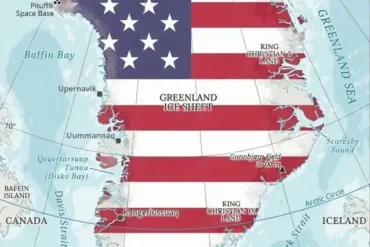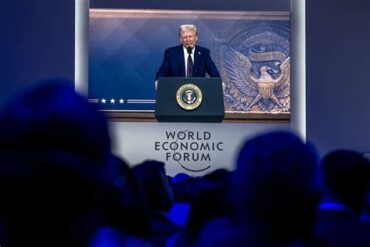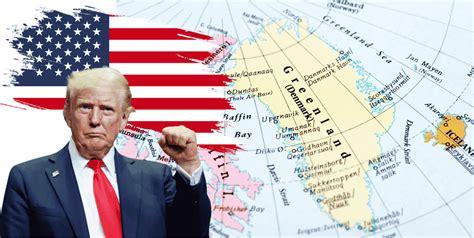
The Arctic has always been a place where maps blur into ambition, and in 2025 that blur has hardened into policy. Greenland—vast, icy, and strategically priceless—has returned to the center of global power politics as U.S. President Donald Trump revives and sharpens his long-standing claim that Washington must secure the island or risk losing the Arctic to rivals. This time, the rhetoric is no longer speculative. It is confrontational, time-bound, and framed as a matter of national survival rather than diplomacy.
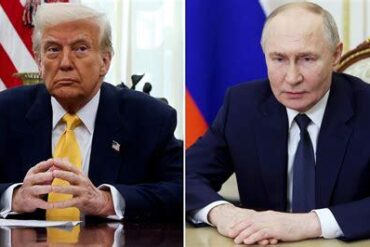
Trump’s assertion that Russia or China could seize Greenland if the United States hesitates has electrified capitals across Europe. Yet the most unexpected reaction did not come from Copenhagen or Berlin, but from Moscow. Vladimir Putin, speaking through Russian state media and at Arctic forums, characterized Trump’s plans as “serious” and “deeply rooted in history,” rejecting the notion that the proposal is mere theatrics. In doing so, the Kremlin introduced a startling twist: tacit recognition of U.S. ambitions in a region Moscow considers existential.
The resulting triangle—Washington, Moscow, and Europe—has transformed Greenland from a semi-autonomous Danish territory into the symbolic fulcrum of a new Arctic order, where sovereignty, resources, and military reach intersect under rapidly melting ice.
Why Greenland Suddenly Sits at the Center of U.S. Strategy
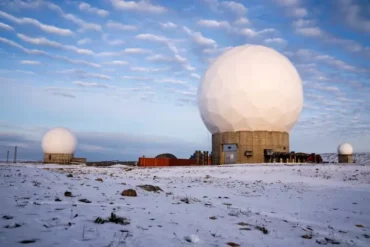
Trump’s renewed Greenland push rests on a stark strategic premise. Existing U.S. military arrangements, including the Pituffik Space Base operated under a 1951 defense agreement with Denmark, are no longer sufficient in an era of hypersonic missiles, under-ice submarines, and polar satellite warfare. Leases, Trump argues, do not guarantee permanence. Ownership does.
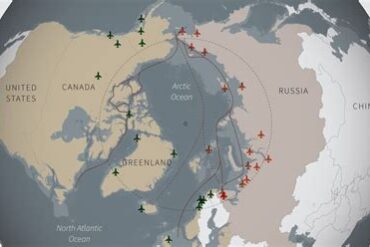
From Washington’s perspective, Greenland offers three irreplaceable advantages: geographic dominance over the North Atlantic, early-warning missile detection capabilities, and proximity to emerging Arctic shipping lanes that could redefine global trade. As ice recedes, what was once a frozen buffer is becoming a navigable corridor—one increasingly patrolled by Russian and Chinese naval assets operating in coordination.
Trump’s language reflects this urgency. He has framed Greenland not as a diplomatic acquisition but as a strategic inevitability, insisting that negotiation is merely the preferred method, not the only one. The implication is clear: the Arctic is no longer peripheral to U.S. security doctrine; it is central.
Putin’s Calculated Endorsement: History as Strategy
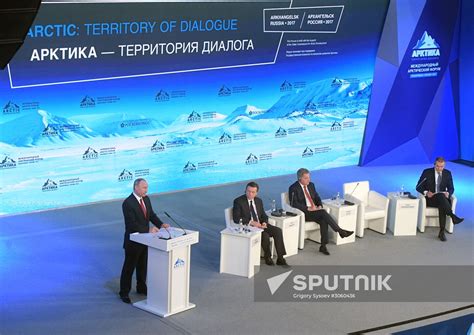
Putin’s remarks, cited by TASS, reframed the debate in a way few expected. By emphasizing that U.S. interest in Greenland dates back to the 18th century, including failed annexation attempts and a shelved 1910 territorial exchange involving Denmark and Germany, Putin effectively legitimized Washington’s narrative of historical continuity.
This was not altruism. Russia’s Arctic strategy prioritizes predictability. A U.S.-controlled Greenland, while undesirable, may be preferable to an expanded NATO footprint or a Chinese commercial-military hybrid presence on the island. By acknowledging Trump’s plans as serious rather than reckless, Moscow signals that it is preparing for a world in which U.S. control of Greenland is conceivable—and perhaps manageable.
Crucially, Putin avoided endorsing force. His support was rhetorical, historical, and strategic, allowing Russia to appear pragmatic while subtly driving a wedge between Washington and its European allies.
Europe Pushes Back: Law, Sovereignty, and Alliance Strain
Denmark’s response has been unequivocal. Prime Minister Mette Frederiksen described the moment as “decisive,” warning that the dispute transcends Greenland itself and cuts to the core of international law and self-determination. Her insistence that Greenland’s future must be decided by its people has become the rallying cry for European resistance.
Germany and Sweden quickly aligned with Copenhagen. Swedish Prime Minister Ulf Kristersson condemned U.S. “threatening rhetoric,” arguing that a forced takeover would normalize territorial coercion at a time when Europe is already grappling with revisionist wars. German officials echoed the concern, stressing that Arctic security must be strengthened within NATO, not through unilateral action.
Seven European nations, including France, Britain, Germany, and Italy, formalized this stance in a joint letter asserting that only Denmark and Greenland can determine the island’s future. The message was firm but measured: alliance solidarity does not extend to rewriting sovereignty.
NATO’s Quiet Balancing Act in the Far North
Behind closed doors, NATO has adopted a more cautious tone. Supreme Allied Commander General Alexus Grynkewich acknowledged that Greenland’s status is under active discussion within the North Atlantic Council, even as he emphasized that there is no immediate threat to NATO territory.
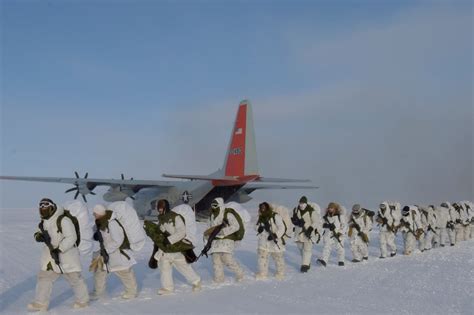
This duality reflects NATO’s dilemma. On one hand, the alliance recognizes the accelerating militarization of the Arctic, marked by joint Russian-Chinese patrols near Alaska and Canada. On the other, it must avoid legitimizing unilateral moves that could fracture alliance cohesion.
Germany’s offer to assume greater responsibility in Arctic security hints at a compromise: enhanced multinational presence without altering sovereignty. Whether Washington accepts that balance remains uncertain.
China’s Silent Shadow Over the Ice
Although absent from public sparring, China looms large over every calculation. Beijing’s self-designation as a “near-Arctic state” and its investments in polar research, satellite infrastructure, and potential mining projects have alarmed both Washington and Moscow. For Trump, China represents the ultimate justification for decisive action; for Putin, a shared concern that tempers rivalry.
Greenland’s rare earth potential only sharpens the stakes. Control over these resources would influence global supply chains critical to defense technology, renewable energy, and advanced manufacturing. In that context, Greenland is less a territory than a strategic multiplier.
An Arctic Inflection Point With Global Consequences
The convergence of Trump’s assertiveness and Putin’s historical framing marks a turning point in Arctic geopolitics. What was once dismissed as unconventional rhetoric has matured into a contest over law, power, and precedent. If Greenland’s status can be redefined under pressure, the implications extend far beyond the polar circle.
For Europe, the crisis tests the resilience of international norms. For NATO, it challenges internal unity. For Russia, it offers a chance to stabilize one frontier while watching others strain. And for the United States, Greenland represents both opportunity and risk—a chance to lock in Arctic dominance, and a gamble that could redefine alliances.
As ice melts and shipping lanes open, the Arctic is no longer the world’s frozen periphery. It is a proving ground for 21st-century power, where history is invoked not as memory, but as justification. In that cold expanse, Greenland has become the warmest geopolitical flashpoint on the planet.