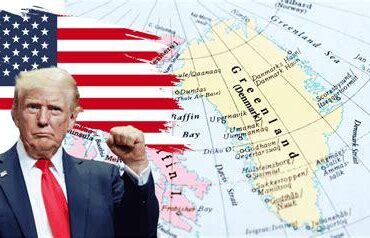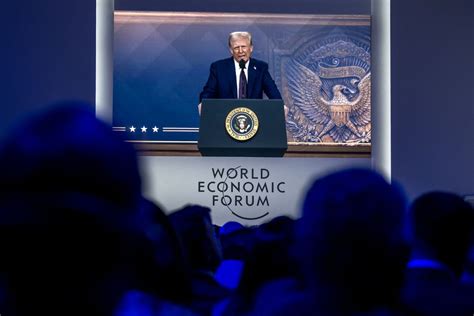
The Arctic has long been a quiet chessboard of global power, its icy vastness hiding minerals, shipping lanes, and strategic leverage. That silence cracked loudly at the World Economic Forum in Davos when Donald Trump, speaking before a global audience, appeared to confuse Greenland with Iceland—not once, but repeatedly. The verbal stumble might have been shrugged off as a slip of the tongue, except it arrived at the exact moment Washington was dramatically backing away from earlier threats to seize Greenland by force.
The result was a surreal collision of geopolitics and political theater. A speech intended to project strength instead triggered international mockery, diplomatic relief, and renewed scrutiny of America’s Arctic ambitions. Behind the laughter, however, sat a serious recalibration of U.S. policy in one of the world’s most strategically sensitive regions.
Trump’s Davos appearance marked his first address there in six years, and expectations were high. Instead of doubling down on confrontation, he unveiled what he framed as a sweeping diplomatic victory: the United States would not use military force against Greenland, and punitive tariffs against European allies would be lifted. The reversal followed weeks of escalating rhetoric that had rattled NATO and raised fears of a transatlantic rupture.
The irony was hard to miss. As Trump claimed to have secured “everything we wanted,” his speech repeatedly referenced “Iceland” while clearly discussing Greenland’s security, resources, and strategic value. In a forum built on precision and symbolism, the mix-up landed with a thud.
A Diplomatic Climbdown Framed as Triumph
The policy shift was negotiated with NATO Secretary-General Mark Rutte, who confirmed that discussions focused on Arctic security rather than sovereignty. Greenland’s political status, he emphasized, “did not come up.” That omission spoke volumes. After weeks of speculation about U.S. intentions toward the Danish-controlled territory, Washington was quietly stepping back from the brink.
Trump portrayed the agreement as permanent, declaring it would last “forever.” The language was characteristically absolute, but the substance revealed restraint. Sanctions of up to 25% tariffs on Denmark and other European allies—including the UK, France, and Germany—were scrapped. These countries had deployed forces to Greenland in a show of solidarity, a move that Trump had previously framed as provocation.
In Denmark, the shift was met with cautious relief. Foreign Minister Lars Løkke Rasmussen called Trump’s messages “positive,” noting both the pause in the trade war and the explicit rejection of military action. After weeks of diplomatic shock and accusations of betrayal, Copenhagen finally exhaled.
Greenland, Not Iceland: Why the Difference Matters
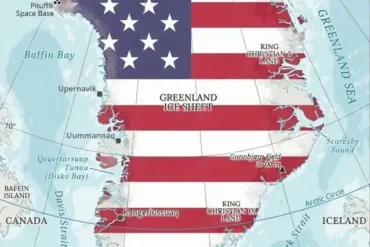
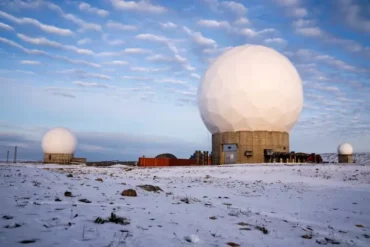
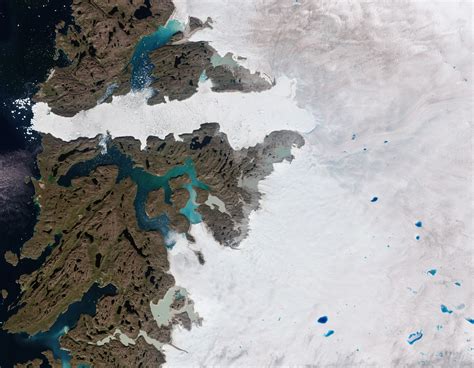
The Davos gaffe resonated because Greenland and Iceland are not interchangeable, geopolitically or geographically. Greenland is the largest island on Earth, with roughly 80% of its surface covered by ice and a population of just 56,000, most of them Inuit living along the coast. Its vastness hides rare earth minerals, strategic air bases, and Arctic access routes increasingly valuable as ice melts.
Iceland, by contrast, is smaller, greener, and far more densely populated, with nearly 380,000 residents, most clustered around Reykjavík. It is volcanically active, commercially connected, and climatically milder thanks to the North Atlantic Current. Confusing the two in casual conversation is common. Doing so while outlining national security policy is not.
The White House moved quickly into damage-control mode. Press Secretary Karoline Leavitt dismissed accusations of confusion, insisting Trump’s remarks were deliberate and accusing journalists of misinterpretation. The defense only fueled further scrutiny, particularly after social media users replayed clips highlighting the repeated references to Iceland.
Arctic Anxiety and the Russia–China Factor
Beneath the verbal missteps lay a consistent strategic concern: Russia and China. NATO spokesperson Allison Hart confirmed that upcoming negotiations between Denmark, Greenland, and the United States would focus on preventing either power from gaining an economic or military foothold on the island.
That concern is not theoretical. Russia has expanded its Arctic military infrastructure, while China has branded itself a “near-Arctic state,” investing heavily in polar research and logistics. For Washington, Greenland represents a northern sentry—remote, frozen, and suddenly central to 21st-century power politics.
Trump has repeatedly argued that the United States “deserves” Greenland because it would be forced to defend the island in any major conflict. At Davos, that argument softened. “I don’t want to use force. I won’t use force,” he said, a line that drew applause and disbelief in equal measure.
Mockery, Memory, and a Crisis Averted
The episode triggered one of the most serious transatlantic crises in decades, with analysts warning that aggression toward Greenland could fracture NATO from within. That outcome now appears unlikely, at least in the near term. Trump’s retreat removed the immediate threat, but not the underlying tension.
Public reaction was swift and unforgiving. Late-night comedians, political commentators, and European media seized on the Greenland–Iceland confusion as shorthand for diplomatic carelessness. Yet history suggests Trump is hardly the first to stumble over the names. Viking-era lore even claims the labels were deliberately swapped to mislead settlers.
The difference this time was context. At Davos, words were not trivia; they were policy signals. In that setting, precision matters.
What the Davos Moment Reveals About U.S. Arctic Strategy
Strip away the embarrassment, and a clearer picture emerges. The United States is recalibrating its Arctic posture—less overt confrontation, more alliance management, and a renewed focus on security cooperation over territorial ambition. Trump’s rhetorical bravado collided with geopolitical reality, and reality won.
The Davos gaffe will linger in headlines, but its lasting significance lies elsewhere. It marked the moment Washington publicly stepped back from the edge, choosing diplomacy over force in the Arctic. For Greenland, Denmark, and NATO, that choice mattered far more than whether the president mixed up two islands on a map.