Modern government aircraft are often described in technical terms: range, survivability, communications capability, defensive systems, fuel efficiency, and runway performance. Yet behind every presidential jet acquisition lies a far more complicated reality. Choosing a government aircraft is rarely just an aviation decision. It is a political declaration, an industrial strategy, a diplomatic signal, and increasingly, a public relations exercise performed on the global stage.
When a president, monarch, or prime minister walks across a red carpet toward a gleaming aircraft surrounded by security personnel and national flags, the jet instantly becomes more than transportation. It transforms into a visible projection of state power. The aircraft represents national identity as clearly as a military parade, embassy compound, or aircraft carrier. In many cases, the logo painted on the tail reveals as much about a country’s geopolitical orientation as any formal treaty or summit statement.
Governments understand this symbolism perfectly. Aerospace manufacturers understand it even better. Winning a flagship government aviation contract can elevate an aircraft manufacturer’s reputation for decades, while losing one can become a painful embarrassment in a fiercely competitive global industry where prestige often matters nearly as much as profit margins.
The politics surrounding VIP aircraft procurement have become dramatically more visible in recent years. The prolonged controversy surrounding the replacement of the United States’ Air Force One fleet exposed how government aviation programs can evolve into public political battlegrounds involving budget disputes, industrial policy debates, partisan symbolism, and national pride. Similar tensions exist across Europe, Asia, the Middle East, and emerging aerospace markets where government jets increasingly function as flying symbols of strategic alignment.
Air Force One Became A Symbol Of American Industrial Power
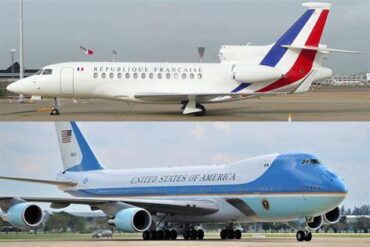
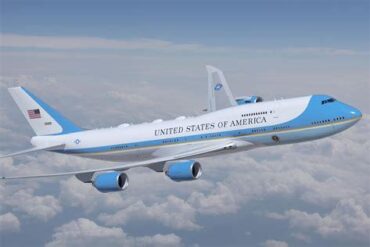
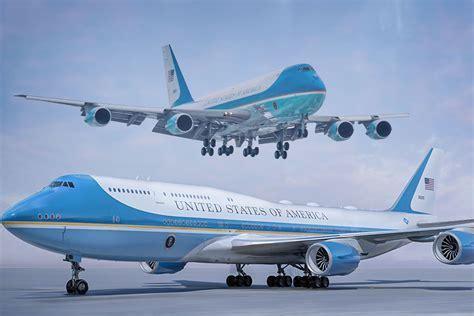
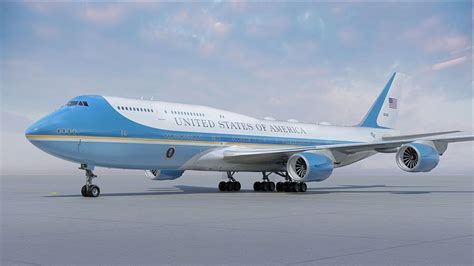
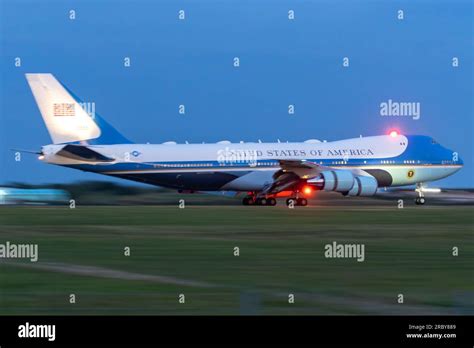
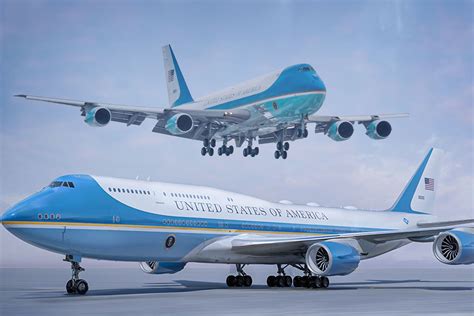
No government aircraft illustrates the intersection of aviation and politics more clearly than the American presidential fleet commonly known as Air Force One. Although technically the term applies to any US Air Force aircraft carrying the president, the iconic Boeing 747-based VC-25 aircraft have become globally recognized symbols of American authority and aerospace dominance.
The aging VC-25A aircraft currently serving American presidents entered service in 1990. Based on the Boeing 747-200 platform, they were designed during the late Cold War to function as airborne command centers capable of supporting continuity of government during catastrophic emergencies. Their role extends far beyond luxury transportation. These aircraft contain hardened communications systems, defensive countermeasures, secure conference rooms, medical facilities, and aerial refueling capability that allows them to remain airborne for extended periods during crises.
Yet replacing the aircraft became politically explosive long before the successor jets even approached delivery.
The future VC-25B program, based on the Boeing 747-8, evolved into one of the most publicly scrutinized aviation procurement projects in modern American history. Cost overruns, manufacturing delays, contract renegotiations, and presidential criticism transformed what should have been a relatively straightforward fleet modernization effort into a national political controversy.
Former President Donald Trump publicly criticized projected program costs during the early stages of procurement, placing extraordinary pressure on Boeing and forcing renegotiations that turned the aircraft into a political talking point across American media. Even proposed exterior paint schemes became partisan flashpoints. Debates over whether the aircraft should maintain the classic Jackie Kennedy-inspired blue-and-white livery or adopt a more aggressive patriotic color palette demonstrated how symbolic presidential aircraft have become.
Underneath the public controversy was a deeper political reality. Choosing a non-American aircraft for Air Force One was never politically viable regardless of operational performance. The aircraft serves as a global advertisement for American aerospace manufacturing capability. Selecting Boeing reinforces narratives surrounding domestic industrial leadership, strategic independence, and national prestige.
That symbolism matters enormously because Air Force One is arguably the most recognizable government aircraft on Earth. Every international arrival, televised summit, diplomatic mission, and presidential crisis response effectively turns the aircraft into a moving billboard for American aerospace engineering.
Boeing And Airbus Compete For More Than Aircraft Sales
The rivalry between Boeing and Airbus is often described as a commercial aviation competition. In reality, it also functions as a geopolitical contest involving industrial influence, defense relationships, export financing, and national strategic interests.
Government aircraft contracts sit at the center of this competition because they deliver immense symbolic value beyond their direct financial worth. When a government selects a Boeing aircraft, the decision can signal closer alignment with the American aerospace and defense ecosystem. Choosing Airbus may communicate support for European strategic autonomy and industrial cooperation.
This dynamic is particularly visible in Europe, where Airbus occupies a unique political position. Airbus is not merely an aircraft manufacturer. It is a multinational industrial project designed to ensure Europe maintains an independent aerospace capability capable of competing with the United States.
As a result, many European governments favor Airbus platforms not solely because of operational performance, but because doing so supports European manufacturing jobs, aerospace research, military conversion expertise, and technological sovereignty.
Germany’s adoption of Airbus A350 aircraft for government transport reflects this broader industrial philosophy. The aircraft provide exceptional long-range capability and modern efficiency, but they also reinforce Europe’s commitment to sustaining a competitive domestic aerospace sector. Every government Airbus order strengthens supply chains spread across France, Germany, Spain, and other European economies deeply tied to the company’s production network.
France provides an even clearer example of how VIP aviation can reflect national industrial strategy. The French government heavily relies on Dassault Falcon aircraft alongside Airbus platforms for state transport missions. Supporting Dassault preserves French aerospace independence and reinforces national engineering prestige in a highly strategic sector.
This matters because aerospace manufacturing remains one of the few industries where technological capability directly overlaps with national security, export power, and geopolitical influence. Governments therefore often treat aircraft procurement as an investment in strategic resilience rather than a simple transportation purchase.
Government Aircraft Function As Flying Diplomatic Statements
Every state visit turns a government aircraft into a stage for international diplomacy. The moment a presidential jet lands abroad, cameras capture not only the arriving leader but also the aircraft itself. Tail markings, manufacturer logos, aircraft size, and even paint schemes become part of the diplomatic performance.
Large widebody aircraft such as Boeing 747s and Airbus A350s project power, range, and prestige. Smaller business jets may emphasize efficiency, discretion, or fiscal restraint. In either case, the aircraft communicates political messaging before a single diplomatic meeting even begins.
This symbolic role explains why governments invest enormous resources into customization. Presidential aircraft are rarely standard commercial airliners. They contain secure communications infrastructure, encrypted data systems, missile defense technologies, military-grade avionics, conference facilities, medical suites, and command capabilities designed for national emergencies.
The result is an aircraft that effectively serves as a mobile extension of state authority.
For countries seeking to elevate their international status, government aircraft become especially important symbols of ambition. Turkey’s Boeing 747-8 presidential aircraft, for example, reflects not only long-range transport requirements but also Ankara’s desire to project regional influence and diplomatic visibility.
Similarly, Gulf states frequently operate highly customized VIP aircraft designed to showcase wealth, modernization, and geopolitical significance during international engagements.
India And Japan Used VIP Aircraft Modernization To Reflect Strategic Realignment
Outside Europe and North America, government aircraft procurement often overlaps with shifting geopolitical relationships.
India’s modernization of its VIP transport fleet offers a particularly revealing example. The country replaced older Boeing 747 presidential aircraft with specially configured Boeing 777-300ER aircraft during a period of rapidly expanding defense and strategic cooperation with the United States.
Operationally, the Boeing 777 offered compelling advantages. The aircraft provided excellent range, modern fuel efficiency, strong fleet support infrastructure, and compatibility with existing Air India operational expertise. Yet the procurement also occurred alongside growing US-India collaboration involving defense agreements, maritime security cooperation, logistics partnerships, and military acquisitions.
The aircraft therefore represented both practical modernization and broader diplomatic alignment.
Japan followed a similar path when replacing its aging Boeing 747 government fleet with Boeing 777-300ER aircraft. Tokyo’s decision reflected operational priorities including reliability and efficiency, but it also reinforced Japan’s longstanding aerospace and defense relationship with Washington.
These examples demonstrate an important reality often overlooked in simplistic geopolitical analysis. Government aircraft procurement is rarely purely political or purely operational. Instead, it usually emerges from a combination of strategic relationships, industrial familiarity, logistical practicality, and diplomatic signaling.
The aircraft chosen by a government often succeeds because it satisfies both operational requirements and political objectives simultaneously.
Smaller Nations Face Far Greater Political Sensitivity
For smaller countries without major domestic aerospace industries, government aircraft procurement can become even more politically delicate.
Unlike the United States, France, or China, smaller nations generally depend entirely on foreign manufacturers for long-range VIP transport capability. As a result, aircraft selection may be interpreted internationally as evidence of geopolitical alignment.
Choosing Boeing can suggest closer ties to the United States and its defense ecosystem. Selecting Airbus may imply stronger European relationships. Purchasing Embraer aircraft can emphasize affordability, regional cooperation, or support for emerging aerospace partnerships.
This sensitivity sometimes pushes governments toward supplier diversification strategies intended to avoid appearing overly dependent on any single geopolitical bloc.
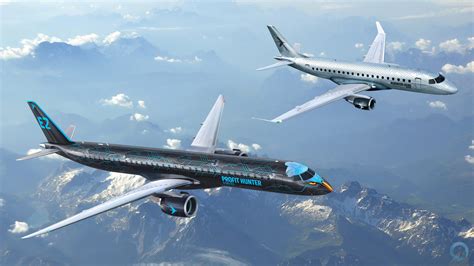
Embraer has increasingly benefited from this environment. The Brazilian manufacturer has positioned itself as an alternative supplier for governments seeking capable aircraft without fully entering the Boeing-Airbus rivalry. Embraer executive jets and government transport aircraft offer lower operating costs while still delivering modern VIP capability, making them attractive for countries balancing prestige with budget discipline.
Gulfstream has also become highly influential in the government transport market. Its long-range business jets are widely used for diplomatic missions, surveillance operations, and executive transport because they combine performance, discretion, and operational flexibility. Many governments prefer business jet platforms precisely because they avoid the enormous operating costs and public visibility associated with large airliner-based presidential fleets.
For smaller states, these procurement decisions can influence broader trade relationships, defense cooperation, and diplomatic perceptions. A government aircraft purchase may therefore carry implications far beyond aviation itself.
Russia And China Emphasize Strategic Independence
Russia and China illustrate a different philosophy surrounding government aviation: strategic autonomy.
Russia continues operating domestically produced Ilyushin Il-96 presidential aircraft partly because doing so demonstrates national aerospace self-reliance despite international sanctions and geopolitical tensions. Operating indigenous aircraft allows Moscow to avoid dependence on Western aerospace supply chains while reinforcing narratives surrounding technological sovereignty.
China presents a more complex model. Chinese leaders have historically used Boeing aircraft operated by Air China for VIP transport, but Beijing simultaneously continues investing heavily in developing indigenous aerospace capability through companies such as COMAC.
This reflects a transitional strategy. While Western-built aircraft may currently offer operational advantages, long-term political priorities increasingly favor domestic aerospace development capable of reducing strategic dependence on foreign manufacturers.
As geopolitical competition intensifies, more governments are likely to prioritize industrial resilience alongside operational performance when selecting future VIP aircraft.
Aerospace Manufacturers Treat Government Contracts As Prestige Victories
Aircraft manufacturers understand perfectly why government aviation contracts matter.
Winning a presidential transport deal delivers publicity impossible to replicate through conventional marketing campaigns. Every televised arrival, summit meeting, humanitarian mission, or international crisis involving the aircraft reinforces the manufacturer’s reputation for reliability, engineering sophistication, and strategic credibility.
Boeing’s decades-long association with Air Force One remains among the company’s most powerful branding assets despite the controversies surrounding the VC-25B replacement effort. Airbus aggressively markets its government and VIP aircraft capabilities by emphasizing sovereignty, flexibility, and secure communications integration. Dassault highlights French engineering excellence and operational versatility. Embraer increasingly presents itself as a cost-efficient challenger capable of serving emerging government aviation markets.
These manufacturers invest heavily in customization expertise because government aircraft differ dramatically from standard commercial models. Presidential aircraft require specialized communications architecture, defensive systems integration, hardened cybersecurity infrastructure, and mission-specific modifications that transform the jets into strategic assets rather than ordinary transports.
The prestige associated with these projects explains why aerospace companies often pursue government contracts even when profitability remains uncertain. The symbolic value can outweigh the financial return.
The Future Of Presidential Aviation Will Become Even More Political
Government aircraft procurement is likely to become increasingly politicized during the coming decades as geopolitical competition intensifies and nations seek greater industrial resilience.
Countries may increasingly favor domestic manufacturers or trusted strategic partners to reduce dependence on potentially vulnerable foreign supply chains. Aerospace sovereignty will become more important as governments recognize the strategic risks associated with relying entirely on external industrial ecosystems for critical national infrastructure.
Environmental pressure may also reshape VIP aviation politics. Governments operating large presidential aircraft fleets could face growing public scrutiny regarding sustainability, fuel consumption, and operating costs. This may encourage greater use of fuel-efficient twin-engine aircraft, sustainable aviation technologies, and smaller long-range platforms capable of balancing prestige with environmental responsibility.
At the same time, the symbolic power of presidential aircraft is unlikely to disappear. If anything, it may become stronger.
In an era dominated by live global media coverage, every government jet arrival instantly circulates worldwide across television broadcasts, online news platforms, and social media feeds. Aircraft therefore function not only as transportation assets but also as instruments of political theater visible to billions of people.
The aircraft parked beside the red carpet tells observers how a country views itself and how it wishes to be perceived by the world. It reveals industrial priorities, diplomatic relationships, economic confidence, strategic ambitions, and national identity in one carefully choreographed image.
That is why choosing a government jet has never been simply about performance. The engines, range, and avionics matter enormously, but the politics surrounding the aircraft matter just as much. In modern geopolitics, presidential aviation operates at the intersection of technology, symbolism, diplomacy, and power projection.
The jet itself ultimately becomes the message.