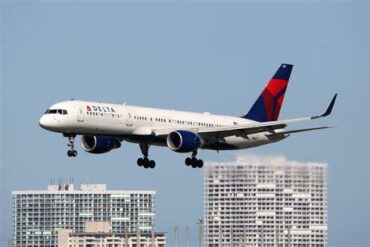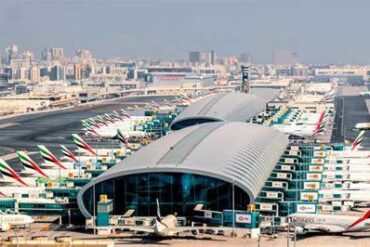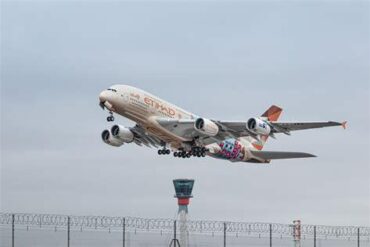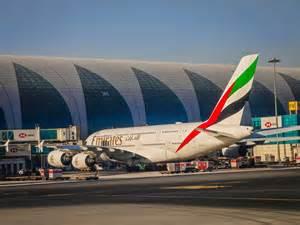
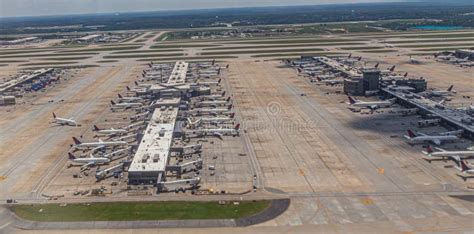
Delta Air Lines’ sudden withdrawal from Dubai International Airport (DXB) in early 2016 marked a critical turning point in the transcontinental aviation dynamic between North America and the Middle East. Despite Dubai’s position as the world’s busiest international airport and Atlanta—Delta’s base—being the world’s busiest by passenger volume, the expected synergy between the two global hubs never materialized. Instead, it collapsed under a web of economic friction, political controversy, and competitive disadvantage in an uneven playing field shaped by international subsidies and geopolitics.
The Subsidy War: Delta’s Allegations Against Gulf Carriers
At the heart of Delta’s decision was a fierce dispute over alleged unfair government subsidies. Alongside United Airlines and American Airlines, Delta formed part of the U.S. Big Three, which collectively accused Gulf carriers—Emirates, Qatar Airways, and Etihad Airways—of receiving a staggering $42 billion in state subsidies. These subsidies, they claimed, allowed the Middle Eastern airlines to operate expansive long-haul services with ultra-large fleets at artificially low costs, effectively pricing out U.S. competitors.
Delta argued that such support created a distortion in international air travel markets, rendering organic competition nearly impossible. These Gulf airlines, backed by their respective governments, operated massive fleets of widebody aircraft, including the Airbus A380 and Boeing 777, which enabled them to flood routes with capacity even when demand was soft.
The Gulf carriers countered these accusations with data. Emirates released a 388-page dossier, reviewed and accepted by the U.S.-UAE Business Council, intended to prove that its business was both self-sustaining and transparent. Emirates asserted that its operational model resembled Ryanair or Southwest Airlines in its use of high aircraft utilization, simplified staffing hierarchies, and lean corporate structures to achieve low cost-per-seat-mile performance.
The Competitive Disadvantage For U.S. Carriers
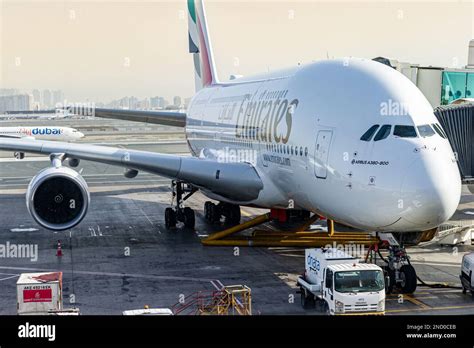
While the U.S. carriers had largely abandoned the Middle East, Emirates and its regional rivals had built massive international networks, connecting Asia, Africa, Europe, and North America through their Gulf hubs. Emirates, in particular, has more than 250 widebody aircraft, including 116 Airbus A380s, and uses DXB as a megahub for both eastbound and westbound travelers.
This strategy worked in tandem with state-supported infrastructure, lower labor costs, and tax incentives. In contrast, U.S. carriers operate in a deregulated environment, where subsidies are limited, labor costs are higher, and bankruptcy protections exist. While American airlines did receive aid during the 2008 financial crisis and the COVID-19 pandemic, these bailouts were reactive and temporary, unlike the structural advantages allegedly enjoyed by Gulf competitors.
The Geopolitical Risk Factor
Beyond the economics, another layer of risk factored into Delta’s calculus: regional instability. U.S. military involvement in the Middle East, coupled with ongoing tensions with Iran, and the presence of non-state militant actors such as ISIS and Al Qaeda, have made the region a perceived no-go zone for many American airlines.
While no U.S.-flagged airliner has been brought down by hostile fire in the Middle East, the mere existence of threats—from MANPADS (man-portable air defense systems) to long-range missile systems—creates a formidable safety concern. Delta, as well as its domestic competitors, have traditionally favored routes through safer European and transpacific corridors where the regulatory environment and political alliances are more stable.
Open Skies Agreements: Legal Structure and Strategic Loopholes
The battle between Delta and the Gulf carriers occurred against the backdrop of the Open Skies Agreements. These treaties, signed between the U.S. and over 100 partner nations, are meant to promote fair competition, lower prices, and expand international connectivity.
However, the U.S. legacy carriers contended that these agreements were being exploited by state-owned Gulf carriers whose subsidies effectively nullified the spirit of competitive neutrality. Although the agreements provided mechanisms for resolving disputes, the lack of direct penalties for hidden state aid left the American side with few real options.
At the same time, Gulf countries like the UAE and Qatar viewed the agreements as legitimate frameworks to grow their global aviation influence. They argued that the U.S. was applying a double standard, especially in light of its own financial interventions in domestic airlines during economic crises.
Strategic Retrenchment: Delta’s Broader Middle East Policy
Delta’s withdrawal from Dubai wasn’t an isolated act; it was part of a broader retrenchment from the Middle East. Unlike United Airlines, which re-established service to Dubai in 2023 via Newark Liberty International Airport, Delta has shown little interest in revisiting the Gulf market.
Delta’s CEO Ed Bastian took a particularly hardline stance. In a controversial move, he linked Middle Eastern airline executives to the 9/11 attacks, sparking backlash and effectively burning diplomatic bridges. That moment all but sealed Delta’s posture toward the region: wary, combative, and disengaged.
Why Dubai Still Matters: The Economic and Tourism Imperative
Despite Delta’s absence, Dubai’s strategic importance hasn’t diminished. It remains one of the most popular tourist destinations in the world, drawing millions of travelers with its luxury shopping, towering skyscrapers, desert adventures, and global events. The UAE’s continued investment in airport infrastructure, including plans for Al Maktoum International Airport (DWC), aims to handle up to 260 million passengers annually in the future.
Even without direct flights, Delta passengers can reach Dubai through SkyTeam partners, or by booking vacation packages via Delta Vacations, often routed through European hubs or code-share flights with Air France-KLM.

The Emirates Model: Hub Efficiency, Scale, and Global Reach
Emirates’ business model is not built around point-to-point routes but hub-and-spoke architecture, with DXB at the center. This allows them to aggregate traffic from multiple continents into one central transfer point, giving them the passenger volumes necessary to justify large aircraft.
The carrier also keeps a tight grip on operational costs by hiring international crew at competitive salaries, operating in a low-tax regime, and eliminating unnecessary managerial overhead. All these elements make Emirates capable of offering premium service at prices North American carriers struggle to match, especially on ultra-long-haul routes.
Can Delta Return? The Prospects for Re-Entry
Though there were whispers in 2018 of Delta resuming DXB service, those plans never moved beyond rumor. As of now, United Airlines remains the only major U.S. carrier with nonstop service to the UAE. American Airlines has relied on its Oneworld alliance partner Qatar Airways to maintain connectivity to the Gulf.
The possibility of a Delta return is remote unless several variables change:
- A shift in U.S. aviation policy to better address global airline subsidies
- Improved diplomatic relations between Delta leadership and Gulf governments
- Emergence of new economic imperatives that necessitate service re-establishment
Until then, Emirates, Qatar Airways, and Etihad will continue dominating the U.S.–Middle East market. Delta may remain competitive globally, but when it comes to the Gulf region, the airline has opted out of the fight.
Conclusion: A Missed Opportunity or Strategic Wisdom?
Delta’s withdrawal from Dubai can be seen either as a strategic defense of its core market or a missed opportunity to stay globally relevant. The Gulf carriers have leveraged state support, visionary planning, and geographic advantage to become titans of international aviation.
In contrast, Delta has chosen to consolidate its strengths in markets where it retains a competitive advantage. As global airline competition continues to heat up, this decision will be judged by future results: either as a prudent exit from a stacked deck or a retreat from global relevance at a time when aviation is more interconnected than ever before.