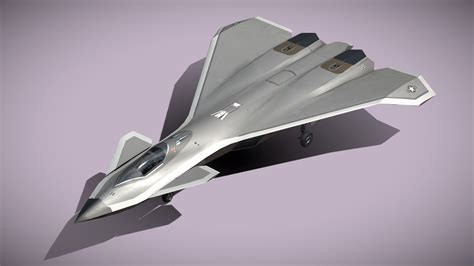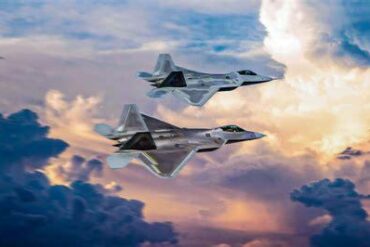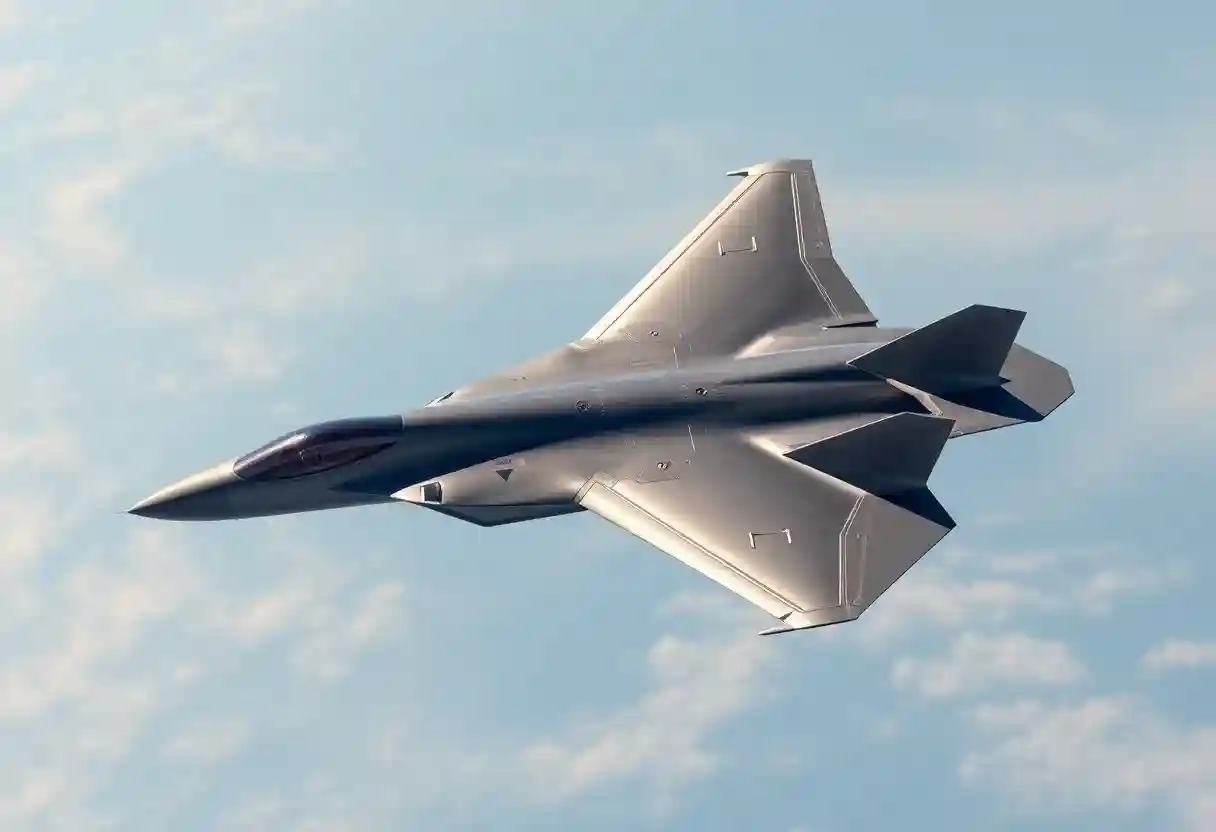
In March 2025, the United States made a resounding announcement in military aviation: it would begin developing the sixth-generation F-47 fighter jet, a leap into the future of air dominance. While the F-35 Lightning II and the F-22 Raptor have long stood as cornerstones of the U.S. Air Force’s power projection, the F-47 promises to embody the future of multi-role stealth, speed, and supremacy. Yet, beyond its mysterious capabilities and ambitious design goals, one question took center stage: why F-47? How did this cutting-edge jet come to bear such a name?
The Political Theater Behind the Name
On March 21, 2025, during a high-profile press conference, President Donald Trump unveiled the F-47 as part of the Next Generation Air Dominance (NGAD) program. The announcement came as a strategic declaration of technological progress, but it also carried political symbolism. As Trump stated during his address, “the generals picked the title” and it was “a beautiful number.” For many, that was a clear nod to the fact that Trump is the 47th President of the United States.

Though not officially confirmed as the sole reason behind the naming, the number 47 has unmistakable relevance to the current commander-in-chief. However, military insiders were quick to clarify that the number also harkens back to one of the most storied fighter planes in U.S. history: the P-47 Thunderbolt of World War II fame. This dual reference—one steeped in personal politics, the other in military legacy—makes the F-47’s naming story a rare blend of symbolism and heritage.
The P-47 Thunderbolt: From Juggernaut to Namesake
The P-47 Thunderbolt, affectionately known among pilots as the “Juggernaut” or simply the “Jug,” was one of the most successful and widely used fighter-bombers of World War II. Developed by Republic Aviation, the P-47 was a formidable presence in the skies, equipped with a 2,000-horsepower Pratt & Whitney R-2800 engine, and armed with six to eight .50 caliber machine guns. With a top speed of 433 miles per hour and the capacity to carry 10 rockets or 2,500 pounds of bombs, the aircraft was a devastating force on the battlefield.
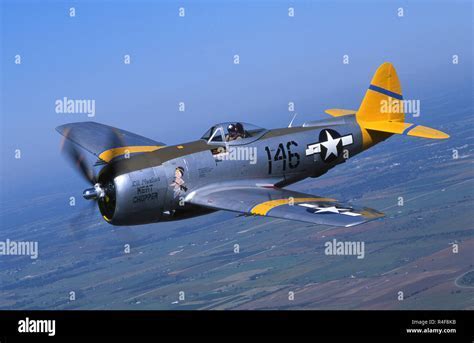
But it wasn’t just the numbers that set it apart—it was the impact. The P-47 took part in nearly every theater of the war, racking up staggering statistics:
- 68,000 enemy trucks destroyed
- 6,000 armored vehicles neutralized
- 86,000 railway cars eliminated
- 9,000 locomotives destroyed
- 4,000 enemy aircraft downed
By the end of World War II, over 15,500 units had been built. Its rugged design, durability, and firepower made the Thunderbolt a favorite among pilots, many of whom credit the aircraft with saving their lives in combat. Naming the F-47 after the P-47 isn’t just nostalgic—it’s a strategic invocation of a battle-tested legacy.
A Break from Convention: Naming Anomaly of the F-47
Military aircraft designations are typically governed by the U.S. Department of Defense’s “Mission Design Series” (MDS) system, a codified naming convention that categorizes aircraft by their type and role. According to the MDS, the number following the “F” (for fighter) should follow chronological development or fit a classified pattern. However, the F-47’s designation raised eyebrows across defense circles.
Emails obtained under FOIA and insider leaks indicate that Air Force and Pentagon officials scrambled in the hours following the jet’s announcement to retroactively justify the F-47 label. General David Allvin, the U.S. Air Force Chief of Staff, posted on X (formerly Twitter) that the name pays homage not only to the P-47 but also to 1947, the founding year of the U.S. Air Force as a separate branch.

While that explanation offers a more sanitized and historically grounded rationale, the irregularity of the naming decision stands out. In contrast to previous aircraft that underwent exhaustive vetting, the F-47 appears to have been branded through a mix of political momentum and symbolic expedience, rather than following traditional military protocol.
The Shadow Duel: Lockheed Martin vs. Boeing
Behind the naming controversy lies a bigger story—the contract battle that shaped the F-47’s path to existence. For years, Lockheed Martin and Boeing competed fiercely to win the NGAD contract. Both defense giants had experience with fifth-generation stealth fighters: Lockheed with the F-22 and F-35, and Boeing with its experimental X-planes and a legacy of tactical aircraft including the F/A-18 Super Hornet.
Beginning in 2019, both companies launched prototype test programs under high secrecy, flying X-plane demonstrators designed to showcase next-gen capabilities like AI integration, adaptive engines, multi-spectrum stealth, and drone swarm command-and-control. Despite Lockheed’s stronghold in the fifth-generation space, Boeing ultimately secured the F-47 contract, a surprise twist with long-term implications.
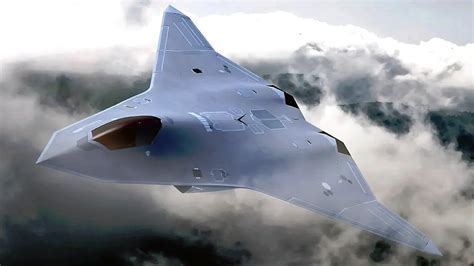
Boeing’s concept reportedly outpaced Lockheed’s with better low observability, range, and next-gen sensor fusion. The final contract was awarded after intense simulation evaluations, performance assessments, and political lobbying. Sources suggest that Boeing’s prototype already flew several times in 2023 and 2024, making it one of the fastest test-to-contract turnarounds in military aerospace history.
F-47: More Than Just a Name
Names in the military are never arbitrary, but the F-47 carries a unique weight. It bridges three identities: a modern combat platform, a nod to historic excellence, and a presidential signature in an election year. While critics argue the naming lacked procedural rigor, the fusion of symbolism, legacy, and innovation tells a deeper story about the current era of defense procurement and public relations.
The F-47 is expected to replace the aging F-22 Raptor, a fifth-generation stealth fighter that, despite its capabilities, has struggled with maintenance costs and a limited production run. With the F-22 slated for retirement in the early 2030s, the F-47 will not only inherit its mission profile but likely expand it with sixth-generation features:
- AI-assisted pilot decision-making systems
- Unmanned teaming with loyal wingman drones
- Directed-energy weapons (in testing phases)
- Enhanced supercruise and thrust vectoring
These technologies, if deployed successfully, will redefine air dominance as we know it. And that makes the name “F-47” not merely symbolic, but a bookmark for the future.
Legacy, Loyalty, and the Next Chapter
From the P-47’s roaring success in WWII to the veiled political overtones of President Trump’s branding, the F-47 name is layered with meaning. As the jet moves from prototype into production, its performance will determine whether the name becomes legend or a historical footnote.
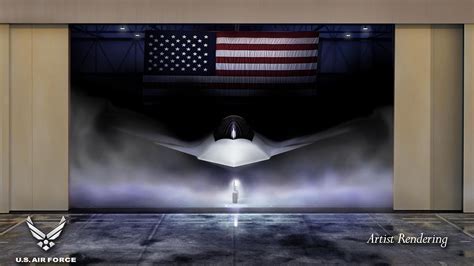
What cannot be denied is this: the F-47 marks the start of a new era in aerial warfare. If it lives up to its ambitious goals, it will cement its place not only among the great fighter jets of history but also as a symbol of American innovation and strategic evolution. And in doing so, the F-47 will earn every digit of its name.
Final Thoughts on the F-47 Name
Despite the swirling theories and opaque decision-making, the F-47 has already accomplished one thing: it has entered the public consciousness with weight and curiosity. Whether named for the President, the P-47 Thunderbolt, or the founding year of the U.S. Air Force, the jet’s designation serves as a multifaceted emblem.
As we await further technical disclosures and operational milestones, the name F-47 will continue to stand as a bridge between past glory and future promise.