The Airbus A380 was built to defy gravity in more ways than one. Conceived as a solution to airport congestion and booming intercontinental demand, the double-deck superjumbo promised to move entire neighborhoods across oceans in a single departure slot. Nearly two decades after its first commercial flight, the aircraft has become rarer, more concentrated, and strategically deployed at a handful of global hubs. That reality makes one question especially compelling: what is the busiest airport for Airbus A380 flights?
The answer is neither subtle nor close. Dubai International Airport (DXB) stands far ahead of any competitor, functioning as the undisputed epicenter of A380 operations worldwide. While London Heathrow and Singapore Changi remain major A380 strongholds, their traffic volumes pale beside Dubai’s immense superjumbo machine.
Understanding why requires more than just raw numbers. It demands a closer look at airline fleet strategies, airport infrastructure investments, global geography, and the evolution of long-haul demand patterns in a post-pandemic aviation market.
Dubai International Airport: The Undisputed A380 Capital of the World
Dubai International is not merely the busiest airport for Airbus A380 flights; it is the gravitational center of the aircraft’s global existence.
According to 2026 aviation data, DXB records 29,626 A380 flights, offering more than 15.1 million seats and generating nearly 58.7 billion Available Seat Miles (ASMs). That figure surpasses the next two leading airports combined. London Heathrow logs 6,974 A380 flights, while Singapore Changi records 5,684. The disparity is not incremental. It is exponential.
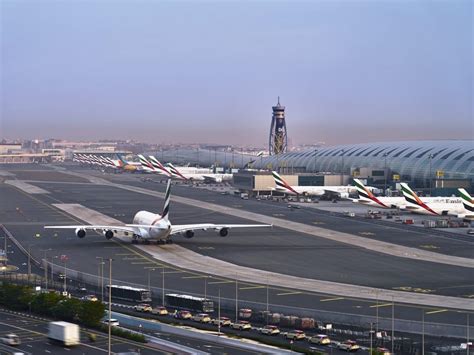
The reason is singular and decisive: Emirates Airline.
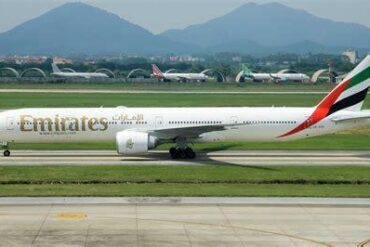
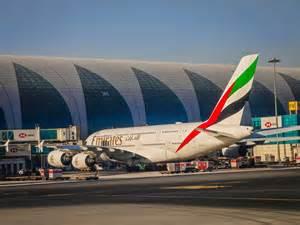
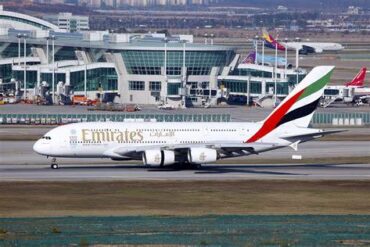
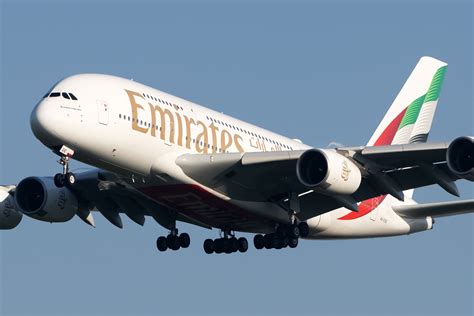
Emirates operates 116 Airbus A380 aircraft, making it the largest A380 operator in the world by an overwhelming margin. In fact, the Dubai-based carrier operates more A380s than all other airlines combined. Virtually every one of those aircraft is anchored at Dubai International, creating a dense, high-frequency superhub network that no other airport can replicate.
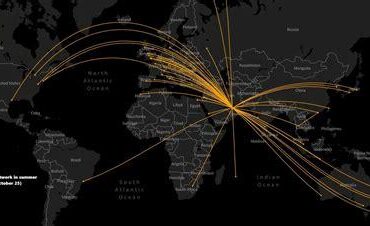
Every day, waves of A380s depart Dubai for London, Sydney, Singapore, New York, Los Angeles, Paris, and dozens of other trunk routes. The aircraft are not used sparingly. They are the backbone of the airline’s long-haul system.
The Emirates Strategy: Building a Superhub Around the A380
To understand Dubai’s dominance, one must understand Emirates’ operating philosophy.
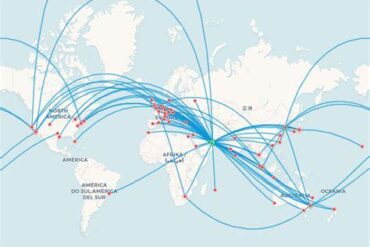
Emirates built its entire long-haul model around high-capacity aircraft feeding a centrally located hub. Dubai sits geographically between Europe, Asia, Africa, and Oceania. Within eight hours’ flight time lies a majority of the world’s population. Within sixteen hours, almost every major global city becomes reachable.
The A380 fits this model perfectly.
Instead of offering multiple smaller aircraft frequencies, Emirates consolidates demand into massive departures. A single A380 can carry more than 500 passengers in typical configurations, and even more in high-density layouts. That means fewer slots used, higher passenger throughput, and optimized airport capacity utilization.
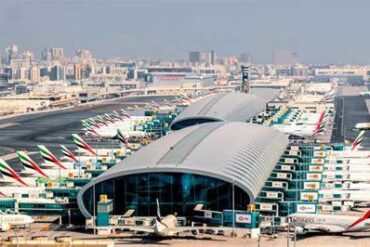
Dubai amplified this advantage through infrastructure. Concourse A at DXB was purpose-built for A380 operations, featuring multiple dual airbridges, reinforced taxiways, and gates specifically engineered for double-deck boarding. While many airports adapted to handle the A380, Dubai designed an entire terminal ecosystem around it.
The result is a self-reinforcing cycle: more aircraft lead to more routes; more routes drive more connecting passengers; more passengers justify additional A380 deployments.
London Heathrow: Prestige Without Scale
London Heathrow Airport (LHR) remains Europe’s premier A380 destination, but its operational profile differs dramatically from Dubai’s.
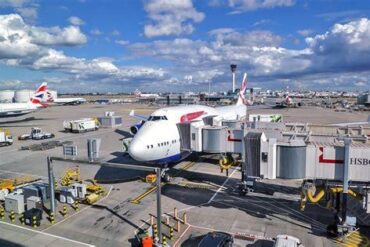
Heathrow records just under 7,000 A380 flights annually. Multiple carriers operate the aircraft there, including British Airways, Emirates, Singapore Airlines, and Qantas. This diversity creates strong presence but fragmented control.
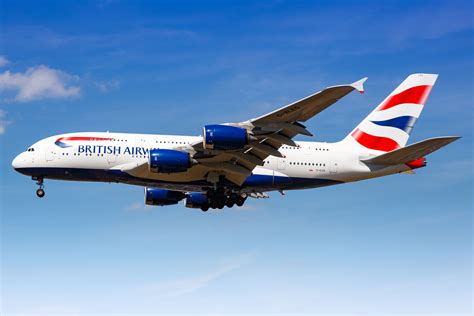
British Airways operates 12 A380s primarily from Heathrow, deploying them on high-demand routes such as Los Angeles, Johannesburg, and Miami. Emirates contributes substantial frequency to London as well, often operating multiple daily A380 services between DXB and LHR.
However, Heathrow is heavily slot-constrained. The airport operates near maximum capacity, leaving little room for frequency expansion. Even when demand exists, airlines cannot simply add additional A380 rotations.
This structural limitation caps Heathrow’s growth potential as an A380 hub. Unlike Dubai, it cannot scale superjumbo operations at will.
Singapore Changi: The Birthplace of the Superjumbo
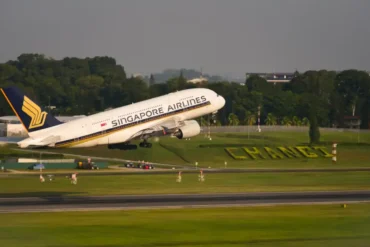
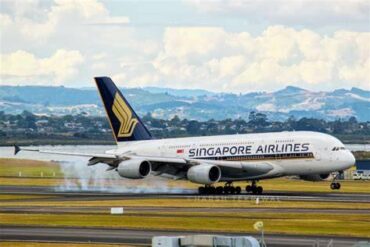
Singapore Changi Airport (SIN) occupies a special place in A380 history. It was the launch airport for the aircraft in 2007 when Singapore Airlines inaugurated the world’s first commercial A380 service.
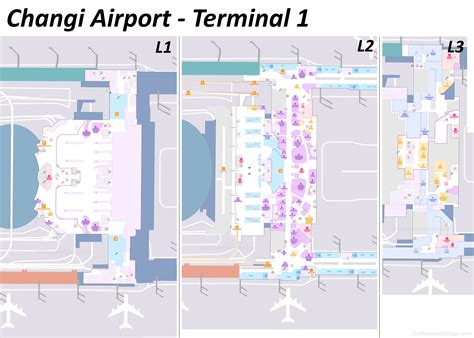
Today, Changi remains a significant A380 hub with 5,684 recorded flights annually. Singapore Airlines operates a fleet of 12 A380s configured with a strong premium focus, including private Suites and enhanced Business Class cabins.
Unlike Emirates, Singapore Airlines uses the A380 strategically rather than ubiquitously. Routes such as London Heathrow and Sydney receive regular deployments, but the airline balances its fleet with Airbus A350s and Boeing 777 variants for efficiency and flexibility.
Changi’s infrastructure is fully A380-capable, but its role in the global network is more measured. It serves both origin-destination traffic and regional connections, yet does not operate a mega-hub model at the scale of Dubai.
The Numbers That Define the Busiest A380 Airport
A clear quantitative picture illustrates the dominance:
- Dubai (DXB): 29,626 A380 flights | 15.1 million seats | 58.7 billion ASMs
- London Heathrow (LHR): 6,974 A380 flights | 3.37 million seats | 14.9 billion ASMs
- Singapore (SIN): 5,684 A380 flights | 2.73 million seats | 11.6 billion ASMs
Dubai handles more than four times Heathrow’s A380 movements and over five times Singapore’s.
These statistics reflect not only flight counts but seat supply and long-haul reach. Available Seat Miles, a standard industry metric measuring seat capacity multiplied by distance flown, show how deeply embedded the A380 is in Emirates’ intercontinental network.
Why Other Airports Cannot Compete
Several factors prevent other global hubs from overtaking Dubai.
First, fleet concentration. No airline other than Emirates operates a triple-digit A380 fleet. Most carriers that once embraced the aircraft—Air France, Malaysia Airlines, Thai Airways—either retired or reduced their fleets after the pandemic.
Second, operational economics. The A380 requires high load factors to be profitable. Airlines deploy it primarily on dense trunk routes. Only a handful of city pairs consistently support 500-plus seats multiple times daily.
Third, airport infrastructure investment. Retrofitting gates for A380 compatibility is expensive. Reinforced pavement, wingtip clearance requirements, and dual boarding bridges are not universal features.
Dubai invested early and extensively. That foresight created a competitive moat.
The Evolution of the Airbus A380 Fleet
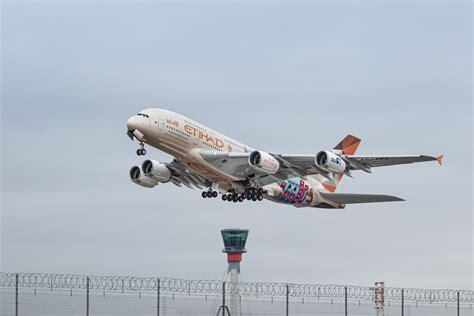
At its peak, 15 airlines operated the Airbus A380. Production officially ended in 2021. Today, approximately ten airlines remain active operators, including Emirates, Singapore Airlines, British Airways, Qantas, Lufthansa, Korean Air, ANA, Qatar Airways, Etihad, and Asiana Airlines.
Yet even among this group, fleet sizes vary dramatically. Emirates alone accounts for the majority of active airframes.
Post-pandemic restructuring accelerated retirements. Twin-engine long-haul aircraft such as the Airbus A350 and Boeing 787 offer lower operating costs and greater route flexibility. For many airlines, efficiency outweighed capacity.
But Emirates doubled down.
The airline retrofitted cabins, introduced Premium Economy, and reaffirmed the A380 as its flagship product. Onboard lounges and shower spas remain distinctive differentiators in the ultra-competitive long-haul market.
Geography: Dubai’s Strategic Advantage
Dubai’s location amplifies everything.
From DXB, Emirates can connect passengers from secondary European cities to Southeast Asia, from African capitals to North America, from Australia to the Middle East, all with one seamless transfer. The hub-and-spoke model functions most efficiently when demand from multiple origins converges onto shared trunk routes.
The A380 excels in precisely this scenario.
Heathrow and Singapore serve large origin markets. Dubai, by contrast, thrives on connecting flows. It aggregates demand across continents, filling superjumbos that might otherwise struggle to sustain load factors in purely origin-destination markets.
That difference is structural and enduring.
Could the Ranking Ever Change?
Speculation always hovers around fleet transitions. Emirates has begun integrating Airbus A350 aircraft into its network and awaits future Boeing 777X deliveries. Over time, a gradual shift toward smaller twinjets could reduce A380 frequencies.
Dubai also plans long-term expansion at Al Maktoum International Airport (DWC). Should Emirates eventually relocate core operations there, the title of “busiest A380 airport” might technically shift within the Dubai airport system.
However, as long as Emirates continues operating over 100 A380s, the center of gravity will remain in Dubai.
London Heathrow’s slot restrictions make dramatic expansion unlikely. Singapore Airlines prioritizes premium optimization over volume. Other hubs lack the fleet scale required to challenge DXB’s lead.
The Enduring Symbolism of the A380 at DXB
Beyond statistics, the A380 defines Dubai’s aviation identity.
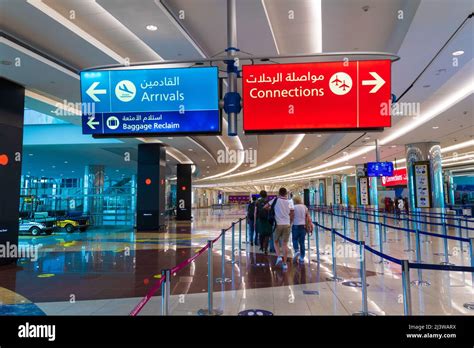
Walk through Concourse A and the scale becomes visceral. Dual jet bridges connect to both decks. Departure boards list multiple A380 flights within the same hour. From a distance, tails line up like a fleet of skyscrapers with wings.
Dubai did not merely accommodate the superjumbo. It architected a hub around it.
In an era increasingly focused on fuel efficiency and right-sized aircraft, the A380 represents an alternative philosophy: move vast numbers of people efficiently through centralized hubs.
For now, that philosophy remains alive and thriving at DXB.
Final Verdict: The World’s Busiest A380 Airport
The data leaves no ambiguity. Dubai International Airport is the busiest airport for Airbus A380 flights by a commanding margin. With nearly 30,000 annual superjumbo movements, over 15 million seats, and almost 59 billion ASMs, DXB stands alone.
London Heathrow and Singapore Changi maintain important A380 roles, supported by respected global carriers. Yet neither approaches the density, fleet concentration, or network integration seen in Dubai.
As the Airbus A380 enters its mature years, its operations are increasingly concentrated at select global hubs. And at the center of that shrinking but still spectacular world sits Dubai International — the reigning capital of the superjumbo age.