The Boeing 777 is not just another widebody aircraft—it is one of the defining machines of modern global connectivity. For nearly three decades, this twin-engine giant has quietly stitched continents together, carrying millions across oceans with a mix of range, efficiency, and sheer capacity that few aircraft can rival. Even in 2026, in an era increasingly shaped by newer jets like the Boeing 787 and Airbus A350, the 777 remains a cornerstone of long-haul aviation.
The real story of the 777, however, is not just about the aircraft itself—it’s about where it flies most. Certain airports have evolved into high-density ecosystems where the 777 thrives, handling thousands of departures annually. These hubs reveal how airlines think, how passengers move, and how global networks are engineered.
When the numbers are laid out, one airport stands far above the rest. Not slightly ahead. Not marginally dominant. But operating on a scale that feels almost gravitational, pulling long-haul traffic into its orbit.
Dubai International Airport: The Undisputed Boeing 777 Capital
There is dominance, and then there is Dubai International Airport (DXB).
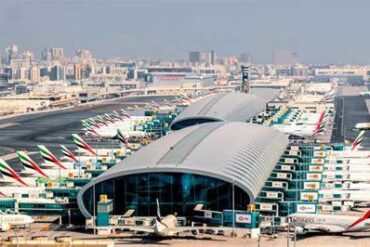
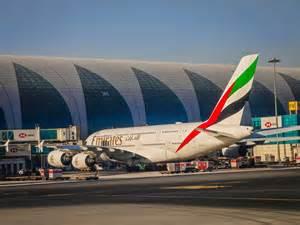
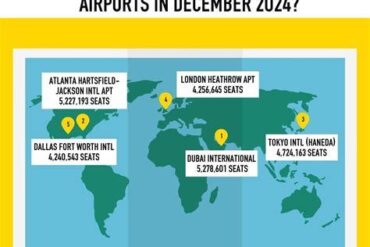
In 2026, Dubai is projected to handle 49,923 Boeing 777 departures, a figure so large it reshapes the conversation entirely. This isn’t just first place—it’s an entirely different tier. The airport effectively functions as the global epicenter of Boeing 777 operations, with an ecosystem built around maximizing long-haul connectivity.
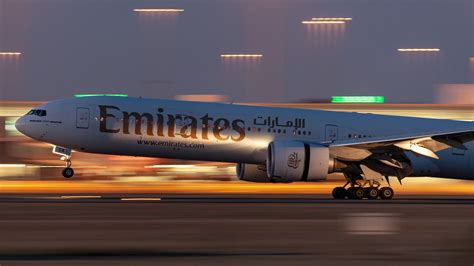
Behind this staggering number sits a deeper metric: scale of movement. These departures translate into 17.8 million available seats and more than 51 billion available seat-miles (ASMs). That’s not just traffic—it’s a planetary-level circulation of people and commerce.
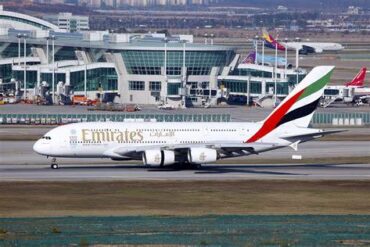
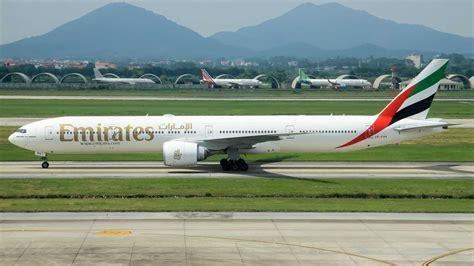
The engine behind this machine is Emirates, the airline that has turned the Boeing 777 into its operational backbone. With a fleet of over 130 aircraft, primarily consisting of the 777-300ER and 777-200LR, Emirates has built a network that connects Europe, Asia, Africa, Oceania, and the Americas through a single hub.
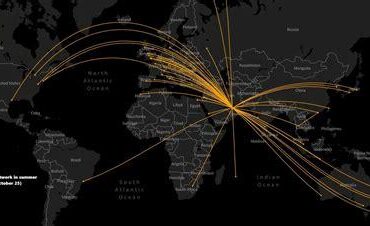
This is where things get interesting from a systems perspective. Dubai doesn’t rely on local demand alone. It thrives on transit efficiency. Passengers from Sydney to London, New York to Mumbai, or Johannesburg to Tokyo often intersect in Dubai, making it less of a destination and more of a global switching node.
The Boeing 777 fits this model perfectly. Its ability to carry hundreds of passengers over ultra-long distances allows Emirates to operate high-frequency, high-capacity routes that feed into this hub-and-spoke system. In a way, the 777 isn’t just flying routes—it’s sustaining an entire network philosophy.
London Heathrow: Europe’s Long-Haul Powerhouse
If Dubai is the undisputed king, London Heathrow Airport (LHR) is the heavyweight challenger rooted in geography and demand density.
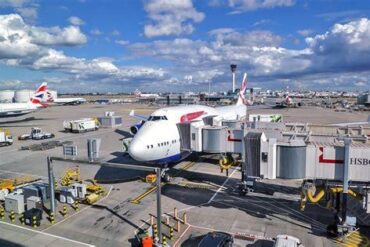
With approximately 28,824 Boeing 777 departures in 2026, Heathrow stands firmly in second place. Unlike Dubai, which thrives on transit flows, Heathrow operates in a different environment—a demand-heavy, slot-constrained ecosystem where every movement must justify itself.
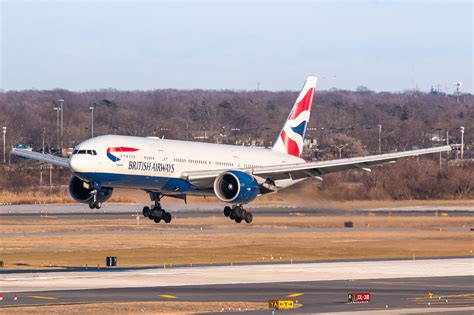
The Boeing 777 plays a critical role here because it maximizes passenger volume per slot. Airlines cannot simply add more flights due to capacity limits, so they deploy larger aircraft instead. Enter the 777.
British Airways forms the backbone of Heathrow’s 777 activity, operating both the 777-200 and 777-300ER across transatlantic and long-haul routes. Alongside it, a coalition of global carriers—American Airlines, Emirates, Qatar Airways—injects additional frequency into the network.
Heathrow’s strength lies in its position as a bridge between continents. It is one of the few places where North America, Europe, Asia, and the Middle East converge at high density. The Boeing 777 becomes the ideal tool here: large enough to handle demand, efficient enough to justify its deployment, and flexible enough to serve a wide range of routes.
Paris Charles de Gaulle and Doha: Flag Carrier Strongholds
The next tier of airports reveals a fascinating pattern: national carriers shaping aircraft usage at their home hubs.
At Paris Charles de Gaulle Airport (CDG), approximately 21,703 Boeing 777 departures are scheduled for 2026. This is not accidental. It is the direct result of Air France’s long-standing reliance on the 777 as a primary long-haul workhorse.
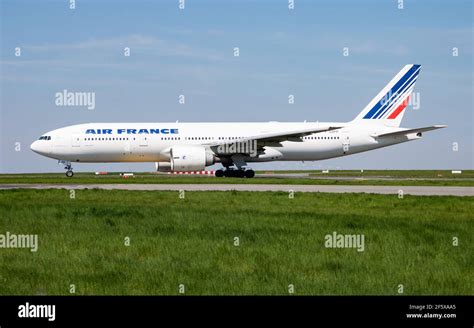
Air France uses the 777 extensively on transatlantic and intercontinental routes, leveraging its capacity to connect Paris with major cities across the globe. The aircraft’s balance between range and economics makes it particularly suited for these high-demand corridors.
Close behind is Hamad International Airport (DOH) in Doha, with around 19,780 Boeing 777 departures. Here, the story mirrors Dubai in structure but differs in scale. Qatar Airways uses the 777 as a core component of its network, although it shares the spotlight with the Airbus A350.
This dual-fleet strategy introduces an interesting dynamic. While both Air France and Qatar Airways rely heavily on the 777, their diversification into newer aircraft slightly reduces the concentration of 777 operations compared to Emirates. The result is high rankings—but not dominance.
Asia’s Deep Integration With Boeing 777 Operations
Shift the lens eastward, and the picture becomes more layered. Asia doesn’t just use the Boeing 777 for long-haul flights—it integrates the aircraft into both international and high-capacity regional operations.
Tokyo Haneda Airport (HND) records approximately 15,595 departures, placing it among the busiest 777 hubs globally.
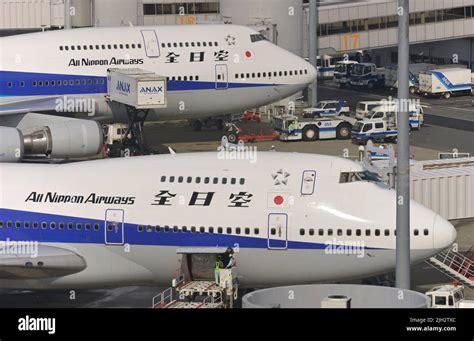
Japan’s aviation market has a unique characteristic: dense domestic routes that justify widebody aircraft. Airlines like All Nippon Airways and Japan Airlines deploy the 777 not just across oceans but also within Japan, creating a hybrid usage model rarely seen elsewhere.
Further south, Taipei Taoyuan International Airport (TPE) handles around 14,410 departures, reinforcing Taiwan’s role as a strategic connector between Northeast Asia and Southeast Asia.
Other major Asian hubs—including Bangkok, Seoul Incheon, and Singapore—also contribute significantly. These airports function as global gateways, linking Asia’s massive population centers with Europe and North America. The Boeing 777 thrives here because it can handle both high-density demand and long-haul distances with equal efficiency.
North America’s Strategic Role in 777 Traffic
Despite the dominance of Middle Eastern and Asian carriers, North America remains deeply embedded in Boeing 777 operations.
San Francisco International Airport (SFO) leads the continent with approximately 13,954 departures in 2026.
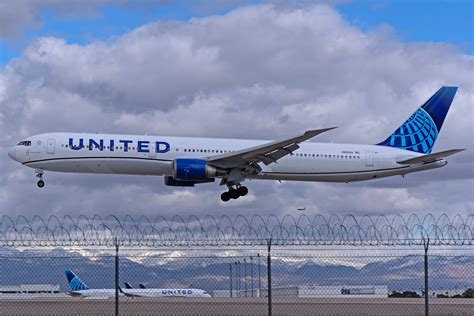
San Francisco’s position is no accident. It is one of the primary gateways between the United States and Asia, a corridor where the 777’s capabilities shine. Airlines such as United Airlines and All Nippon Airways deploy the aircraft on transpacific routes, where range and passenger volume are critical.
Meanwhile, John F. Kennedy International Airport (JFK) in New York handles around 12,483 departures, driven by its transatlantic and global connectivity. JFK is less about a single dominant airline and more about diverse international traffic, with multiple carriers contributing to its 777 activity.
Other major hubs—Los Angeles, Chicago O’Hare, Dallas-Fort Worth—also support significant 777 operations. These airports collectively illustrate a key point: while North America may not dominate in sheer volume, it remains structurally essential to the global 777 network.
Top 10 Busiest Airports for Boeing 777 Flights in 2026
To understand the scale clearly, the rankings tell the story:
- Dubai (DXB): 49,923 flights
- London Heathrow (LHR): 28,824 flights
- Paris CDG (CDG): 21,703 flights
- Doha (DOH): 19,780 flights
- Tokyo Haneda (HND): 15,595 flights
- Taipei (TPE): 14,410 flights
- San Francisco (SFO): 13,954 flights
- Bangkok (BKK): 13,392 flights
- New York JFK (JFK): 12,483 flights
- Seoul Incheon (ICN): 12,046 flights
The drop from first to second place is striking. Dubai operates over 70% more 777 flights than Heathrow, which itself is a giant by any standard. That gap tells you everything about how concentrated 777 operations have become.
Why the Boeing 777 Still Dominates Long-Haul Aviation
There’s a quiet paradox in aviation. Newer aircraft often promise better efficiency, yet older designs continue to dominate. The Boeing 777 is a perfect example.
Its enduring relevance comes down to three core strengths:
- Range: Capable of connecting virtually any two major cities on Earth
- Capacity: Ideal for high-demand routes with hundreds of passengers
- Economics: Proven reliability and cost efficiency over decades of operation
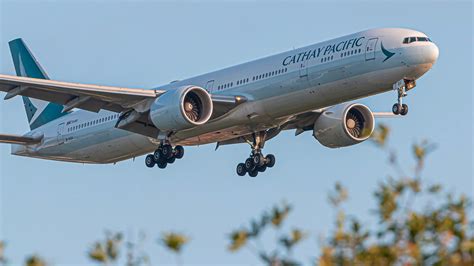
The 777-300ER, in particular, remains a favorite for airlines needing maximum capacity without stepping into the complexity of larger aircraft like the A380. Meanwhile, the 777-200ER offers slightly lower capacity with similar range, providing flexibility across different markets.
This adaptability allows airlines to fine-tune their networks. A route that doesn’t justify an A380 can still thrive with a 777. A market that demands frequency can deploy multiple 777s instead of fewer larger aircraft.
The Hidden Logic Behind Hub Dominance
Look closely at the busiest airports, and a pattern emerges. These are not just busy places—they are strategically optimized hubs.
Dubai and Doha rely on geographic positioning, sitting between major population centers. Heathrow and Paris leverage historical demand and economic gravity. Asian hubs combine regional density with global connectivity.
The Boeing 777 thrives in these environments because it is, fundamentally, a network amplifier. It takes existing demand and scales it efficiently across long distances.
Think of it as a bridge-builder. Not the flashy kind that grabs headlines, but the kind that quietly carries millions every day, holding together the structure of global travel.
Final Analysis: A Giant That Refuses to Fade
In 2026, the answer is clear: Dubai International Airport is the busiest airport in the world for Boeing 777 flights, and it isn’t close.
What’s more interesting is why. This dominance isn’t just about fleet size or airline strategy—it’s about system design. Emirates built a network where the Boeing 777 is not just useful, but essential. Remove the aircraft, and the system itself would struggle to function.
Elsewhere, airports like Heathrow, Paris, and Doha demonstrate how the 777 continues to anchor long-haul operations even as newer aircraft enter service. Across Asia and North America, the jet remains deeply embedded in global aviation flows.
The future will bring change. The 777X looms on the horizon, promising new efficiencies and capabilities. Yet the current generation of 777s shows no sign of disappearing. Instead, they continue to dominate the skies, quietly doing what they’ve always done—moving the world, one long-haul flight at a time.