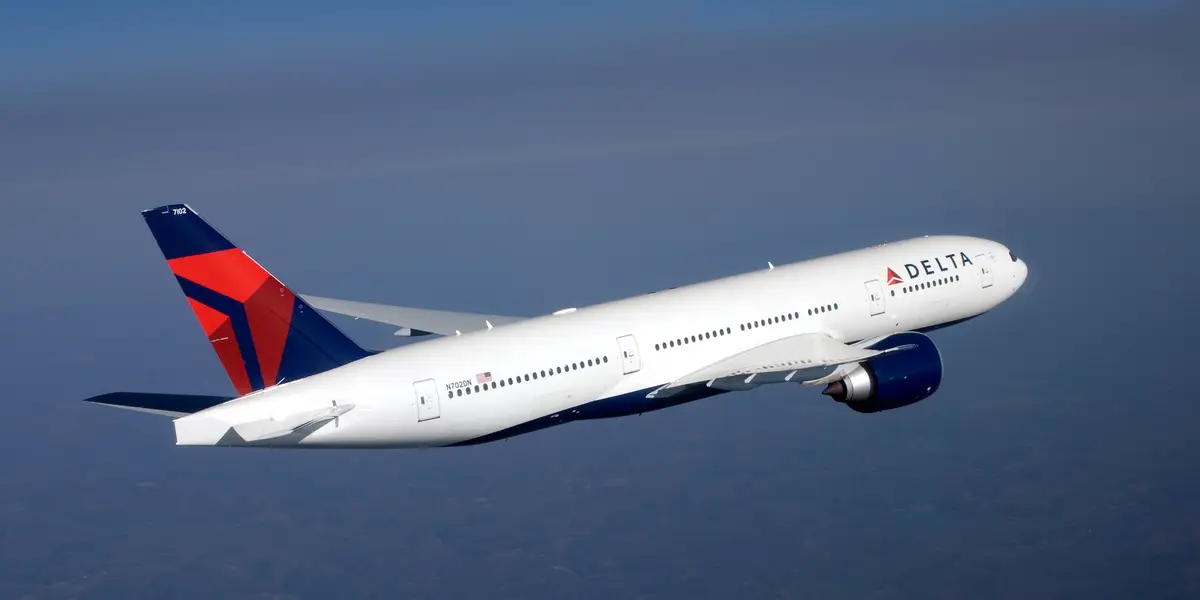
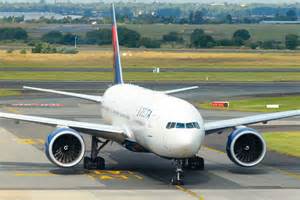
For decades, the Boeing 777 was regarded as one of the most successful long-haul aircraft ever built. Airlines around the world relied on it to connect continents, open ultra-long-range routes, and transport millions of passengers across oceans with remarkable reliability. Yet in 2020, one of America’s largest airlines made a decision that stunned industry observers. Delta Air Lines retired its entire Boeing 777 fleet almost overnight, despite having recently invested approximately $100 million upgrading the aircraft interiors.
The decision was not driven by technical shortcomings, safety concerns, or operational failures. Instead, it was the result of a single economic reality that became impossible to ignore: the Airbus A350-900 consumed approximately 21% less fuel per seat than the Boeing 777 aircraft it was replacing.
In an industry where profit margins are often measured in single digits, a fuel efficiency advantage of that magnitude can completely reshape fleet strategy. Delta’s decision became one of the most significant examples of how modern aircraft economics can outweigh even substantial previous investments and fundamentally alter the future direction of an airline.
The Pandemic Created The Perfect Moment For Fleet Transformation
When the global aviation industry entered crisis mode in early 2020, airlines faced circumstances unlike anything they had previously experienced. International travel demand collapsed at unprecedented speed. Borders closed, long-haul networks disappeared, and hundreds of aircraft were suddenly parked around the world.
For Delta Air Lines, the situation was particularly severe. The carrier was forced to ground more than 650 aircraft across its mainline and regional operations while daily cash losses reportedly approached $50 million. Under such extraordinary conditions, management teams could no longer afford to evaluate aircraft based on historical performance or emotional attachment.
Instead, every fleet type was subjected to a ruthless economic review.
Aircraft that previously generated acceptable returns suddenly had to justify their existence in a dramatically smaller airline. Fleet planners were no longer asking whether an aircraft performed well. They were asking whether a newer aircraft could perform the same mission more efficiently and at lower cost.
The Boeing 777 found itself at the center of that conversation.
For years, the aircraft had been one of Delta’s flagship international assets. The airline operated both the Boeing 777-200ER and the ultra-long-range Boeing 777-200LR, deploying them on demanding routes across the Pacific and to destinations requiring exceptional endurance.
Operationally, the aircraft remained highly capable. Economically, however, the landscape had changed.
By May 2020, Delta announced that all 18 Boeing 777 aircraft would leave the fleet by the end of the year, marking one of the fastest retirements of a major widebody fleet in modern airline history.
Understanding The 21% Fuel Burn Gap
The figure that ultimately defined Delta’s decision was strikingly simple.
According to the airline, the Airbus A350-900 delivered approximately 21% lower fuel consumption per seat compared with the Boeing 777 aircraft being retired.
While the percentage may appear modest at first glance, its financial implications are enormous.
Fuel has historically represented one of the largest expenses for any airline. Depending on market conditions, it can account for between 20% and 35% of total operating costs. A reduction exceeding twenty percent in fuel burn per seat therefore creates a substantial competitive advantage.
The impact becomes even more dramatic when multiplied across an entire fleet operating long-haul missions.
A single intercontinental flight may consume tens of thousands of gallons of jet fuel. Over hundreds or thousands of annual flights, even minor efficiency improvements generate significant savings. A twenty-one percent reduction is not merely an improvement. It is a transformation.
The economics become particularly compelling during periods of uncertain demand. When passenger numbers decline, airlines cannot simply compensate through higher utilization or stronger ticket sales. Lower operating costs become critical to survival.
For Delta Air Lines, every future year of Boeing 777 operations represented millions of dollars in additional fuel expenses compared with operating the Airbus A350.
That reality ultimately outweighed every other consideration.
Why The Airbus A350 Was Designed For This Moment
The Airbus A350 was developed during an era when airlines increasingly prioritized efficiency over sheer size.
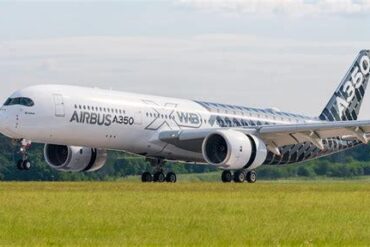
Unlike earlier generations of long-haul aircraft, the A350 incorporated extensive use of advanced composite materials, sophisticated aerodynamics, and next-generation engine technology. These innovations were not incremental upgrades. They were integrated into the aircraft from the beginning.
The result was an aircraft optimized around fuel efficiency, lower maintenance requirements, and reduced lifecycle costs.
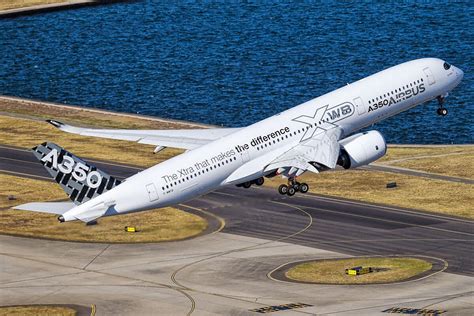
One of the A350’s defining features is its extensive carbon-fiber composite structure. Compared with traditional aluminum construction, composites reduce weight while maintaining structural strength. Lower weight directly translates into reduced fuel consumption, particularly on long-haul routes where efficiency gains accumulate over many hours of flight.
The aircraft’s Rolls-Royce Trent XWB engines further enhance performance by delivering exceptional fuel economy while meeting increasingly stringent environmental standards.
Together, these technologies created a platform capable of outperforming older widebody aircraft across multiple economic categories.
For Delta, the A350 was not simply another aircraft. It represented a fundamentally different generation of airline economics.
The $100 Million Retrofit That Could Not Be Saved
One of the most surprising aspects of Delta’s decision was the timing.
Only two years earlier, the airline had completed a major modernization program across its Boeing 777 fleet. The project reportedly cost approximately $100 million and introduced several of Delta’s most advanced passenger experience features.
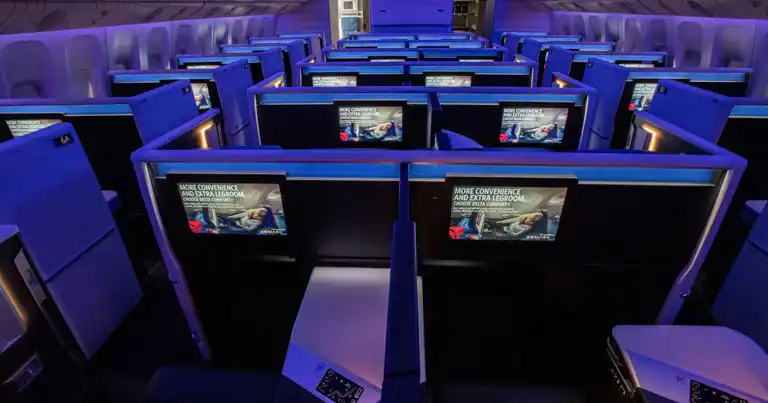
The upgrades included Delta One Suites, enhanced premium cabins, improved seating configurations, and redesigned interiors intended to align the aircraft with the airline’s broader premium strategy.
Under normal circumstances, airlines expect such investments to remain in service for many years.
Cabin retrofits are expensive because they are designed to extend an aircraft’s commercial relevance. The return on investment is typically realized gradually through improved passenger satisfaction, premium revenue generation, and prolonged fleet utilization.
When Delta approved the modernization project, few industry observers imagined the fleet would disappear entirely within two years.
Yet when the pandemic arrived and management reassessed long-term economics, the retrofit investment became irrelevant.
This reflects one of the most important principles in business decision-making: sunk costs should not dictate future strategy.
The $100 million had already been spent. The key question was no longer whether the retrofit had value. The question was whether continued Boeing 777 operations made economic sense going forward.
Delta concluded they did not.
From a financial perspective, preserving a less efficient fleet solely to justify a previous investment would create even greater costs over time.
The airline chose future profitability over past expenditures.
The Boeing 777 Was Not The Problem
A common misconception surrounding Delta’s decision is that it somehow reflected a failure of the Boeing 777 itself.
Nothing could be further from reality.
The Boeing 777 remains one of the most successful commercial aircraft ever produced. Airlines across the globe continue operating the type successfully on high-demand international routes.
Its reputation for reliability, range, payload capability, and operational flexibility remains exceptionally strong.
The aircraft helped transform long-haul aviation during the 1990s and 2000s. It opened new nonstop routes, replaced older four-engine aircraft, and became the backbone of numerous international fleets.
Delta’s decision was therefore not an indictment of the Boeing 777.
Rather, it was evidence of how dramatically aircraft technology had advanced.
The Airbus A350 simply represented a newer generation of design philosophy. When airlines compare aircraft separated by decades of technological evolution, economics naturally favor the newer platform.
The retirement highlighted the relentless pace of progress in commercial aviation rather than any weakness in Boeing’s flagship twin-engine aircraft.
Replacing The Ultra-Long-Range Boeing 777-200LR
Although the economics strongly favored retirement, the transition was not without challenges.
The Boeing 777-200LR possessed capabilities that few commercial aircraft could match. For years, it ranked among the longest-range passenger aircraft in the world and enabled nonstop flights on exceptionally demanding routes.
One notable example was Delta’s service between Atlanta and Johannesburg.
These missions required extraordinary endurance, making the 777-200LR uniquely valuable within the airline’s network.
Removing such a specialized aircraft inevitably created operational questions.
Could replacement aircraft match the range?
Would payload restrictions become necessary?
Could certain routes remain economically viable?
Delta ultimately concluded that the answers were manageable.
Modern airlines routinely adapt route structures, schedules, payload assumptions, and fleet assignments when introducing new aircraft. While some adjustments were necessary, the broader network benefits delivered by the Airbus A350 significantly outweighed isolated operational compromises.
Once alternative solutions were identified, maintaining an entire Boeing 777 subfleet became increasingly difficult to justify.
The retirement proceeded without reversal.
Fleet Simplification Became A Strategic Priority
Fuel efficiency was not the only factor influencing Delta’s decision.
Fleet simplification also played a major role.
Every aircraft family introduces complexity into airline operations. Different fleets require separate pilot training programs, maintenance procedures, spare parts inventories, technical expertise, and scheduling considerations.
Reducing the number of aircraft types can generate substantial savings throughout an organization.
The benefits extend far beyond fuel.
Training becomes more streamlined. Maintenance operations become more efficient. Spare parts management becomes less complicated. Crew scheduling gains flexibility.
During the post-pandemic recovery, these advantages became particularly attractive.
Rather than rebuilding around a diverse collection of aircraft types, Delta focused increasingly on a smaller number of highly efficient platforms.
The Airbus A350 fit perfectly within that strategy.
It offered superior fuel efficiency, strong passenger appeal, advanced technology, and alignment with the airline’s long-term fleet vision.
As a result, retaining the Boeing 777 increasingly conflicted with broader corporate objectives.
Environmental Benefits Reinforced The Business Case
Although economics remained the primary driver behind the retirement, environmental considerations provided additional support.
Lower fuel consumption naturally produces lower carbon emissions.
As governments, regulators, investors, and passengers place greater emphasis on sustainability, airlines face growing pressure to reduce their environmental footprint.
The A350’s efficiency advantage therefore generated dual benefits.
It reduced operating expenses while simultaneously lowering emissions.
This alignment between financial and environmental objectives is becoming increasingly important across global aviation.
For Delta, replacing the Boeing 777 with more efficient aircraft supported both profitability goals and long-term sustainability commitments.
The environmental benefits may not have initiated the decision, but they certainly strengthened the argument.
Six Years Later, The Decision Looks Increasingly Visionary
The strongest validation of Delta’s strategy emerged in the years following retirement.
If management had miscalculated, the airline might eventually have sought another large twin-engine aircraft or reconsidered the role previously occupied by the Boeing 777.
Instead, the opposite occurred.
Delta continued expanding its Airbus widebody fleet.
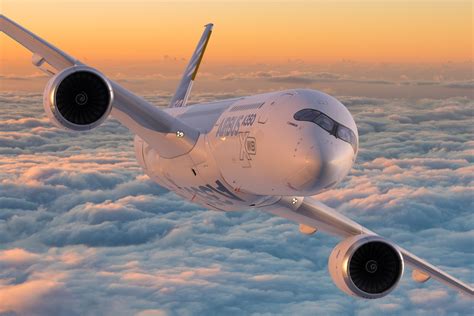
By 2026, the airline reinforced its commitment to the Airbus strategy through additional orders for A350-900 and A330-900 aircraft. These purchases demonstrated confidence not only in specific aircraft models but also in the broader philosophy that guided the 2020 retirement decision.
Six years after the Boeing 777 left service, it remained absent from Delta’s long-term planning.
The Airbus fleet, meanwhile, continued growing.
That outcome suggests the original analysis was correct.
Management recognized earlier than many observers that future long-haul competitiveness would be defined by efficiency rather than legacy fleet structures.
The Retirement That Redefined Modern Fleet Economics
Delta Air Lines’ retirement of its Boeing 777 fleet stands as one of the most consequential fleet decisions of the pandemic era.
The airline willingly abandoned aircraft that had recently received extensive upgrades. It accepted the loss of a $100 million cabin modernization investment. It retired a fleet that had played a central role in its intercontinental network for years.
Yet the decision was grounded in a simple economic reality.
The Airbus A350-900 delivered approximately 21% lower fuel burn per seat.
In an industry where operating costs determine competitiveness, that advantage proved overwhelming.
What appeared dramatic in 2020 increasingly looks strategic in hindsight. Delta recognized that the future belonged to aircraft capable of delivering significantly lower operating costs while maintaining world-class long-haul performance.
The Boeing 777 remained a respected aviation icon. But for Delta Air Lines, the economics of the next generation had already arrived.
The result was a fleet transformation that demonstrated how quickly technological progress can alter airline strategy, and how a single efficiency figure can be powerful enough to retire an entire flagship fleet almost overnight.