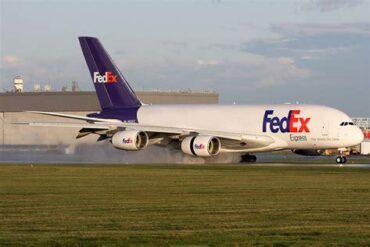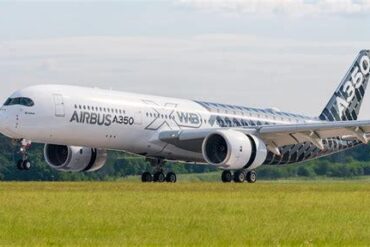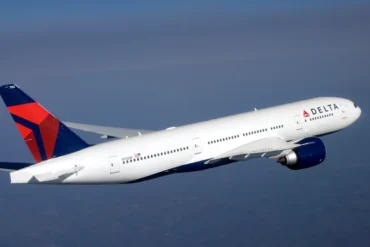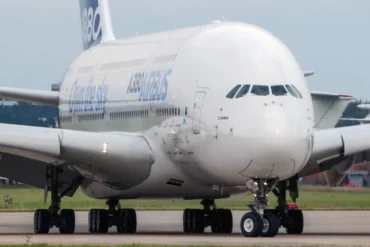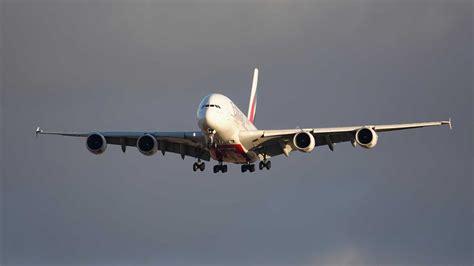
The Airbus A380, once the undisputed king of long-haul aviation, is quietly retreating from one of its former strongholds: Melbourne Airport (MEL). A decade ago, the sight of multiple double-deckers lining the tarmac symbolized global connectivity at its most ambitious. Today, that spectacle has thinned to a near-vanishing point, with six airlines withdrawing A380 operations from Melbourne. The question hanging in the air feels almost cinematic: is the superjumbo era ending, or simply evolving into something leaner and more strategic?
The answer, like most things in aviation, lies in economics disguised as engineering. The A380 was built for a world where passenger demand between mega-hubs would grow endlessly. That world did exist—for a while. But as airlines recalibrated after the pandemic and fuel efficiency became a ruthless priority, the industry began favoring smaller, long-range aircraft that could flex with demand rather than gamble on it.
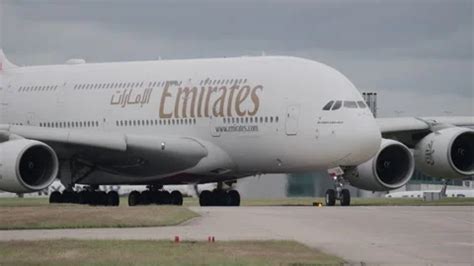
Melbourne serves as a near-perfect case study of this transformation. Once hosting eight A380 operators, the airport now stands on the edge of becoming a single-operator outpost for the aircraft. With Qantas preparing to withdraw its A380 service, only Emirates will remain, clinging to the aircraft it has championed more than any other airline.
Melbourne’s Golden Age of A380 Operations
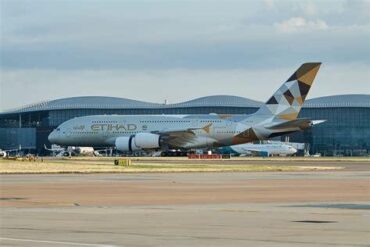
There was a moment—specifically September 2017—when Melbourne Airport reached peak superjumbo saturation. On its busiest day, the airport handled nine A380 movements, a logistical ballet involving some of the world’s most prestigious carriers. Airlines like Singapore Airlines, Qatar Airways, Etihad Airways, China Southern Airlines, and Malaysia Airlines all deployed the aircraft on key long-haul routes.
This wasn’t just about capacity; it was about prestige and network dominance. Routes like Melbourne to Dubai, Singapore, Los Angeles, and London Heathrow became arteries of global travel, pumped full by the sheer volume the A380 could carry. Airlines weren’t just transporting passengers—they were making statements about scale.
Yet even at its peak, a subtle flaw lurked beneath the grandeur. The A380 thrives on consistently high demand. Any dip—seasonal, اقتصادی, or unexpected—turns its massive capacity into a liability rather than an advantage.
The Six Airlines That Quietly Exited
The retreat didn’t happen overnight. Instead, it unfolded like a slow tide pulling back from shore. Six airlines gradually phased out their A380 services to Melbourne, each for slightly different reasons but with a shared underlying logic: efficiency beats excess.
- Singapore Airlines shifted to Airbus A350s and Boeing 787s, prioritizing frequency over size
- Qatar Airways replaced the A380 with A350 and Boeing 777 aircraft, aligning capacity with demand
- Etihad Airways restructured its fleet strategy, focusing on leaner, long-haul operations
- China Southern Airlines reduced A380 deployment globally, including Melbourne routes
- Malaysia Airlines stepped back amid broader fleet and financial restructuring
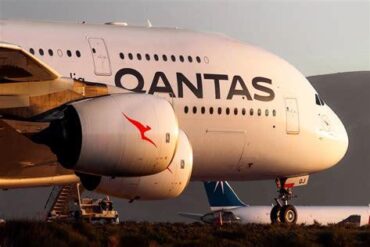
- Qantas, once a major A380 operator at MEL, is now transitioning its Los Angeles route to the Boeing 787
Each decision reflects a shift in airline philosophy. Instead of filling 500+ seats on a single flight, airlines now prefer multiple smaller flights, offering flexibility and often higher profitability.
The Busiest Day That Will Never Return
On September 25, 2017, Melbourne experienced its most intense A380 traffic ever recorded. Flights connected the city to global hubs like Dubai (DXB), Singapore (SIN), Auckland (AKL), Los Angeles (LAX), Doha (DOH), and Abu Dhabi (AUH).
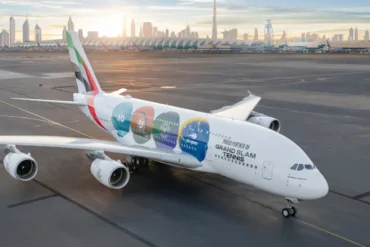
Emirates alone operated four A380 flights that day, showcasing its aggressive use of the aircraft. One particularly unusual route—Auckland to Melbourne on an A380—highlighted how airlines occasionally used the superjumbo even on shorter sectors to optimize fleet utilization.
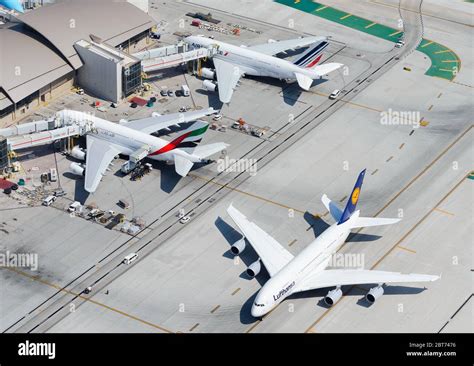
That level of activity now feels like a relic from a parallel timeline. Not because demand vanished, but because the rules of efficiency changed. Airlines learned that filling a giant aircraft consistently is harder than deploying smaller jets more frequently.
Why the A380 Lost Its Edge
The A380’s decline isn’t about failure—it’s about mismatch. The aircraft excels in specific conditions: high-density routes between mega-hubs. But the modern aviation landscape has drifted toward point-to-point travel, enabled by aircraft like the Boeing 787 Dreamliner and Airbus A350.
These newer jets offer:
- Lower fuel consumption per seat
- Greater range with smaller passenger loads
- Flexibility to open new routes without massive risk
In contrast, the A380 demands near-full capacity to justify its operating costs. That’s a tall order in a world where travel demand fluctuates rapidly due to economic shifts, geopolitical factors, and evolving passenger preferences.
There’s also a subtle psychological factor. Travelers increasingly value frequency and convenience over sheer aircraft size. A daily flight on a smaller plane often beats a single massive departure.
Melbourne Airport’s Evolution Beyond the Superjumbo
Despite the A380’s retreat, Melbourne Airport is far from declining. In fact, its international network is expanding in ways that reflect the industry’s new direction. By 2026, 45 airlines will operate at MEL, connecting passengers to 41 international destinations.
New entrants and route expansions tell a compelling story:
- Finnair launching Helsinki flights via Bangkok
- Indonesia AirAsia increasing connectivity to Bali
- Jetstar opening routes to Colombo
- SriLankan Airlines boosting flight frequency
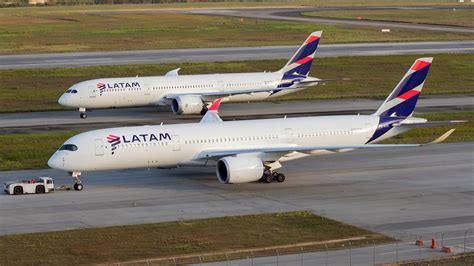
This growth isn’t powered by giant aircraft, but by efficient, right-sized planes that adapt to demand. It’s less dramatic visually, perhaps—but far more sustainable economically.
Is the Airbus A380 Truly Dead?
Declaring the A380 “dead” would be premature, but calling it endangered isn’t far off. Airlines like Emirates continue to rely heavily on the aircraft, and for certain high-density routes, it remains unmatched in passenger experience and capacity.
What’s really happening is a strategic narrowing of its role. The A380 is transitioning from a widespread global workhorse to a specialized tool, deployed only where its strengths outweigh its limitations.
Melbourne’s story captures this shift with unusual clarity. From nine daily A380 movements to potentially just one operator, the airport reflects an industry that has traded spectacle for precision.
Aviation, at its core, is an optimization problem disguised as travel. The A380 was a bold solution to yesterday’s equation. Today’s variables have changed—and the answers look smaller, smarter, and far more adaptable.