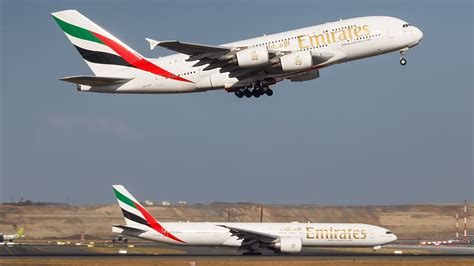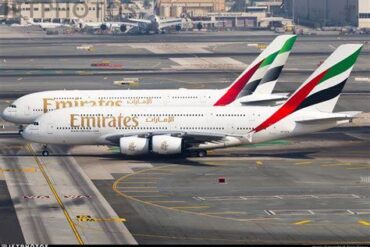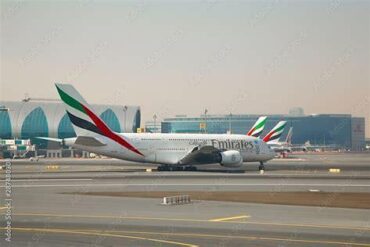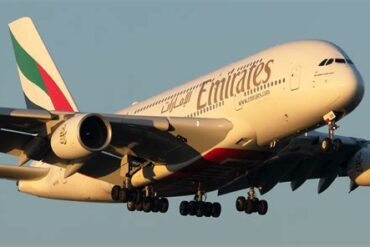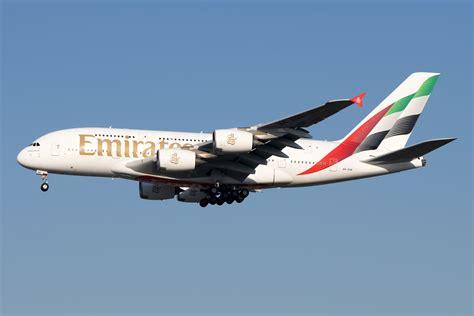
The sudden withdrawal of the iconic Airbus A380 from 15 major international routes by Emirates marks one of the most significant tactical adjustments in global aviation this year. This is not merely a scheduling tweak—it is a direct reflection of geopolitical instability, shifting passenger demand, and the evolving economics of long-haul aviation.
At its peak, the A380 symbolized Emirates’ dominance in high-capacity, hub-and-spoke travel. Today, its temporary retreat from key cities signals a recalibration of priorities as uncertainty reshapes the aviation landscape.
Geopolitical Turbulence Reshaping Global Flight Patterns
The ongoing instability linked to tensions involving Iran has fundamentally altered airspace dynamics across the Gulf. Airlines operating through this region, especially Emirates, are navigating a complex web of rerouted paths, rising operational costs, and unpredictable passenger flows.
This instability has forced Emirates to reduce its A380 operations to an average of 45 daily departures from Dubai in April—a sharp decline. Compared to just weeks prior, that figure has dropped by nearly a third, and it stands 43% lower than the same period last year.
Such a steep reduction underscores a hard truth: even the world’s largest passenger aircraft cannot remain viable when demand becomes volatile and operational risks increase.
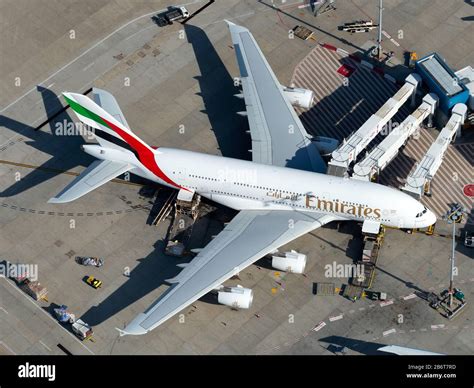
The 15 Routes Affected: A Strategic Withdrawal, Not a Retreat
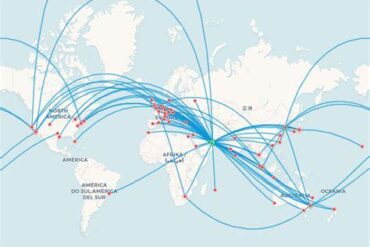
The 15 routes losing A380 service span Europe, North America, Asia, and Australia. Major cities like Barcelona, Frankfurt, Los Angeles, and Osaka have all seen the superjumbo either removed or temporarily replaced.
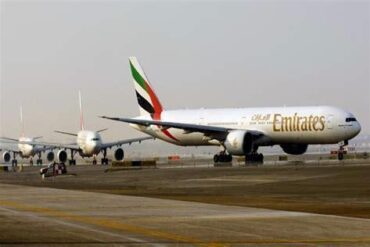
Rather than a full suspension of connectivity, Emirates has tactically deployed smaller, more flexible aircraft such as the Boeing 777 and Airbus A350. This allows the airline to maintain route presence while reducing capacity to better match demand.
Key patterns emerge from these changes:
- Routes with fluctuating passenger volumes saw repeated A380 withdrawals and reinstatements
- Some long-haul destinations, including Los Angeles and Osaka, are fully suspended
- Others continue with reduced-capacity aircraft to preserve market share
This is not a sign of weakness—it is precision capacity management at scale.
Why the Airbus A380 Is the First to Be Cut
The A380 is unmatched in capacity, but that advantage becomes a liability under uncertain conditions. With over 500 seats to fill on each flight, profitability depends heavily on consistently high demand.
When geopolitical disruptions dampen travel confidence or reroute flights into longer, less efficient paths, the economics quickly shift. Smaller aircraft like the Boeing 777-300ER and Airbus A350-900 offer critical advantages:
- Lower fuel consumption per flight
- Greater flexibility in scheduling
- Easier load factor optimization
In simple terms, it is better to fly a smaller aircraft full than a superjumbo half-empty.
Houston, Los Angeles, and Osaka: Strategic Suspensions Explained
Among the most notable changes is the suspension of A380 service to major long-haul destinations, particularly Houston, Los Angeles, and Osaka.
Houston, once a stronghold for Emirates’ A380 operations, has seen over 2,500 departures since its introduction in 2014. It ranked among the airline’s most significant U.S. markets for the aircraft. Yet today, even this established route cannot justify the deployment of such a large aircraft under current conditions.
Los Angeles and Osaka face similar challenges. These routes are heavily dependent on premium long-haul demand—precisely the segment most sensitive to geopolitical uncertainty and shifting travel patterns.
Copenhagen: A Pre-Planned Exit Accelerated by Reality
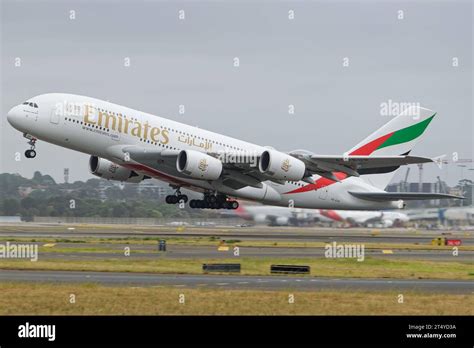
Not all A380 withdrawals are purely reactive. The case of Copenhagen reveals a deeper strategic transition already underway.
Even before the current crisis, Emirates had planned to phase out A380 service to Copenhagen by the end of May. The route is set to transition to a mix of Airbus A350-900 and Boeing 777 aircraft, increasing frequency while optimizing seat distribution.
This shift delivers measurable advantages:
- A 17% increase in total seat capacity
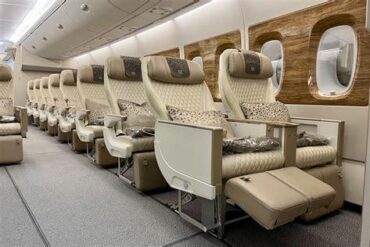
- Introduction of premium economy for the first time
- Improved frequency, enhancing connectivity and competitiveness
This is a clear example of how Emirates is moving away from reliance on ultra-large aircraft toward a more diversified fleet strategy.
The Economics of Flexibility in Modern Aviation
The aviation industry has entered an era where flexibility outweighs scale. The A380, once the ultimate symbol of efficiency through size, now faces structural limitations in a world defined by uncertainty.
Airlines are increasingly prioritizing:
- Aircraft that can adapt to fluctuating demand
- Routes that can sustain profitability with smaller loads
- Operational resilience over maximum capacity
For Emirates, this does not mean abandoning the A380 entirely. The aircraft remains central to high-demand routes like London and Sydney. However, its deployment is becoming more selective, more calculated, and more dependent on stable market conditions.
A Temporary Pause or a Long-Term Shift?
All 15 affected routes are currently scheduled to see the return of the A380 starting May 1. However, this uniform timeline raises questions. Such consistency often indicates placeholder scheduling rather than confirmed operational intent.
Given the fluid geopolitical situation, delays or further adjustments are highly likely. Airlines rarely commit to fixed plans in unstable environments, and Emirates is no exception.
What is clear, however, is that this episode reflects a broader transformation. The airline is not just reacting—it is adapting, refining, and future-proofing its network.
Conclusion: The A380’s Role Is Evolving, Not Ending
The temporary removal of the Airbus A380 from 15 major routes is not the end of an era—it is a recalibration of strategy. Emirates is demonstrating that even the most iconic aircraft must adapt to changing realities.
By shifting toward smaller, more efficient aircraft while preserving its global reach, the airline is positioning itself for resilience in an unpredictable world.
The A380 will continue to fly, but its mission is changing. It is no longer the default choice for expansion—it is a precision tool deployed where demand, stability, and profitability align perfectly.