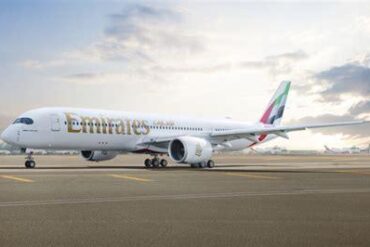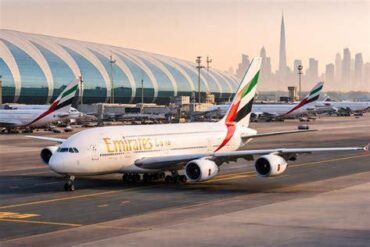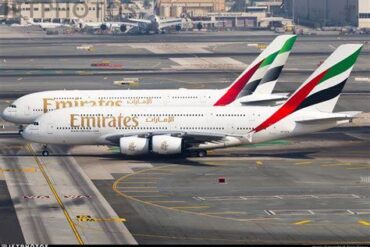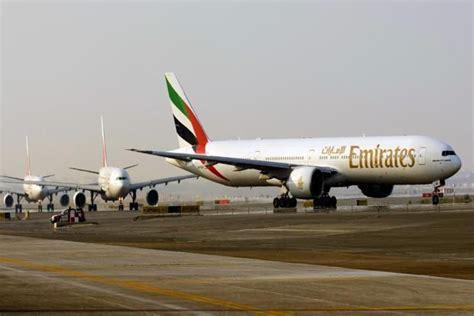
Emirates is preparing a major upgrade to its India network by introducing daily Airbus A380 service between Dubai International Airport (DXB) and Delhi Indira Gandhi International Airport (DEL). Beginning with the northern winter schedule on October 25, the world’s largest operator of the double-decker aircraft will deploy the A380 to India’s capital on a scheduled basis for the first time, replacing one of its Boeing 777-300ER frequencies with significantly greater capacity.
The move marks a milestone for both Emirates and Delhi Airport. Although the airline briefly operated an A380 flight to Delhi in July 2010 to celebrate the opening of the airport’s then-new terminal, that flight was a one-off event. Nearly sixteen years later, the superjumbo is finally becoming a permanent part of Emirates’ Delhi operation, reflecting the continued strength of demand between India, the Middle East, Europe, and North America.
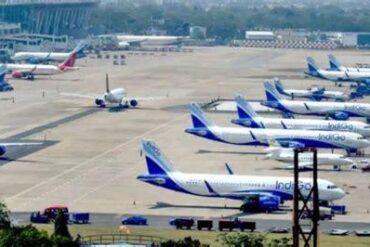
The new deployment also strengthens Delhi’s position as one of Asia’s premier airports for the Airbus A380. Once Emirates begins operations, Delhi will host scheduled A380 flights from three different airlines—Emirates, Lufthansa, and Singapore Airlines. That gives the airport more A380 operators than ever before and establishes it as India’s busiest gateway for regular superjumbo activity.
Emirates Upgrades One Daily Delhi Flight to the Airbus A380
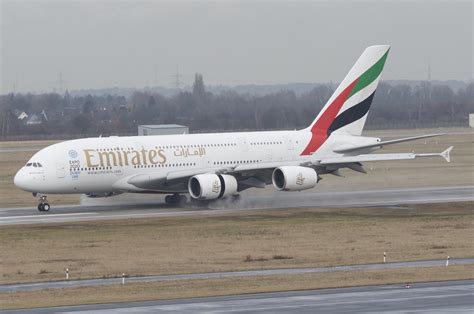
Under the new winter schedule, Emirates will continue operating four daily flights between Dubai and Delhi, but one evening departure from Dubai and its corresponding early morning return from Delhi will be upgraded to the Airbus A380.
The A380 will replace a four-class Boeing 777-300ER while maintaining Emirates’ premium-heavy product offering. Depending on the specific aircraft assigned, passengers can expect between 468 and 487 seats, substantially increasing overall capacity while also providing more First Class suites, Business Class seats, Premium Economy cabins, and Economy Class seating.
The November schedule is as follows:
| Route | Aircraft | Departure | Arrival |
|---|---|---|---|
| DXB–DEL | Boeing 777-300ER | 4:20 AM | 8:55 AM |
| DXB–DEL | Boeing 777-300ER | 9:55 AM | 2:40 PM |
| DXB–DEL | Boeing 777-300ER | 3:10 PM | 7:55 PM |
| DXB–DEL | Airbus A380 | 9:30 PM | 2:10 AM (+1) |
| DEL–DXB | Airbus A380 | 4:10 AM | 6:35 AM |
| DEL–DXB | Boeing 777-300ER | 10:35 AM | 1:00 PM |
| DEL–DXB | Boeing 777-300ER | 4:15 PM | 6:35 PM |
| DEL–DXB | Boeing 777-300ER | 9:30 PM | 11:59 PM |
By selecting the late-evening departure from Dubai, Emirates maximizes onward connectivity for travelers arriving from Europe, North America, Africa, and the Middle East before continuing to Delhi. The return timing similarly feeds into the airline’s extensive morning departure bank from Dubai.
Delhi Becomes Emirates’ Third Airbus A380 Destination in India
Delhi’s addition also expands Emirates’ exclusive position in India. The airline first introduced scheduled A380 operations to Mumbai in 2014, making it the country’s inaugural regular superjumbo destination. Bengaluru joined the network in 2022, and Delhi now becomes the third Indian airport to receive the aircraft.
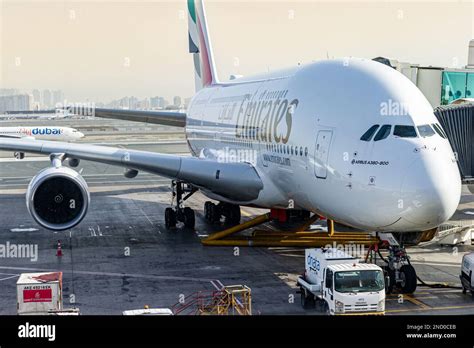
No other airline has operated the Airbus A380 to three different Indian cities.
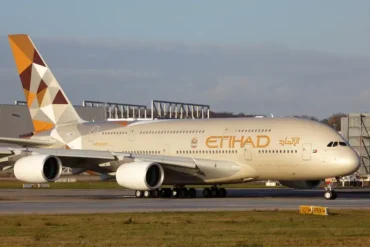
Etihad Airways previously deployed the aircraft to Mumbai before withdrawing regular operations in 2017, with only limited returns in later years. Lufthansa continues serving both Delhi and Mumbai with the A380 on selected schedules, while Singapore Airlines also maintains A380 operations to the same two cities. Emirates now becomes the only carrier with scheduled superjumbo service to Mumbai, Bengaluru, and Delhi simultaneously.
For travelers, this expansion means more opportunities to experience one of commercial aviation’s most recognizable aircraft on routes connecting India and the Gulf.
Complete Emirates Airbus A380 Schedule to India
With Delhi joining the network, Emirates will operate three daily Airbus A380 flights to India throughout November.
| Route | Departure | Arrival |
|---|---|---|
| DXB–Bengaluru | 9:35 PM | 2:40 AM (+1) |
| Bengaluru–DXB | 4:30 AM | 7:10 AM |
| DXB–Mumbai | 9:40 PM | 2:15 AM (+1) |
| Mumbai–DXB | 4:15 AM | 6:05 AM |
| DXB–Delhi | 9:30 PM | 2:10 AM (+1) |
| Delhi–DXB | 4:10 AM | 6:35 AM |
A noticeable feature of these schedules is their consistency. All three Indian destinations depart Dubai late in the evening and return early the following morning. This timing is carefully designed to integrate with Emirates’ global hub strategy, allowing passengers to connect efficiently across dozens of long-haul markets without lengthy layovers.
Dubai’s Global Hub Makes the A380 Upgrade Logical
The decision to deploy the Airbus A380 is driven by far more than local demand between Dubai and Delhi. Emirates relies on Dubai as one of the world’s largest connecting hubs, with passengers arriving from virtually every continent before transferring onto flights across its network.
The airline’s busiest departure period to Europe occurs during the morning hours, while numerous overnight arrivals from North America reach Dubai shortly beforehand. By positioning the Delhi flight within this connection window, Emirates can efficiently funnel thousands of transfer passengers onto a single high-capacity aircraft rather than operating multiple smaller services.
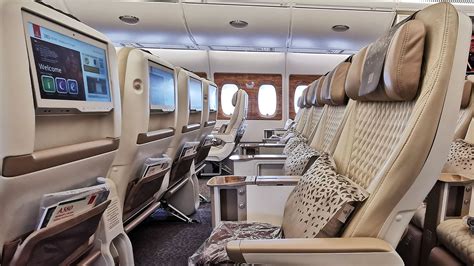
The aircraft also enables Emirates to increase premium seating without adding another flight. This is especially valuable on routes where airport slots are constrained but passenger demand continues to grow.
Europe and North America Drive Delhi’s Connecting Traffic
Recent booking data highlights why Emirates selected Delhi for its latest A380 expansion. During the twelve months ending in April 2026, nearly 590,000 passengers traveling through Delhi connected onward via Dubai to another Emirates flight. That represents more than 1,600 connecting passengers every day.
Approximately 44% of these travelers continued to destinations in Europe, making it the largest connecting region. North America accounted for 29%, followed by Africa and the Middle East at 12% each, while the remainder traveled to Australasia and Latin America.
The United States emerged as the largest country market for Delhi passengers connecting through Dubai, ahead of the United Kingdom, Canada, Saudi Arabia, Italy, Germany, South Africa, Spain, France, and Switzerland.
At the city level, London ranked as the largest destination, followed by Toronto, San Francisco, New York, Milan, Seattle, Los Angeles, Paris, Manchester, and Johannesburg. The prominence of North American cities within the top rankings reinforces why Emirates is introducing its highest-capacity aircraft on the route, enabling the airline to accommodate increasing demand while preserving seamless global connections through Dubai.
The addition of scheduled Airbus A380 flights to Delhi represents more than a simple aircraft substitution. It enhances Emirates’ network efficiency, strengthens Delhi’s role as India’s leading superjumbo gateway, and offers thousands of additional seats every week on one of the world’s busiest international corridors. As global travel demand continues to rise, the deployment underscores the continuing importance of the Airbus A380 within Emirates’ long-haul strategy and the growing significance of India in the airline’s worldwide network.