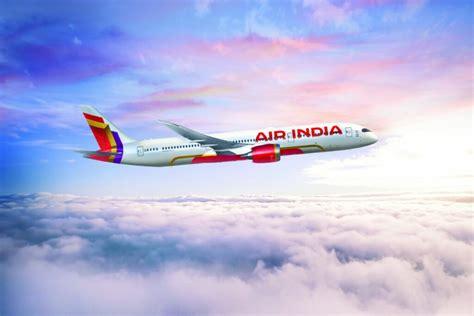
Air India has officially announced the return of non-stop flights between Delhi and Manila, re-establishing a vital air corridor between India and the Philippines for the first time in over a decade. Beginning October 1, 2025, the Tata Group-owned carrier will operate five weekly flights, aiming to reinvigorate tourism, strengthen trade ties, and capitalize on growing travel demand across South and Southeast Asia.
After a 12-year hiatus—since Philippine Airlines halted its direct service in 2013—this long-awaited route is a significant move in the evolving aviation dynamics of the region. The Delhi-Manila route promises new convenience for travelers and enhanced business connectivity between two rapidly developing Asian economies.
A Milestone Reconnection After a Decade
The previous suspension of direct flights between India and the Philippines stemmed from weak demand. However, 2025 marks a very different landscape. According to the Philippines’ Department of Tourism, there has been a remarkable uptick in Indian tourist arrivals, reaching nearly 79,000 in 2024, representing a 12.4% year-on-year growth. This figure also reflects a 53% increase compared to 2022, demonstrating a resurgent interest in the tropical archipelago.
This surge is part of a broader wave of Indian outbound travel, with Indian travelers ranking among the world’s highest spenders on international trips. With the Philippines now offering visa-free entry for up to 14 days to Indian citizens—regardless of third-country visas or residency—travel barriers have eased dramatically, making the archipelago an increasingly attractive destination.
Route and Service Details: Air India’s A321neo Takes the Lead
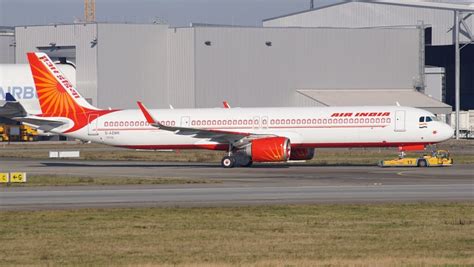
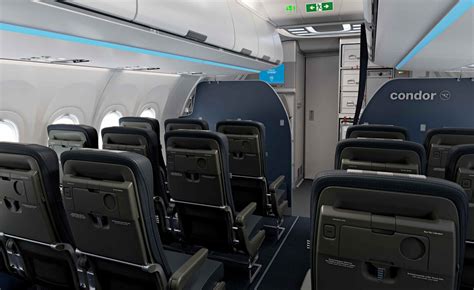
Air India will deploy its modern Airbus A321neo aircraft on the Delhi-Manila route. The plane features a three-class configuration: Business Class, Premium Economy, and Economy, ensuring that a broad segment of passengers—from leisure tourists to business travelers—can access the service comfortably.
Flights will operate on Monday, Wednesday, Thursday, Saturday, and Sunday, covering the six-and-a-half-hour journey non-stop. Bookings are already open on all standard platforms, including Air India’s official website, travel agencies, and online travel aggregators.
Strategic Timing with Policy Shifts
The timing of this announcement aligns perfectly with the Philippines’ recent visa reform, which now allows Indian nationals visa-free access for 14 days, removing the previous restriction that limited this benefit to those holding valid visas or permanent residence in countries like the US, UK, Canada, Australia, Japan, Singapore, or the Schengen zone.
This move places the Philippines in the same bracket as other Indian tourist favorites such as Thailand and Malaysia, both of which have also liberalized entry norms to attract Indian tourists. Combined with Air India’s launch, this policy creates a powerful synergy between increased accessibility and direct connectivity, expected to yield a notable rise in two-way travel.
Unlocking Transfer Traffic Potential from Europe
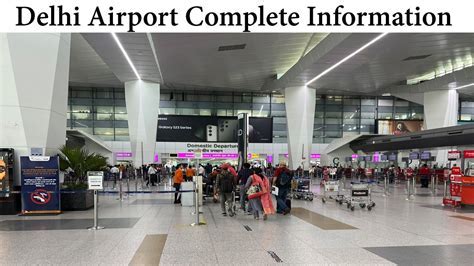
In addition to serving point-to-point traffic, the Delhi-Manila service is positioned to capture valuable transfer traffic between Europe and Southeast Asia. Air India’s growing hub at Delhi’s Indira Gandhi International Airport is evolving into a transit gateway linking European destinations with Asia-Pacific regions.
For travelers from Europe—especially those flying from London, Frankfurt, Paris, or Milan—the ability to connect to Manila via a one-stop route in Delhi represents a significant improvement in convenience and pricing compared to multiple hops through traditional hubs like Bangkok, Hong Kong, or Kuala Lumpur.
A Strategic Move in Competitive Southeast Asia
The Southeast Asian aviation market is fiercely competitive, with regional giants like Singapore Airlines, Cathay Pacific, Thai Airways, and Malaysia Airlines historically dominating intra-Asia and Asia-Europe traffic. However, Indian carriers are now pushing aggressively to capture a share of this lucrative corridor.
Air India, under Tata Group’s leadership and in synergy with IndiGo’s expanding network, is focusing on strengthening eastbound operations. With Southeast Asia witnessing a resurgence in post-pandemic travel, the new Delhi-Manila service becomes a symbolic and strategic milestone in Indian aviation.
Campbell Wilson, CEO and MD of Air India, encapsulated this mission by stating: *”The introduction of our Delhi-Manila route is yet another step in our mission to connect India with more of the world, non-stop. As outbound travel from India grows at an unprecedented pace, with Indian tourists ranking among the highest spenders globally, the new entry rules for Indian tourists are a shot in the arm to boost tourism to the Philippines.”
Expanding Cultural and Economic Exchange
India and the Philippines, though historically underconnected in aviation, share deepening cultural, educational, and business ties. India is a major provider of skilled professionals in the Philippines’ booming IT-BPM sector. In reverse, the Philippines’ nursing and healthcare talent has seen growing placements in Indian private medical institutions and multinational clinics.
Direct connectivity will not only ease business travel and corporate collaboration, but also spur student mobility, academic partnerships, and inbound Filipino tourism to India. As the Philippines increasingly seeks to diversify its global tourist base, India—with its large and growing middle class—is seen as a key strategic market.

Implications for Air India’s International Strategy
This route marks another feather in Air India’s expanding international cap. Over the past 18 months, the airline has launched or resumed multiple long-haul and regional services as part of its Vihaan.AI transformation plan, which aims to turn the flag carrier into a world-class global airline.
The Delhi-Manila route complements other recent additions, including flights to Copenhagen, Milan, Amsterdam, and Sydney, among others. With a growing widebody and narrowbody fleet under renewal, Air India is well-positioned to scale its network, offering both direct connectivity and hub-based transit options.
As Indian aviation moves from a point-to-point economy to a global transit proposition, Air India’s renewed presence in Southeast Asia demonstrates its ambition to reclaim long-lost ground and enter competitive international markets with confidence.
The Road Ahead: A New Era of Connectivity
The reestablishment of the Delhi-Manila route after 12 years is not just a return of a flight—it’s a renewed diplomatic and economic gesture, a symbol of shifting travel trends, and a powerful business opportunity for both nations. With strong demand indicators, relaxed visa policies, and a booming Indian outbound travel market, the route is poised for success.
In the coming years, stakeholders from tourism boards, hospitality, airlines, and trade sectors in both countries are expected to build on this direct air link, exploring joint marketing campaigns, bundled travel offerings, and investment forums.

For Indian travelers seeking new tropical experiences, and for Filipino professionals and tourists exploring India, the skies have just become a little friendlier—and the journey, far more direct.