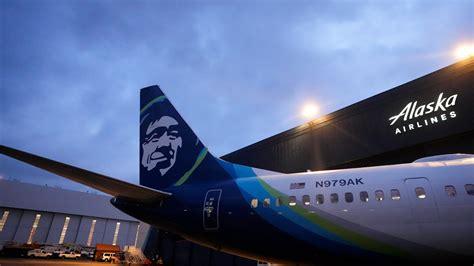
On the evening of July 20, 2025, Alaska Airlines abruptly grounded its entire fleet following a critical IT systems failure that crippled its operational infrastructure. The three-hour disruption sent ripples across its domestic and regional networks, causing widespread flight delays and cancellations, with airports from Seattle-Tacoma to San Diego experiencing gridlock. While services resumed by late Sunday night, the aftershocks continued into the following day, leaving passengers stranded and schedules in disarray.
Alaska Airlines Grounds All Flights Amid Sudden IT Systems Collapse
At approximately 20:00 PST, Alaska Airlines issued a system-wide ground stop affecting both its mainline fleet and its regional partner, Horizon Air. The order came after a multi-redundant hardware component in its data center, provided by a third-party vendor, failed without warning. This unexpected crash took down key operational systems vital to flight coordination, dispatch, crew scheduling, and aircraft tracking. With internal logistics severed, the airline had no choice but to halt departures to maintain safety and control.
In a statement, Alaska Airlines confirmed the outage was not the result of a cyberattack:
“The safety of our flights was never compromised. The IT outage is not related to any other current events, and it’s not a cybersecurity event.”
Though the systems began coming back online by 23:00 PST, the cascading impact across the airline’s network created significant bottlenecks that spilled into Monday’s operations.
A Ground Stop That Stretched Beyond the Clock: Immediate Fallout
The outage could not have come at a worse time. Seattle-Tacoma International Airport (SEA)—Alaska Airlines’ busiest hub—reported over 160 flight delays by late Sunday, nearly half of the airport’s total delays for the day. According to real-time tracking by Flightaware, more than 300 flights were delayed and 68 canceled on July 20 alone.
By the following morning:
- 83 Alaska Airlines flights were canceled
- Over 170 additional flights faced delays
This ripple effect struck every one of Alaska’s key airports. Anchorage International experienced 34 delays, San Francisco had 28, Portland International faced 22, San Diego reported 16, and Los Angeles International matched that tally. The breakdown in communication left passengers frustrated and confused, with many stuck in aircraft on the tarmac for hours.
Passengers Left in Limbo: Hours on the Tarmac and Communication Gaps
As Alaska’s operations team scrambled to restore order, customer experience suffered. At Denver International Airport, several Alaska Airlines flights were delayed so severely that passengers were forced to deplane after sitting onboard for nearly two hours without movement. Many travelers reported inconsistent information, lack of updates, and difficulty rebooking flights, compounding the frustration.
Despite restoring connectivity to its data systems late Sunday, the airline struggled to reposition crews and aircraft across its hubs. Many flight crews had already timed out under FAA duty regulations, unable to operate further without mandated rest. Aircraft remained out of position, and standby equipment was already allocated or grounded.
Internal Hardware Failure – Not Cyber Sabotage
In a climate where digital security has become increasingly critical, Alaska Airlines moved swiftly to clarify the root cause. The airline confirmed that the outage originated from hardware failure rather than a malicious cyberattack, distinguishing it from the string of cybersecurity incidents plaguing the aviation sector.
The failed system component was described as multi-redundant, indicating that even with backup mechanisms in place, the failure was both unexpected and severe enough to knock out multiple levels of defense. Alaska Airlines is now working with the vendor to replace the defective part and ensure system stability.
A Climate of Rising Cybersecurity Concerns in Aviation
Although this particular incident was not cyber-related, it underscores the vulnerability of modern airlines to IT instability. Alaska Airlines’ own corporate sibling, Hawaiian Airlines, reported a cyberattack in June 2025, attributed to the hacker group Scattered Spider. That breach did not affect flight schedules but raised red flags within the industry.
In the same timeframe, WestJet—a major Canadian carrier—also acknowledged a breach from the same hacking group. And just months earlier, in December 2024, Japan Airlines suffered a crippling cyberattack that halted ticketing and disrupted operations during peak holiday travel.
This pattern of digital sabotage has forced aviation regulators and carriers to reassess cybersecurity protocols, especially as airlines grow more dependent on cloud systems, automated logistics, and centralized control.
Ben Minicucci’s Response and Corporate Strategy
Ben Minicucci, CEO of Alaska Airlines, has publicly acknowledged the seriousness of the failure. Internally, Alaska is accelerating efforts to build out resilient failover systems and conducting an extensive audit of third-party tech dependencies. Minicucci emphasized that although the failure was not related to an attack, the resulting chaos highlighted the fragile interdependence of modern airline systems.
Alaska Airlines, headquartered in Seattle, is a long-standing full-service carrier and a key member of the oneworld alliance. With primary hubs in Anchorage, Los Angeles, Portland, San Francisco, and Seattle, its operations span a wide geography where weather, staffing, and logistical precision are constant challenges.

Lessons from the Ground Stop: A Wake-Up Call
While the ground stop lasted only three hours, its operational fallout was vast. In aviation, timing is critical. When one flight is delayed, aircraft rotations, gate assignments, crew schedules, and passenger connections all cascade into disruption. Alaska’s situation provides a stark example of how even short outages can cripple large-scale operations.
For passengers, the key takeaway is the growing importance of proactive travel planning—including checking flight status before departure, enabling airline alerts, and having contingency options. For the industry, this incident will likely become a case study in IT resilience, systems architecture, and disaster recovery.
Industry-Wide Reflection: Building for Redundancy and Recovery
The aviation industry is facing a crossroads where operational continuity and digital reliability must be tightly integrated. Airlines like Alaska that operate on lean margins and tight schedules must ensure that failures in one node—be it a data server or logistics system—don’t paralyze the entire network.
The event also revives discussions around the centralization of airline IT infrastructures. As carriers modernize their systems with cloud-based platforms and AI-driven logistics, they must also build redundant, geographically dispersed systems that can handle real-time transitions during unexpected failures.
Looking ahead, passengers and stakeholders alike will be watching closely as Alaska Airlines rolls out its post-mortem analysis and updates on system improvements. In the meantime, the airline continues to grapple with the residual effects of the outage, attempting to normalize operations amid widespread aircraft and crew misalignment.
Conclusion: Alaska’s Return to the Skies Comes With Caution
As of Monday afternoon, Alaska Airlines is flying again, but the scars of the outage remain. Trust must be rebuilt—not just with travelers, but internally among staff who rely on consistent digital systems to perform their duties efficiently. This incident underscores that in the age of digital aviation, IT infrastructure is as vital as jet fuel.
The resumption of operations marks a turning point. Alaska Airlines now faces the imperative to prove that the lessons learned from this event will shape a more robust, responsive, and reliable future—not just for its passengers, but for the aviation ecosystem at large.