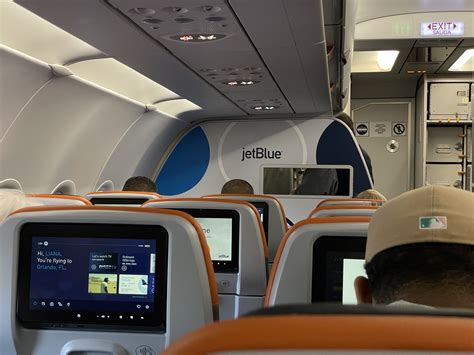
JetBlue Airways briefly halted all departing flights across the United States after an unexpected internal system outage prompted the airline to request a nationwide ground stop from the Federal Aviation Administration (FAA). The disruption unfolded just after midnight, temporarily pausing the New York-based carrier’s departures before systems were restored and flights resumed less than an hour later.
Although any interruption to airline operations can ripple through complex global schedules, the timing of the event significantly reduced its impact. The pause occurred during the early overnight hours when far fewer flights are scheduled to depart, allowing JetBlue to resolve the issue quickly while limiting widespread operational consequences.
The incident highlights the increasingly technology-dependent nature of modern airline operations, where internal IT infrastructure manages everything from dispatch and flight planning to passenger check-in and crew scheduling. When even a small part of that system experiences a failure, airlines often choose to temporarily halt departures to maintain safety and operational control.
FAA Issues Temporary Ground Stop at JetBlue’s Request
The ground stop was initiated at 12:35 a.m. Eastern Time, following JetBlue’s request to federal regulators. According to reports and official statements, the airline identified a brief internal technology disruption that affected operational systems necessary for safely launching flights.
To prevent aircraft from departing while the system outage persisted, the airline asked the Federal Aviation Administration to temporarily halt JetBlue departures nationwide. A ground stop is one of the most decisive operational control measures available in aviation, effectively freezing departures until the underlying issue is resolved.
In this case, the measure was precautionary and short-lived. Within 55 minutes, the airline’s technical teams restored functionality, allowing the FAA to lift the restriction at 1:30 a.m. and return the carrier to normal operations.
The FAA later confirmed that the pause occurred specifically because JetBlue requested the measure while addressing the IT issue. Once the systems stabilized, air traffic operations resumed immediately, enabling flights to depart again across the airline’s network.
Operational Impact: Hundreds of Delays but Minimal Cancellations
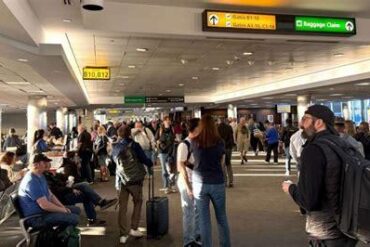
Despite the relatively brief disruption, the temporary halt still produced a ripple effect across JetBlue’s network. When departures are paused—even for a short period—aircraft and crews quickly begin to stack up at airports, creating congestion once operations restart.
Flight tracking data from FlightAware revealed that 172 JetBlue flights experienced delays within the following 24-hour period. That number represents roughly 18% of the airline’s daily operations, a noticeable but manageable impact.
Encouragingly for passengers, cancellations were extremely limited. Only two flights were canceled, and it remains unclear whether those cancellations were directly tied to the system outage or unrelated operational issues.
This outcome illustrates how strategic timing can dramatically reduce disruption. Because the ground stop occurred during overnight hours—when fewer flights are scheduled—the airline avoided the cascading cancellations that can occur during busier travel periods.

Why Timing Matters in Airline Disruptions
Airlines operate on tightly choreographed schedules where aircraft rotations, crew assignments, and airport slot allocations interlock like gears in a watch. When a disruption occurs during peak travel periods, the cascading effects can multiply quickly.
Morning and evening rush hours are especially vulnerable because large numbers of flights depart within narrow time windows. A system outage during those periods can create operational gridlock lasting the entire day.
By contrast, overnight operations typically involve lower flight volumes, fewer connecting passengers, and greater scheduling flexibility. In JetBlue’s case, this timing allowed the airline to absorb delays without triggering a wave of cancellations.
A useful comparison can be drawn with Alaska Airlines’ IT outage in October 2025, which triggered a much longer ground stop lasting approximately eight hours. That disruption began during the evening peak and forced hundreds of flight cancellations, demonstrating how the same type of technical issue can produce dramatically different outcomes depending on timing.

JetBlue’s Operational Scale on a Typical Day
To understand the potential scale of disruption, it helps to examine JetBlue’s daily flight schedule. According to aviation analytics firm Cirium, the airline planned to operate 823 flights on March 10, 2026, representing a significant portion of domestic and international travel capacity.
Those flights collectively offer more than 172 million available seats, with an average of 160 passengers per aircraft departure across the network. With such volume, even short interruptions can quickly affect thousands of travelers if not resolved promptly.
JetBlue’s network relies heavily on several key hubs and focus cities, including New York’s John F. Kennedy International Airport (JFK) and Boston Logan International Airport (BOS). These airports serve as central nodes connecting passengers to destinations throughout North America, the Caribbean, and Europe.
Key Routes Scheduled During the Recovery Day
As operations normalized, JetBlue resumed its planned schedule across major domestic and international routes.
Among the airline’s most frequently operated routes on the day following the outage were:
- Boston (BOS) – Orlando (MCO) with nine daily round trips
- Boston (BOS) – Washington National (DCA) also with nine round trips
- New York (JFK) – Santo Domingo (SDQ) with five rotations
- New York (JFK) – Santiago, Dominican Republic (STI) with five rotations
For long-haul services, the airline’s flagship transatlantic route between JFK and London Heathrow (LHR) operated two rotations, continuing JetBlue’s growing presence in the competitive transatlantic market.
Technology: The Hidden Backbone of Airline Operations
Modern airlines rely on an intricate web of digital infrastructure to coordinate thousands of moving parts across global networks. Systems manage flight planning, aircraft dispatch, weather monitoring, maintenance tracking, and passenger services simultaneously.
Even a short disruption in these systems can force airlines to temporarily halt operations while engineers confirm that flight data, routing information, and safety protocols remain intact.
Airlines typically choose caution in these situations. A brief pause to stabilize systems is far preferable to launching flights without fully functioning operational tools.
JetBlue’s quick recovery demonstrates how redundancy, rapid troubleshooting, and coordinated communication with regulators help airlines manage unexpected technical setbacks.
JetBlue Looks Ahead to Stable Operations
With the outage resolved and the FAA ground stop lifted, JetBlue moved quickly to restore its flight schedule and minimize lingering delays. Early indicators suggest that the airline absorbed the disruption effectively, avoiding the widespread cancellations that often accompany major system failures.
While the event lasted less than an hour, it serves as a reminder of the delicate balance behind modern aviation logistics. Thousands of flights, millions of passengers, and vast technological systems must align perfectly each day.
For JetBlue, the overnight timing of the outage and the rapid response from technical teams turned what could have been a major operational crisis into a brief, contained interruption—a testament to the resilience built into today’s airline networks.