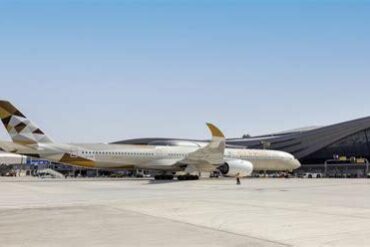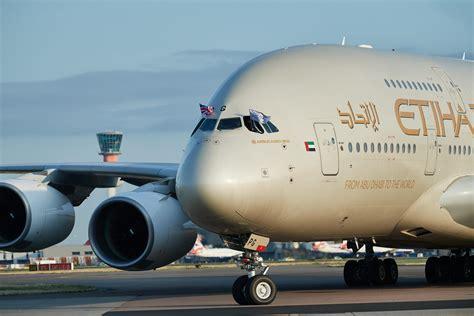
The return of the Etihad Airways Airbus A380 to the skies over Abu Dhabi marked a pivotal moment for regional aviation, signaling the first signs of operational recovery after days of sudden airspace closures across the Middle East. As geopolitical tensions surged following air strikes involving the United States and Israel, neighboring airspace rapidly became restricted, forcing carriers to suspend or reroute flights. Against that volatile backdrop, Abu Dhabi’s flagship carrier quietly but decisively initiated a limited return to service.
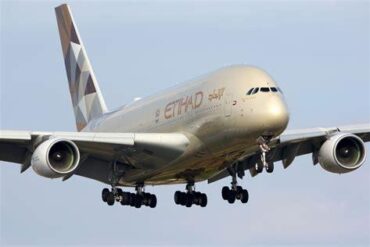
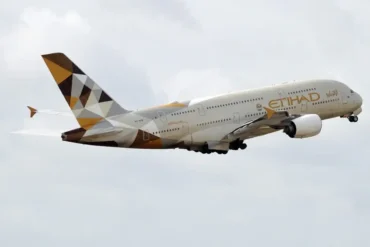
In the hours before the first departure, official guidance still indicated a suspension of commercial flights to and from Abu Dhabi International Airport until 14:00 UAE time on March 3. Yet flight tracking data revealed movement. A massive double-deck aircraft—Etihad’s Airbus A380 operating as EY67—lifted off for London Heathrow, becoming the first regularly scheduled passenger service to depart after the disruption.
Etihad A380 EY67 to London Heathrow: A Strategic First Move
The Airbus A380 bound for London Heathrow was more than a routine long-haul rotation. It symbolized a carefully coordinated restart under strict safety parameters. Rather than following its traditional northwesterly trajectory, the aircraft initially tracked southeast toward Oman before banking west across Saudi Arabian airspace. The deviation added mileage but significantly reduced exposure to sensitive zones affected by regional instability.
This rerouting underscores the adaptability of modern flight planning. Airlines today operate within an intricate web of geopolitical constraints, and dispatch teams rely on real-time intelligence, regulatory approvals, and coordination with multiple air navigation authorities. In this case, the detour prioritized safety while preserving long-haul connectivity between the UAE capital and one of Europe’s most critical hubs.
While scheduled commercial services remained officially suspended, select repositioning, cargo, and approved passenger movements were authorized in coordination with UAE authorities. The departure of EY67 demonstrated that when strict operational criteria are met, limited services can resume even amid uncertainty.
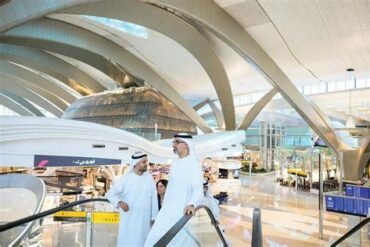
Measured Restart at Abu Dhabi International Airport
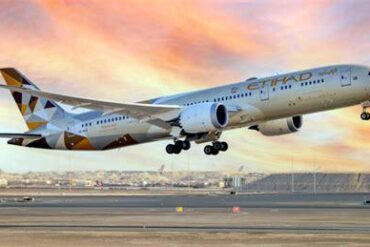
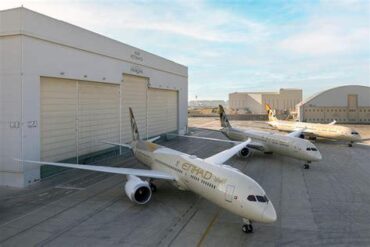
At Abu Dhabi International Airport, departure boards continued to show widespread cancellations. However, beneath that surface, a controlled reopening was unfolding. Following EY67’s 14:39 local departure, another Etihad service—EY41 to Amsterdam—took off at 14:50, operated by a Boeing 787-10 Dreamliner. The sequencing reflected deliberate pacing rather than a full-scale restart.
The airport authority advised passengers to confirm directly with airlines before traveling to the terminal, emphasizing that safety remained paramount. Ground teams coordinated with airline operations centers to ensure aircraft dispatch, crew availability, and passenger processing aligned with rapidly evolving airspace permissions.
Select Etihad Routes Resume Operations
Beyond London and Amsterdam, a limited cluster of Etihad flights gradually entered the air. Destinations spanned both regional and long-haul markets, including Dammam, Delhi, Islamabad, Jeddah, Karachi, Moscow, Mumbai, Paris, and Riyadh. Each departure represented not only commercial activity but also a logistical calculation: route risk assessment, crew legality compliance, fuel contingency planning, and diplomatic clearance.
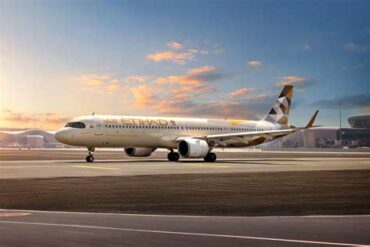
The pattern suggests that Etihad prioritized high-demand or strategically significant destinations first, balancing network resilience with operational prudence. Aircraft types deployed ranged from widebody Dreamliners to narrowbody jets suited for shorter Gulf and South Asian sectors, reflecting a flexible fleet strategy during constrained conditions.
Lufthansa Airbus A380 D-AIMK Departs After Extended Ground Stay
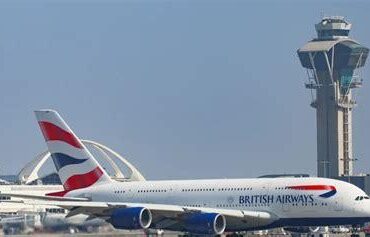
While EY67 was the first scheduled passenger service to leave, it was not technically the day’s first departure. That distinction belonged to a Lufthansa Airbus A380 registered D-AIMK, which departed earlier for Munich.
The aircraft had been in Abu Dhabi since November 6 of the previous year after arriving from Munich for maintenance purposes. Following an extended stay, it conducted a five-hour circular test flight on February 26 before tensions escalated. Its subsequent departure to Munich was operated without passengers, reflecting a ferry or positioning movement rather than commercial service.
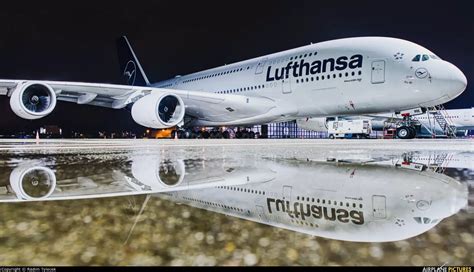
The presence of the Lufthansa superjumbo in Abu Dhabi highlights the emirate’s role as a maintenance and technical services hub. Large widebody aircraft often undergo heavy checks outside their primary operating bases, and such extended ground periods are not uncommon for fleet reactivations or structural inspections.
Airspace Volatility and the Wider Middle East Aviation Landscape
The temporary paralysis of multiple Middle Eastern hubs illustrates how tightly interwoven global aviation has become with geopolitical stability. Airspace closures ripple outward, forcing carriers to suspend flights, reroute traffic, and absorb cascading delays. Aircraft, crews, and passengers are all subject to the domino effect.
For Etihad Airways, the cautious return of the Airbus A380 to London represents both operational resilience and symbolic continuity. The A380 itself—once sidelined by the pandemic—has reemerged as a flagship asset on high-density routes, offering premium cabins and substantial seat capacity. Deploying it during the initial restart phase signals confidence in demand recovery on the Abu Dhabi–London corridor.
The unfolding situation remains fluid, and broader restoration of full schedules will depend on sustained airspace stability. Yet the sight of a double-deck aircraft climbing westward over the Arabian Peninsula carries weight. It reflects not only the reopening of a runway but the determination of airlines and airports to maintain global connectivity even when geopolitical fault lines shift beneath them.
In aviation, resilience is measured not by the absence of disruption but by the precision of recovery. The Etihad A380’s departure from Abu Dhabi demonstrates how, even amid uncertainty, disciplined coordination and rigorous safety oversight can return aircraft—and confidence—to the skies.