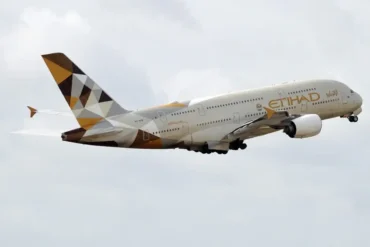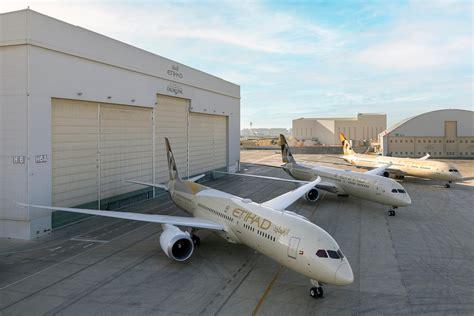
Etihad Airways has quietly begun the painstaking work required to restore its global network, repositioning aircraft stranded across multiple international stations back to its hub at Zayed International Airport ahead of a planned Monday relaunch. The move marks the first tangible sign that operations are transitioning from crisis response to structured recovery following sweeping regional airspace closures that paralyzed traffic into and out of the United Arab Emirates.
The disruptions, triggered by escalating geopolitical tensions across the Middle East, forced an abrupt suspension of departures and arrivals in Abu Dhabi. Aircraft already airborne were instructed to return to their origin airports, fracturing Etihad’s carefully choreographed rotation system. What followed was a logistical puzzle: widebody jets parked in foreign cities, crews displaced from their operating bases, and long-haul schedules rendered unusable overnight.
Rather than rushing into a premature restart, the airline has opted for what industry insiders describe as a “fleet reset.” The phrase sounds clinical, but in practice it involves securing overflight permissions, ferrying aircraft without passengers, recalibrating maintenance slots, and consolidating personnel back at base. Without this foundational step, any attempt to relaunch commercial services would risk compounding delays and operational instability.
Strategic Repositioning Signals Controlled Recovery
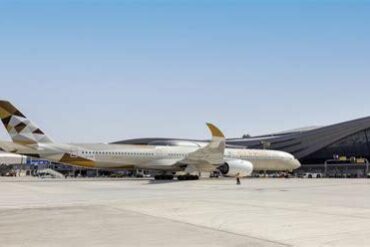
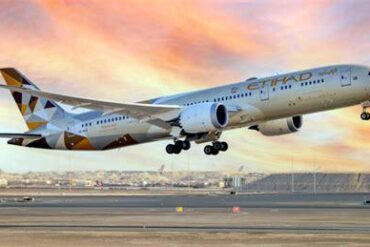
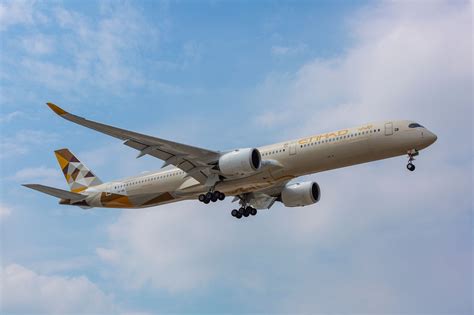
Flight-tracking data from Flightradar24 has already shown movement. Etihad ferried an Airbus A350-1000 from Istanbul and Muscat back to Abu Dhabi, while a Boeing 787-9 returned from Cairo under special operational permissions. These ferry flights carry no passengers and operate outside the normal commercial timetable, yet they represent the backbone of the restart strategy.
Concentrating aircraft at hub serves multiple purposes. Maintenance teams can conduct post-grounding inspections efficiently. Spare aircraft become immediately deployable once slots reopen. Crews can be reassigned into stable pairings rather than remaining scattered across outstations. Perhaps most critically, it reduces the financial and operational burden of stranded aircraft incurring overnight costs in foreign airports.
The scale of the disruption cannot be overstated. Beginning Saturday, February 28, airspace restrictions rippled across Gulf corridors, halting departures from Abu Dhabi through Sunday afternoon. Inbound flights scheduled to arrive before 14:00 UAE time were cancelled outright. As tensions escalated following U.S.–Israeli strikes on Iran and subsequent retaliation, aviation authorities across the region extended closures, leaving airlines to navigate a constantly shifting operational landscape.
A Defined No-Fly Window Creates Operational Clarity
Etihad has now formalized a clear suspension window, announcing that all flights to and from Abu Dhabi remain halted until 14:00 UAE time on Monday, March 2. This clarity is critical. In aviation, uncertainty is more disruptive than closure itself. A defined no-fly window allows dispatchers, ground handlers, and airport authorities to coordinate a staged reintroduction of services rather than attempting an improvised restart.
The airline’s relaunch will not resemble a simple on–off switch. Executives are preparing for a controlled ramp-up beginning with a skeleton schedule. Priority routes—likely high-demand regional sectors and strategically vital long-haul services—will return first. Additional frequencies will follow only as airspace corridors stabilize and slot allocations normalize.
This phased strategy mitigates cascading delays. When a network is fractured, aircraft rotations no longer align with crew duty limits, maintenance windows, or connecting passenger flows. Restarting too aggressively risks triggering a chain reaction of missed connections and aircraft swaps that can echo for days.
Passenger Flexibility Measures Cushion Immediate Impact
On the commercial front, Etihad has deployed flexibility tools to soften the disruption’s blow. Tickets issued on or before February 28 for travel through March 7 may be rebooked without fees onto Etihad-operated flights as late as March 18. Refunds remain available for passengers who opt not to travel. Customers are being urged to verify flight status prior to departure and to ensure contact details are current, a reminder that operational updates may shift rapidly.
Connecting passengers face additional complexity. If an onward segment has been cancelled, travelers may be denied boarding at their origin airport even if the first leg remains operational. This technical detail underscores how interconnected modern airline networks are; a single disrupted sector can invalidate an entire itinerary.
Phone lines have experienced significant congestion, prompting the airline to redirect refund requests to online forms and to advise agency bookings be managed directly through travel agents. Accommodation is being arranged where necessary, though availability remains constrained in certain markets due to the sudden surge in displaced travelers.
Operational Aftershocks Beyond the Headlines
The visible cancellations tell only part of the story. Beneath the surface, crew rosters have been dislocated, aircraft maintenance cycles interrupted, and slot coordination severed. Pilots must remain within strict duty-time limitations. Widebody aircraft require synchronized heavy maintenance planning. Ground crews need predictable aircraft arrivals to staff gates and handle baggage efficiently.
Reassembling this ecosystem requires precision. By concentrating its fleet at Zayed International Airport, Etihad regains control over the operational chessboard. Spare capacity can be strategically deployed, and contingency aircraft positioned to absorb irregularities during the first days of resumed service.
Industry observers note that Middle Eastern hubs operate as critical connective tissue between Europe, Asia, and Africa. When even a single hub pauses, the ripple effects extend across continents. Long-haul flights are forced into circuitous reroutes, fuel planning assumptions shift, and crew duty calculations tighten. In that context, Etihad’s measured approach reflects a broader lesson learned from past disruptions: stability first, scale second.
The coming days will test the resilience of both airline and passengers. A skeleton schedule will likely expand gradually as confidence in reopened corridors solidifies. Delays may persist as aircraft and crews return to synchronized rotations. Yet the visible ferry flights landing back in Abu Dhabi signal forward motion.
A fleet reset may lack glamour, but it is the foundation upon which reliable operations are rebuilt. By restoring aircraft to base before reopening its network, Etihad is prioritizing structural integrity over speed. In aviation, that discipline often determines whether recovery is chaotic—or controlled.