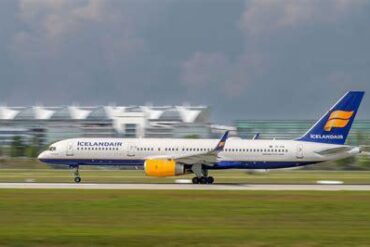
United Airlines has canceled a planned September 11 memorial flyover in Denver that was intended to feature a Boeing 777 escorted by four F-16 Fighting Falcons at precisely timed moments connected to United Airlines Flight 175. The proposed aerial tribute was designed to commemorate the 25th anniversary of the terrorist attacks, but concerns surrounding public reaction, communication, and coordination with local authorities ultimately brought the highly visible display to an end before it could take place.
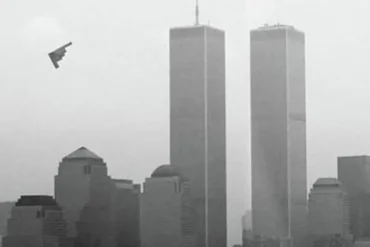
The plan carried unusually powerful symbolism because United Airlines Flight 175 (UA175) was one of the two United flights hijacked during the September 11, 2001 attacks. The Boeing 767 operating the flight departed Boston Logan International Airport for Los Angeles before being taken over by the hijackers. At 9:03 a.m., the aircraft struck the South Tower of the World Trade Center, becoming the second aircraft to hit the towers.
United’s proposed Denver flyover was carefully linked to that history. A United Boeing 777 was scheduled to depart Denver International Airport at 8:14 a.m., corresponding to the scheduled departure time of UA175 from Boston. The aircraft would then fly toward United’s Flight Training Center near Quebec Street and 35th Avenue, approximately 13 miles from Denver International Airport. The most striking part of the plan was scheduled for 9:03 a.m., matching the moment UA175 hit the South Tower.

The widebody aircraft was expected to be accompanied by four F-16 Fighting Falcons from the Colorado Air National Guard’s 120th Fighter Squadron. Such a formation would have created an unmistakable spectacle over the Denver metropolitan area, particularly because the event involved a large commercial jet flying alongside military aircraft at relatively low altitude. For an aviation audience, the combination of a Boeing 777 and four F-16s would have been both visually dramatic and operationally significant.
Why United Airlines Canceled the 9/11 Flyover
The difficulty was not the intention behind the tribute but the way the proposed operation intersected with a densely populated urban environment. Denver’s Office of Emergency Management began preparing public notifications after concerns emerged that residents could misinterpret a low-flying airliner surrounded by fighter jets as an actual emergency or hijacking scenario. The city estimated that roughly one million people might need advance notification to prevent confusion.
United described the flyover as part of private events connected with its Denver hub and training center rather than a public event. However, the aircraft would still have been visible and audible across a significant portion of the metropolitan area. Denver Mayor Mike Johnston’s office indicated that the city had been informed rather than consulted, highlighting the coordination problems surrounding the proposal.
“We fully support honoring the victims of 9/11 as well as first responders,” a spokesperson for the mayor’s office said, while explaining that the emergency management team wanted residents to know what they might see and hear. That distinction became important because the proposed formation was anything but inconspicuous.

A Boeing 777 is an enormous twin-engine aircraft, and even a controlled low-power pass would generate substantial noise. Four F-16s operating nearby would add another layer of unmistakable sound. Over a metropolitan area of approximately three million residents, the combined formation could have attracted attention far beyond the intended private audience.
A Powerful Tribute With Difficult Historical Timing
The decision also demonstrates why commemorative aviation events can be unusually complicated when their symbolism closely mirrors the circumstances of a tragedy. In this case, the timing was deliberately precise: 8:14 a.m. represented UA175’s departure, while 9:03 a.m. represented its impact with the South Tower. For families, survivors, first responders, and members of the public, those details could carry deeply personal meaning.
United has a particularly direct connection to the September 11 attacks. United operated both Flight 175 and Flight 93, with 16 crew members and 84 passengers killed aboard the two aircraft. American Airlines also lost passengers and crew aboard Flights 11 and 77, which were used in the attacks on the World Trade Center and Pentagon.
The cancellation therefore does not remove United’s broader commitment to remembering its employees and passengers. Instead, the airline is proceeding with a different memorial project at its Denver training facility. United is unveiling a monument incorporating steel recovered from the World Trade Center Ground Zero site, dedicated to the crews of Flight 175 and Flight 93.

That approach provides a more controlled setting for remembrance while avoiding the potential confusion associated with a fighter-escorted commercial aircraft flying over a major American city at the exact moment one of the September 11 aircraft struck the World Trade Center.
United’s Denver 9/11 Memorial Takes a Different Path
The canceled Boeing 777 9/11 flyover would have been an extraordinary aviation tribute, but its cancellation illustrates the challenge of balancing spectacle with sensitivity. United’s intention to honor those lost on September 11 is clear, yet the operational reality of staging a highly visible military-commercial formation over Denver created questions that could not easily be separated from the emotional history of the event.
As the 25th anniversary approaches, memorial ceremonies at the National September 11 Memorial and Museum and in Shanksville, Pennsylvania will provide more traditional settings for remembrance. In Denver, United’s permanent monument will now carry much of the commemorative focus. Rather than recreating an image associated with the attacks in the sky, the airline will offer a physical place where the people connected to Flights 175 and 93 can be remembered.
The canceled flyover may never leave the ground, but the story behind it underscores how deeply 9/11 remains connected to United Airlines, commercial aviation, and the people who operate it. The final tribute in Denver will be quieter, but for an anniversary carrying such enormous historical weight, quiet remembrance may ultimately prove more appropriate than a dramatic formation in the sky.