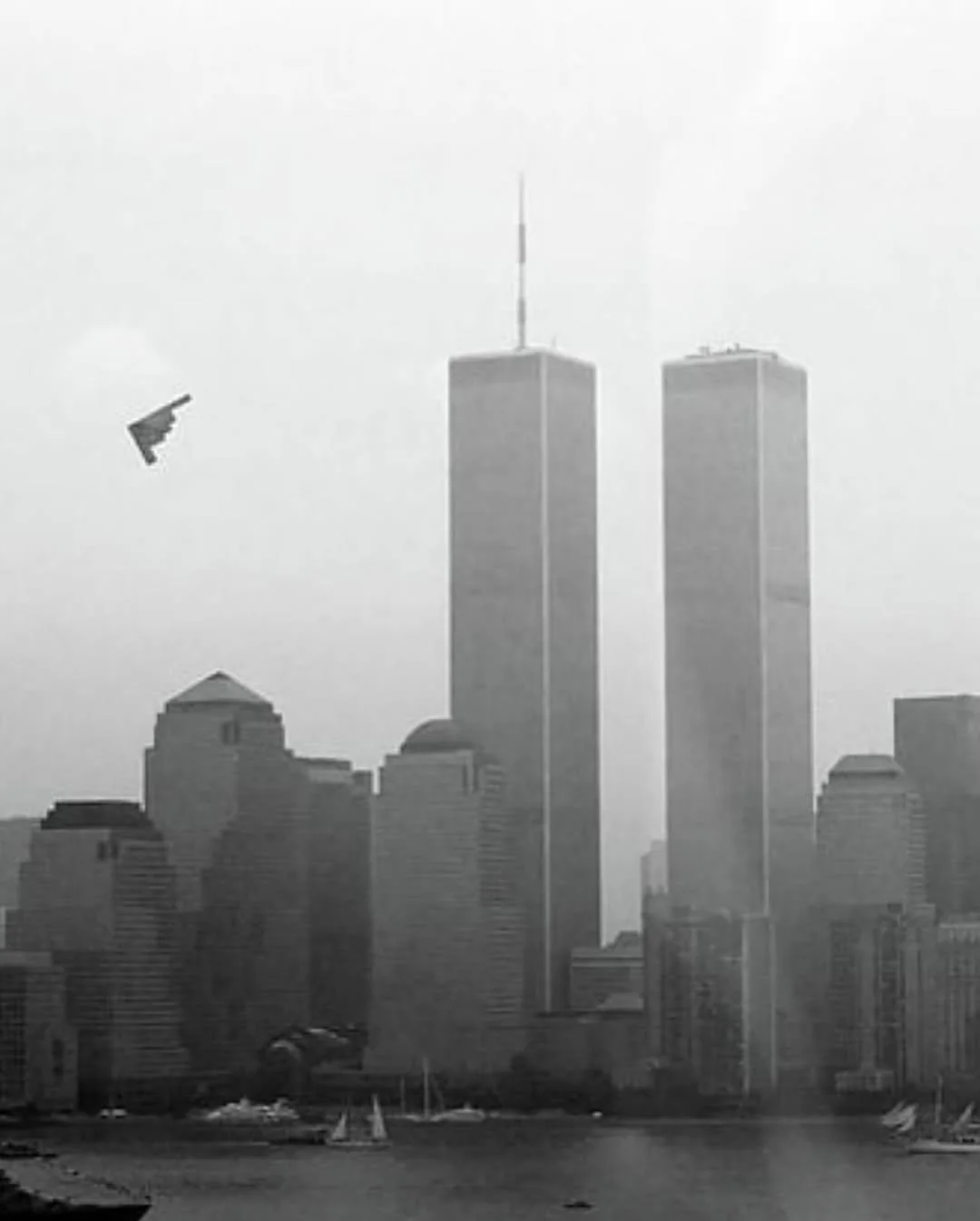
On July 4th, 2000, a shadow swept across Manhattan that seemed to defy time, technology, and logic. As part of the OpSail 2000 celebrations, the Northrop Grumman B-2 Spirit, the United States Air Force’s premier stealth bomber, soared over the skyline of New York City, passing directly above the World Trade Center. The moment, captured in a rare photograph by Sean Gautreaux, has since become a subject of awe, disbelief, and reflection.
The Iconic Photo: B-2 and the Twin Towers
The image—grainy, haunting, and historical—pairs two symbols of vastly different eras: the brutalist permanence of the Twin Towers and the flowing, alien geometry of the B-2. It is an intersection of American economic power and military innovation.
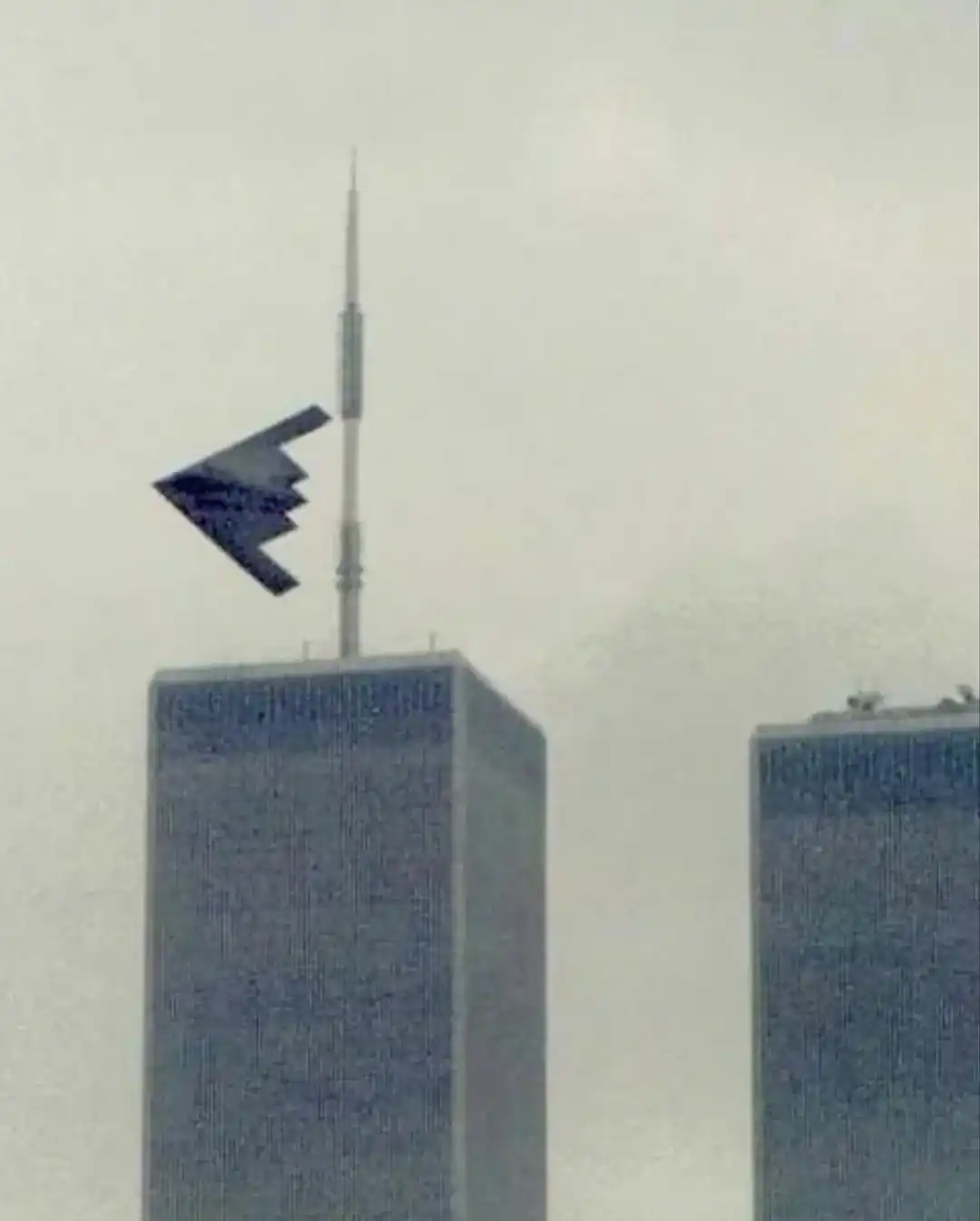
The B-2 Spirit, a craft shrouded in secrecy and born of Cold War tensions, was first unveiled to the public in 1988, though development began much earlier under classified initiatives. Its flyover above NYC marked one of the very few times this aircraft was seen flying over such a densely populated civilian area. The image’s strange juxtaposition evokes a feeling of eerie surrealism, compounded by the knowledge of what would happen to the Twin Towers just 14 months later.
A Fourth of July Like No Other: OpSail 2000
The flyover was part of the OpSail 2000 event, a massive naval and aerial show celebrating America’s maritime heritage and the new millennium. The U.S. military showcased its most advanced aircraft, ships, and ceremonial firepower. However, few in the crowd that day could have anticipated the sheer alien presence of the B-2 overhead.
From the riverside parks to midtown rooftops, spectators looked up in awe as what appeared to be a flying wing glided silently through the summer sky. It looked more like a spacecraft than a conventional aircraft—angular, matte-black, and utterly quiet. Many people, then and now, liken it to a UFO.
Engineering the Future: The B-2 Spirit’s Cold War Origins
To understand why the image stuns viewers decades later, it’s important to explore the technological marvel that is the B-2 Spirit. Conceived in the late 1970s under the Advanced Technology Bomber program, the B-2 was developed to penetrate dense Soviet air defenses using low observable (stealth) technology.
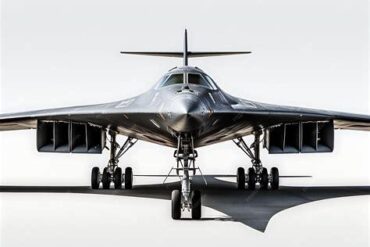
Built primarily from composite materials, coated with radar-absorbing paint, and shaped with curves designed to scatter radar waves, the B-2 can appear nearly invisible to radar systems. Its unique flying wing design is a direct descendant of the work of Jack Northrop, whose early experiments in flying wings date back to the 1940s.
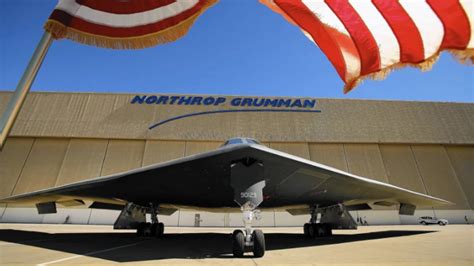
At $2.13 billion per unit (adjusted for inflation), the B-2 remains one of the most expensive aircraft ever built. But its stealth capabilities, range of 6,000 nautical miles without refueling, and payload of up to 40,000 pounds make it an unparalleled strategic asset.
Timeless and Otherworldly: Why the B-2 Still Looks Like Sci-Fi
What astonishes many observers—even 25 years after the flyover—is how futuristic the B-2 still appears. A comment from Redditor Ant0n61 puts it succinctly: “The B-2 looks like it’s from the future. Incredible this is a craft from the 80s.” The sentiment is echoed widely. Despite being more than three decades old, the B-2 could pass for cutting-edge even today.
This longevity is no accident. The B-2’s design was so advanced and forward-thinking that it anticipated aerospace trends that wouldn’t become mainstream until much later. Aircraft like the F-117 Nighthawk and even the F-22 Raptor owe much to the innovations first tested on the B-2.
Stealth Meets Symbolism: The Twin Towers and National Defense
The flyover’s symbolism becomes even more layered in retrospect. The B-2 Spirit represented unseen strength, a sentinel in the sky. The World Trade Center, tall and commanding, represented economic might. Their alignment in one image now reads like a photograph from an alternate history—a moment frozen in time, juxtaposing a past world order with the hidden realities of strategic deterrence.
When Redditor ElSquibbonator remarked, “It feels so . . . off seeing the B-2 and the Twin Towers in the same photo,” they voiced an instinctive discomfort. The stealth bomber seems out of place not because it shouldn’t be there—but because it belongs to a different timeline.
Authenticity and Provenance of the Photo
For those doubting the photo’s legitimacy, Redditor minhbi99 traced it to its source: “World Trade Center and OpSail 2000 July 4th Photo 18 B2 Stealth Bomber” by Sean Gautreaux. The photograph, often shared online in a cropped form, is indeed authentic.
This image has circulated in forums like r/aviation and Reddit threads for years, often with disbelief or skepticism. The disbelief, however, arises more from cognitive dissonance than from any digital manipulation. The contrast of imagery and implications is so powerful that viewers second-guess their own memory of history.
A Moment of National Spectacle Before Tragedy
July 4th, 2000, was a day of pageantry and pride, a celebration of American technological and naval might. And yet, what makes the B-2’s appearance unforgettable is what came next. In just over a year, the World Trade Center would be obliterated in the September 11, 2001 attacks.
This contextual knowledge gives the image an unsettling prescience. The plane, designed for nuclear deterrence, was never meant to fly over American cities in wartime. But for a fleeting moment, it did—in peacetime, in full view of civilians, at the pinnacle of American confidence.
Legacy and Reflection: What the Image Teaches Us
Two decades later, the photo of the B-2 Spirit over New York is more than a fascinating snapshot—it’s a study in contrasts. It forces us to reconsider:
- The blurred boundary between science fiction and military reality
- The timeline of progress—how things that seem impossibly advanced can, in fact, be old
- The nature of power—silent, invisible, yet always looming
Reddit user aa2051 captures it best: “It’s funny because the B-2 is more than 30 years old and yet feels so modern that this photo looks like it came from an alternate timeline.”
And that’s exactly what this flyover feels like—a glimpse into another version of history, one where symbols of strength silently overlap in the sky, unaware of the tectonic shifts about to come.
Final Thoughts: A Symbol of Invisible Might
The B-2 Spirit’s flyover above New York City remains one of the most iconic and quietly provocative aerial images in modern history. It is not just about aircraft or architecture. It’s about perception—how we view power, progress, and protection.
A futuristic bomber soaring above towers that would soon be erased from the skyline: the moment now lives as both a technical marvel and a haunting prelude. Rarely does a single image say so much, so silently.