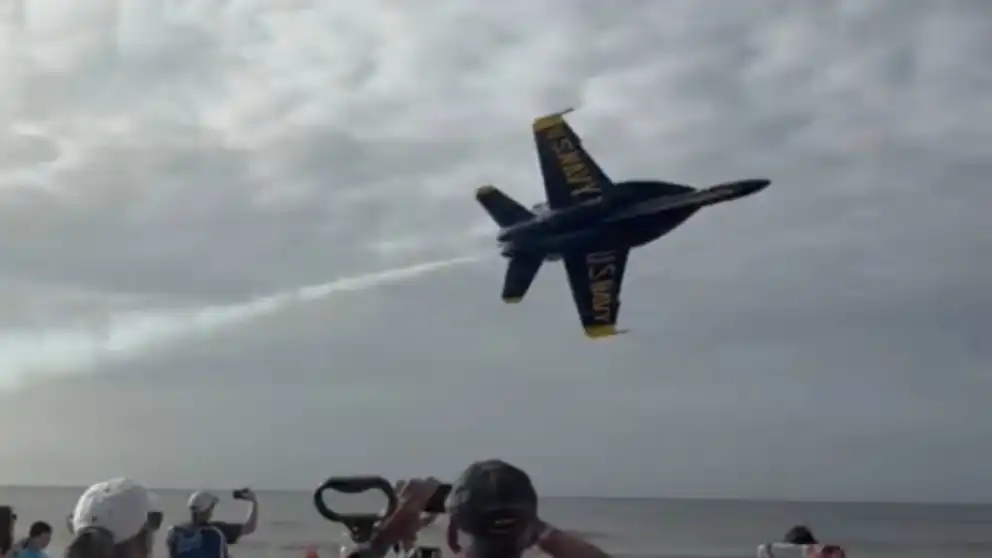
A Blue Angels F/A-18E Super Hornet pilot involved in a controversial low-altitude flyover over Pensacola Beach, Florida, will not be fired or receive disciplinary action, according to statements from senior US Navy officials. The dramatic pass, which sent sand, umbrellas, and beach equipment flying, quickly became one of the most discussed military aviation moments of the summer.
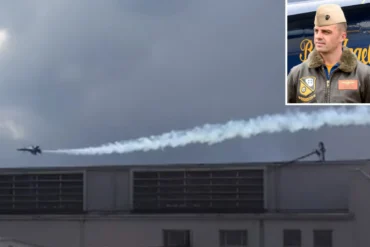
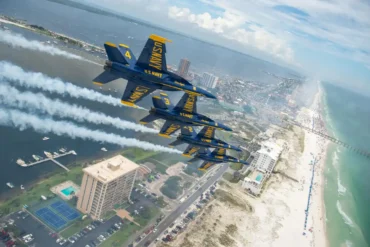
The July 15 flyover occurred during the Blue Angels’ hometown event, “Breakfast with the Blues,” near Naval Air Station Pensacola. Video footage showed the aircraft racing across the coastline at an extremely low height, with observers estimating the jet was approximately 40 feet (12 meters) above the ground. The maneuver created a powerful wake effect, causing turbulence across the beach and surprising spectators gathered below.
The incident immediately raised questions among aviation experts and safety advocates because the altitude appeared far below the typical minimum safe altitude expected for aircraft operations. While the Blue Angels operate under special Federal Aviation Administration waivers that allow them to perform advanced demonstrations, those exemptions still contain strict limitations designed to protect pilots, spectators, and surrounding communities.
Blue Angels Flyover Creates Viral Controversy Over Safety Rules
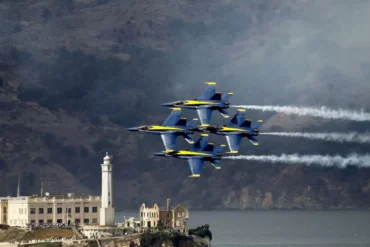
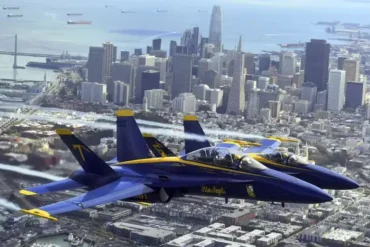
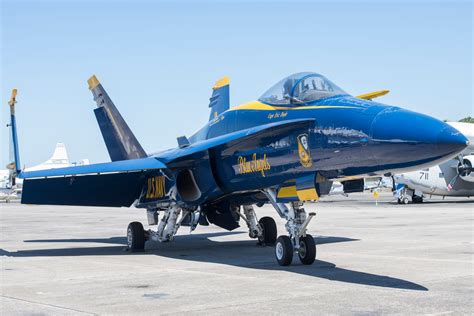
The Blue Angels are known worldwide for precision flying, aggressive formations, and carefully planned demonstrations. Their performances involve maneuvers that would normally be prohibited for civilian aircraft, including high-speed passes and aerobatic routines conducted under specially approved conditions.
However, the team’s exemptions do not provide unlimited freedom. Demonstration flights must take place within approved areas, during approved times, and according to detailed safety procedures. Even during airshows, aircraft are generally restricted from performing dangerous maneuvers directly over crowds.
The Pensacola Beach flyover looked similar to a scene from a Hollywood aviation movie, particularly the famous low-level “buzz the tower” moment associated with Top Gun. In reality, military flight instructors have long emphasized that unauthorized low passes can carry serious risks, including reduced reaction time, potential aircraft control issues, and danger to people on the ground.
The most immediate concern from the viral footage was the proximity of the aircraft to spectators. The crowd included families and children attending the community event, leading some observers to question whether the maneuver exposed people to unnecessary risks. The powerful jet exhaust and wake turbulence were strong enough to move beach gear, raising additional concerns about possible injuries or hearing damage.
Despite the criticism, no injuries or property damage claims have been publicly reported. The Navy stated that it would conduct an internal review, emphasizing that community safety, spectator protection, and pilot safety remain top priorities.
Navy Leaders Defend Blue Angels Pilot After Review
Shortly after the video spread online, senior officials indicated that the pilot would not face punishment. Acting Secretary of the Navy Hung Cao publicly stated that the flight debrief had been completed and that there would be “no reprimands” and “no firings.”
Defense Secretary Pete Hegseth also expressed support for the Blue Angels and their continued operations. The response from political and military leaders contrasted with the traditional approach of conducting lengthy aviation safety investigations before reaching conclusions.
Supporters of the maneuver argued that Pensacola has a unique relationship with naval aviation. The city is often called the “Cradle of Naval Aviation” because of its long history with Navy flight training and its connection to NAS Pensacola, the Blue Angels’ home base.
Many spectators attending the event were familiar with military aviation and viewed the flyover as an unforgettable demonstration rather than a reckless act. The region regularly experiences military aircraft activity, and Blue Angels training flights are a common sight over the area.
Why the Incident Is Different From Past Blue Angels Safety Reviews
The decision not to discipline the pilot has drawn comparisons with previous Blue Angels safety incidents. In 2011, the team faced a major review after a maneuver during the Lynchburg Regional Air Show briefly dropped below the authorized minimum safe altitude.
Following that incident, Blue Angels commander Dave Koss voluntarily stepped down after accepting responsibility for the team’s performance. Although there were no injuries or property damage, Koss believed leadership accountability was essential to maintaining public trust in the organization.
That response became an example of the Blue Angels’ long-standing safety culture, where commanders have historically accepted responsibility when mistakes occur. The Pensacola Beach incident has therefore sparked debate about whether the Navy’s current response represents a shift in how it handles high-profile aviation events.
The Blue Angels have built their reputation on discipline, precision, and professionalism. Every maneuver performed by the team is designed to demonstrate aviation excellence while maintaining public confidence. The challenge for the Navy is balancing the excitement and tradition of military demonstrations with the responsibility of protecting spectators.
Blue Angels Continue Mission Despite Public Debate
The viral flyover has not changed the Blue Angels’ mission of representing the US Navy and Marine Corps through aviation excellence. The team remains one of the most recognizable military demonstration units in the world, attracting millions of spectators each year.
The controversy surrounding the Pensacola Beach pass highlights the difficult balance between thrilling aviation displays and strict operational safety. While supporters celebrate the skill required to perform such a maneuver, critics argue that even highly trained pilots must operate within established safety boundaries.
For now, the Navy’s position is clear: the pilot involved will remain with the Blue Angels, and the team will continue performing. The internal review may provide more details about the circumstances behind the flight, but the incident has already become one of the most debated Blue Angels moments in recent years.