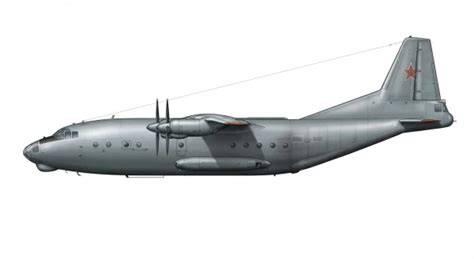
The Antonov An-12 is one of the strangest successful military transports of the Cold War. At first glance, it looks like the Soviet answer to the Lockheed C-130 Hercules: a four-engine, high-wing turboprop designed to carry troops, equipment, vehicles, and supplies over medium distances. Yet that familiar silhouette hides an aircraft built around a remarkably different philosophy. Instead of simply becoming a Soviet equivalent of the Hercules, the An-12 combined the requirements of a tactical transport with engineering ideas inherited from the World War II bomber era.
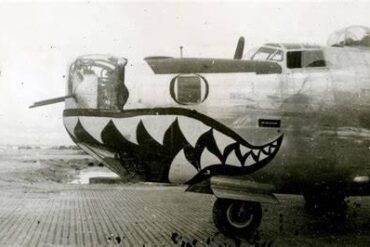
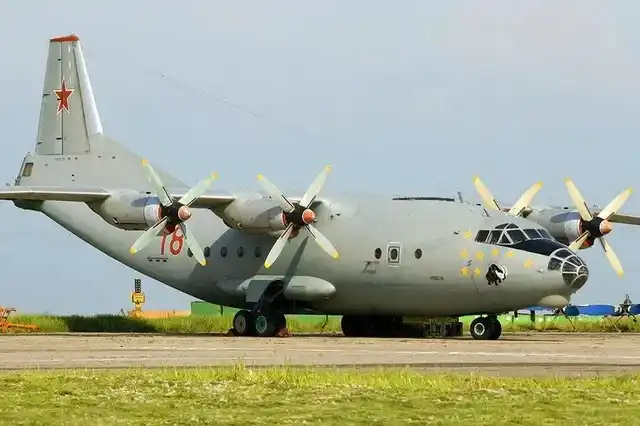
Its most striking features make that heritage immediately visible. The aircraft carried a fully glazed navigator’s nose, giving the crew a forward view reminiscent of a wartime bombardier’s station. At the opposite end, military versions incorporated a manned tail turret armed with two 23 mm NR-23 cannons, complete with armored glazing and protective armor. In an age when jet bombers were rapidly transforming military aviation, the Soviets had effectively placed bomber-style defensive equipment on a turboprop cargo aircraft.
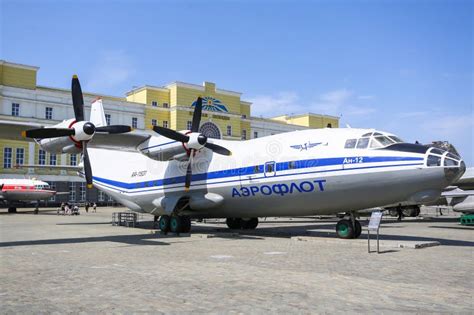
The An-12 first flew on December 16, 1957, from Irkutsk-2 aerodrome. Captain Yakov Vernikov and co-pilot Georgii Lysenko were at the controls during that historic flight. The aircraft entered Soviet service in 1959, placing it in the same broad Cold War generation as the early Lockheed C-130 Hercules. From there, the Antonov spread across the Soviet Union, Warsaw Pact countries, and numerous foreign operators, including India, China, and Egypt.
For decades, however, the aircraft has often been reduced in Western discussions to a simple label: the “Soviet C-130.” That description is convenient but misleading. The two aircraft shared a mission category and several broad aerodynamic characteristics, yet their internal philosophies were very different. The Hercules was conceived around efficient logistics, rapid loading, a pressurized cargo compartment, and a rear loading ramp. The An-12 emerged from the Antonov An-10 family and carried much more of the design language of a militarized, bomber-influenced transport.
The Soviet C-130 That Wasn’t Really a C-130
The superficial comparison between the An-12 and C-130 makes sense. Both aircraft use four turboprop engines mounted on a high wing, both were intended to support military forces far from major bases, and both became remarkably widespread. Their careers also overlapped for decades, making them natural rivals in the historical record of tactical airlift.
But similar requirements do not necessarily produce similar airplanes.
The Lockheed C-130 Hercules was designed specifically for the United States Air Force’s Tactical Air Command as a modern tactical transport. Its defining feature was the rear loading ramp. That ramp allowed troops, vehicles, artillery, pallets, and other equipment to move directly into the cargo hold with comparatively little ground equipment. The aircraft’s pressurized fuselage also made high-altitude operation more practical and gave passengers and crew a more controlled environment.
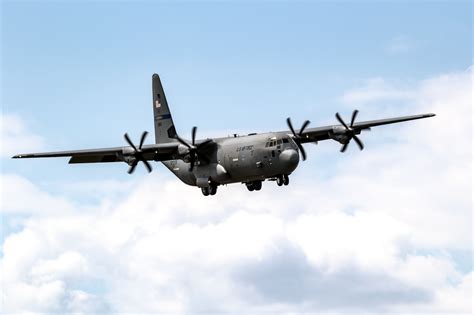
The Antonov approach was different. The An-12 was derived from the An-10, a large Soviet turboprop transport developed for both military and civil applications. Antonov adapted that basic architecture into a military aircraft that could operate in demanding conditions while incorporating defensive capabilities directly into the airframe.
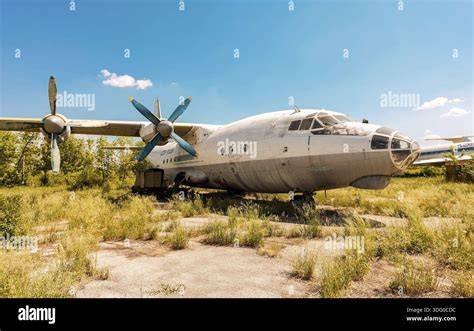
According to manufacturer specifications cited in the reference material, the An-12 measures approximately 125 feet (38.02 meters) in wingspan and 109 feet (33.11 meters) in length. Four Ivchenko AI-20 turboprops produce roughly 4,000 horsepower each. Its published cruise speed is around 354 mph (570 km/h), with a service ceiling approaching 32,808 feet (10,000 meters) and an operational range of approximately 3,107 miles (5,000 km).
Its maximum payload is around 44,000 pounds (20,000 kg), giving the aircraft substantial tactical utility.
Yet the statistics tell only part of the story. The most revealing characteristics are found in the places where the aircraft departs from conventional transport design.
A WWII-Style Glazed Nose
The An-12’s nose immediately sets it apart from the Hercules.
Instead of terminating in a solid, streamlined structure dedicated primarily to avionics and cockpit equipment, the Soviet aircraft features a glazed forward section associated with the navigator’s position. The arrangement recalls the bombardier and navigator stations of heavy bombers from the Second World War, when visual navigation and observation from the aircraft’s nose remained extremely important.
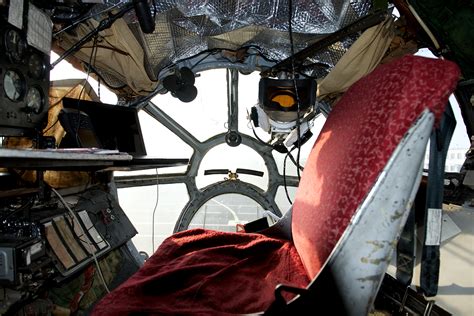
This was not simply an aesthetic choice. The aircraft was designed during a period when Soviet military aviation still carried substantial institutional experience from WWII. Thousands of Soviet aircrew had operated aircraft in which navigators, bombardiers, and other specialists occupied dedicated stations throughout the fuselage. Those habits did not disappear overnight when turboprops replaced piston engines.
The glazed nose therefore reflects a transitional period in aviation engineering. The An-12 belonged unmistakably to the turboprop age, yet portions of its architecture still belonged to the bomber generation that preceded it.
The arrangement also reveals something about the Soviet conception of tactical air operations. Navigation was not treated solely as an electronic function. A dedicated crew station and extensive external visibility remained valuable, particularly when aircraft were expected to operate across enormous territories and into austere environments.
The result is one of the An-12’s most recognizable visual signatures: a modern four-engine transport carrying what appears to be a small piece of a wartime bomber at its nose.
The Tail Turret Was More Than a Historical Curiosity
The aircraft’s rear end is even more unusual.
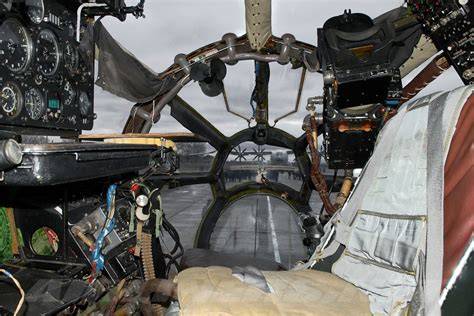
Military An-12 variants incorporated a manned tail gunner’s position equipped with two 23 mm Nudelman-Rikhter NR-23 cannons. The gunner occupied a dedicated station surrounded by substantial protective glazing. Reference material describes armored glass approximately 5.3 inches (135 mm) thick, along with a removable armor shield around 0.8 inches (20 mm) thick.
That equipment dramatically changes how we should interpret the aircraft.
Modern military transports generally depend on speed, altitude, electronic warfare systems, infrared countermeasures, radar warning equipment, escorts, or operational tactics to reduce vulnerability. The An-12’s original design instead incorporated direct defensive firepower into the aircraft.
This was a fundamentally different answer to the problem of survivability.
A transport flying near contested territory was not necessarily expected to be helpless. If an enemy aircraft approached from behind, the An-12’s gunner could engage it directly. The arrangement was conceptually familiar from WWII bombers, where rear turrets existed specifically because the tail represented a vulnerable approach angle.
The irony is that the An-12 arrived when aviation technology was already moving away from that philosophy. High-speed jet fighters, guided missiles, radar, and increasingly sophisticated air-defense systems were making gun turrets less attractive as a primary defensive solution.
Yet the Soviet military retained the concept.
The decision added weight, equipment, crew requirements, maintenance demands, and aerodynamic penalties. Those disadvantages were accepted because Soviet planners valued a degree of organic self-defense that was not central to the original C-130 concept.
The later development of the AC-130 demonstrates that the Hercules family could also become heavily armed, but that was a radically different application. The AC-130 was a specialized gunship created for a dedicated combat role. The An-12’s tail guns were integrated into the military transport itself.
That distinction matters.
Why the An-12 Did Not Have a Conventional C-130-Style Loading System
The difference becomes even clearer when we examine the rear fuselage.
The C-130’s rear ramp became one of its defining engineering achievements. Vehicles can drive directly into the cargo compartment, pallets can be loaded quickly, and troops can enter and leave without extensive external equipment.
The An-12’s loading arrangement is much more complicated.
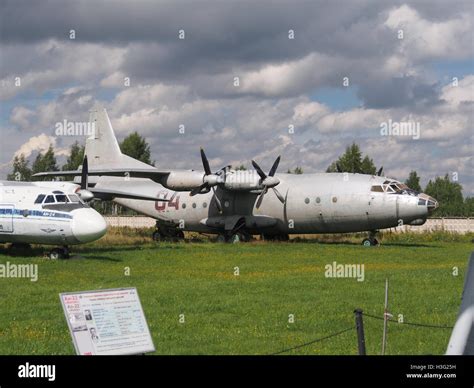
Its rear fuselage incorporates upper and lower doors rather than simply providing the same type of powered loading ramp associated with the Hercules. When a ramp is required for vehicles, a two-piece ramp stored inside the cargo compartment must be deployed manually. A telescoping support leg can be extended beneath the ramp to help prevent the aircraft from becoming unstable during loading.
That sounds like a minor distinction until we consider what it means at a remote airfield.
A transport aircraft spends a surprisingly large portion of its operational life on the ground. Every minute spent loading or unloading affects the number of missions that can be completed. Every additional piece of equipment requires personnel. Every manual procedure introduces another opportunity for delay.
The An-12’s cargo system therefore represents a genuine trade-off.
It was capable of carrying heavy loads, including vehicles and military equipment, but it was not optimized around the rapid logistics cycle that became one of the Hercules’ greatest strengths. Instead, the Soviet aircraft relied more heavily on internal cargo-handling equipment and cranes, allowing loads to be positioned without requiring the same simple drive-on arrangement.
The cargo compartment was also unpressurized and unheated, another major distinction from the pressurized C-130.
For cargo, that could be acceptable. For troops and passengers, it created a harsher environment. The design prioritized rugged military utility over the comfort and flexibility associated with a more refined transport cabin.
The philosophy was essentially straightforward: build a large, durable aircraft that could deliver personnel and equipment into difficult locations without making every component dependent on sophisticated infrastructure.
That philosophy had real advantages.
It also had consequences.
When the Transport Became a Bomber
Perhaps the most revealing evidence of the An-12’s hybrid design came from the operators themselves.
The aircraft was a transport, but operators repeatedly discovered that a large cargo aircraft could also become an improvised bomber.
The Indian Air Force began dropping bombs from An-12 cargo compartments as early as 1965. During the 1971 war between India and Pakistan, the practice expanded, with aircraft conducting bombing missions at night and, on some occasions, during daylight.
The concept proved useful enough that Antonov eventually developed a dedicated bomber configuration, the An-12BKV.
This version could use a TG-12MV conveyor system to handle a substantial bomb load. Reference material gives a maximum capacity of roughly 24,000 pounds (11,000 kg), with configurations ranging from dozens of lighter bombs to fewer heavy weapons.
The idea sounds extraordinary today because Western air forces generally maintained a stronger distinction between transport and bomber fleets. But the An-12 was already structurally suited to carrying heavy loads. Turning some of that cargo capacity toward weapons required adaptation rather than a complete redesign.
Other operators reached similar conclusions independently.
Ethiopia used An-12 aircraft in bombing operations during its conflict with Somalia in the 1980s. Afghan forces later employed inherited aircraft in a similar fashion during periods of civil war. The concept even survived into much more recent decades, when Sudanese operators reportedly used modified An-12s to drop unguided bombs.
These later uses should not be confused with the aircraft’s original transport mission, but they demonstrate how flexible the basic platform could become when conventional combat aviation resources were limited.
The An-12 was not a bomber masquerading as a transport. It was something more unusual: a transport whose design and enormous cargo volume made bomber conversion surprisingly practical.
The “Black Tulip” and the Soviet-Afghan War
The aircraft’s military history also contains a much darker chapter.
During the Soviet-Afghan War, An-12s became associated with the grim task of carrying the bodies of Soviet personnel killed in Afghanistan back to the Soviet Union. The aircraft consequently acquired the nickname “Black Tulip.”
The name became embedded in Soviet and post-Soviet memory because of what the transport represented rather than what it had originally been designed to do.
The same aircraft that had once represented the technological ambitions of Soviet tactical airlift was now associated with the final journey of soldiers who would never return home alive.
That role demonstrates another aspect of transport aviation that is easy to overlook. An airlifter’s importance is not measured only by the number of tons it carries or the speed at which it moves troops. During wars, transports become part of the entire logistical and human system surrounding combat operations.
The An-12 carried ammunition, equipment, troops, and supplies. It also carried the consequences of the war itself.
The Price of the Soviet Philosophy
The An-12’s unusual design decisions did not come without a cost.
Its tail guns, armor, specialized crew position, unpressurized cargo compartment, and more manual loading system all contributed to a heavier and more complicated aircraft than would have resulted from a pure logistics-first design.
Reference material cites approximately 1,248 An-12 airframes produced, although production figures vary among sources. It also cites 232 aircraft lost in accidents. The C-130 family, by comparison, has suffered a much larger absolute number of losses but was produced in substantially greater numbers.
Raw accident figures must be interpreted carefully.
The An-12 operated across several decades, with numerous countries, maintenance systems, conflict zones, remote airfields, and operating environments involved. Aircraft age, crew training, infrastructure, weather, military operations, and maintenance standards all affect accident rates.
Nevertheless, the aircraft’s long-term record reinforces an important point: rugged does not necessarily mean simple, and simple does not necessarily mean safe.
The An-12 was designed to tolerate demanding conditions, but it was also asked to perform difficult missions with aging engines and increasingly outdated systems. Many examples continued operating long after their original design era had passed.
Its Ivchenko AI-20 engines were durable and powerful for their generation, but they belonged to an earlier technological period. Maintaining such engines and other systems for decades naturally became more demanding.
Operating costs also accumulated. Reference material estimates an An-12’s operating cost at roughly $8,600 to $10,000 per flight hour, depending on configuration and operator. That figure illustrates the economic challenge of keeping a Cold War-era turboprop in commercial service long after newer aircraft have become available.
Why the West Forgot the An-12
The An-12’s partial disappearance from popular Western aviation memory is particularly interesting because it was never a minor aircraft.
It served throughout the Soviet Union and much of the Warsaw Pact. It was exported beyond the communist world to countries including India and Egypt. It operated in Africa, Asia, Eastern Europe, and the former Soviet republics. Hundreds of examples remained active for decades.
Yet the aircraft never developed the same cultural recognition as the C-130 Hercules.
Part of the reason is simple: the Hercules became deeply embedded in Western military aviation. It received continuous modernization, generated countless specialized variants, and remained an active backbone of American and allied airlift operations.
The An-12 had a different trajectory.
The collapse of the Soviet Union fractured its original industrial and military ecosystem. Operators became increasingly fragmented. Parts availability became more difficult. Many aircraft moved into civilian cargo roles. Others were retired, abandoned, or preserved.
The aircraft also suffered from an unfortunate historical label.
Calling it the “Soviet C-130” made the comparison easy but stripped away its identity. The An-12 was not merely an imitation of the Hercules. It was a product of a separate military culture, industrial system, operational doctrine, and engineering tradition.
Once that context disappears, its unusual features look like eccentricities.
In context, they make sense.
China Refused to Let the Design Die
The An-12’s most important legacy may not be found in Russia or Ukraine at all.
After the Sino-Soviet split, China lost access to Soviet technical assistance and could no longer depend on the same flow of support that had helped its aviation industry develop. Rather than abandon the An-12 concept, Chinese engineers reverse-engineered the aircraft and developed the Shaanxi Y-8.
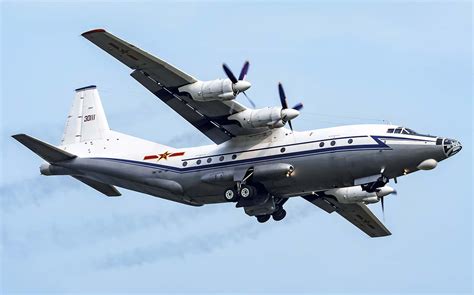
That decision gave the basic An-12 architecture a second life.
The Y-8 became the foundation for numerous Chinese special-mission aircraft, including platforms adapted for airborne early warning, electronic warfare, maritime patrol, reconnaissance, and other missions. The design was repeatedly modified as Chinese aerospace technology advanced.
A later collaboration involving Shaanxi Aircraft Company, Antonov, and Pratt & Whitney Canada produced the Y8-F600, incorporating a redesigned fuselage, updated avionics, and PW150B turboprop engines.
The irony is hard to miss.
The Soviet Union disappeared in 1991, yet an aircraft conceived during the height of the Cold War continued evolving in China. The original nation that created the An-12 ceased to exist, but the basic engineering lineage remained relevant.
That is one of the clearest signs of a successful aircraft design.
The An-12 Still Flies
The story becomes even more remarkable when we look at surviving Soviet-built examples.
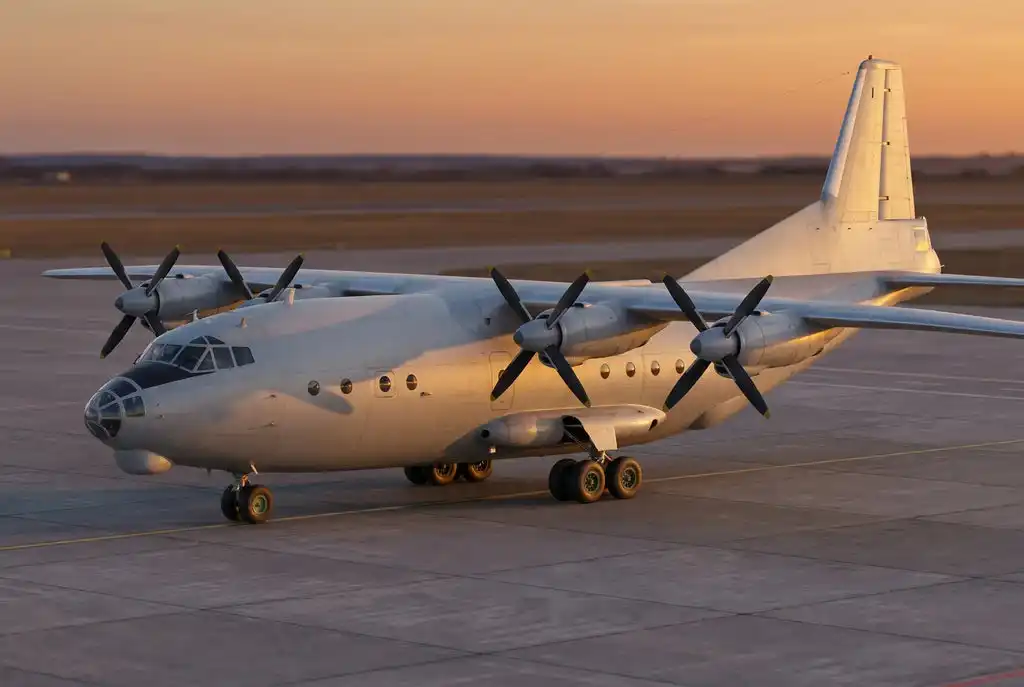
Commercial operators have continued using original An-12s for freight missions where ruggedness and access to basic infrastructure matter more than modern passenger comfort or fuel efficiency. Ukrainian carrier CAVOK Air, for example, has operated An-12s in charter and ACMI cargo work, including missions involving oversized cargo and difficult destinations.
Some aircraft have accumulated extraordinary lifetimes.
One example built in 1967 reportedly completed its final flight in 2026 after approximately 50,000 flight hours and 18,000 flights. Elsewhere, aging An-12s have remained active in African freight operations, including missions to remote airstrips where newer aircraft are not always economical or available.
In 2025, Burkina Faso’s Batot Air reportedly returned a roughly 63-year-old An-12 to service, highlighting just how far the original design has been pushed beyond the service life envisioned by its designers.
This endurance says something important about the aircraft.
The An-12 was never the most elegant logistics machine. It was not the easiest aircraft to load, the quietest aircraft to operate, or the most technologically sophisticated. But it was big, rugged, mechanically straightforward by modern standards, and capable of carrying heavy loads into places where infrastructure could be limited.
Those characteristics retain value.
A Forgotten Cold War Airlifter With a Bomber’s DNA
The Antonov An-12 deserves to be remembered as something more interesting than a Soviet C-130 imitation.
It was a product of a particular moment in aviation history when the lessons of World War II were still deeply embedded in military engineering, while turboprops and new transport concepts were rapidly changing the battlefield.
Its glazed nose preserved the visual language of the bomber navigator. Its 23 mm tail turret brought a wartime defensive concept into the Cold War transport era. Its unpressurized cargo compartment and manually supported loading system reflected a Soviet preference for rugged utility over the rapid logistics cycle that defined the Hercules.
And when operators needed more than transportation, the An-12 could be adapted for bombing missions, sometimes formally and sometimes through battlefield improvisation.
That flexibility was both its strength and its weakness.
The same choices that made the aircraft distinctive also imposed penalties in weight, complexity, maintenance, loading speed, operating cost, and eventually accident exposure. The Hercules proved more adaptable to decades of systematic Western modernization, while the An-12’s original architecture was harder to transform into a modern logistics platform.
Yet judging the aircraft solely by that comparison misses the bigger story.
The An-12 was built for a different world.
It was designed for a Soviet military system that expected transports to operate independently, withstand rough conditions, carry substantial loads, and retain some ability to defend themselves. It reflected a doctrine in which the boundary between transport, reconnaissance, and combat support could be considerably less rigid than in Western air forces.
More than six decades after its first flight, the evidence is still flying.
Original An-12s have survived in commercial cargo work. Chinese derivatives have evolved into sophisticated military special-mission aircraft. And photographs of the aircraft still reveal the odd combination that makes it historically fascinating: a huge turboprop transport with a WWII-style glazed nose at the front and a cannon-equipped bomber turret at the back.
That combination is precisely why the Antonov An-12 should never have been remembered merely as the Soviet C-130.
It was something much stranger—and, in many ways, much more revealing.
The aircraft captured the Soviet approach to airlift at a unique point in history: modern enough to move 20 tonnes of cargo across thousands of miles, yet traditional enough to retain a gunner behind armored glass. It could carry troops and vehicles, but it could also become an improvised bomber. It could serve a superpower, a developing air force, a cargo company, or a remote humanitarian operation.
The West may have forgotten the An-12 for a while.
The aircraft itself never really went away.