Modern aviation is a spectacle of engineering triumph, but few parts of an aircraft symbolize raw power and innovation quite like its engines. Among the many technological marvels bolted beneath wings or integrated into fuselages, one question continues to spark curiosity and admiration: what is the largest engine ever put on a plane? The answer takes us through the towering legacy of General Electric’s GE9X and GE90, and back to the WWII-era piston beasts that once thundered through the skies.
GE9X: The Largest Jet Engine Ever Built
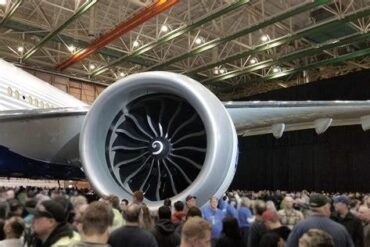
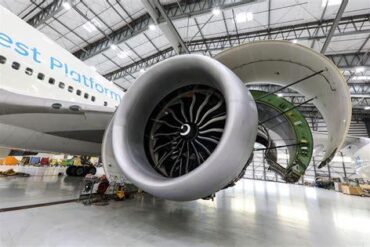
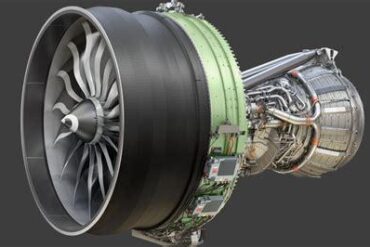
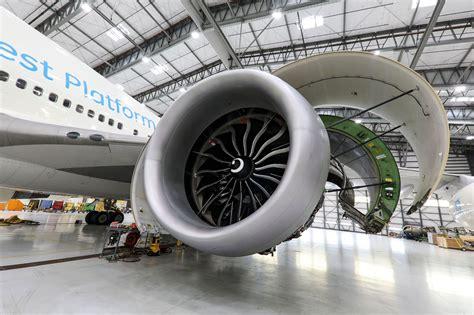
In terms of physical size, no jet engine surpasses the General Electric GE9X. Developed exclusively for the next-generation Boeing 777X, the GE9X isn’t just a marvel on paper—it’s a visual juggernaut. With a fan diameter of 134 inches, it claims the title of the largest fan ever fitted on a commercial aircraft engine.
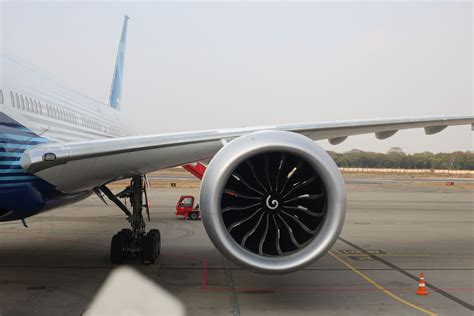
The GE9X made its first test flight in 2018, long before the 777X saw commercial daylight. Even though its host aircraft won’t enter full service until 2026, the GE9X has already proven its airworthiness across dozens of flight tests. Despite the modern industry’s focus on fuel efficiency and emissions, GE has engineered the GE9X for both scale and thrust.
- Length: 220 inches
- Weight: 21,000 lbs
- Fan blades: 16 composite blades
- Certified thrust: 105,000 pounds
- Maximum test thrust: 134,300 pounds (unofficial record)
Compared to its predecessor, the GE90, the GE9X may be slightly lighter and shorter, but it outshines in overall efficiency, materials innovation (ceramic matrix composites), and performance under testing.
GE90: The Original Heavyweight Champion
Before the GE9X entered the scene, General Electric’s GE90 held the crown. Designed for the Boeing 777 family, particularly the long-haul 777-300ER, the GE90 earned its reputation as one of the most powerful and largest operational jet engines in the skies.
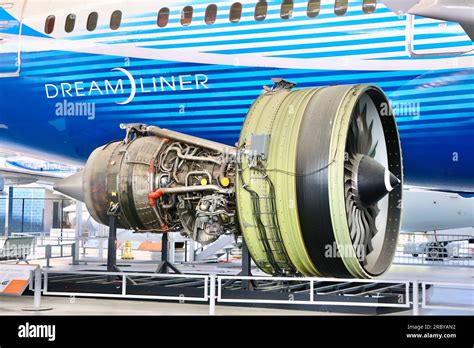
Introduced in the mid-1990s, the GE90-115B variant pushed the boundaries of what was possible with turbofan technology at the time. It set a Guinness World Record in 2002 for producing 127,900 pounds of thrust during ground testing—a number only surpassed by its GE9X sibling under non-commercial conditions.
- Fan diameter: 128 inches
- Length: 287 inches
- Weight: 19,316 lbs (GE90-115B variant)
- Thrust in service: 115,300 pounds
- Fan blades: 22
Despite being older, the GE90 remains in active service powering thousands of flights per year and continues to influence the design of modern turbofans.
The Battle of Titans: GE9X vs GE90
In comparing these two titanic engines, it’s clear that the GE9X edges out the GE90 in innovation and potential, but the GE90 still holds a formidable legacy:
- Fan Size: GE9X is wider (134 in vs. 128 in)
- Weight: GE9X is heavier (21,000 lbs vs. 19,316 lbs)
- Thrust Rating: GE90 wins in certified thrust (115,300 lbs vs. 105,000 lbs)
- Fan Blades: GE9X uses fewer, lighter blades (16 vs. 22)
Thus, while GE9X is physically the largest jet engine ever mounted on an aircraft, the GE90 remains the most powerful to enter full commercial operation.
Lycoming XR-7755-3: The Largest Aircraft Piston Engine Ever Built
Jet engines dominate the skies today, but during the World War II era, aircraft were powered by massive piston engines. The Lycoming XR-7755-3 stands at the pinnacle of that era, as the largest piston engine ever constructed—though never flown.
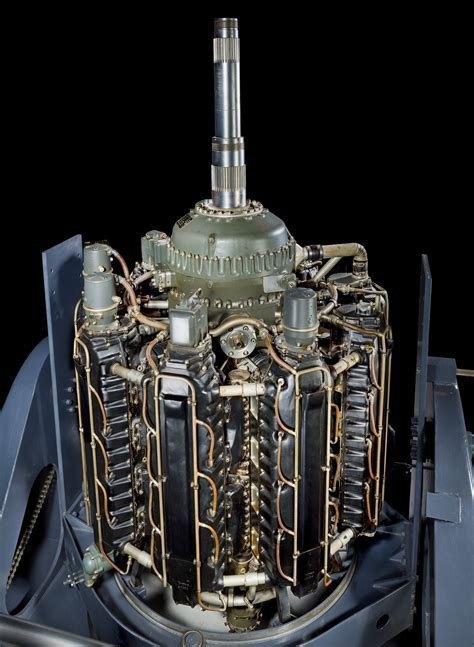
Commissioned by the U.S. Air Force, this mammoth 36-cylinder engine was developed for future heavy bombers and transports that never materialized. Its specs read like science fiction:
- Cylinders: 36, liquid-cooled
- Displacement: 7,755 cubic inches
- Power Output: 5,000 hp at 2,600 RPM
- Length: 121.35 inches
- Diameter: 61 inches
Despite the impressive engineering, only three prototypes were ever built, and none were mounted to an airworthy aircraft. It remains a mechanical colossus of unfulfilled potential.
Pratt & Whitney R-4360 Wasp Major: The Largest Piston Engine to Fly
While the XR-7755-3 never got airborne, another legendary engine did: the Pratt & Whitney R-4360 Wasp Major. Developed during the same wartime years, it became the largest and most powerful piston engine to ever actually fly.
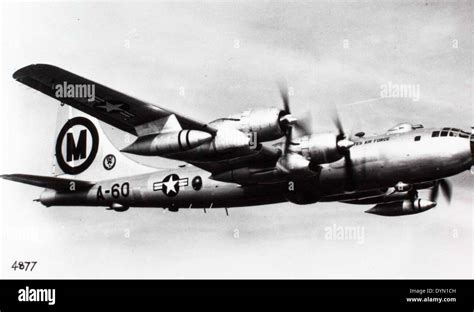
Used in several iconic aircraft including the Boeing B-50 Superfortress, KC-97 Stratofreighter, and Boeing 377 Stratocruiser, the Wasp Major featured 28 air-cooled radial cylinders arranged in four rows.
- Power Output: 4,300 hp
- Cylinders: 28
- Diameter: 55 inches
- Length: 96.5 inches
- Weight: 3,870 lbs
Between 1944 and 1955, over 18,000 units were built, powering military and civilian aircraft during the transition period between piston and jet propulsion. It earned its title not through raw size but through widespread deployment, reliability, and success.
From Pistons to Turbofans: Evolution of Aviation Power
The evolution of aircraft propulsion from pistons to turbofans is a story of increasing efficiency, thrust, and reliability. Where the Wasp Major once roared with the power of 4,300 hp, today’s GE9X quietly delivers over 100,000 pounds of thrust, enabling aircraft like the Boeing 777X to fly farther, faster, and more economically than ever before.
The shift to turbofan engines, especially those with high bypass ratios like the GE9X, was driven by rising fuel costs, noise restrictions, and emissions regulations. These modern engines deliver better fuel economy, reduced environmental impact, and higher sustained speeds. The transition also symbolizes a broader technological arc—from mechanical complexity to thermodynamic sophistication.
Conclusion: Defining “Largest”
To define the “largest engine ever put on a plane,” context is key:
- Physically largest jet engine: GE9X, with the widest fan and largest frontal area.
- Most powerful jet engine in commercial use: GE90-115B, with 115,300 lbs thrust.
- Largest piston engine ever built: Lycoming XR-7755-3, though it never flew.
- Largest piston engine to fly: Pratt & Whitney R-4360 Wasp Major.
Each engine represents a milestone in engineering. From the thundering pistons of the 1940s to the carbon-composite blades of the 21st century, the pursuit of power in aviation continues to evolve. As the GE9X prepares for mainstream use, it carries forward the legacy of giants—built not just to fly, but to redefine the limits of the sky itself.