Flying in economy class has become increasingly challenging over the past two decades. As airlines maximize aircraft capacity and pursue greater efficiency, seat pitch—the distance between one point on a seat and the same point on the seat in front—has steadily shrunk across much of the industry. For travelers spending ten, twelve, or even fifteen hours in the air, a few extra inches of legroom can make the difference between arriving refreshed and arriving exhausted.
In 2026, the global aviation landscape presents a fascinating contrast. While many airlines continue squeezing more seats into their cabins, a select group of carriers still prioritize passenger comfort by offering significantly more space in economy class. These airlines have resisted the densification trend and built reputations around providing a more comfortable experience without requiring passengers to upgrade to premium economy or business class.
For travelers planning long-haul journeys, understanding which airlines offer the most generous economy seating has become more important than ever.
The competition for economy passengers is intense, but comfort remains one of the few areas where airlines can genuinely differentiate themselves. While fare prices often dominate booking decisions, legroom continues to be one of the most commonly discussed aspects of the passenger experience.
The airlines leading the world in economy-class legroom demonstrate that comfort and profitability do not always have to be mutually exclusive.
Japan Airlines: The Global Benchmark for Economy Class Comfort
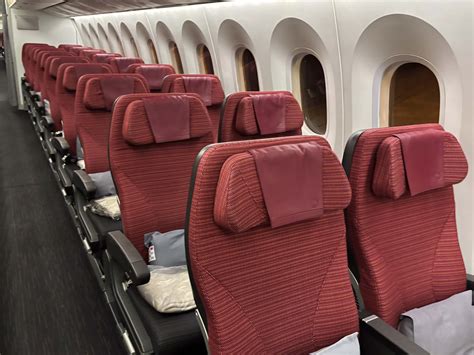
At the top of the global rankings sits Japan Airlines (JAL), which continues to set the industry standard with a generous 34-inch seat pitch across much of its long-haul fleet.
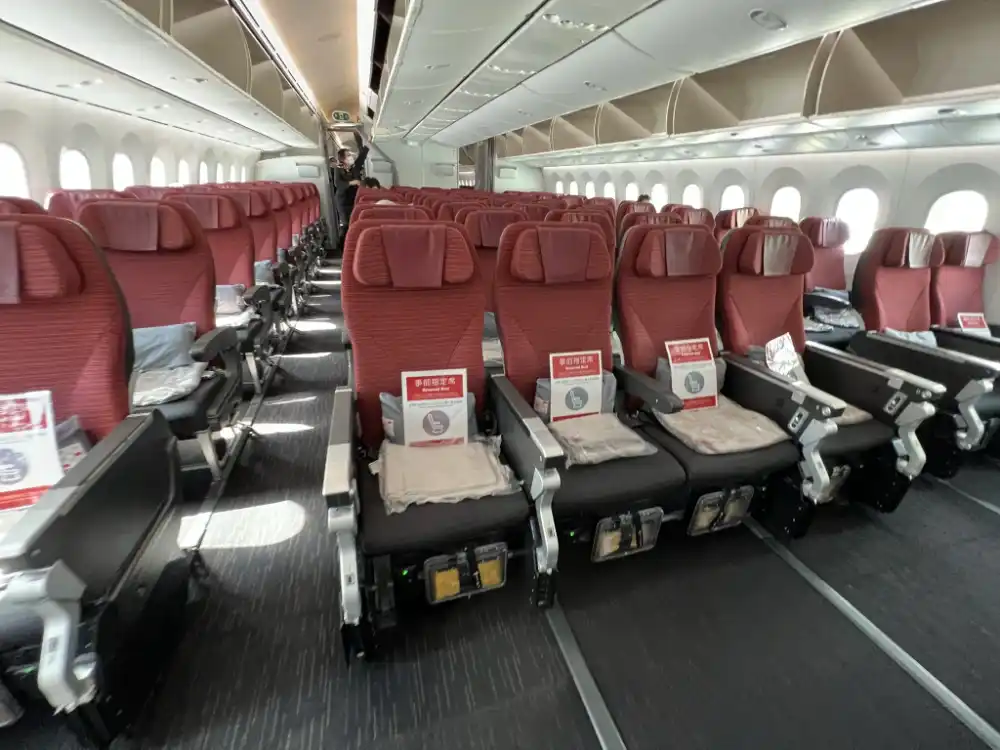
JAL’s success is not merely the result of adding extra inches between rows. The airline fundamentally rejected one of the industry’s most widespread trends: packing more seats into aircraft cabins. Its famous Sky Wider concept transformed passenger expectations by configuring many Boeing 787 Dreamliners with an eight-abreast 2-4-2 layout instead of the more common nine-abreast 3-3-3 arrangement used by most international carriers.
This approach creates wider seats, larger personal spaces, and significantly improved comfort throughout the cabin. Passengers immediately notice the difference when boarding. The cabin feels less crowded, movement is easier, and shoulder space is noticeably improved.
JAL further enhances comfort through innovative slim-seat engineering. The seatbacks are carefully sculpted to create additional knee clearance without reducing cushioning or support. As a result, passengers often perceive the available space as being even greater than the measured pitch would suggest.
The airline’s repeated recognition as one of the world’s best economy-class providers is no accident. It reflects a long-term strategy focused on customer satisfaction rather than maximizing seat density.
All Nippon Airways Continues Japan’s Tradition of Passenger Comfort
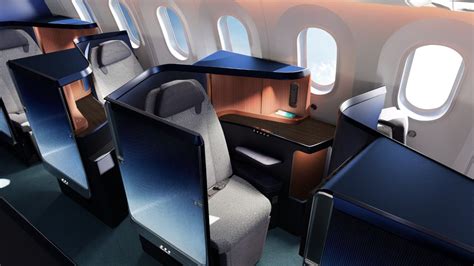
Matching JAL’s impressive standards is All Nippon Airways (ANA), which also provides a remarkable 34-inch pitch on much of its long-haul network.
ANA has built a reputation for consistency. Whether passengers are flying aboard a Boeing 777-300ER or a Boeing 787-9, they can generally expect generous personal space and excellent seating ergonomics.
The airline is further strengthening its position in 2026 through the introduction of new-generation Recaro economy seats on selected Boeing 787-9 aircraft. These redesigned seats offer approximately one additional inch of effective knee clearance while simultaneously increasing recline capability.
The enhanced recline is particularly noteworthy. ANA’s newest economy seats provide roughly seven inches of recline travel, significantly exceeding what many competing airlines offer. This additional movement allows passengers to find more comfortable resting positions during overnight flights and ultra-long-haul journeys.
ANA’s approach reflects a broader Japanese philosophy emphasizing quality, precision, and passenger well-being. Rather than viewing economy travelers simply as price-sensitive customers, the airline treats comfort as a core component of its brand identity.
Emirates Proves Large Aircraft Can Still Deliver Spacious Economy Travel
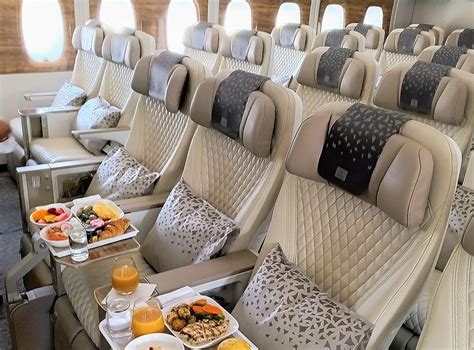
Joining the Japanese leaders is Emirates, which also offers 34 inches of pitch on many of its Airbus A380 aircraft.
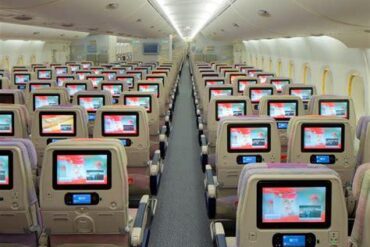
The airline’s flagship superjumbo remains one of the most comfortable ways to travel in economy class. The sheer size of the A380 allows Emirates to create a spacious environment that feels less confined than many competing widebody aircraft.
Passengers benefit from wide aisles, high ceilings, generous overhead storage, and one of the industry’s most advanced in-flight entertainment systems. Combined with the airline’s renowned service standards, these factors create an economy-class experience that frequently exceeds expectations.
Although seat configurations vary across Emirates’ fleet, the A380 remains a standout option for travelers seeking maximum comfort without paying premium cabin prices.
The airline’s commitment to maintaining generous pitch demonstrates that large-scale international operators can still prioritize passenger comfort while operating profitably on global routes.
Why Economy Class Legroom Has Become So Rare
The modern economy cabin reflects decades of economic pressure and evolving airline business models.
For airlines, every inch matters. Reducing seat pitch by even a single inch can create enough space to add an additional row of seats. Across hundreds of aircraft and thousands of annual flights, these additional seats generate substantial revenue.
The rise of ultra-low-cost carriers accelerated this trend. Airlines such as Spirit and Ryanair demonstrated that many travelers prioritize low fares above nearly every other factor. To remain competitive, full-service carriers gradually adopted denser cabin layouts.
As a result, today’s industry norm typically ranges between 30 and 32 inches of pitch, depending on aircraft type and route.
While modern seat manufacturers have introduced thinner seatbacks designed to preserve knee room, the actual distance between rows remains significantly smaller than on many aircraft from previous decades.
The consequence is an economy cabin environment that often feels noticeably more crowded than it did twenty years ago.
JetBlue: America’s Economy Comfort Champion
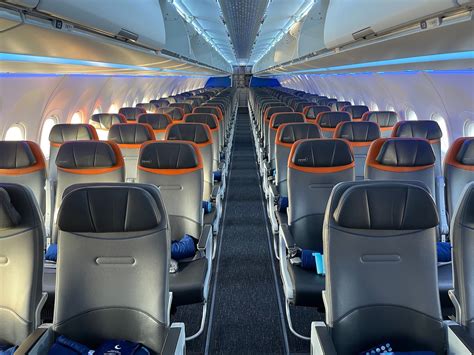
Among North American airlines, JetBlue Airways stands apart as the clear leader in economy-class legroom.
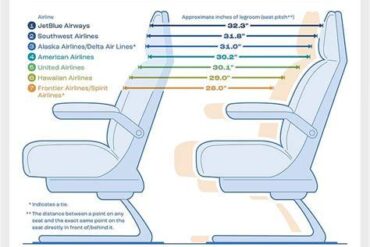
The carrier offers an average seat pitch of approximately 32.3 inches, surpassing most major U.S. competitors and maintaining a strong reputation among comfort-focused travelers.
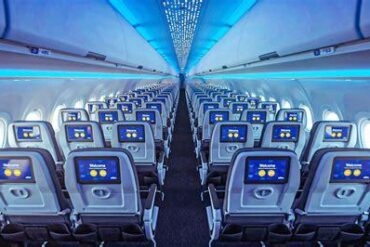
Unlike many airlines that compete primarily on price, JetBlue deliberately positions comfort as a major selling point. The airline configures its Airbus A320 and A321 aircraft with fewer seats than many rivals, allowing passengers more personal space throughout the cabin.
The strategy extends beyond legroom. JetBlue also provides complimentary high-speed Wi-Fi, seatback entertainment screens, and a generally more passenger-friendly onboard experience.
For domestic travelers and transcontinental passengers within the United States, JetBlue often delivers one of the closest experiences to international premium economy while still selling standard economy tickets.
Singapore Airlines, Cathay Pacific, and Qantas Deliver Strong Global Alternatives
Occupying the next tier are Singapore Airlines, Cathay Pacific, and Qantas, each providing approximately 32 inches of seat pitch on many long-haul aircraft.
Although they fall slightly behind the Japanese carriers in raw legroom measurements, these airlines consistently rank among the world’s most respected operators due to their combination of comfort, service quality, and operational excellence.
Singapore Airlines has long been regarded as one of the industry’s premium benchmarks. Even in economy class, passengers enjoy attentive service, high-quality meals, and thoughtfully designed cabin interiors.
Cathay Pacific combines generous seating with a refined travel experience shaped by decades of expertise operating long-haul routes across Asia, Europe, North America, and Australia.
Qantas similarly maintains strong comfort standards while operating some of the world’s longest flights, making seat design and passenger well-being particularly important.
A key factor differentiating these airlines from JAL and ANA is cabin density. Most operate nine-abreast seating on aircraft such as the Boeing 787 and Boeing 777, whereas Japanese carriers frequently maintain lower-density configurations.
Nevertheless, they remain among the best choices available for long-haul economy travel.
Southwest, Alaska, and Delta Round Out the Top Ten
Several American carriers also earn positions among the world’s better economy-class products.
Southwest Airlines provides approximately 31.8 inches of pitch, slightly exceeding many competitors in the domestic U.S. market. Historically known for customer-friendly policies and straightforward pricing, Southwest has maintained relatively comfortable seating despite operating a low-cost model.
Alaska Airlines and Delta Air Lines follow closely with approximately 31 inches of pitch.
While these measurements may not sound dramatically different from industry averages, even small increases become noticeable during flights lasting several hours. Combined with strong operational performance and customer service reputations, these airlines remain attractive options for travelers prioritizing overall value.
The Failed Experiment That Changed Economy Travel Forever
One of the most important chapters in aviation comfort history occurred in the early 2000s when American Airlines launched its ambitious More Room Throughout Coach initiative.
The program represented a radical attempt to improve passenger comfort across the airline’s fleet. American removed approximately 7,200 seats from more than 700 aircraft and increased economy-class pitch to between 34 and 35 inches.
Passengers loved the change.
Thousands of customers praised the extra space, citing improved comfort, easier laptop usage, and a significantly better travel experience.
However, despite overwhelmingly positive feedback, the initiative ultimately failed financially.
The airline discovered that most passengers were unwilling to pay even modestly higher fares for additional legroom. Competitors continued offering lower prices with denser seating, and consumers frequently chose cheaper tickets over improved comfort.
Combined with the aviation industry’s challenges following the September 11 attacks, rising fuel prices, and economic uncertainty, the program became unsustainable.
By 2004, the initiative was abandoned.
Its failure continues to influence airline decision-making today and remains one of the primary reasons economy cabins have become increasingly dense across much of the industry.
Why Japanese Airlines Continue to Lead the Industry
The dominance of Japan Airlines and ANA is rooted in more than cabin design.
Both carriers embrace a business philosophy centered on quality, hospitality, and long-term brand reputation. The Japanese concept of Omotenashi, often translated as wholehearted hospitality, shapes every aspect of the customer experience.
This cultural approach encourages airlines to anticipate passenger needs rather than merely react to complaints. As a result, seat comfort becomes a strategic investment rather than a cost to be minimized.
While many airlines focus primarily on maximizing aircraft utilization and revenue per flight, Japanese carriers place greater emphasis on delivering a consistently superior experience that reinforces customer loyalty.
The result is an economy-class product that continues to outperform many global competitors in comfort, satisfaction, and passenger perception.
The Verdict: Comfort Still Exists in Economy Class
Despite widespread industry trends toward denser cabins, several airlines continue proving that economy travel does not have to feel cramped.
Japan Airlines, All Nippon Airways, and Emirates lead the world with industry-leading 34-inch seat pitch offerings, providing a level of comfort increasingly rare in modern aviation. JetBlue remains the standout performer in North America, while Singapore Airlines, Cathay Pacific, and Qantas continue delivering excellent long-haul experiences.
For travelers booking flights in 2026, legroom remains one of the most valuable factors to evaluate before purchasing a ticket. A few additional inches may seem insignificant on paper, but during a long-haul journey spanning thousands of miles, those inches can dramatically transform the entire travel experience.
As airlines continue balancing profitability against passenger expectations, these comfort-focused carriers demonstrate that there is still room in modern aviation for economy-class travel that prioritizes the people sitting in the seats.