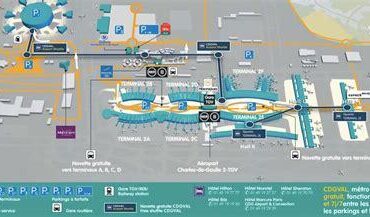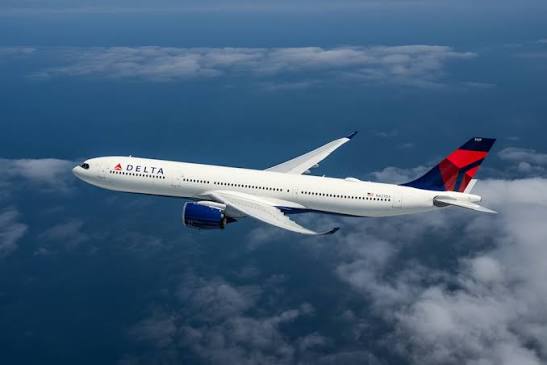
Delta Air Lines is preparing for one of its largest expansions at Paris Charles de Gaulle Airport (CDG) in years, and the centerpiece is a brand-new nonstop connection from Austin, Texas. Starting March 27, 2027, Delta will operate daily flights between Austin-Bergstrom International Airport (AUS) and Paris CDG, creating a route that has never previously existed as a nonstop airport pair. The service will connect one of Delta’s fastest-growing U.S. focus cities with one of Europe’s most important aviation gateways.
The new Austin-Paris route is significant for more than simply adding another transatlantic destination. Austin has developed into an increasingly important Delta market, with roughly 30 routes planned for 2027, while Paris provides enormous onward connectivity throughout Europe and beyond. The new service will also coexist with KLM’s nonstop Austin-Amsterdam operation, giving the broader SkyTeam network two major European gateways from the Texas capital.
Local demand provides a strong foundation for the route. During the 12 months ending in April 2026, approximately 47,000 round-trip passengers traveled between Austin and Paris. Despite having no nonstop option, Paris was already the second-largest European market from Austin after London. That indicates a substantial pool of travelers who have historically relied on connecting itineraries and could now have a much more convenient alternative.
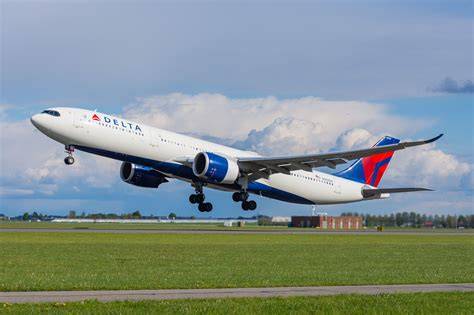
Delta’s Paris CDG Expansion Reaches 10 U.S. Routes
The Austin launch becomes even more important when viewed within Delta’s wider Paris CDG network. Based on the airline’s schedule submission known as of August 14, 2026, Delta is planning between 12 and 13 daily departures from the United States to Paris in April 2027. The additional Austin service increases Delta’s overall CDG frequency by about 9% compared with April 2026.
That growth would give Delta more flights to Paris in April than in any other year. It would also exceed the previous April record, established in 2024, by nearly 4%. Most notably, Delta will once again offer 10 nonstop U.S.-Paris routes, a network size last seen in 2023.
The planned network will stretch across Delta’s major hubs and strategic markets. Atlanta will receive two daily flights using Airbus A330-300 and Boeing 767-400ER aircraft, while Boston will have a daily Airbus A330-900. Cincinnati and Detroit will each retain daily service, with Detroit using the A330-300. Los Angeles will operate daily A350-900 service, while Minneapolis will offer a daily A330-300.
New York-JFK remains one of Delta’s strongest Paris markets, with two to three daily Boeing 767-400ER flights planned. Salt Lake City and Seattle will each receive daily A330-900 service. Austin’s daily A330-900 therefore fits naturally into a network that combines traditional Delta hubs with strategically important coastal and growing markets.
Air France Partnership Strengthens Delta’s Paris Strategy
Delta’s Paris expansion cannot be separated from its exceptionally close relationship with Air France. The two airlines participate in a transatlantic antitrust-immunized joint venture alongside KLM and Virgin Atlantic, allowing them to coordinate schedules, networks and commercial operations far more closely than conventional airline partnerships.
That relationship is particularly valuable at CDG because Air France supplies enormous onward connectivity. Delta passengers arriving from Austin, Seattle, Salt Lake City or other U.S. cities can potentially connect through Paris to destinations that Delta itself does not serve nonstop. The commercial logic is therefore much broader than the Austin-Paris passenger market alone.
The largest potential connecting markets demonstrate the opportunity. London accounted for approximately 180,000 passengers, while Amsterdam represented about 45,000. Rome generated roughly 29,000 passengers, followed by Dublin and Frankfurt at approximately 27,000 each. Barcelona, Hyderabad, Madrid, Bengaluru, Mumbai and Athens also represented substantial passenger flows.

Paris Becomes Delta’s Second-Busiest European Gateway
Even after this expansion, Amsterdam Schiphol will remain Delta’s largest European airport by frequency, with around 16 daily flights planned for April 2027. Paris, however, will strengthen its position as Delta’s second-largest European gateway.
The distinction between the two airports is strategically important. Amsterdam provides Delta with a powerful northern European hub through KLM, while Paris offers access to Air France’s enormous global network. Together, the two hubs give Delta a formidable SkyTeam presence across Europe.
For travelers originating in Austin, the new CDG service could therefore provide alternatives that do not currently exist. A passenger traveling to France can avoid a connection, while travelers heading elsewhere in Europe or South Asia can use Paris as a transfer point. This makes the route useful for both point-to-point demand and connecting traffic, an important combination for filling a widebody aircraft every day.
Delta Has Previously Abandoned Several Paris Routes
Delta’s Paris network has not always moved in one direction. Over the past two decades, the airline has discontinued eight CDG markets, illustrating how quickly international route economics can change.
Former routes included Chicago O’Hare, which operated from 2011 to 2017, Newark from 2013 to 2018, Indianapolis from 2018 to 2020, Philadelphia from 2009 to 2017, Pittsburgh from 2009 to 2018, and Raleigh-Durham from 2016 to 2023. Delta also previously operated fifth-freedom services from Paris to Chennai and Mumbai, although both ended in 2006.
The history demonstrates why Delta’s current Paris expansion is notable. The airline is not simply restoring a collection of old routes. Instead, it is concentrating capacity around markets where it sees stronger network value and leveraging its joint venture with Air France to make the Paris hub more productive.

Why the Austin-Paris Route Matters
The Delta Austin-Paris nonstop route is ultimately about more than a new city pair. It represents the airline’s broader strategy of building international connectivity around high-growth U.S. markets while using powerful European hubs to extend its reach.
For Austin, the service adds a direct link to one of the world’s most important aviation centers. For Delta, it strengthens a growing Texas presence and adds another source of traffic into Paris. For Air France and the wider SkyTeam joint venture, it creates additional U.S. feed into a hub capable of distributing passengers across Europe, Africa, Asia and beyond.
If the published schedule remains intact, April 2027 will mark a particularly strong moment for Delta at Paris Charles de Gaulle. Ten U.S. nonstop routes, record April frequencies and a new daily Austin operation will make Paris an even more important part of Delta’s transatlantic strategy. The map may show only one new line, but behind it sits a much larger network expansion.