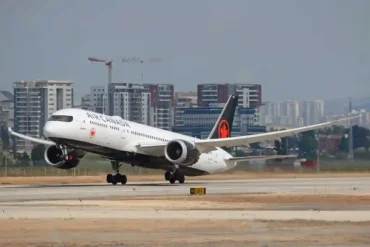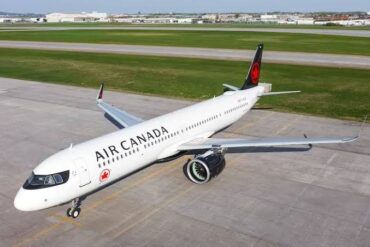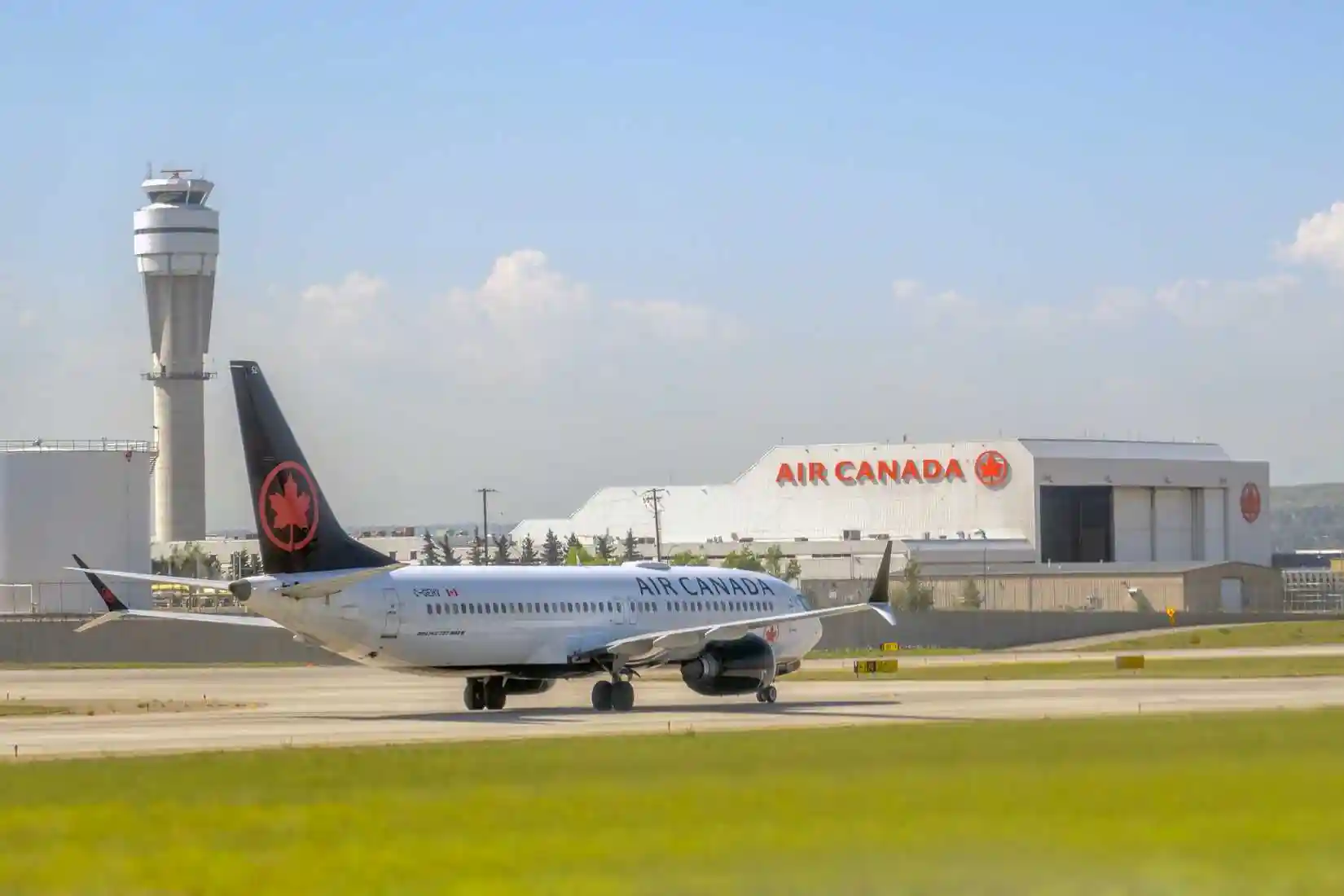
Air Canada has confirmed that it will no longer fly the Boeing 737 MAX 8 on three of its transatlantic services, the boldest structural change to its narrowbody long-haul strategy in years. The affected city pairs are Halifax Stanfield International Airport (YHZ) to London Heathrow (LHR), Montréal–Trudeau International Airport (YUL) to Edinburgh Airport (EDI), and Montréal to Nantes Atlantique Airport (NTE). None of these markets disappears from the schedule, but each one shifts to the Airbus A321XLR, the long-range narrowbody that has quietly become the backbone of Air Canada’s secondary-Europe ambitions. The decision sits inside a wider fleet rebalancing in which the MAX 8 is being handed over to Air Canada Rouge, the carrier’s leisure-focused subsidiary, whose network stretches across North America, the Caribbean, and Central America.
The Montreal–Nantes link is the most fleeting casualty. It operated only between June and July 2026 before being pulled, a trial that evidently did not justify holding a scarce MAX airframe on a seasonal French route. Montreal–Edinburgh, launched in June 2025, runs through September 2026 and then hands over. Halifax–London Heathrow carries the longest history of the three, flying the MAX since April 2022 and continuing until December 2026. All three transitions are timed so the A321XLR arrives in 2027 and the MAX 8 winds down its transatlantic role without a gap in service.
Why the 737 MAX 8 Is Leaving the North Atlantic
The reasoning is fleet economics rather than route failure. The MAX 8 has the legs for East Coast Canada to Europe, and Air Canada has used it aggressively since 2022 to open thinner markets that could not support a widebody. But the type is now needed elsewhere, and every airframe sent to Rouge supports a dense leisure network where high-frequency, lower-yield flying rewards narrowbody efficiency. Moving the MAX to Rouge modernizes that subsidiary’s fleet across sun destinations while freeing the A321XLR, a jet with comparable range and a more comfortable cabin, for the transatlantic missions where premium demand is stronger.
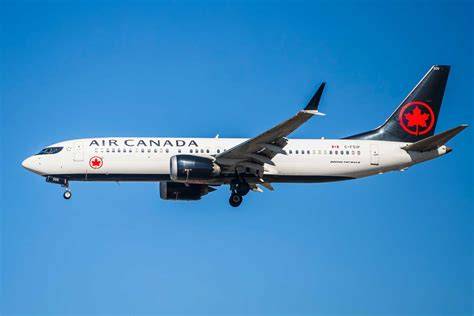
The numbers reveal how small the MAX’s transatlantic footprint has already become. In the third quarter of 2026, Air Canada is operating 329 transatlantic departures with the 737 MAX 8, representing 6.8% of all its crossings. By the third quarter of 2027, that falls to 188 flights, or just 3.5% of the transatlantic schedule, a 43% decrease year over year. The trend line is unmistakable: 184 departures and 4.5% in Q3 2023, 211 and 4.9% in 2024, and 249 and 5.5% in 2025. The MAX 8 was steadily growing, then the strategy pivoted, and the aircraft’s role is now being deliberately narrowed.
Four Transatlantic Routes Keep the 737 MAX 8
The MAX 8 has not abandoned the Atlantic entirely. Air Canada will continue flying it next summer from Halifax to Brussels Airport (BRU), from Montréal and Toronto to Keflavik International Airport (KEF) near Reykjavik, and from Toronto Pearson to Ponta Delgada (PDL) in the Azores. These four services suit the aircraft’s profile: they are seasonal, leisure-weighted, and served by markets where Icelandair-style competition and diaspora demand favor frequency over cabin size. Brussels retains the Halifax link because the Belgian capital’s Canadian traffic is steady enough to justify the type, while the Icelandic and Azorean routes pair naturally with Rouge’s leisure DNA and Air Canada’s connecting feed.

Inside the Air Canada Rouge 737 MAX 8 Cabin
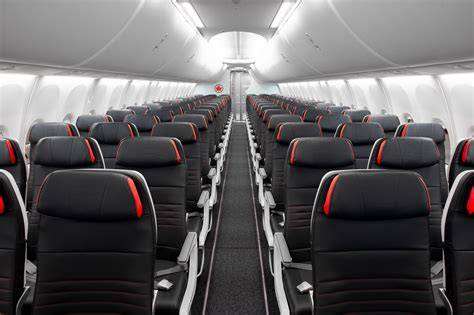
Passengers flying the transferred jets will not step back in time. The Rouge MAX 8 is configured with 177 seats: 12 in Business Class, 18 Preferred Extra Legroom, and 147 in standard Economy, and unlike older Rouge airframes these aircraft retain mainline features. That means seatback entertainment, free WiFi for Aeroplan members, and complimentary beer, wine, and snacks on select routes. The first phase of the handover began in March on domestic services from Vancouver International Airport (YVR) to Edmonton International Airport (YEG) and Kelowna (YLW), with the transition continuing through the end of the year. Rouge’s upgraded cabins and refreshed technology give travelers a better short-haul product than the subsidiary has historically offered, and they give Air Canada a way to redeploy the MAX without stranding capacity.
Air Canada Transatlantic Network Changes: What Travelers Should Plan For
Travelers holding bookings on the three affected city pairs should expect equipment swaps rather than cancellations. The Airbus A321XLR offers a modern cabin and comparable nonstop convenience, and Air Canada has framed the change as optimization of aircraft availability. Halifax–London Heathrow runs on the MAX until December 2026, Montreal–Edinburgh until September 2026, and Montreal–Nantes ended in July 2026. Anyone booking those routes for 2027 should confirm the operating aircraft, seat selection, and business-class configuration closer to departure, because the A321XLR’s cabin layout differs from the MAX 8’s. The broader lesson is clear: Air Canada is increasingly splitting its Atlantic flying between widebodies on trunk routes, the A321XLR on secondary Europe, and Rouge’s MAX 8 on the leisure fringes. For readers tracking the Air Canada 737 MAX route cancellations, the complete list is Halifax–London Heathrow, Montreal–Edinburgh, and Montreal–Nantes, with Brussels, Keflavik, and Ponta Delgada remaining. The shift protects the network while reshaping how passengers experience the Atlantic crossing.