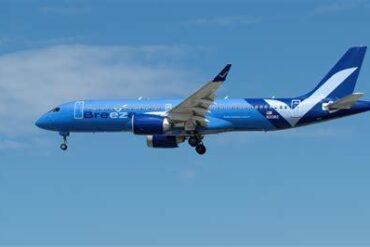
Breeze Airways has officially erased two Colorado destinations from its route map, closing the year with a leaner network built almost entirely around its Airbus A220-300 fleet. The Utah-headquartered low-cost carrier has ended service to Denver International Airport (DEN) and Montrose Regional Airport (MTJ), two very different markets that shared the same fate: weak demand that could not justify the airline’s aircraft or its attention. For travelers who booked either city expecting Breeze’s trademark nonstop convenience, the exits mark the end of a short chapter, and for the airline they signal a deliberate pivot toward airports where its point-to-point model can thrive without fighting legacy giants on their home turf.
Breeze launched in 2021 with a promise that felt almost contrarian in American aviation: fly the routes nobody else flies, connect smaller cities directly, and skip the hub-and-spoke grind entirely. More than 60 A220-300s now carry that mission, while the carrier phases out its last two Embraer E190 jets, a symbolic close to its early, experimental years. Cirium data underpinning this analysis shows a network of roughly 2,618 miles across five operating airports, which explains why every marginal route is scrutinized so heavily. When a destination underperforms, it is not simply trimmed; it is cut, and the aircraft is redeployed to markets with stronger fundamentals.
Breeze Airways Cuts Ties With Montrose Regional Airport
The Montrose exit came first, ending in April after a run that began in December 2024. Breeze had connected Montrose Regional Airport (MTJ) with Provo (PVU) in Utah and Santa Ana John Wayne Airport (SNA) in California, offering up to five weekly flights at the peak of the schedule. On paper, the pairing made sense: Montrose is the gateway to the Black Canyon of Gunnison National Park, the San Juan Mountains, and Grand Mesa, a recreation corridor that draws skiers, hikers and rafters from across the West.
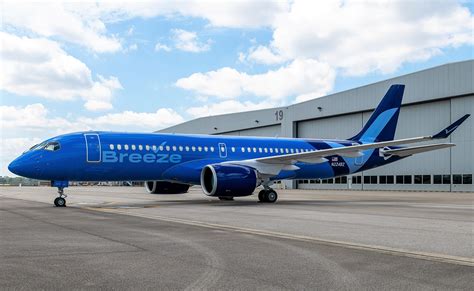
The numbers told a harsher story. Load factors on the Montrose flights averaged just 32.30 percent, meaning fewer than one in three seats carried a passenger on the operating services. That figure sits far below the break-even range for any commercial jet, let alone an A220 configured for comfort with premium seating. The Provo to Montrose link was left completely unserved after the cut, while the Santa Ana to Montrose corridor lost a convenient nonstop option and now relies on indirect competition with United Airlines through Los Angeles, which operates only seasonally.
Montrose itself remains well connected, just not by Breeze. Southwest Airlines and United Airlines continue as the airport’s year-round operators, with American Airlines and Delta Air Lines adding seasonal capacity during ski season. The departure is therefore less a blow to the airport’s viability than a reminder of how thin the margins are on mountain-town routes, where demand swings violently with snowpack and school calendars.
Breeze Discontinues Providence to Denver Nonstop Flights
The Denver withdrawal arrived in August, when Breeze discontinued its nonstop between Denver International Airport (DEN) and Providence from its base at Rhode Island T.F. Green International Airport (PVD). The carrier had launched the service in May 2024, running it seasonally through the Northern Hemisphere summer at up to four weekly frequencies. It was a classic Breeze bet: link two airports that legacy carriers largely ignore in favor of hub connections through Chicago, Charlotte or Newark.
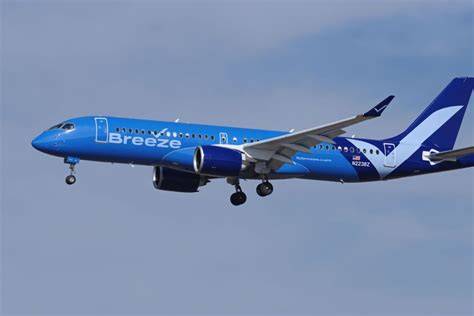
Performance was better than Montrose but still insufficient. Load factors reached a modest 65.9 percent, a respectable number in isolation yet not enough to sustain a seasonal route competing against Southwest Airlines, which operates the same city pair through the warmer months with its Boeing 737 fleet. With Southwest’s frequency advantage and brand loyalty in Providence, Breeze faced a battle it could not win on price alone. The route now belongs solely to Southwest, and Breeze has redirected the aircraft toward markets where its A220 economics work harder.
Why Breeze Airways Is Leaving Colorado Behind
Both cuts reflect the same strategic logic. Breeze thrives where it is the only nonstop option, not where it is the second or third carrier on a corridor with entrenched competition. Denver is one of the most contested airports in the United States, dominated by United’s massive hub operation and Southwest’s extensive point-to-point network. Montrose, meanwhile, is a seasonal leisure market where demand is concentrated into a few winter and summer weeks and collapses in shoulder months, making year-round or extended-season service difficult to fill.
The airline has also been pruning broadly. Breeze has canceled 18 routes from its five busiest airports between 2022 and 2026, a pattern that reveals disciplined network management rather than crisis. Every removed destination frees an A220 for routes with stronger yields, and Breeze’s fleet of more than 60 aircraft gives it flexibility that legacy carriers, locked into hub schedules, simply do not have.
Breeze Airways Expansion at Myrtle Beach International Airport
While Colorado disappears from the map, Myrtle Beach International Airport (MYR) is about to become the centerpiece of Breeze’s growth. The airline plans to add 11 new routes from the airport next year, increasing its capacity there by more than 70 percent and cementing its position as the largest operator at Myrtle Beach. New destinations include Boston (BOS), Buffalo (BUF), Latrobe (LBE), and Santo Domingo (SDQ), the last extending Breeze’s reach into the Caribbean.
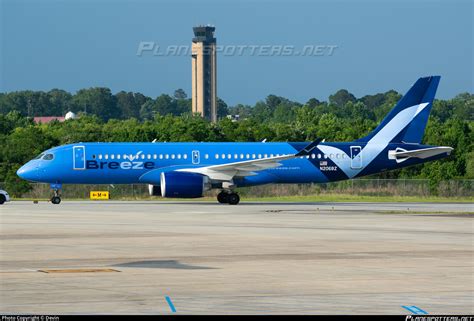
That expansion will push the airline’s total network past 90 cities across the United States and the Caribbean, a remarkable footprint for a carrier that began flying only in 2021. Breeze’s appeal rests on a simple formula: low fares, a point-to-point network, service to smaller airports legacy carriers skip, and flexible change and cancellation policies that contrast sharply with the rigidity of other ultra-low-cost operators. Travelers who lose a nonstop to Denver or Montrose are, in effect, subsidizing the growth of routes that better fit that model.
What the Breeze Airways Cancellations Mean for Travelers
For passengers affected by the Montrose and Denver exits, the practical impact is a return to connecting itineraries. Providence travelers heading to Colorado will now book Southwest or route through a hub; Montrose-bound skiers will lean on Southwest, United, American and Delta, often with a stop in Denver or Salt Lake City. Breeze has not signaled further Colorado ambitions, and given the load factor data behind both decisions, a near-term return to either airport looks unlikely.
The broader takeaway is that route cancellations are a feature of the low-cost model, not a failure of it. Breeze removes weak links quickly, moves aircraft to markets like Myrtle Beach, and keeps its cost structure intact. For travelers, the lesson is equally clear: when booking a young carrier’s experimental route, check whether the service is seasonal and how it is performing, because the network map can change faster than the fare calendar suggests.