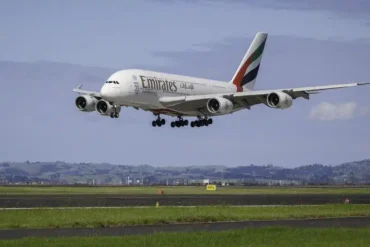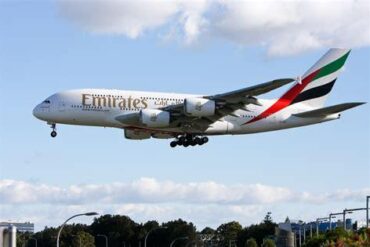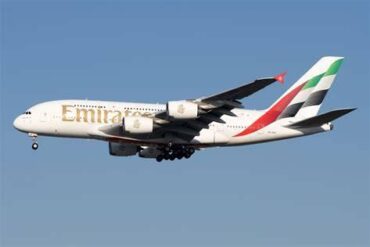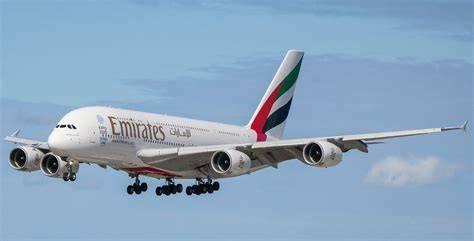
Nonstop flights between Dubai International Airport (DXB) and Auckland Airport (AKL) have a habit of stealing the spotlight. At roughly 8,800 miles (14,162 km), the link ranks among the longest commercial services anywhere on the planet and stands as the longest scheduled Airbus A380 operation in Emirates’ network. Yet the more instructive story sits behind the cabin door and above the departure desk, where an unseen structure quietly keeps New Zealand connected even when the marquee nonstop flight bends to the demands of wind, fuel, and load. That structure is a one-stop fallback through Australia, a network of connections through Sydney, Melbourne, and Brisbane that Emirates has kept alive since the route launched in March 2016. It is the operational exoskeleton beneath one of aviation’s most ambitious missions, and it explains how a carrier can promise Auckland every single day without ever placing all of its confidence in a single departure.
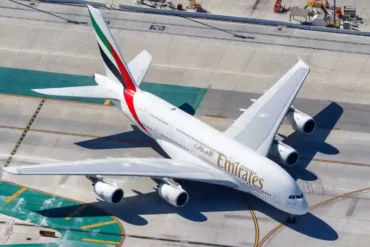
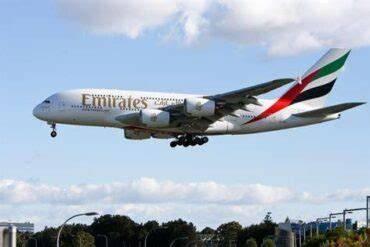
Why the Dubai to Auckland Nonstop Is Emirates’ Longest Airbus A380 Mission
The Dubai to Auckland nonstop occupies a peculiar place in Emirates’ route map. It is not merely long; it is structurally demanding in ways shorter ultra-long-haul sectors are not. The eastbound leg from Auckland to Dubai runs against the clock in its own way, but the westbound flight from Dubai to Auckland usually presents the stiffer test, because prevailing winds across the Indian Ocean and Southeast Asia tend to blow directly against the aircraft. On a cooperative day the journey can land in a little over 17 hours, but strong headwinds have repeatedly stretched block times toward 17 hours and 25 minutes, and occasionally beyond. Every one of those extra minutes translates into burned fuel, and burned fuel on a flight of this duration is never a rounding error.
Dispatch planning on this sector is a discipline of narrow margins. Planners weigh aircraft performance against passenger load, cargo demand, forecast winds at multiple flight levels, alternate airport availability, and the regulatory fuel reserves that must remain untouched in the tanks on arrival. Because the aircraft crosses enormous stretches of ocean and remote airspace, diversion options shrink in ways that make short-haul contingency planning look trivial. A weather system that forces a reroute can add flying time in increments that, multiplied across a 17-hour mission, reshape the entire fuel equation. Emirates responds by treating each departure as a bespoke calculation rather than a repeat of yesterday’s flight plan.
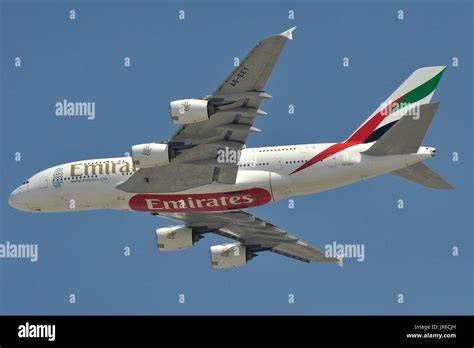
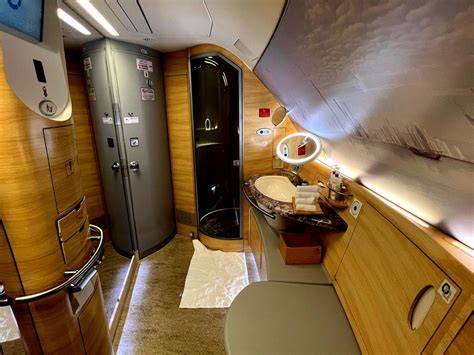
The fact that Emirates has kept the A380 exclusively assigned to this route speaks to confidence in the aircraft as much as to demand. The double-decker pairs long range with enormous seating capacity, letting the airline move several hundred passengers in a single departure while still offering the premium hardware — an onboard lounge and first-class shower spas — that justifies the fare premium on a flight of this length. Concentrating that capacity into one daily departure is efficient when loads are strong, and the route’s recent upgrade to daily A380 service is the clearest possible verdict on whether the economics hold up.
How Australia Became Emirates’ Little-Known Fallback for Auckland
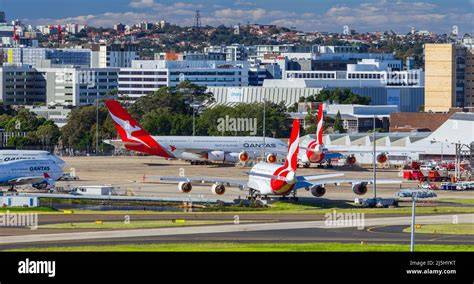
What most travelers never see is that Emirates has never treated the nonstop as its only road to Auckland. Since 2016 the airline has maintained extensive services into Australia’s largest cities, and those gateways function as a built-in alternative whenever the nonstop schedule is reduced, retimed, or disrupted. Sydney Kingsford Smith Airport (SYD) carries the heaviest weight in this arrangement, thanks to its dense schedule from Dubai and its deep pool of connecting passengers. Melbourne Airport (MEL) and Brisbane Airport (BNE) add further pathways, so a passenger bound for New Zealand can always be routed through Australia without Emirates inventing a contingency from scratch.
The elegance of this design is that it is not a contingency at all. The Australian services run every day for their own commercial reasons, carrying passengers whose journeys begin and end in Australia. Their secondary role as an Auckland fallback costs the airline almost nothing in extra flying and delivers something far more valuable than a spare option: an already integrated reservation path that requires no special planning when conditions sour. When nonstop frequencies are trimmed during weaker periods, or when a schedule change ripples through the network, the connecting model absorbs the shock without severing Dubai from New Zealand.
This matters enormously for passengers who do not originate in Dubai. Emirates funnels travelers from Europe, the Middle East, Africa, and Asia through its Dubai hub before fanning them across its long-haul network, and a traveler from Manchester or Nairobi cares only that the itinerary works. Multiple onward routing options give the reservation system room to rebook, reprice, and recover when demand patterns shift or a single flight is affected. The fallback is invisible in the booking engine, which is precisely what makes it effective.
The Operational Flexibility Ultra-Long-Haul Flying Demands
Flights that spend more than 17 hours in the air leave little room for improvisation. By the time an A380 is over the Indian Ocean, the decisions that matter have already been made on the ground: how much fuel to carry, how much cargo to accept, which routing to file, which alternates to nominate. Headwinds are the dominant variable on the Dubai to Auckland sector, and opposing winds raise fuel burn while compressing the margins that keep the flight legal and comfortable. Planners therefore re-evaluate atmospheric conditions continuously in the hours before departure rather than locking in a plan days in advance.
Maintaining the Australian connections gives Emirates a second lever in this process. Instead of insisting that every passenger travel nonstop regardless of what the atmosphere is doing, the airline can adapt schedules to seasonal requirements while still moving people reliably between Dubai and New Zealand. That flexibility also protects fleet utilization, because A380s are scarce, valuable assets that must be allocated where demand is strongest. Having more than one routing option lets Emirates redeploy capacity as operational priorities evolve, whether that means concentrating the double-decker on the nonstop or leaning on connections during a period of adjustment.
Why Growing Demand Pushed the Nonstop Route Toward Daily A380 Service
For all the value of the Australian fallback, passenger demand has increasingly favored the nonstop. As international travel recovered and long-haul markets strengthened, Emirates progressively expanded the Dubai to Auckland schedule, culminating in the shift to a daily A380 departure. That milestone confirmed that one of the world’s longest flights could be economically attractive despite its punishing operating costs, and it underlined how thoroughly the carrier had read the market.
Even with daily nonstop service, the underlying network philosophy has not budged. The Australian gateways still matter: they add capacity, they serve passengers whose itineraries touch Australia, and they preserve resilience when circumstances demand adjustment. The expanded nonstop schedule complements the connecting model rather than replacing it. Together, the two options create a network that serves different passenger preferences — some want the shortest possible journey, others value a stop for reasons of schedule or fare — while letting Emirates respond to demand shifts without sacrificing regional connectivity. The result is a system that balances efficiency against redundancy.
The Airbus A380’s Enduring Role in Emirates’ Ultra-Long-Haul Strategy
Emirates remains the world’s most committed A380 operator, with 116 aircraft in its fleet according to ch-aviation, even as other carriers have retired or reduced their double-decker fleets. The Dubai to Auckland route showcases why. The aircraft’s combination of range and capacity allows Emirates to move hundreds of passengers on a single mission while offering premium products that compete on comfort rather than price. Operating one large aircraft instead of several smaller ones concentrates capacity into a single daily departure and keeps the onboard product consistent across the route.
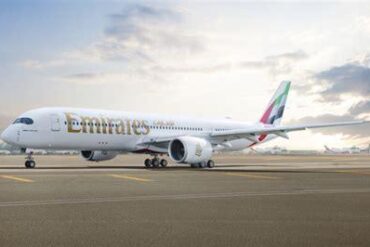
The airline’s refurbishment program reinforces the aircraft’s future. Updated interiors, refreshed premium cabins, and modernized economy seating keep the A380 competitive on exactly the kind of flight where comfort matters most — after 17 hours in the air, the difference between a refreshed cabin and a dated one is measured in how travelers describe the journey afterward. Emirates has also ordered 49 A350-900s (with 24 already in service), 35 777-8s, 235 777-9s, and 35 Dreamliners, but the A380 remains the flagship for high-density, high-value missions like this one.
What Network Planning, Not Just Aircraft Performance, Really Delivers
From the passenger’s seat, Dubai to Auckland looks like a single record-setting flight connecting two distant cities. Behind the scenes, it functions as one component of a much larger network built on flexibility, redundancy, and efficient aircraft utilization. The continued availability of Australian connections proves that successful ultra-long-haul operations depend as much on network planning as on aircraft performance. By maintaining multiple routing options through Sydney, Melbourne, and Brisbane, Emirates reduces its dependence on any single schedule while preserving service continuity across the wider region.
That philosophy has allowed the airline to adjust nonstop frequencies over time without abandoning the market or compromising connectivity. Whether operating fewer nonstop flights during certain periods or expanding to daily A380 departures when demand supports it, Emirates retains an established fallback that has been part of its strategy since the route first took off in 2016. The Australian services are not competitors to the nonstop flight; they are complementary components of a broader network. That combination is what enables Emirates to keep operating one of commercial aviation’s most demanding A380 routes while maintaining the operational resilience required for flights that regularly spend well over 17 hours in the air.
Emirates’ fleet at a glance, according to ch-aviation:
- Airbus A350-900 — 24 in service, 49 on order
- Airbus A380 — 116 in service
- Boeing 777-200LR — 10 in service
- Boeing 777-300ER — 117 in service
- Boeing 777-8 — 35 on order
- Boeing 777-9 — 235 on order
- Boeing 787-8 Dreamliner — 20 on order
- Boeing 787-10 Dreamliner — 15 on order