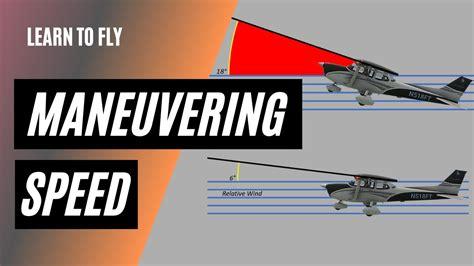
Maneuvering speed, commonly referred to as Va, is a fundamental concept in aviation safety, yet it is often misunderstood or oversimplified. To appreciate how Va protects an aircraft, we must delve into the principles of aircraft certification, aerodynamic behavior under stress, and the nuances that influence structural integrity during flight.
Flying within safe operational parameters is paramount. Va represents the maximum speed at which you can make a full, abrupt control input without risking structural damage. However, this protection is conditional, hinging on smooth air and singular control deflection.
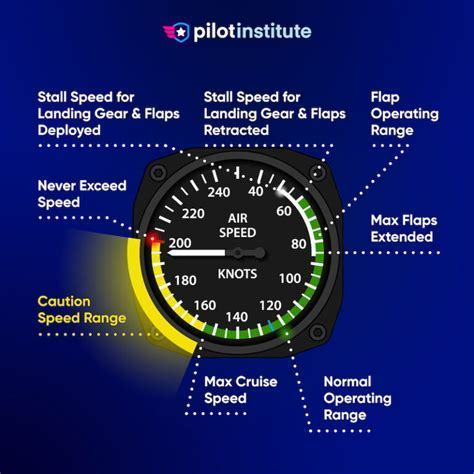
Understanding Maneuvering Speed (Va)
Design maneuvering speed is a calculated value ensuring that if a pilot moves a single control to its limit, the aircraft will stall before experiencing structural failure. It embodies a compromise between responsiveness and protection, allowing aggressive but controlled inputs without catastrophic outcomes. The catch? It only applies if the movement is limited to one control in one direction at a time, and only in non-turbulent conditions.
The certification process involves subjecting the aircraft to sudden, full control deflections in all three axes—pitch, roll, and yaw—individually. Movements must reach full stops or the maximum force a pilot can reasonably exert. The airplane must stall before structural loads exceed its design limits.
Va’s Limitations and Misconceptions
Believing that Va offers invincibility is a dangerous misconception. In turbulent air, or when multiple controls are moved simultaneously or violently, the aircraft can experience compound stresses that exceed certification scenarios. For example, rolling while pitching or combining heavy rudder inputs with other maneuvers introduces complex load factors that structures aren’t certified to withstand.
Normal category airplanes are tested for 3.8 positive Gs and 1.52 negative Gs. However, compound stresses, like “rolling Gs”—rapid alternations between positive and negative forces—can cause failure even without breaching these thresholds. Pilots must resist the urge to overcontrol, especially in dynamic weather conditions.
Certification Testing for Va
Manufacturers execute six primary tests during certification at Va:
- Full elevator back deflection
- Full elevator forward deflection
- Full aileron right deflection
- Full aileron left deflection
- Full rudder right deflection
- Full rudder left deflection
Each test is isolated—no compounded movements are evaluated at this stage. Only for elevators is a “checked maneuver” tested, involving aft then forward movement, performed delicately to avoid surpassing G limits.
Importantly, manufacturers also conduct a full aileron deflection while under two-thirds of the maximum load limit, ensuring the wings endure asymmetric stresses under lighter G loads.
The Relationship Between Va and Aircraft Weight
A critical but often overlooked aspect is that Va is not a fixed speed. It is certified at the aircraft’s maximum gross weight, meaning it diminishes as weight decreases. As weight drops, the required lift for level flight lowers, shifting the critical angle of attack relative to G loading.
At full gross weight, pulling back sharply at Va ensures the angle of attack increases to critical just as structural G limits are approached, causing a stall before damage. At lighter weights, the aircraft would hit G limits first if Va remains the same, necessitating a lower maneuvering speed to maintain protection.
Pilots should reference the aircraft’s operating handbook for Va variations or use the following formula if a chart is unavailable:
[ V_{a_{new}} = V_{a_{max}} \times \sqrt{\frac{W_{new}}{W_{max}}} ]
Where:
- ( V_{a_{new}} ) = Adjusted maneuvering speed
- ( V_{a_{max}} ) = Published Va at maximum gross weight
- ( W_{new} ) = Current weight
- ( W_{max} ) = Maximum gross weight
Practical Implications for Pilots
Understanding Va‘s conditional protections helps pilots manage aircraft loads more intelligently. Smooth, deliberate control inputs remain essential even below Va, particularly in turbulence or when flying lighter than maximum gross weight.
Misapplication of rudder, particularly in slip/skid situations during stall recovery or in gusty crosswinds, exemplifies how exceeding Va limitations can cause tailplane or rudder damage. Moreover, pilots flying aerobatic-capable planes must remember that “flick” maneuvers are separately certified—standard airplanes are not designed for aggressive, multi-axis dynamic loads.
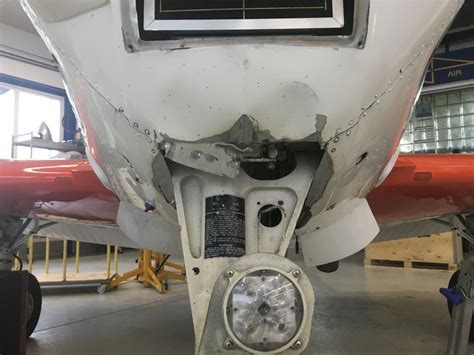
Key Takeaways: How Va Truly Protects Your Aircraft
- Va provides protection against structural failure only when single, full deflections occur in smooth air.
- Turbulence, rapid multi-axis control movements, or “rolling G” conditions can overwhelm airframe strength even below Va.
- Va decreases with aircraft weight reduction, requiring pilots to adjust their operational mindsets.
- Smoothness and precision—not mere speed control—define effective use of Va as a safety margin.
By fully understanding maneuvering speed’s intended protections—and its critical limits—we can foster safer, smarter flying. Incorporating this knowledge into everyday operations transforms Va from an abstract number into a practical shield, guarding both aircraft integrity and pilot safety.