Allegiant Air is preparing to cut additional Sun Country Airlines departures from Minneapolis–Saint Paul International Airport (MSP) even as its own leadership describes demand in the Twin Cities as “really strong,” a contradiction that now sits at the center of the carrier’s post-acquisition integration. On the company’s third-quarter 2026 earnings call, Allegiant CEO Greg Anderson confirmed that Sun Country’s pilot staffing remains below the level required to fly its planned schedule, forcing the airline to operate well under its intended passenger capacity heading into the final months of the year. The admission arrives five months after Allegiant completed its acquisition of the Minnesota-based carrier in May, and it complicates the growth narrative that underpinned the deal.
The stakes extend well beyond a single quarter of trimmed frequencies. Minneapolis is Sun Country’s home market and the primary theater in which it competes with Delta Air Lines, an incumbent whose grip on the airport has shaped local fares for a generation. Allegiant has repeatedly promised to restore and expand Sun Country’s presence there, but Delta’s scale, its international network and its aggressive pilot recruitment have combined to slow that effort. Each departure removed from the MSP board narrows the low-cost alternative available to Twin Cities travelers and, on high-demand leisure routes, reduces the competitive pressure that has historically kept fares in check.
Pilot Shortages Force Deeper Schedule Cuts Despite “Really Strong” Demand
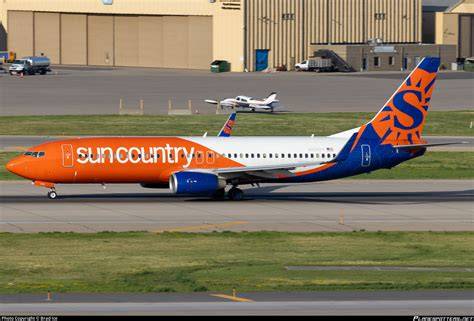
Allegiant’s latest financial update makes clear that Sun Country’s operational difficulties are bleeding into the fourth quarter of 2026. Anderson acknowledged that pilot attrition has improved since the previous earnings call, yet staffing still falls short of what the schedule demands. The carrier therefore expects to keep flying below its planned passenger capacity while recruitment and training classes work their way through the pipeline, a process measured in months rather than weeks because newly hired first officers must complete type training and line checks before they can add meaningful block hours.
The reductions are most visible at MSP, where Sun Country has long functioned as the airport’s principal low-cost counterweight to Delta. Earlier trims removed roughly 348 September departures, about one-third of the flights the airline had previously scheduled for that month. Reporting from the Minnesota Star Tribune subsequently placed October’s schedule about 20% lighter year over year, with November down approximately 8%. The pattern describes a carrier cutting deepest where capacity is thinnest and demand is weakest, rather than one retreating from the market outright.
Anderson, however, framed the cuts as a timing problem rather than a strategic one. He described the Twin Cities as an attractive market the company intends to grow into once crew availability catches up, noting that recruitment classes are already underway. “The demand in the Twin Cities is really strong,” he said on the call. “We want to add capacity there. So for our Sun Country flying, I would expect we’ll start adding back flying as the staffing levels rebuild. We have Allegiant. Expect sometime in 2027 to be able to fly Allegiant aircraft from Allegiant bases into the Twin Cities and add some incremental flying.”
An Allegiant spokesperson reinforced that position, explaining that the cuts are not part of a “long-term strategy” but rather a byproduct of merging two carriers’ operations. The statement described the changes as part of Sun Country’s regular network planning, with capacity aligned to seasonal demand and operational needs. It stressed that reductions are concentrated during off-peak periods where demand is lower, that disruptions should be limited, and that MSP “will serve as the largest base in our combined network.” The spokesperson also acknowledged “near-term headwinds associated with pilot attrition” while expressing optimism about long-term growth in Minneapolis.
Delta’s Minneapolis Dominance Complicates Sun Country’s Recovery
The root of the staffing gap is competition for experienced pilots, and no competitor looms larger than Delta. After the acquisition closed, a substantial number of Sun Country aviators reportedly departed for larger airlines, with many landing at Delta. Allegiant has previously conceded that attrition ran far higher than anticipated, creating an operational shock during an integration that was already complex. For a carrier of Sun Country’s size, the loss of even a modest cohort of captains can cascade through the schedule, because every absent captain removes an aircraft’s worth of flying from the plan.
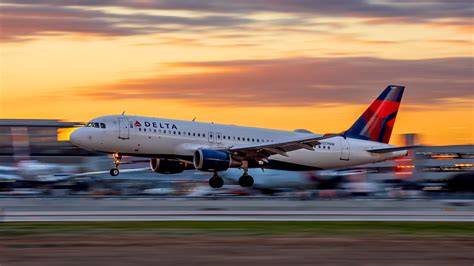
Delta’s advantages are structural. Minneapolis ranks among its most important hubs, and the airline consistently carries roughly 70% of the airport’s passenger market. Its domestic and international network, its larger fleet and its deep recruiting apparatus give it leverage that a low-cost operator cannot match on compensation alone, and pilots weighing a career against a decade of seniority progression have strong incentives to move. Delta’s dominance also means that when Sun Country withdraws capacity, the incumbent can absorb displaced demand without adding much new flying of its own.
The pressure is not confined to the cockpit. Sun Country has expanded its cargo operations, particularly through its Amazon partnership, and those freighter flights increasingly compete for the same aircraft and crew resources that passenger services depend on. Every cargo rotation flown by a Sun Country crew is a passenger rotation that cannot be flown, adding a second constraint on top of the pilot shortage. Delta, meanwhile, stands to benefit from reduced competition on routes where Sun Country once offered lower fares, though the carrier will not automatically backfill every discontinued service.
Low-Cost Model Preserves Sun Country’s Competitive Edge at MSP
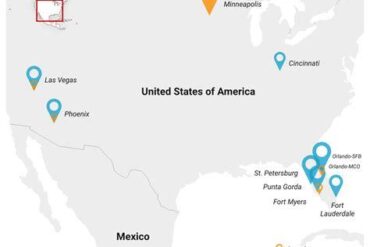
Sun Country retains a genuine advantage in its low-cost carrier business model, its affordable fares and its focus on leisure destinations such as Florida, Arizona and Mexico. That positioning attracts price-sensitive travelers who might otherwise default to Delta, and it gives the airline a reason to exist at MSP that does not depend on matching the incumbent’s breadth. Restoring capacity, therefore, is less about reclaiming market share across the board than about keeping enough seats in the market to preserve the fare discipline that made Sun Country relevant in the first place.
The timing of the recovery matters enormously. When the deal was announced, the combined company presented Minneapolis as a flagship growth opportunity, promising additional destinations and improved connectivity. The immediate aftermath has been considerably messier, with workforce departures and schedule reductions undercutting those ambitions before they could be realized. Delta’s growing presence represents a real competitive threat: with Sun Country temporarily smaller, the incumbent can entrench its position on overlapping routes, potentially making it harder for the low-cost carrier to win back share once pilots return.

Can Allegiant Rebuild Sun Country Before Delta Gains More Ground?
Allegiant continues to insist the current situation is temporary. Anderson indicated that recruitment classes are full and that the company expects to begin adding back Sun Country passenger capacity as more pilots become available. He also pointed to 2027, when Allegiant plans to deploy its own aircraft from its existing bases into the Twin Cities, adding incremental flying that does not depend solely on rebuilding Sun Country’s workforce. That approach effectively allows the parent company to serve MSP through a second brand while the acquired carrier stabilizes.
For Minneapolis travelers, the practical consequences are already tangible: fewer departure times on popular leisure routes, less fare competition and a thinner low-cost option at an airport where Delta controls roughly seven in ten passengers. Discussions among Twin Cities flyers have focused on pilot recruitment, route durability and future ticket prices, reflecting unease about whether the cuts will prove temporary or become the new normal. The Star Tribune’s reporting on the latest reductions has amplified that concern locally.
The decisive variable is speed. Every month that Sun Country flies below plan is a month in which Delta can consolidate its position and in which displaced passengers form new habits. Allegiant’s promise that MSP will remain the largest base in its combined network is credible on paper, given the carrier’s investment and its stated intent to add flying in 2027. Whether the workforce can be rebuilt quickly enough to make that promise real, before Delta converts a temporary gap into a permanent advantage, is the question that will define Sun Country’s future at its home airport.