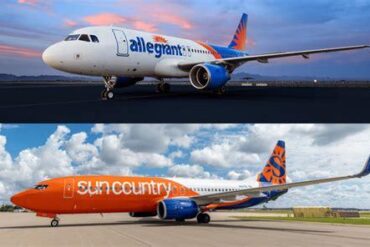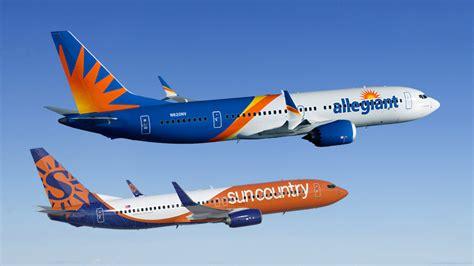
The American leisure airline market is entering a major new phase after Allegiant Air officially completed its acquisition of Sun Country Airlines. The deal creates one of the largest vacation-focused airline groups in the United States, combining two carriers that built their reputations around affordable leisure travel, underserved routes, and nonstop access to popular holiday destinations.
Together, the airlines will transport roughly 22 million passengers annually, operating nearly 650 routes across approximately 175 cities with a combined fleet of 195 aircraft. While both brands will continue operating separately for now, the merger signals a powerful shift in how low-cost leisure travel may evolve in North America over the next decade.
For travellers, the acquisition could eventually unlock broader nonstop access, more route flexibility, and stronger competition in secondary leisure markets that larger network airlines often overlook. In the immediate future, however, passengers are unlikely to notice significant operational changes.
The merger arrives at a time when airlines are aggressively reshaping networks around profitability, operational resilience, and post-pandemic leisure demand patterns. Unlike traditional mergers focused heavily on corporate travel, this deal is centred almost entirely on vacation traffic and regional connectivity.
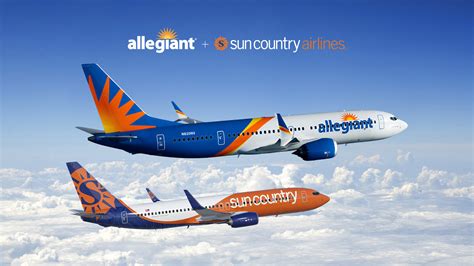
Why the Allegiant and Sun Country Combination Matters
The acquisition creates a uniquely positioned airline group with complementary strengths rather than heavily overlapping operations. That distinction is important because it reduces the risk of aggressive route cuts that often follow major airline consolidations.
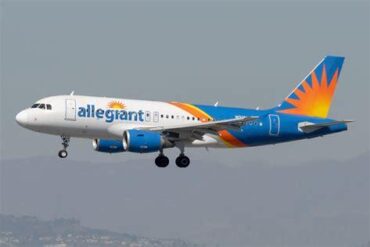
Allegiant Air built its business by serving smaller regional airports with limited nonstop competition. Its strategy focused on linking underserved American communities to high-demand leisure destinations including Florida, Las Vegas, Phoenix, Myrtle Beach, and vacation hotspots across Mexico and the Caribbean.
Meanwhile, Sun Country Airlines developed a different operational identity. The airline concentrated much of its network around Minneapolis–Saint Paul International Airport while also expanding charter operations and cargo services, including flying contracts tied to Amazon logistics operations.
This operational diversity may ultimately become one of the merger’s biggest strategic advantages. Allegiant historically relied heavily on seasonal leisure demand, which can fluctuate dramatically depending on economic conditions and travel trends. Sun Country’s cargo and charter business provides a stabilising revenue stream that could help smooth seasonal volatility.
Executives from both companies believe the merger will generate approximately $140 million in annual synergies within three years. Those savings are expected to come from fleet optimisation, procurement efficiencies, maintenance coordination, and broader operational integration.
What Air Travellers Will Notice First
For now, the merger will remain mostly invisible to customers. Existing bookings remain valid, loyalty programmes stay independent, and customer service operations continue separately while integration planning progresses.
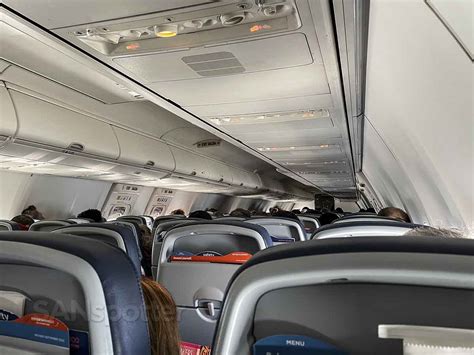
Passengers flying with either airline should still expect the same websites, mobile apps, check-in procedures, baggage policies, and onboard experiences they are already familiar with. That gradual integration approach helps minimise disruption while regulators and airline management teams coordinate long-term operational planning.
The larger changes will likely emerge slowly through network expansion and booking flexibility rather than immediate branding changes.
Travellers may eventually gain access to broader codeshare-style booking opportunities that connect both airlines’ route systems more seamlessly. This could allow passengers from smaller regional communities to access a significantly wider range of vacation destinations without relying on major hub airports.
Minneapolis Remains a Critical Piece of the Strategy
One of the biggest questions surrounding the acquisition involved the future of Sun Country’s strong Minneapolis presence. The city has long served as the carrier’s operational heart and a major competitive alternative to Delta Air Lines in the Upper Midwest leisure market.
According to the combined company, Minneapolis–Saint Paul International Airport will remain a major operating centre after the merger. That commitment matters because Sun Country established deep customer loyalty throughout Minnesota and surrounding Midwestern states over several decades.
Unlike Allegiant’s emphasis on secondary airports, Sun Country traditionally operated from larger primary airports with denser schedules and stronger frequency. Preserving that structure allows the merged airline group to maintain access to travellers who prioritise convenience, schedule flexibility, and connections through larger metropolitan airports.
The combined network now gives Allegiant stronger exposure to high-demand northern leisure markets while simultaneously giving Sun Country access to Allegiant’s extensive secondary airport system across the southern United States.
Fleet Expansion Creates Operational Opportunities
The merger also creates one of the more interesting mixed narrowbody fleets in the American low-cost sector.
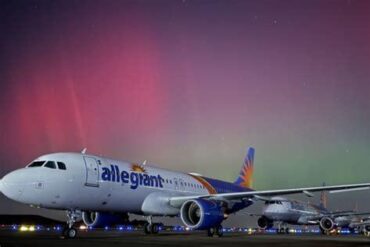
According to fleet data from Planespotters.net, Allegiant currently operates Airbus A319s, Airbus A320s, and newer Boeing 737 MAX 8 aircraft. Many of its Airbus aircraft are relatively old, with some averaging more than 20 years in service.
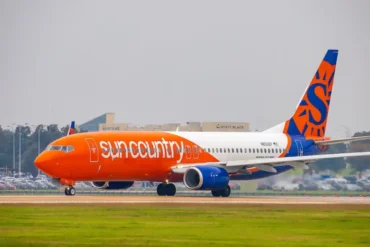
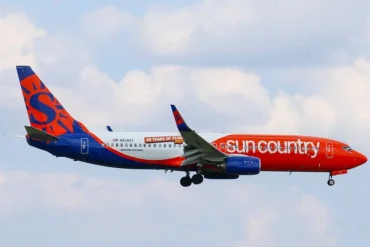
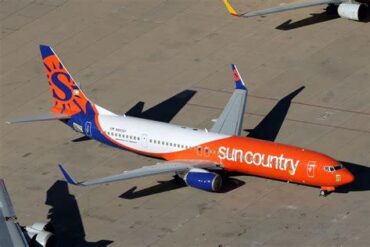
Sun Country, by contrast, operates an all-Boeing 737 fleet with an average age of approximately 19 years.
That fleet diversity creates both opportunities and challenges. Allegiant gains access to Sun Country’s Boeing operational expertise while potentially improving fleet flexibility over time. However, maintaining both Airbus and Boeing operations also increases maintenance complexity, pilot training requirements, and operational costs.
Still, the combined scale could improve aircraft utilisation and strengthen purchasing leverage for future fleet renewal decisions.
Overlapping Routes Could Become More Competitive
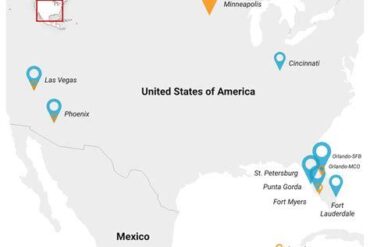
Although the two airlines avoided extensive direct competition before the merger, they did overlap in several high-demand leisure markets including Las Vegas, Orlando-area airports, Phoenix-area airports, Cancun, Fort Lauderdale, Nashville, and Tampa Bay destinations.
What made the overlap unusual was how differently the airlines approached those markets.
Allegiant Air often focused on secondary airports such as Orlando Sanford International Airport and Phoenix–Mesa Gateway Airport, targeting lower operating costs and easier passenger experiences.
Sun Country Airlines generally preferred larger primary airports including Orlando International Airport and Phoenix Sky Harbor International Airport, attracting passengers seeking broader connectivity and traditional airport infrastructure.
That dual-airport strategy may actually strengthen the merged company’s competitive reach rather than forcing route reductions. The airline group can now target both budget-conscious regional travellers and passengers preferring larger airport ecosystems.
The Long-Term Impact on US Leisure Travel
The merger reflects a broader transformation happening across the airline industry as carriers increasingly prioritise resilient leisure demand over unpredictable business travel markets.
For travellers, the biggest long-term benefit could be expanded nonstop connectivity between smaller American communities and major vacation destinations without requiring connections through congested mega hubs.
The combined airline group now possesses a rare balance of secondary airport access, major metropolitan presence, charter expertise, cargo diversification, and strong leisure brand recognition. That combination could position the new company as a far more formidable competitor against traditional low-cost and legacy airlines alike.
Most importantly for passengers, the acquisition suggests that leisure travel remains one of the strongest and most aggressively expanding segments of the aviation industry. As airlines continue chasing profitable vacation traffic, travellers may ultimately gain more choices, more nonstop routes, and more competition-driven pricing across the United States leisure market.