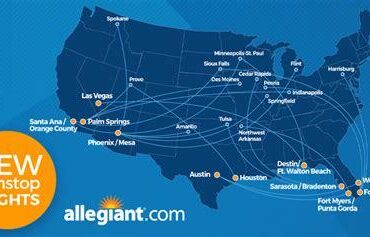
The announcement landed quietly but carried structural weight. Allegiant Travel Company’s agreement to acquire Minneapolis-based Sun Country Airlines is not merely another chapter in US airline consolidation; it is a deliberate geographic play centered on Minneapolis–St. Paul International Airport (MSP). In an industry where control of place can matter as much as control of planes, Allegiant is buying something it has never truly owned before: scale inside a legacy-dominated major airport.
For Allegiant, long defined by small-city routes and secondary airports, MSP represents an abrupt shift in posture. The deal delivers immediate relevance in the Upper Midwest and inserts Allegiant into one of the most tightly held airport ecosystems in North America. Sun Country’s presence at MSP, built patiently alongside Delta’s dominance, gives Allegiant a ready-made platform that organic growth could not realistically replicate.
This is why early coverage focused too narrowly on route overlap and fleet math. The real story is strategic inheritance. Sun Country does not just bring airplanes and staff; it brings defensible territory. In airline economics, that is the hardest asset to build and the easiest to lose if misplayed.
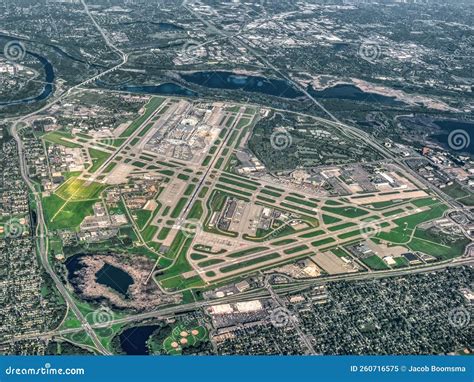
MSP as a Strategic Anchor, Not a Traditional Hub
MSP will not become a classic hub-and-spoke system for Allegiant, and that distinction matters. Rather than chasing business travelers or global connectivity, Allegiant appears intent on using MSP as a strategic anchor—a stable, high-volume base that supports a broader leisure network. This mirrors how fortress airports function without replicating legacy carrier complexity.
Sun Country already accounts for roughly ten percent of MSP’s capacity, making it the largest non-Delta operator at the airport. That scale provides schedule depth, brand recognition, and operational muscle. Allegiant inherits all three overnight. Instead of dispersing growth across dozens of small markets, it now owns a single gravity point capable of absorbing seasonal swings and stabilizing cash flow.
The combined airline plans to maintain Sun Country’s leisure-heavy pattern from MSP, particularly to Florida, Mexico, the Caribbean, and the US Southwest. Allegiant’s smaller-city routes can increasingly feed into that base, forming a loose spoke-and-anchor structure that preserves point-to-point economics while improving aircraft utilization. For travelers, this translates into more nonstop leisure options without the congestion of a business-focused hub.
Borrowing From Delta’s Northwest Playbook
There is a historical echo here that industry veterans recognize immediately. When Delta Air Lines acquired Northwest Airlines, it inherited MSP as a fortress hub that still underpins Delta’s Midwestern dominance today. Allegiant is not building a global network, but it is following the same defensive logic: acquire loyalty, gate access, and operational scale in a market competitors struggle to penetrate.
MSP has long resisted diversification. Southwest never gained critical mass. United and American remain peripheral players. Delta’s pricing power and schedule density discouraged sustained challenges. Sun Country survived by operating around peak business demand and focusing relentlessly on leisure travelers. Allegiant now steps into that niche with deeper pockets and broader network reach.

The lack of significant route overlap between Allegiant and Sun Country strengthens the case. It minimizes regulatory friction and reduces internal cannibalization, allowing the merged carrier to layer networks rather than compress them. MSP becomes the connective tissue between Allegiant’s underserved-city model and Sun Country’s major-market leisure focus.
Why the Upper Midwest Matters More Than It Appears
Geography amplifies this move. The Upper Midwest is not overserved, but it is loyal and sticky. Travelers value nonstop options, seasonal reliability, and price transparency. Sun Country cultivated that loyalty over decades, particularly among Minnesota-based leisure travelers who view the airline as a local alternative rather than a disruptor.
By acquiring Sun Country, Allegiant gains instant credibility in a region where brand trust is slow to earn and fast to erode. That credibility is difficult for new entrants to challenge, especially at a constrained airport like MSP where gates, slots, and operational windows are finite. Over time, this local loyalty becomes a moat.
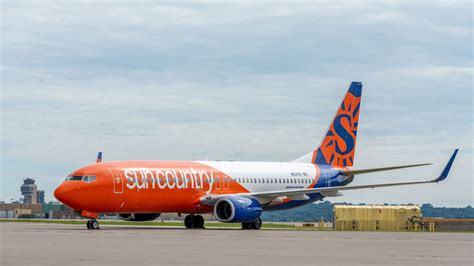
Operational alignment further strengthens the logic. Sun Country’s Boeing 737 fleet fits neatly alongside Allegiant’s narrowbody strategy, simplifying training, maintenance, and sourcing. Cost synergies are real, but the more valuable outcome is operational resilience. MSP can absorb aircraft during seasonal lulls elsewhere and provide year-round utilization stability.
Competitive and Regulatory Implications at MSP
For regulators, the merger is less alarming than headline numbers suggest. Delta’s dominance at MSP remains untouched. The competitive questions will center on pricing power in specific leisure markets rather than systemic overlap. Allegiant’s challenge will be to demonstrate continued service to smaller Midwestern cities while avoiding excessive consolidation on popular vacation routes.
For MSP itself, the deal reinforces its status as one of the most concentrated major airports in the US. Leisure competition may intensify at the margins, but the airport’s core structure remains intact. What changes is who controls the second layer of relevance beneath Delta.
Ultimately, this acquisition is not about national ambition. It is about regional control. By securing MSP as an anchor, Allegiant gains stability, defensive strength, and strategic credibility in a market where those qualities are exceptionally hard to buy. In doing so, it quietly adopts a lesson Delta mastered years ago: fortress airports are not built overnight, but they can be acquired—if the timing and target are right.