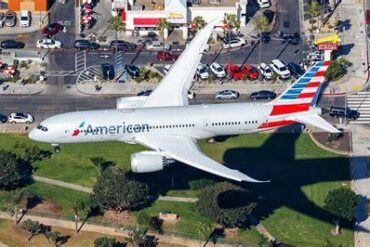
Winter Storm Fern did not merely disrupt flights; it performed a brutal stress test on American Airlines’ entire operating philosophy. As ice locked down Dallas/Fort Worth International Airport and Charlotte Douglas International Airport at the same time, the carrier’s carefully engineered hub-and-spoke system collapsed inward. What followed was not a short-lived weather delay but a cascading operational failure that stretched across the network, stranded crews and passengers, and erased hundreds of millions of dollars in value. Fern became a case study in how scale, when overly concentrated, can turn efficiency into systemic risk.
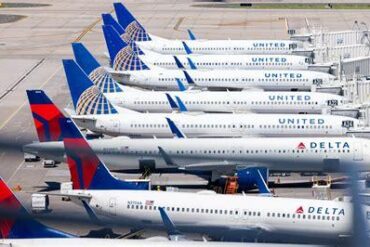
American’s recovery lagged far behind its major rivals. While Delta Air Lines and United Airlines were already restoring normal schedules, American continued canceling hundreds of additional flights days after the storm’s peak. The contrast was stark enough to raise an uncomfortable question: was this really about weather, or was the airline’s network design itself the hidden accelerant?
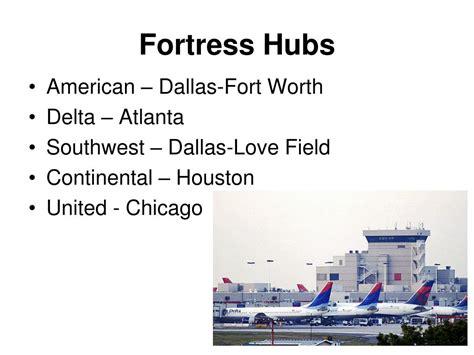
The answer lies deep inside American’s reliance on “fortress hubs,” a strategy that works brilliantly in calm conditions and catastrophically when multiple linchpins fail at once.
A Perfect Storm for a Concentrated Network
For decades, American Airlines has optimized around a small number of ultra-dominant hubs. Dallas/Fort Worth and Charlotte are not just important airports; they are the dual engines of the airline’s domestic network. Together, they handle an enormous share of American’s connecting traffic, crew bases, and aircraft rotations. Under normal circumstances, this concentration delivers high aircraft utilization, dense schedules, and strong market power.
Storm Fern turned that strength into a liability.
When freezing rain transformed DFW into what CEO Robert Isom later described as a “skating rink,” the initial shock was severe but manageable. The crisis escalated when the same system marched east and crippled Charlotte. With both hubs compromised simultaneously, American lost its ability to reroute traffic internally. There was no unaffected super-hub to absorb displaced aircraft and crews. The network had nowhere to breathe.
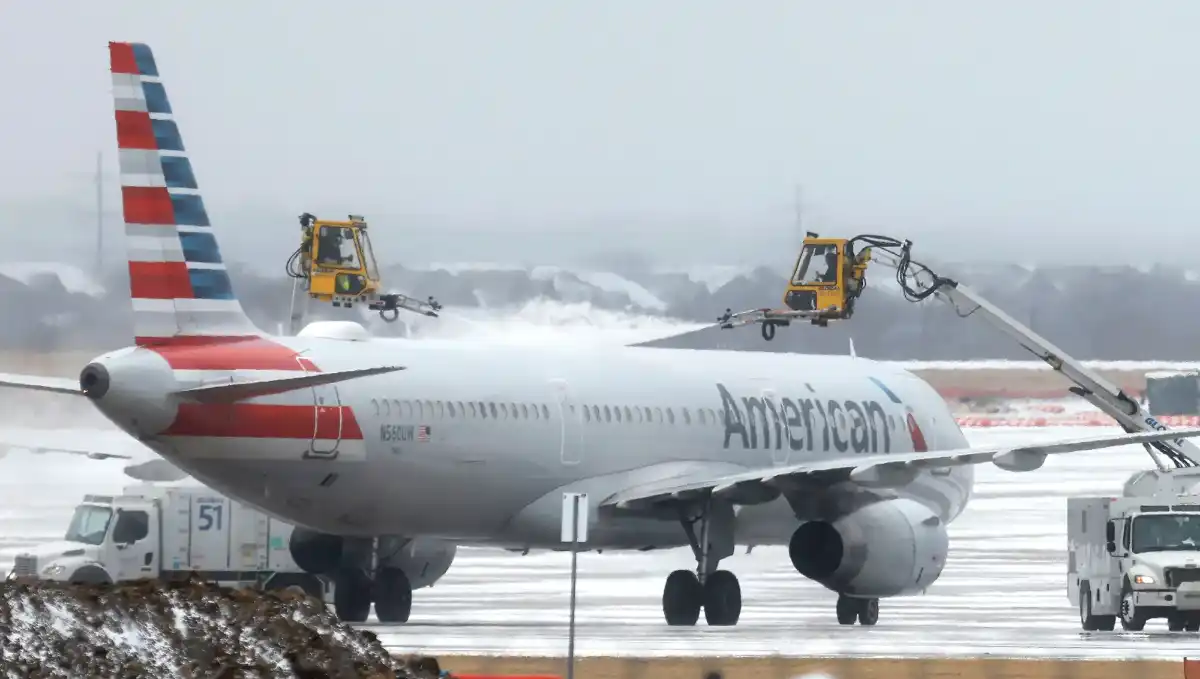
As the freeze expanded, secondary hubs such as Philadelphia, Reagan National, and New York JFK were also disrupted. Over a single weekend, more than 10,000 American Airlines flights were scrubbed. By Tuesday, nearly half of American’s mainline schedule was canceled, while competitors were operating close to normal levels. Nine of the ten U.S. airports with the highest cancellation rates were American hubs, an unmistakable signal that this was not a localized failure but a network-wide paralysis.
Why the Hub-and-Spoke Model Breaks Under Ice
The hub-and-spoke system depends on synchronization. Aircraft, crews, and passengers must arrive and depart in tightly coordinated waves. When a hub shuts down, that synchronization shatters instantly. Aircraft end up parked in the wrong cities. Crews finish flights far from their assigned bases. Passengers miss connections that no longer exist.
In theory, the system recovers once the weather clears. In practice, recovery speed depends on how quickly an airline can reassemble those scattered pieces.
American’s problem was not just that planes were grounded; it was that people were unreachable.
DFW and CLT are primary crew domiciles. When those airports closed, thousands of pilots and flight attendants were suddenly out of position. Even when runways reopened and aircraft were ready to fly, there were no legal crews available to operate them. This is where the hub-and-spoke model reveals its fragility: grounding a hub does not merely cancel flights there; it immobilizes crews who are needed everywhere else.
Crew Displacement Becomes a Human Bottleneck
As the days dragged on, reports from inside the operation painted a grim picture. Flight attendants sleeping on airport floors. Crews stuck in cities for five days while their schedules insisted they were somewhere else entirely. Phone lines to crew scheduling crashing under the load. Pilots ready to fly but missing flight attendants, aircraft fueled but legally unstaffed.
This was not just inconvenience; it was operational gridlock.
Federal Aviation Administration rest requirements added another layer of complexity. Crews who had already endured long duty days during the storm timed out and became unavailable. Others lacked the correct aircraft qualifications for substitute assignments. Geography compounded everything: a crew scheduled to operate a Miami departure could not help if they were stranded in icy Dallas.
Each unresolved crew pairing rippled outward, canceling yet another flight and stranding yet more crews. What should have been a 48-hour weather disruption metastasized into a five-day logistical nightmare.
The Technology Gap Behind the Recovery Gap
The stark difference between American’s recovery and that of its rivals points toward technology, not meteorology. Modern airline recovery is no longer managed by human dispatchers alone. It is driven by sophisticated, AI-powered optimization engines designed to rebuild shattered schedules in real time.
Delta and United have invested heavily in these systems, developing proprietary tools capable of solving what amounts to a three-dimensional puzzle: aircraft availability, crew legality, and passenger flows, all recalculated continuously as conditions change. These systems do not wait for the storm to end. They simulate thousands of scenarios while the weather is still unfolding, preparing recovery plans for multiple reopening timelines.
American relies on a platform known as HEAT, the Hub Efficiency Analytics Tool. HEAT excels at pre-storm planning, adjusting schedules days in advance to minimize stranded aircraft. What it does not do particularly well is post-storm recovery at scale. Once the network is already broken, HEAT lacks the speed and autonomy required to rebuild it minute by minute.
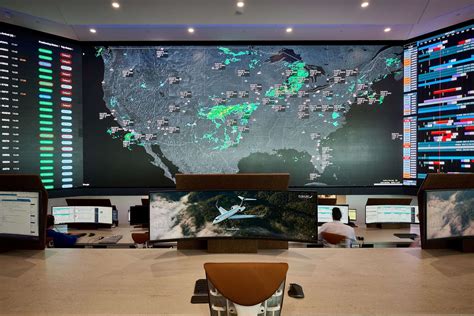
Older recovery logic prioritizes aircraft first and crews second. Modern AI treats them as inseparable. The difference is decisive. When recovery algorithms take hours to compute solutions that competitors solve in minutes, the delay compounds. Each lost hour creates more crew misalignments, more legal timeouts, and more cancellations. The recovery gap widens exponentially.
Financial Fallout Beyond the Tarmac
The operational meltdown translated directly into financial damage. During American’s fourth-quarter earnings call, CFO Devon May estimated the revenue impact of Storm Fern at more than $200 million. That figure reflects lost ticket sales, reaccommodation costs, crew expenses, and downstream disruption to future bookings.
The timing could not have been worse. American had just reported a record $14 billion in quarterly revenue, signaling strong demand and operational momentum. Storm Fern did not erase that success, but it cast a long shadow over forward guidance. Investors were reminded that margins in aviation are thin, and resilience matters as much as scale.
The reputational cost is harder to quantify but equally real. Passengers tend to forgive weather. They are far less forgiving of chaos that lingers days after the skies clear.
A Structural Lesson for the Industry
Storm Fern did not invent American’s vulnerabilities; it exposed them. The hub-and-spoke model is not broken, but extreme concentration demands equally extreme resilience. When too much capacity, too many crews, and too much decision-making authority converge in a handful of locations, a single weather system can paralyze an entire airline.
This is not merely an American Airlines problem. Climate volatility is increasing, not decreasing. Polar outbreaks reaching the Southern Plains and the Carolinas are no longer statistical outliers. Airlines that built networks assuming geographic insulation are discovering that insulation has thinned.
The lesson is blunt: operational resilience now depends as much on software architecture as on fleet size. Airlines that cannot dynamically reassemble crews and aircraft at speed will continue to suffer prolonged meltdowns, no matter how large or profitable they appear on paper.
The Hub-And-Spoke Trap in the Age of Extremes
Storm Fern will be remembered not just for ice-covered runways but for what it revealed about modern airline fragility. American Airlines built a network optimized for efficiency, frequency, and market dominance. In doing so, it also built a system where failure at the core radiates outward with astonishing force.
Fortress hubs are powerful engines, but engines without redundancy can stall an entire machine. As weather extremes become more common, the airlines that thrive will be those that treat recovery technology, crew mobility, and network flexibility as strategic assets, not back-office details.
In the frozen aftermath of Storm Fern, the hub-and-spoke trap was no longer theoretical. It was etched into canceled flights, stranded crews, and a balance sheet lighter by hundreds of millions. The ice has melted. The lesson remains.