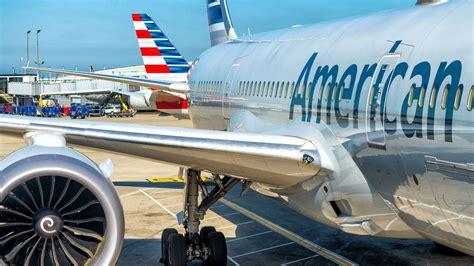
American Airlines likes to describe itself as the master of scale, the carrier that moves more passengers through more hubs than any rival. On paper, the strategy looks formidable. In practice, cracks are spreading through the foundation, and the loudest alarms are coming from the cockpit. Across the pilot group, frustration has hardened into open debate over whether senior leadership still understands how to run a resilient, competitive network in an era defined by operational precision.
The current flashpoint is a potential vote of no confidence in management, now under discussion during a four-day Allied Pilots Association board meeting in Dallas. Such votes are rare in large U.S. airlines, not because discontent is unusual, but because reaching this stage means pilots believe something structural has gone wrong. The issue is not a single storm or a bad quarter. It is the sense that American’s network design magnifies disruption instead of absorbing it.
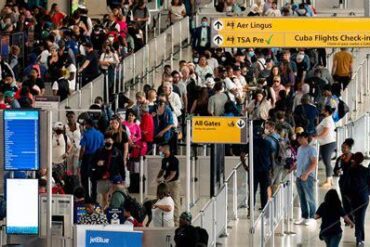
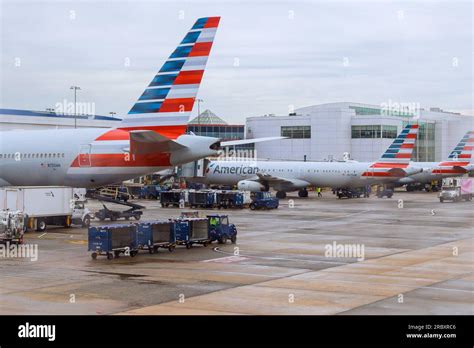
Winter operations at Dallas/Fort Worth International Airport and Charlotte Douglas International Airport brought these concerns into sharp focus. Severe weather triggered hundreds of cancellations, but pilots argue the weather itself was only the spark. What followed exposed weaknesses in crew positioning, recovery planning, and real-time decision-making that left aircraft and crews scattered across the system. In a hub-and-spoke network, recovery speed is everything. When it falters, the entire operation feels brittle.
A Network Built for Volume, Not Resilience
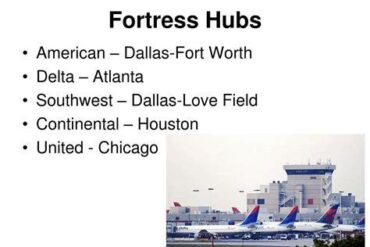
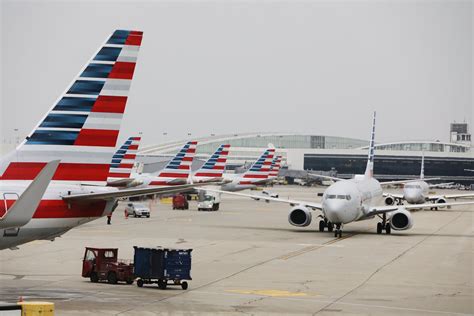
American operates one of the densest hub networks in the world, funneling traffic through mega-centers like DFW, Charlotte, Chicago O’Hare, Miami, and Phoenix. This concentration delivers impressive passenger numbers, but pilots increasingly question whether it creates single points of failure. When a dominant hub stumbles, the ripple effects cascade faster than crews can be repositioned or aircraft rerouted.
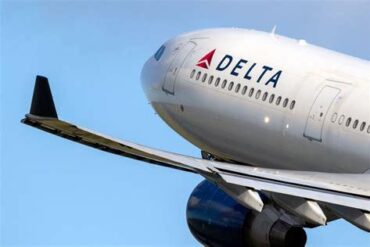
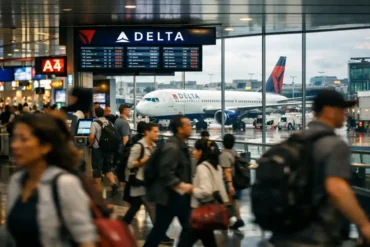
Competitors have quietly evolved away from this extreme dependence. Delta Air Lines has invested heavily in operational buffers, spare aircraft availability, and flexible crew utilization. United Airlines has leaned into technology-driven recovery tools and diversified hub flows. American, by contrast, appears to pilots to be running its network closer to the edge, extracting efficiency without building enough slack for irregular operations.
The result is a system that performs adequately on calm days but struggles when reality intrudes. For pilots, this translates into longer duty days, chaotic reassignments, and a growing sense that frontline experience is not feeding back into strategic planning. Scale, they argue, should be an advantage. Instead, it has become a liability.
Financial Results Deepen the Divide
Operational frustration might be tolerable if it were paired with industry-leading returns. Instead, American’s financial performance has become a second, equally potent source of anger. The airline reported roughly $111 million in net profit for the full year, a number that pales beside Delta’s multi-billion-dollar earnings. For pilots, the comparison is unavoidable and personal.
Profit-sharing highlights the gap with brutal clarity. Delta’s pilots are set to receive more than $500 million in profit-sharing, a figure that exceeds American’s entire annual profit. APA President Nick Silva has framed this not as envy, but as evidence that American’s strategy fails to convert size into value. When competitors generate stronger margins with smaller networks, questions about leadership competence are inevitable.
This disparity directly affects take-home pay, morale, and retention. Pilots see peers at rival airlines flying similar aircraft under comparable contracts, yet enjoying far greater upside. Over time, that imbalance erodes loyalty and undermines management’s claim that the network strategy is working.
Labor Unrest Beyond the Flight Deck
The pilots are not alone. American’s flight attendants’ union has also criticized management over reliability and morale, signaling a broader workforce unease. When multiple labor groups independently reach similar conclusions, it suggests a systemic issue rather than isolated grievances. Trust, once lost, is difficult to rebuild, and airlines are uniquely dependent on frontline cooperation during disruptions.
A no-confidence vote would not legally remove executives, but its symbolic weight would be heavy. It would tell the board, investors, and regulators that those tasked with executing the network no longer believe in the strategy guiding it. Historically, such moments often precede intensified scrutiny, governance changes, or strategic resets, even if leadership remains formally intact.
What a No-Confidence Vote Signals for the Future
American’s leadership has defended its approach, pointing to recent investments and forecasts that promise improvement. Booking trends and network tweaks are cited as evidence that the worst is behind them. Pilots remain skeptical, noting that similar assurances followed previous setbacks. From their perspective, the airline keeps diagnosing symptoms while ignoring the underlying disease.
At stake is more than internal politics. Persistent labor dissatisfaction can bleed into on-time performance, customer perception, and ultimately brand value. Airlines live and die by execution, and execution depends on alignment between strategy and those who carry it out. A network that exhausts its crews while underperforming financially is not merely inefficient; it is unstable.
As discussions continue in Dallas, the outcome of any formal vote remains uncertain. What is clear is that American Airlines stands at a crossroads. Its vast network can either be refined into a resilient, profit-generating machine or continue to amplify every shock that hits it. Pilots have made their verdict plain: size alone is no longer enough, and without sharper leadership and smarter execution, the hubs that once powered American’s dominance may become the very engines of its crisis.