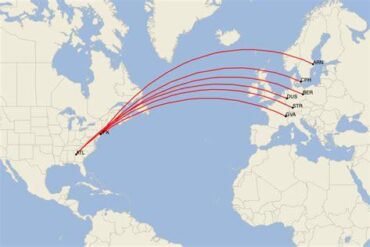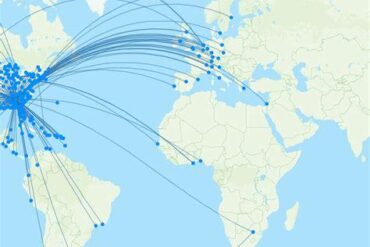
Delta Air Lines is undertaking a strategic overhaul of its transatlantic operations, streamlining its U.S.-Europe network and doubling down on Paris Charles de Gaulle (CDG) and Amsterdam Schiphol (AMS) as key gateways. As part of a long-term vision to strengthen its role within the SkyTeam Alliance, Delta is reducing the number of U.S. cities with direct European connections, instead channeling traffic through its European partners Air France and KLM at these high-capacity hubs.
This consolidation marks a fundamental shift in how Delta connects passengers to Europe, pivoting away from wide-reaching point-to-point routes and toward hub-centric, alliance-optimized routing. The airline now leans heavily on joint venture operations with its European partners, ensuring coverage across the continent even as direct routes from second-tier U.S. markets are retired.

The Rise of CDG and AMS as Delta’s Primary Transatlantic Anchors
Historically, Delta’s European reach was expansive, supported by a broad network of flights from a variety of American cities. Today, that network has narrowed, but become more efficient. Paris Charles de Gaulle (CDG) and Amsterdam Schiphol (AMS) have become central to the airline’s European footprint, each acting as a powerful connector for onward travel within Europe and beyond.
Delta’s partnership with Air France and KLM is at the core of this strategy. These joint ventures allow for tight integration of schedules, seamless passenger experiences, and shared capacity planning. In effect, Delta can offer extensive European coverage without operating each leg itself, relying instead on alliance synergies to extend its reach.
Cincinnati and Los Angeles: From Gateways to Feeders
Delta’s Cincinnati operations now center solely around one international route: a flight to Paris CDG. Operating since 1997, this long-standing route was once part of a much broader network when Cincinnati functioned as a key Delta hub. However, following Delta’s bankruptcy and subsequent network realignment, Detroit took over as the primary international hub for the region.
Today, Cincinnati’s Paris service remains operational but scaled down, particularly in winter months when the 767-400ER replaces the A330-300 and reduces frequency to three times weekly.
In Los Angeles, Delta has also trimmed its European offerings. The airline’s foray into European routes from LAX began in 2014, featuring London Heathrow and Amsterdam. Yet as of 2018, only the Paris CDG route remains, operated by the Airbus A350-900. Notably, this service now functions less as a direct transatlantic option and more as a connector: in 2024, 60% of LAX-CDG passengers connected onward via SkyTeam partners.

Orlando and Tampa: Seasonal Routes with Mixed Results
Orlando International Airport (MCO) and Tampa International Airport (TPA) offer seasonal European routes, primarily to Amsterdam. These cities were never major international gateways for Delta, and their current European services serve niche demand.
Orlando’s route to Amsterdam Schiphol, originally introduced in 2018, has seen fluctuating frequency. Now a winter-only service, it supports broader network connectivity rather than point-to-point demand. Data from 2024 shows 56% of travelers on this route connected to other SkyTeam destinations, highlighting its secondary role.
Tampa’s Amsterdam route, reinstated in 2024 after being suspended during the pandemic, remains an experiment in rebuilding demand. Delta flew 26,000 passengers on the route in late 2024, but the 79% load factor falls short of the airline’s Schiphol average, suggesting that while the route shows promise, it’s still maturing.
U.S. Airports Losing Direct European Service
As part of its network optimization, Delta has cut direct European services from several U.S. airports, many of which once enjoyed multiple transatlantic connections. Cities like Chicago O’Hare, Miami, and Memphis—all formerly central to Delta’s strategy—have seen routes terminated in favor of funneling traffic through key hubs.
For example:
- Chicago O’Hare to Paris CDG operated from 2011 to 2017.
- Memphis to Amsterdam ran from 2010 to 2012.
- Miami to London Heathrow ended in 2012 after just a year.
Even once-prominent tech hubs like Raleigh-Durham lost their direct CDG service in 2023 after a sporadic run. Philadelphia, Portland, and Newark also lost their Delta-operated flights, with KLM sometimes stepping in to take over routes such as Portland to Amsterdam, reflecting a handoff of transatlantic responsibility within SkyTeam.
A Strategy Grounded in SkyTeam Synergy
The key to understanding Delta’s new European approach lies in its reliance on deep alliances. Rather than spreading thin by maintaining multiple direct links from less profitable cities, Delta is pooling resources with Air France and KLM to create powerful hub-and-spoke systems in Europe.
The advantage is multifaceted:
- Lower operational costs by concentrating aircraft on high-yield routes.
- Greater schedule density at major hubs, making connections more seamless.
- Improved code-sharing and loyalty benefits for SkyMiles and Flying Blue members.
Passengers may now need to make an extra stop in Paris or Amsterdam, but the experience is optimized with shorter layovers, shared terminals, and synchronized baggage handling.
Aircraft Deployment Reflects Route Prioritization
Delta’s aircraft choices further reflect the prioritization of certain routes. Flagship widebodies like the Airbus A350-900 and A330-300 are reserved for routes with stable demand and high yield potential. In contrast, secondary routes see reduced winter schedules and use older models like the 767-400ER.
Examples include:
- LAX to CDG: A350-900 daily, reduced to three weekly in winter.
- Cincinnati to CDG: Daily A330-300 in peak season, winter down to 767-400ER.
- Orlando and Tampa to AMS: Operated by A330-300s during winter only.
These adjustments allow Delta to fine-tune capacity, preserve profitability, and manage seasonal fluctuations more efficiently.
A Leaner, More Focused Transatlantic Operation
What may appear as contraction is, in fact, a strategic consolidation. By removing underperforming routes and funneling passengers through powerful hubs backed by strong partners, Delta is reshaping its transatlantic presence into one that is agile, adaptable, and alliance-driven.
The reduced number of U.S. cities served directly is offset by the efficiency of joint ventures. Rather than operating thin routes with low load factors, Delta ensures access to Europe through a high-frequency, high-connectivity model that aligns with broader industry trends of network rationalization and alliance reliance.
The Competitive Landscape and United Airlines
Delta’s repositioning comes as United Airlines retains its lead in U.S.-Europe capacity. However, the race is not simply about numbers. Delta’s focus on quality connections, customer experience, and strategic alliances positions it differently than United’s more extensive point-to-point approach.
While United operates a larger number of direct routes from more U.S. cities, Delta’s emphasis on European hubs gives it greater control over schedule efficiency and network resilience, particularly in the face of geopolitical and economic headwinds.
Conclusion: Delta’s European Future Hinges on Paris and Amsterdam
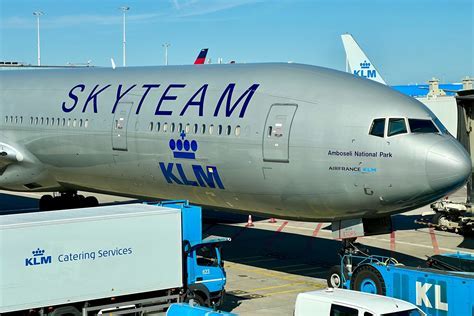
Delta Air Lines is no longer chasing route count dominance across the Atlantic. Instead, the carrier is building a robust, streamlined, and partner-focused European network, anchored at CDG and AMS. Through its SkyTeam alliance, Delta offers travelers a broad array of destinations, not through direct flights from every U.S. city, but via a well-oiled hub ecosystem with superior connectivity.
In a market defined by complexity and competition, this model delivers both cost efficiency and passenger value, proving that fewer routes—when chosen wisely and supported by the right partners—can still yield global access at scale.