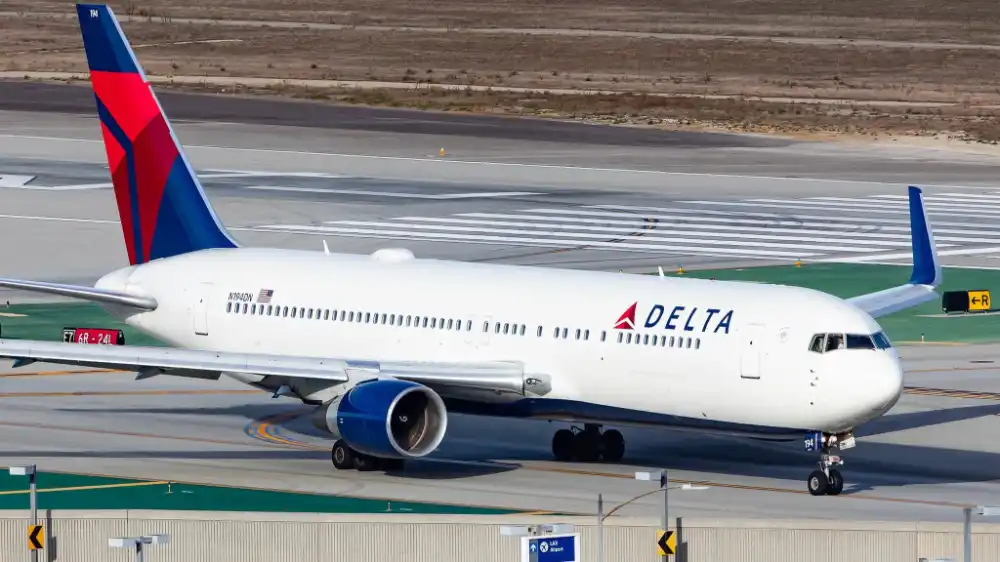
Delta Air Lines has significantly reshaped its Florida network, eliminating 14 routes that once connected travelers across the United States and beyond. As one of the largest carriers serving the Sunshine State, the airline’s latest schedule adjustments provide an important glimpse into how major airlines are refining capacity, prioritizing profitability, and focusing on routes that generate stronger demand. The changes affect both domestic and international markets, removing several seasonal services and a notable transatlantic route that survived for only a single winter season.
Florida remains one of the most important aviation markets in North America. Millions of passengers travel through the state’s airports annually, driven by tourism, business activity, cruise traffic, and strong population growth. Delta Air Lines transported more than 30 million passengers to, from, and within Florida during the 12 months ending March 2026, making it the state’s second-largest airline operator behind American Airlines.
Despite this enormous presence, Delta’s network strategy has always centered on its major hubs and focus cities. Airports such as Atlanta, Detroit, Minneapolis, Boston, New York JFK, New York LaGuardia, Seattle, Salt Lake City, Los Angeles, and Raleigh-Durham account for the overwhelming majority of the carrier’s Florida traffic. Approximately 96 percent of passengers traveling on Delta’s Florida network either originated from, connected through, or traveled to these strategically important airports.
The latest round of schedule revisions demonstrates that routes operating outside these core network priorities face increasing scrutiny when performance fails to meet expectations.
After reviewing Delta’s Florida schedules between January 2025 and May 2026 and comparing them with published operations from June 2026 through April 2027, a total of 14 routes no longer appear in the airline’s future plans. These cuts span multiple airports and include services that had only recently returned to Delta’s network.
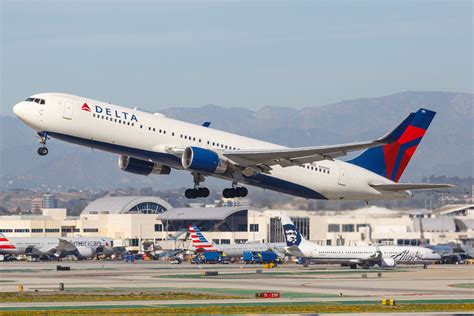
Why Delta Is Cutting Florida Routes
The airline industry’s post-pandemic recovery phase has shifted toward optimization rather than expansion. Airlines are increasingly focusing on maximizing profitability, improving aircraft utilization, and deploying capacity on routes with stronger revenue potential.
For Delta, Florida remains a critical market. However, not every route generates sufficient demand to justify continued operation. Many of the eliminated services were highly seasonal, operated only once weekly, or depended almost entirely on leisure travelers. Such routes often become vulnerable when airlines identify opportunities to use aircraft more effectively elsewhere.
Several of the discontinued routes relied heavily on point-to-point traffic rather than connections through Delta’s broader network. Without the support of significant connecting passenger flows, sustaining year-round profitability becomes far more challenging.
Orlando Sees the Largest Number of Route Losses
Among all Florida airports affected by the network adjustments, Orlando International Airport experienced the most significant reductions.
Delta eliminated service from Orlando to several domestic destinations, including Columbus, Grand Rapids, Indianapolis, Kansas City, Louisville, Nashville, and Pittsburgh. Most of these routes returned only briefly during late 2025 before disappearing again in April 2026.
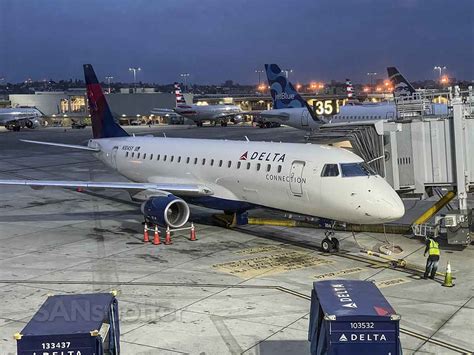
These flights were primarily operated using Embraer E175 regional jets and typically ran on Saturdays. Their schedules were designed to capture leisure travel demand rather than business traffic, making them highly seasonal by nature.
The Orlando-Columbus route emerged as one of the weakest performers among the discontinued markets. Load factors averaged just over two-thirds of available seats, highlighting the challenges of maintaining profitability even in one of America’s busiest leisure destinations.
The elimination of seven Orlando routes in a single scheduling cycle reflects Delta’s determination to streamline operations and focus on markets that produce stronger financial returns.
The End of Orlando–Miami Once Again
One of the most interesting route cancellations involves the Orlando-to-Miami market, a service with a long and complicated history.
Delta has repeatedly entered and exited this route over the past several decades. The airline operated the service when Orlando functioned as a Delta hub, discontinued it, later reinstated it, and once again withdrew from the market.
Although more than 71,000 passengers traveled on the route during 2025, the vast majority were not local travelers. Instead, they used Orlando or Miami as connecting points for onward journeys. Only a relatively small percentage flew solely between the two Florida cities.
The route also played an important strategic role by feeding passengers into connections with Delta’s partner airlines, particularly LATAM, which maintains a substantial presence at Miami International Airport. Nevertheless, demand levels and network economics ultimately appear insufficient to justify continuation.
Seasonal Florida Routes Also Disappear
Several additional seasonal routes have vanished from Delta’s schedules.
Service between Detroit and Destin-Fort Walton Beach ended after the summer 2025 season. Meanwhile, seasonal February operations connecting Detroit and New York LaGuardia with Daytona Beach also disappeared after early 2026.
Boston experienced its own reductions, with Panama City and Pensacola no longer appearing in future schedules. These routes were highly specialized seasonal operations designed to capture specific travel peaks rather than support year-round demand.
Because some of these services existed only during narrow travel windows, there remains a possibility that certain routes could return in future years. However, as of the latest published schedules, none are currently planned.
Delta’s Short-Lived London Heathrow Experiment Ends
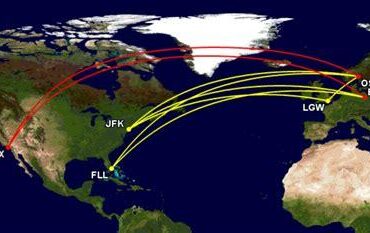
The most notable international casualty is Delta’s route between Orlando and London Heathrow.
Launched in October 2024, the service represented a rare attempt by a U.S. airline to connect Orlando directly with Heathrow. Historically, the majority of travelers between Central Florida and the United Kingdom have flown on British carriers, making the route an unconventional addition to Delta’s network.
Operated four times weekly using the Airbus A330-900, the service was expected to complement Delta’s transatlantic partnerships and strengthen its presence in one of the world’s most competitive long-haul markets.
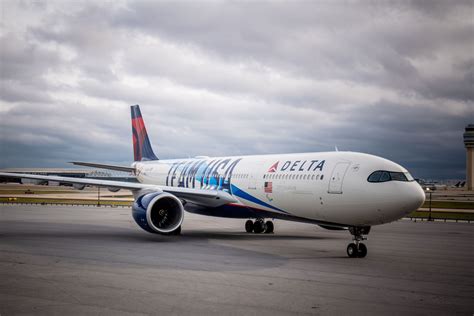
Despite carrying more than 30,000 passengers during its operation, the route struggled to achieve satisfactory seat occupancy. Average load factors remained significantly below what airlines typically seek on transatlantic flights.
As a result, the service concluded in March 2025 after just one winter season.
The decision highlights the realities of international aviation economics. Even routes connecting globally recognized destinations must demonstrate sufficient demand and profitability to survive. In this case, competition, passenger preferences, and operating costs likely combined to make continuation unattractive.
What These Florida Route Cuts Reveal About Delta’s Future Strategy
The removal of 14 Florida routes does not signal a retreat from the state. Rather, it reflects a broader strategy focused on strengthening Delta’s core network and maximizing efficiency across its fleet.
The airline continues to maintain extensive Florida operations through major hubs such as Atlanta, Detroit, Boston, Minneapolis, New York, and Seattle. These connections provide travelers with access to hundreds of destinations while supporting the network economics that major airlines increasingly prioritize.
As aircraft utilization, profitability, and competitive positioning become more important than ever, Delta’s latest Florida route cuts offer a clear example of how modern airlines continuously adapt their networks. While some travelers may lose convenient nonstop options, the carrier appears committed to concentrating resources on routes capable of delivering sustainable long-term performance in an increasingly competitive aviation landscape.