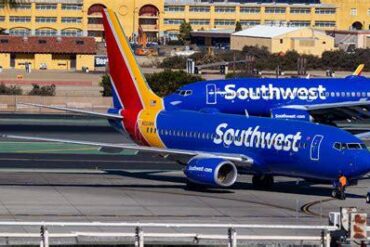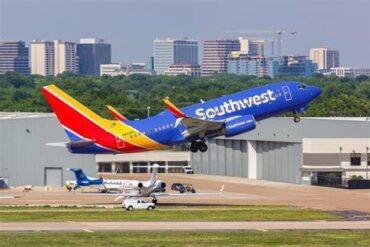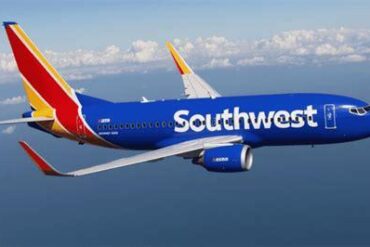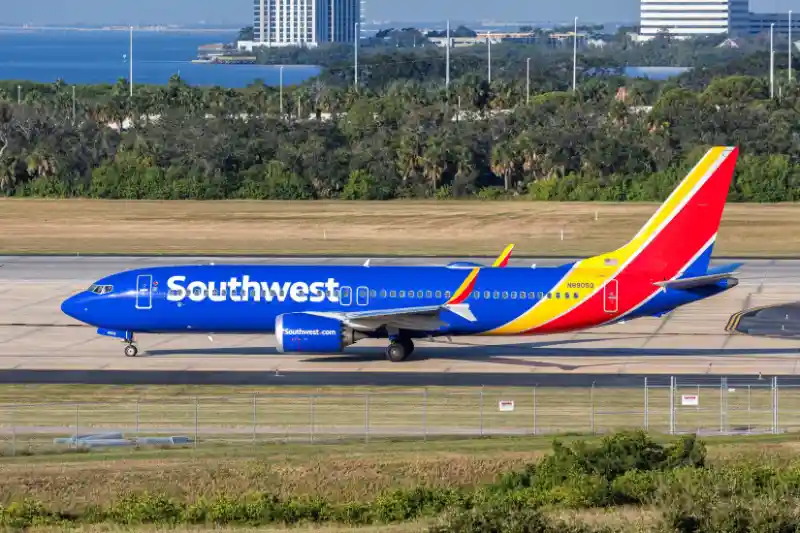
Southwest Airlines has significantly reshaped its Florida network, eliminating 43 routes that were previously available between major cities across the United States and key destinations throughout the Sunshine State. The changes represent one of the carrier’s most substantial network adjustments in recent years and highlight a broader strategy focused on operational efficiency, stronger-performing markets, and consolidation at core airports.
Florida remains one of the airline’s most important markets. According to data from the U.S. Department of Transportation, Southwest transported approximately 29.4 million passengers to, from, and within Florida during the twelve months ending in February 2026. That performance gave the airline roughly 14% of the state’s passenger market, making it the third-largest carrier operating in Florida. Remarkably, nearly one out of every six Southwest passengers traveled through a Florida airport.
Despite that importance, a review of Southwest’s schedules between January 2025 and March 2027 reveals a notable reduction in nonstop service across dozens of routes.
Why Southwest Is Cutting So Many Florida Routes
The airline’s latest network adjustments are not the result of a single factor. Instead, they reflect a combination of changing travel demand, fleet utilization priorities, airport strategy, and competitive pressures.
Many of the eliminated routes operated with limited frequency, sometimes only once per week or during seasonal demand peaks. Several markets were launched experimentally and quickly withdrawn when performance failed to meet expectations. Others became casualties of broader network restructuring efforts as Southwest redirected resources toward airports where it believes long-term growth opportunities are stronger.
A major contributor to the cuts has been the airline’s decision to reduce its footprint at Hartsfield-Jackson Atlanta International Airport (ATL). Once viewed as a critical growth market, Atlanta has become less central to Southwest’s strategy as the carrier increases focus on other hubs such as Nashville and Chicago Midway.
The result is a substantial reduction in Florida connectivity from several cities across the country.
Thirteen Florida Routes Eliminated During 2025
The first wave of cuts occurred throughout 2025, with Southwest discontinuing thirteen routes connected to Florida airports.
Several of these routes linked Florida with major domestic markets, while one connected South Florida to the Caribbean. The most notable international casualty was the route between Fort Lauderdale-Hollywood International Airport (FLL) and Montego Bay, Jamaica.
Southwest operated the Montego Bay service from June 2017 until November 2025. At its peak, the route featured two daily flights and represented an important leisure travel connection between South Florida and Jamaica. However, service gradually declined over the years before ultimately ending.
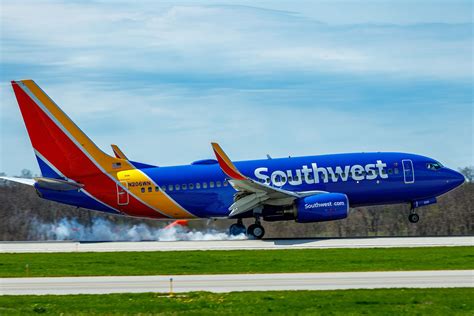
The 2025 route eliminations included:
- Minneapolis – Southwest Florida International Airport (RSW)
- Atlanta – Palm Beach International Airport (PBI)
- Minneapolis – Tampa International Airport (TPA)
- Atlanta – Jacksonville International Airport (JAX)
- Atlanta – Fort Lauderdale (FLL)
- Atlanta – Miami International Airport (MIA)
- Atlanta – Southwest Florida International Airport (RSW)
- Atlanta – Sarasota Bradenton International Airport (SRQ)
- Cincinnati – Tampa International Airport (TPA)
- Hartford – Fort Lauderdale (FLL)
- Kansas City – Jacksonville (JAX)
- Long Beach – Orlando International Airport (MCO)
- Fort Lauderdale – Montego Bay (MBJ)
Atlanta alone accounted for nearly half of these discontinued services, underscoring the scale of Southwest’s strategic retreat from the airport.
Thirty Additional Routes Ended During 2026
The pace of network reductions accelerated dramatically during the first half of 2026. Southwest removed an additional 30 Florida routes, many of which served seasonal or niche demand patterns.
A significant number connected Florida destinations with cities throughout the Northeast, Midwest, and Mountain West. Several routes survived only a few months before disappearing from the schedule.
Among the routes discontinued in February 2026 were services from Islip, Albany, Hartford, Boston, Buffalo, Providence, Portland, Rochester, and New York LaGuardia to various Florida airports.
The much larger April 2026 reduction affected connections from Austin, Cleveland, Dallas Love Field, Detroit, Grand Rapids, Milwaukee, Minneapolis, Omaha, Louisville, Las Vegas, and Salt Lake City.
Notable route eliminations during 2026 included:
- Islip – Miami
- Albany – Sarasota
- Hartford – Fort Myers
- Boston – Orlando
- Buffalo – Palm Beach
- Islip – Fort Lauderdale
- New York LaGuardia – Tampa
- Providence – Palm Beach
- Portland – Orlando
- Rochester – Fort Myers
- Austin – Fort Myers
- Chicago O’Hare – Fort Lauderdale
- Cleveland – Fort Myers
- Cleveland – Sarasota
- Cleveland – Tampa
- Dallas Love Field – Palm Beach
- Detroit – Tampa
- Grand Rapids – Fort Myers
- Grand Rapids – Tampa
- Las Vegas – Fort Lauderdale
- Louisville – Fort Myers
- Milwaukee – Miami
- Milwaukee – Sarasota
- Minneapolis – Orlando
- Omaha – Fort Lauderdale
- Omaha – Miami
- Salt Lake City – Tampa
- Chicago O’Hare – Northwest Florida Beaches
- Providence – Fort Myers
- Albany – Fort Myers
Many of these services operated with limited schedules, suggesting Southwest viewed them as experimental opportunities rather than long-term commitments.
Chicago O’Hare Exit Reshapes Florida Service
One of the most significant developments behind several route eliminations is Southwest’s departure from Chicago O’Hare International Airport (ORD).
The carrier entered O’Hare in 2021 during the pandemic, hoping to capture additional market share in the Chicago region. However, maintaining operations at both O’Hare and Chicago Midway created complexity and diluted resources.
As a result, Southwest chose to consolidate operations at Chicago Midway Airport (MDW), one of its strongest and most strategically important bases.
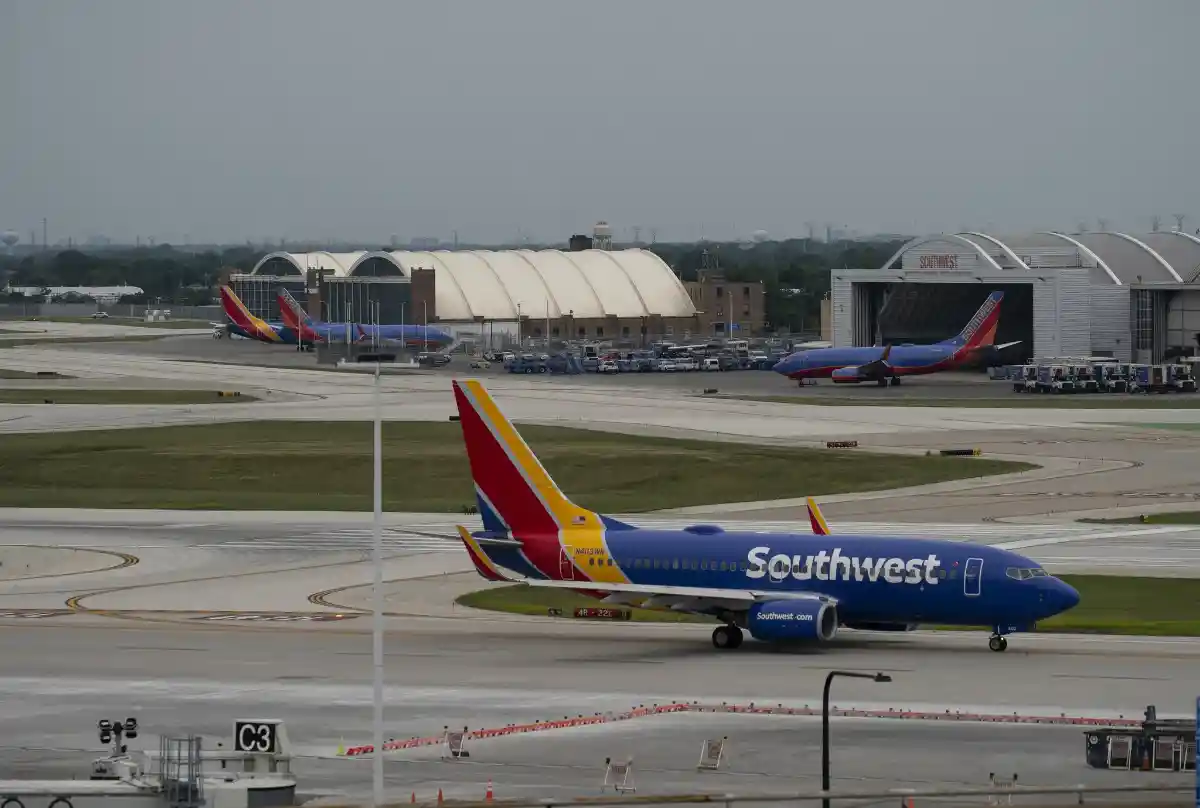
Before the withdrawal, Southwest offered Florida service from O’Hare to several destinations, including Fort Lauderdale, Orlando, Tampa, Fort Myers, and Northwest Florida Beaches International Airport. The elimination of these routes reflects a broader effort to simplify operations while concentrating capacity where the airline enjoys greater competitive advantages.
Chicago Midway remains Southwest’s primary airport in the region and continues to support extensive service throughout Florida.
Which Florida Airports Were Most Affected?
The impact of the route reductions was not distributed evenly across the state. Several airports experienced a disproportionately large number of service losses.
Among the most affected were:
- Fort Lauderdale-Hollywood International Airport (FLL)
- Southwest Florida International Airport (RSW)
- Tampa International Airport (TPA)
- Sarasota Bradenton International Airport (SRQ)
- Palm Beach International Airport (PBI)
- Miami International Airport (MIA)
- Orlando International Airport (MCO)
Southwest Florida International Airport in Fort Myers appears particularly affected, losing numerous nonstop connections from cities across the Northeast and Midwest. Tampa also experienced multiple route eliminations from major metropolitan areas.
While these airports continue to receive substantial Southwest service, travelers now have fewer nonstop options than they did just a year earlier.
What These Changes Mean for Travelers
For passengers, the cuts mean reduced route flexibility and, in some cases, the need for connecting flights instead of nonstop service. Travelers from smaller and mid-sized cities are likely to feel the greatest impact because many discontinued routes linked secondary markets directly with Florida leisure destinations.
However, the reductions do not necessarily signal weakness in Florida demand. Rather, they indicate Southwest’s desire to focus aircraft on routes that generate stronger revenue and higher load factors.
The airline continues to maintain a major presence across Florida, carrying millions of passengers annually and operating extensive schedules at Orlando, Tampa, Fort Lauderdale, Fort Myers, and other airports. Even after eliminating 43 routes, Florida remains one of the most important pillars of Southwest’s nationwide network.
As the airline continues refining its route map through 2027 and beyond, travelers can expect further adjustments as Southwest balances profitability, competition, and evolving travel patterns across one of America’s busiest aviation markets.