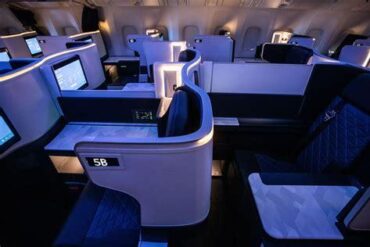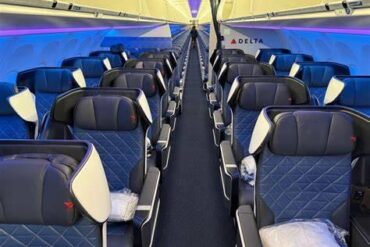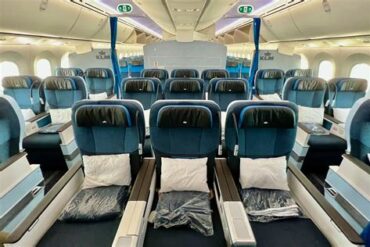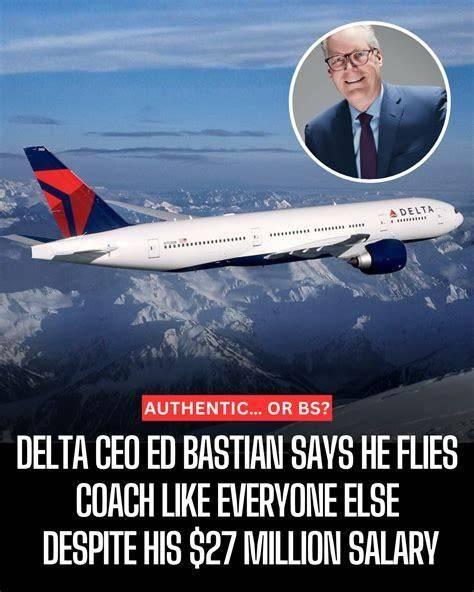
Delta Air Lines has built one of the airline industry’s strongest premium brands, with Delta One Suites, premium lounges, elevated dining, and an increasingly sophisticated cabin hierarchy at the center of its commercial strategy. Yet there is an intriguing contradiction at the top of the company: CEO Ed Bastian often chooses to fly in Main Cabin or Comfort+ rather than automatically taking a premium seat.
At first glance, that choice seems unusual. The chief executive of an airline that has spent years persuading travelers to pay more for better seats could easily justify sitting in a suite or First Class cabin. Instead, Bastian has repeatedly embraced the ordinary passenger experience. He can be found walking through the aircraft, speaking with flight attendants, observing the cabin, and paying attention to details that are difficult to notice from a premium seat.
The reasoning is more practical than symbolic. For Bastian, sitting away from the front of the aircraft provides a different perspective on Delta’s actual customer experience. He can observe boarding congestion, overhead-bin pressure, Wi-Fi performance, seat comfort, lavatory queues, catering procedures, and the interaction between crews and passengers. These are precisely the details that can disappear when executives experience the airline through a heavily optimized premium journey.
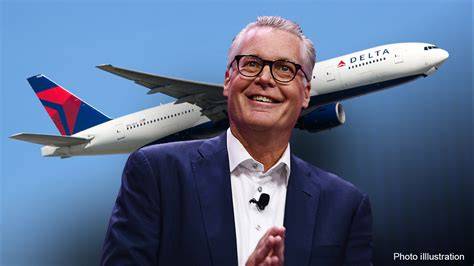
Why Ed Bastian Flies Delta Main Cabin
Bastian’s decision to fly in economy is closely connected to his leadership philosophy. Rather than relying exclusively on reports, surveys, dashboards, and executive presentations, he places significant value on seeing operations firsthand.
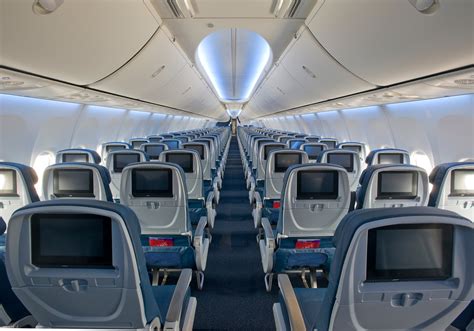
A premium cabin can provide an excellent experience, but it does not necessarily represent what most passengers encounter. The journey from the terminal to the aircraft can be identical for everyone, but the experience changes dramatically once passengers begin boarding. A traveler in 1A may have a spacious seat, dedicated service, priority boarding, and more storage. Someone sitting near the rear may be dealing with a crowded aisle, limited overhead space, and a much longer wait to leave the aircraft.
That difference matters to an airline executive. If Bastian wants to understand whether a new boarding procedure actually works, sitting in a premium cabin may provide only part of the answer. From the middle of the aircraft, he can see how passengers behave when they encounter full bins, narrow aisles, delayed boarding groups, or questions about seat assignments.
He can also hear conversations that would rarely reach an executive meeting. Flight attendants interact with passengers throughout the cabin, and those interactions can reveal small frustrations before they become major complaints. A misplaced bag, an unreliable entertainment screen, an inconsistent catering item, or a confusing app prompt may appear insignificant individually, but repeated problems can shape how customers remember a flight.
The Value of Seeing the Passenger Journey
The most important advantage of sitting in the Main Cabin is arguably unfiltered observation. Executives naturally receive a different level of attention when employees know they are onboard. A CEO traveling in an obvious executive position can unintentionally change how employees behave around him.
By sitting among ordinary passengers, Bastian can reduce that effect. Flight attendants still know who he is in many cases, but the physical environment is closer to what everyday travelers experience. He can observe how quickly carts move, how passengers respond to announcements, and where bottlenecks develop without relying entirely on a carefully prepared demonstration.
That perspective becomes especially valuable during irregular operations. Delays, cancellations, weather disruptions, aircraft swaps, and full flights expose weaknesses that may remain invisible during normal operations. When every seat is occupied and passengers are trying to find space for carry-on bags, small inefficiencies become much easier to identify.
Bastian’s approach therefore reflects a broader management principle: the real airline is experienced at the point where systems meet people. A beautifully designed cabin cannot compensate for a chaotic boarding process, poor communication, unreliable Wi-Fi, or a frustrating connection.
Why Premium Cabins Still Matter to Delta
Bastian’s economy travel should not be interpreted as a rejection of premium cabins. Quite the opposite is true. Under his leadership, Delta has made premium travel a central part of its business strategy.
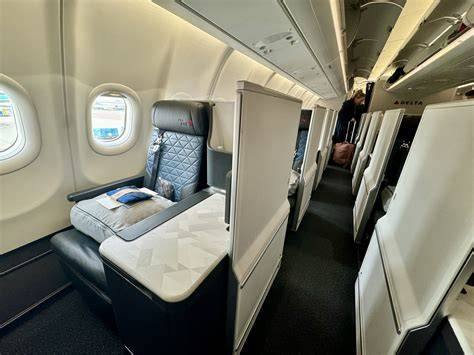
The airline has invested heavily in products such as Delta One Suites, Premium Select, First Class, and Comfort+. Its premium proposition extends beyond the seat itself, encompassing lounges, airport services, food and beverages, loyalty benefits, and a more carefully segmented customer journey.
That strategy reflects a fundamental change in airline economics. Airlines can carry large numbers of passengers in economy, but premium customers can generate disproportionately attractive revenue. Business travelers and leisure passengers willing to pay for additional comfort have therefore become increasingly important to the industry’s financial model.
Delta has aggressively developed this market while maintaining a broad Main Cabin network. The result is a layered product structure in which customers can choose how much they want to spend and what level of service they value.
Bastian’s personal travel habits fit neatly into that strategy. Understanding the economy experience does not require personally avoiding premium products altogether. Instead, it gives him a baseline against which Delta can judge whether its premium improvements are genuinely meaningful.
Ed Bastian’s Background Helps Explain His Management Style
Bastian’s approach is also easier to understand when his career is considered. His professional background includes finance, auditing, and operational leadership, giving him a perspective that combines financial discipline with direct business management.
He joined Delta in 1998 as its Vice President of Finance and later became involved in the company’s difficult restructuring period. He briefly left the airline to become CFO of Acuity Brands before returning to Delta at the request of CEO Gerald Grinstein.
That return came at a pivotal moment. Delta was navigating bankruptcy and attempting to rebuild its business. Bastian eventually became president and was appointed CEO in 2016.
The experience shaped an executive who understands that airline profitability cannot be separated from operational execution. Airlines are complicated businesses in which a financial decision can eventually affect aircraft utilization, crew scheduling, passenger satisfaction, maintenance, and airport performance.
His preference for direct observation therefore fits the environment in which he developed as a leader. The numbers matter, but the numbers often tell only the end of the story.
Delta’s Transformation Under Ed Bastian
Since Bastian became CEO, Delta has increasingly positioned itself as a premium, reliability-focused airline rather than simply competing on the lowest possible fare.
The transformation has involved extensive investment in the customer proposition. Delta has expanded premium seating, improved airport facilities, developed its lounge network, strengthened partnerships, and continued refining SkyMiles. At the same time, the airline has emphasized operational reliability and a more consistent service experience.
Major airports have also received substantial attention. Facilities and operations at locations such as Atlanta, Los Angeles, Salt Lake City, and New York’s LaGuardia have evolved alongside Delta’s broader strategy.
The company has also pursued revenue diversification through businesses and partnerships beyond traditional ticket sales. SkyMiles, the American Express relationship, and Delta TechOps all contribute to a broader commercial ecosystem.
That diversification gives Delta more ways to generate value from its customer relationships. It also makes customer behavior increasingly important. The airline needs to understand not merely who buys a ticket, but why a customer chooses a particular cabin, how often that customer returns, and which benefits influence loyalty.
Economy Seats Can Reveal Problems Premium Cabins Hide
One reason Bastian’s seating choice is strategically useful is that premium cabins can conceal operational problems.
Consider boarding. A premium traveler may board early, settle into a spacious seat, and place a bag in an easily accessible compartment. A Main Cabin passenger boarding later may encounter a completely different situation. Overhead bins can be full, aisles can become congested, and passengers may need to check bags unexpectedly.
The same principle applies to connectivity. A premium passenger might be focused on the quality of the seat and meal, while another traveler may care more about whether Wi-Fi works reliably throughout a three-hour flight.
Even the lavatory experience can tell a story. Queue length, cleanliness, availability, and cabin traffic can reveal how well the aircraft’s layout works under real conditions.
These observations can be more valuable than a formal presentation because they connect customer expectations with actual behavior. Bastian does not need to ask whether a process works if he can watch passengers struggle with it.
Why His Choice Can Also Protect Upgrade Fairness
There is another practical consideration: executive travel should not unnecessarily interfere with the customer hierarchy.
Delta has millions of loyalty-program members, including Medallion members who earn upgrades through their relationship with the airline. A CEO automatically occupying a premium seat can potentially remove an opportunity from a customer who has earned that upgrade or purchased the seat.
Choosing a Main Cabin seat can therefore reinforce the idea that executives should not receive special treatment simply because of their position.
That message matters culturally. Airline employees are constantly making decisions about customers, upgrades, irregular operations, and service recovery. If senior leadership expects privileges while promoting a people-first culture, employees may notice the contradiction.
Bastian’s willingness to experience the standard product helps close that gap. It communicates that leadership should understand the same constraints employees and customers encounter every day.
A Leadership Philosophy Built Around Listening
Bastian’s management philosophy can broadly be described as people-first leadership backed by operational accountability.
The concept is straightforward: take care of employees, enable them to take care of customers, and build a business that benefits from those relationships. But executing that philosophy inside a global airline is considerably harder than stating it.
Delta employs tens of thousands of people across airports, aircraft, maintenance facilities, contact centers, technology teams, and corporate offices. A CEO cannot personally observe every operation. He can, however, create habits that encourage leaders to remain connected to frontline reality.
Walking aircraft aisles is one such habit.
Station visits, employee conversations, ride-alongs, and direct feedback all provide information that traditional corporate reporting may not capture. The objective is not to eliminate data-driven management. It is to combine data with firsthand evidence.
That combination is particularly powerful in aviation because an airline’s performance depends on thousands of interconnected decisions every day.
What Investors Can Learn From Bastian’s Travel Habits
Bastian’s preference for economy travel also fits the message Delta presents to investors. The company wants to be viewed as a disciplined premium carrier capable of generating strong cash flow while maintaining operational reliability.
Premium revenue is important, but Delta cannot afford to lose sight of the enormous customer base traveling in its less expensive cabins. Main Cabin passengers fill aircraft, generate loyalty activity, purchase ancillary products, and can eventually become premium customers.
Understanding those passengers is therefore not merely a cultural exercise. It has commercial value.
A customer who experiences an easy boarding process, reliable Wi-Fi, friendly service, and a clean aircraft may be more likely to choose Delta again. Over time, that relationship can become more valuable as the traveler moves into higher-fare products or earns greater loyalty benefits.
The premium strategy works best when the entire customer journey is strong. Bastian’s economy observations can help identify weaknesses at the foundation of that journey.
Does Ed Bastian’s Economy Travel Contradict Delta’s Premium Strategy?
Not really. In fact, the apparent contradiction may be the point.
Delta can spend millions improving premium cabins while its CEO deliberately spends time in the Main Cabin because the two decisions address different questions. Premium investment asks, “What will convince customers to pay more?” Economy observation asks, “What does the customer experience before, during, and after that decision?”
Both questions are essential.
The danger for any premium airline is becoming too focused on the customer at the front of the aircraft. The business still depends on the enormous operational machine supporting every passenger, regardless of fare.
Bastian’s travel habits suggest that he understands this distinction. Premium cabins may drive attractive economics, but the airline’s reputation is created across the entire aircraft.

The Bigger Lesson for Delta Air Lines
There is a broader lesson behind Ed Bastian’s unusual choice of seat. Leadership visibility is valuable only when it produces better decisions.
Simply walking through an aircraft does not automatically make someone a better executive. The value comes from what happens afterward. If a CEO notices a problem, listens to employees, examines the underlying data, and changes the process, firsthand observation becomes a management tool rather than a photo opportunity.
That distinction is particularly important for Delta because the airline’s brand increasingly depends on consistency. A passenger paying hundreds or thousands of dollars for a premium journey expects the experience to feel deliberate. But that experience is built on systems that begin long before the passenger reaches the premium cabin.
Baggage handling, crew scheduling, aircraft maintenance, boarding, technology, catering, airport staffing, and communication all contribute to the final impression.
Bastian’s decision to occasionally sit among ordinary passengers places him directly inside those systems.
Why Delta’s CEO Flying Economy Matters
Ed Bastian’s willingness to fly outside Delta’s premium cabins is more than an unusual executive habit. It reflects a deliberate approach to understanding how Delta Air Lines actually feels to its customers.
While the airline continues investing heavily in Delta One Suites, Premium Select, lounges, loyalty programs, and other premium products, Bastian recognizes that the everyday passenger experience provides information that cannot always be extracted from spreadsheets.
From a crowded boarding aisle to a full overhead bin, from an unreliable Wi-Fi connection to a conversation with a flight attendant, the details matter. They reveal where the airline’s promises meet operational reality.
For a CEO, sitting in the Main Cabin can therefore be an unusually effective form of market research. It places him close to the people who ultimately determine whether Delta’s premium strategy succeeds: the passengers and employees experiencing the airline every day.
And that may explain the apparent contradiction at the heart of Delta’s strategy. The CEO of a premium airline does not always need to sit in the premium cabin to understand premium travel. Sometimes, the best view of the entire airline comes from somewhere much farther back.