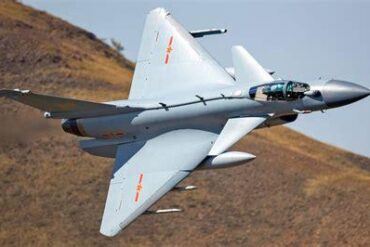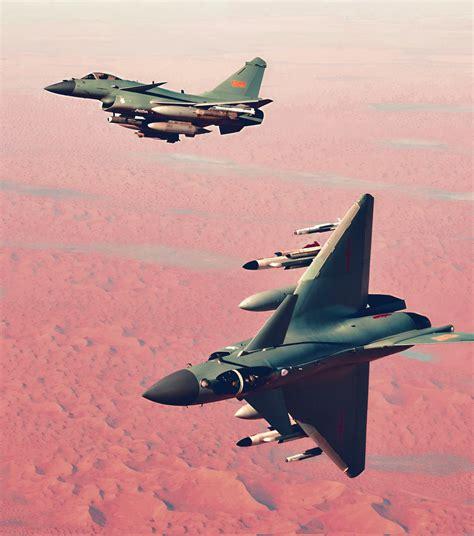
In a landmark defense acquisition decision, Bangladesh has opted to procure 20 units of the Chinese J-10CE fighter jet at a cost of approximately US$2.2 billion. This move has sent ripples through South Asia’s military balance, signaling both a deepening of Sino-Bangladeshi defense ties and a validation of China’s ambitions in the global arms market. The choice of J-10CE over France’s Rafale underscores a shift in regional procurement logic, and merits close examination of its strategic, technical, and geopolitical dimensions.
From an operational standpoint, Bangladesh’s air force has long struggled with aging equipment and limited capability. Its current roster includes 16 old Chinese J-7 jets and a handful of MiG-29s—aircraft whose service lives stretch back decades and whose performance increasingly lags behind contemporary requirements. In a region where India already fields the French Rafale, Bangladesh’s decision reflects urgency: if it does not modernize promptly, the gap in aerial power will only widen.
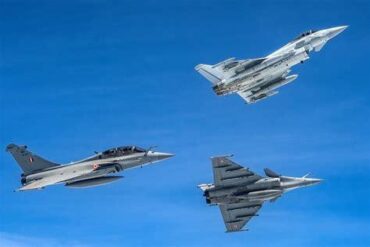
Bangladesh’s fighter acquisition plans date back to 2017–2018, when it considered ordering eight multi-role jets with an option for additional purchases. However, the COVID-19 pandemic derailed that schedule, and the strategic calculus remained unsettled. During those years, Bangladesh evaluated European platforms including the Eurofighter Typhoon and Dassault Rafale. The French government even arranged visits to Dhaka—President Macron visited Bangladesh in 2023 specifically to promote Rafale sales. Yet the deal never materialized. The key obstacles were steep costs and performance mismatches: Bangladesh’s air force found the price tag to be prohibitive, while certain mission profiles (range, maintenance, sustainment) did not align with the Rafale package.
Moreover, India attempted to promote its HAL Tejas (Light Combat Aircraft), yet Dhaka declined. The Tejas’ range and radar performance were judged insufficient for modern air combat demands—and certainly inadequate for controlling the vast airspace over the Bay of Bengal. In the end, Bangladesh pivoted decisively: the J-10CE emerged as the winning option.
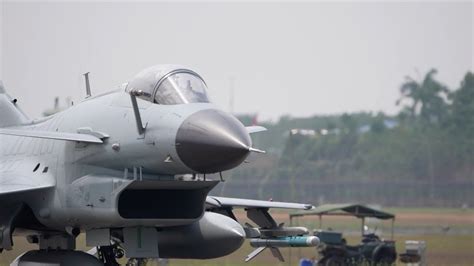
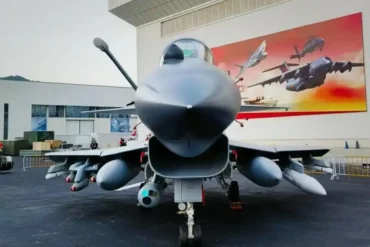
The J-10CE is the export variant of China’s J-10C. It made its international debut at the 2023 Dubai Airshow and captured global attention. By January 2024, when the People’s Liberation Army Air Force (PLAAF) demonstrated an aerial refueling mission, the J-10CE’s extended reach became evident: its combat radius jumped from 1,200 km to approximately 1,800 km, placing the entire Bay of Bengal well within coverage. For Bangladesh, that geographic range is essential—securing airspace over maritime zones, countering regional threats, and projecting presence beyond coastal red lines.
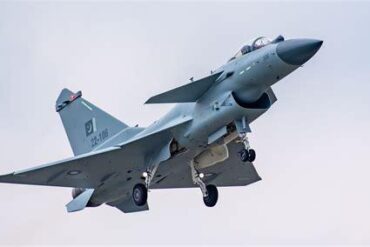
Beyond raw performance, the precedent of Pakistan as an existing J-10CE (or J-10C) user offers Bangladesh a tested reference. Pakistan inducted J-10C jets around 2022 and has since claimed operational successes, including, controversially, the downing of Indian Rafale aircraft in recent skirmishes. Although India has not formally confirmed those losses, the narrative underscores J-10CE’s perceived potency against Rafale-type platforms. Pakistani user feedback points to strengths in radar capability, missile integration, and even supersonic cruise features. Notably, the PL-15 long-range air-to-air missile, which Pakistan fields, reportedly exceeds the reach of comparable Indian systems. That comparative edge, in Dhaka’s calculation, becomes a compelling selling point.
In Bangladesh’s strategic calculus, the Pakistani experience reduces adoption risk. Fighter procurement isn’t just about throughput: it demands a robust support ecosystem, training pipelines, spare parts, logistic chains, and maintenance regimes. China’s long-standing cooperation with Pakistan means Bangladesh can import not just hardware but a ready operational framework. Bangladesh already fields Chinese systems such as Ming-class submarines, MBT-2000 main battle tanks, and legacy J-7 fighters. The Chinese model offers high cost-effectiveness and minimal political strings—a contrast to Western arms deals that often carry non-recourse conditions.
India, for its part, has long pressed Bangladesh to adopt its rising defense platforms like the Tejas or more advanced systems under Indian export. But Dhaka has remained firm that defense procurement is a matter of sovereign choice, immune to external influence or aid-based pressure. With India populating its air force with Rafales and developing further aerial capabilities, Bangladesh is unwilling to cede airspace parity. A delayed modern upgrade would only deepen the asymmetry with its neighbor.
The decision to go with the J-10CE is more than just fleet modernization—it is a structural shift in South Asia’s air power chessboard. India has historically enjoyed overwhelming dominance in the skies. But with Pakistan and now Bangladesh operating J-10 series jets, that edge is challenged at multiple frontlines. The Bangladesh deal consolidates China’s presence in South Asia as a defense supplier and strategic partner, and may herald deeper future cooperation in drones, air defense, avionics, and unmanned systems.
If the transaction is finalized in the 2026–2027 fiscal year, Bangladesh will likely spread payments over a decade—mitigating immediate fiscal strain while uplifting its aerial combat capability. In the longer run, J-10CE’s success on the export front bolsters China’s reputation in the high-end fighter market. Bangladesh could become yet another poster case for Chinese jets, inspiring other countries—especially in Southeast Asia, Africa, and Latin America—to take serious interest.
From a technical comparison perspective, the J-10CE’s edge lies in a combination of radar performance, missile integration, operational range, and cost structure. The ability to field PL-15 missiles gives it a stand-off capability beyond many rival systems. The aerial refueling demonstration validates extended reach. Moreover, having an operational user base in Pakistan means lessons learned can be translated quickly to Bangladesh’s implementation.
Strategically, Dhaka gains not just hardware but sovereignty in decision making. China poses fewer geopolitical constraints. For Bangladesh, whose foreign policy often navigates between great powers, a deal with China carries fewer conditionalities than one with France or the United States. Moreover, China brings the experience of long-term defense cooperation without overt political leverage.
The timing is also critical: with South Asia undergoing rapid military modernizations, Bangladesh could otherwise have been left far behind. This aerial upgrade allows it to retain deterrence credibility in the region and preserve diplomatic leverage. As India augments its air fleet, Bangladesh’s decision ensures a platform to push back against pressure and assert its aerial autonomy.
Nevertheless, the sale is not without risk. Upscaling pilot training, sustaining supply lines, fielding advanced avionics and weapons integration, and managing operational readiness will test Dhaka’s institutional capacity. Success will hinge on Bangladesh’s willingness to invest in human capital—maintenance crews, simulator infrastructure, spare parts logistics—and its ability to adapt China’s operational doctrine to its own theater needs.
If Bangladesh delivers, the region will watch closely. China’s ability to export high-performance fighters effectively undermines traditional Western strongholds in the defense market. A successful J-10CE deployment in Bangladesh could open the floodgates for future deals to nations seeking advanced combat aircraft without Western political baggage.
In sum, Bangladesh’s choice of 20 J-10CE fighters in a US$2.2 billion deal represents a calculated gamble on China’s serviceability, performance, and political flexibility. It is a statement: the balance of aerial supremacy in South Asia may be shifting. The decision not only augments Bangladesh’s combat readiness, but sends a message that Chinese aerospace is no longer a fringe contender—it is ascending toward the center stage of global defense markets.
Strategic Implications for South Asia’s Military Balance
The Bangladesh deal strengthens China’s influence in South Asia, effectively creating a bloc of China-armed air forces (Pakistan, Bangladesh) capable of facing India’s Rafale-equipped air dominance. It may prompt India to accelerate further procurement, upgrade indigenous platforms, or strengthen alliances. In essence, the balance of power in the region enters a new chapter—where aerial deterrence is no longer unilaterally in India’s favor.
Technical Strengths of J-10CE: What Makes It Attractive
The J-10CE’s appeal lies in its combination of:
- Extended combat radius via aerial refueling, validated in PLAAF demonstration (from ~1,200 km to ~1,800 km).
- Advanced radar and avionics package suitable for beyond-visual-range engagements.
- Integration with PL-15 long-range air-to-air missiles whose reach potentially outperforms competitors employed by Rafale users.
- Comparatively lower acquisition and maintenance cost, without the political strings often attached by Western suppliers.
- Track record in a peer user (Pakistan), offering Bangladesh a blueprint for training, maintenance, and operations.
Challenges Ahead: Implementation, Sustainment, and Adaptation
Procurement is only step one. Bangladesh must absorb the learning curve: train pilots, ground crews, establish logistics chains, adapt Chinese doctrine to Bangladesh’s theater environment, and secure long-term parts supply. Any weakness in these areas could undermine the jet’s effectiveness. Institutional reforms, investments in defense education, and bilateral support from China will prove decisive.
Outlook: Will Other Countries Follow Bangladesh’s Lead?
If Bangladesh implements the J-10CE successfully, it becomes a potent showcase for China’s high-end export ambitions. Other nations, particularly those constrained by political conditionality from Western suppliers, may increasingly turn to Chinese platforms. Southeast Asia, Africa, and parts of Latin America may be especially receptive. The Bangladesh deal might thus be more than a bilateral decision—it could be an inflection point in the global fighter export landscape.
The US$2.2 billion Bangladesh–China J-10CE deal over Rafale is not just a military transaction—it is a geopolitical statement. It underlines how weapon systems, access to persistent air power, and strategic autonomy remain essential to 21st-century security calculations in contested regions. If executed well, Bangladesh could emerge as a model for economically viable, high-performance defense acquisition—and China could gain another exemplar in its quest to reimagine the future of aerial warfare exports.