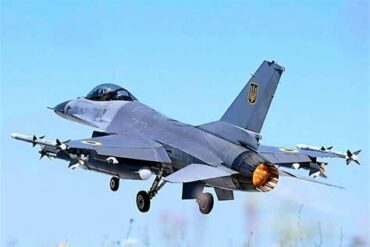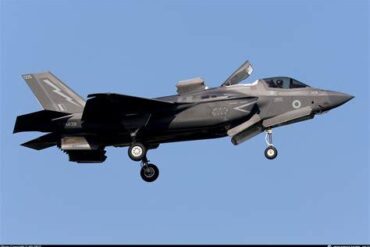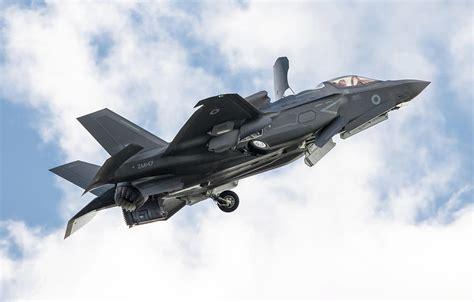
The Royal Air Force’s F-35B Lightning II has recorded its first confirmed combat kill in British service after downing hostile drones over Jordanian airspace on 3 March 2026. The engagement, conducted by aircraft operating from RAF Akrotiri in Cyprus, marks a defining operational milestone for the United Kingdom’s fifth-generation fighter fleet and underscores the expanding role of stealth aircraft in counter-drone air defence missions across the Middle East.
The Ministry of Defence confirmed that RAF F-35B fighters intercepted and destroyed multiple uncrewed aerial systems during defensive operations coordinated with regional partners. The drones were assessed to pose a threat to coalition interests and to Jordanian airspace. The mission was part of a broader surge response to escalating Iranian-linked drone activity targeting British forces and allied infrastructure across the Eastern Mediterranean and Gulf region.
Unlike previous Lightning deployments that focused heavily on intelligence gathering, surveillance patrols, and deterrence sorties, this mission resulted in a confirmed air-to-air kill. For the RAF, the moment represents more than a tactical success. It demonstrates that the F-35B force has transitioned from initial operational capability into fully integrated, real-world combat operations under complex rules of engagement.
Fifth-Generation Stealth Meets the Drone Threat
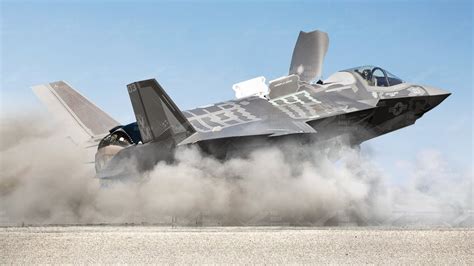
The F-35B Lightning II is a short take-off and vertical landing variant designed for expeditionary basing and aircraft carrier operations. Beneath its angular fuselage lies an architecture built around sensor fusion — the process by which multiple onboard sensors merge data into a single, coherent tactical picture for the pilot. Instead of juggling separate radar screens and infrared feeds, the pilot sees one integrated battlespace display.
At the heart of that system is the AN/APG-81 active electronically scanned array radar. Unlike mechanically scanned radars of previous generations, an AESA radar uses thousands of tiny transmit-receive modules to steer its beam electronically at near-instant speed. This enables high-resolution tracking of small, low-signature targets such as drones, even in cluttered environments.
Complementing the radar is the Distributed Aperture System, a network of infrared cameras mounted around the aircraft’s fuselage that provides spherical, 360-degree awareness. In practical terms, this allows the F-35 pilot to detect heat signatures from small unmanned systems approaching from multiple angles, including below or behind the aircraft. Combined with advanced electronic warfare suites capable of detecting and classifying emissions, the aircraft becomes both hunter and sensor node.
Against slow-moving or one-way attack drones, stealth may seem excessive. Yet stealth reduces the aircraft’s own radar signature, allowing it to operate forward without broadcasting its presence. This buys time and space in the engagement timeline. The F-35B can detect and classify threats before adversaries are aware of its position, enabling beyond-visual-range missile engagements under tightly controlled command and control frameworks.
Coordinated Multi-Aircraft Defensive Operations
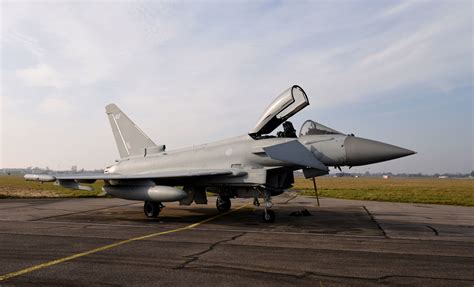
The engagement over Jordan did not occur in isolation. RAF Typhoon fighters provided combat air patrol coverage, creating layered defensive geometry in the sky. The Typhoon, a highly agile fourth-generation fighter with an exceptional thrust-to-weight ratio, remains a formidable interceptor platform. While the F-35B excels at early detection and networked targeting, the Typhoon contributes speed, sustained patrol endurance, and a proven air-to-air missile suite.
Supporting both aircraft types was a Voyager air-to-air refuelling tanker based on the Airbus A330 Multi Role Tanker Transport platform. Voyager extends sortie duration by refuelling fast jets in flight, enabling continuous presence over wide operating areas. In defensive counter-drone missions, persistence is critical. Drones may be launched in waves or at irregular intervals. A tanker orbiting in secure airspace allows fighters to remain on station for extended coverage, reducing gaps in the defensive shield.
Simultaneously, British Counter-Uncrewed Aerial Systems teams operating in Iraq neutralised drones headed toward coalition forces. In Qatar, an RAF Typhoon from the joint UK–Qatar 12 Squadron intercepted and destroyed an Iranian one-way attack drone. Within a 24-hour window, British assets engaged hostile unmanned systems across multiple airspaces, illustrating a distributed and coordinated defensive architecture rather than isolated reactions.
RAF Akrotiri: Strategic Launchpad in the Eastern Mediterranean
RAF Akrotiri, located in Cyprus, has long served as a strategic hub for British air operations in the Middle East. Its geography is decisive. From Akrotiri, fast jets can reach the Levant, the Eastern Mediterranean, and parts of the Gulf region with relative speed while remaining outside immediate high-threat zones.
Operating F-35Bs from this base demonstrates the UK’s ability to project advanced air power forward without relying exclusively on aircraft carriers. The short take-off and vertical landing capability of the B variant provides flexibility in austere environments and reinforces interoperability with the Royal Navy’s Queen Elizabeth-class carriers.
The choice to deploy F-35Bs in a defensive counter-drone role also reflects a shift in air warfare dynamics. Traditional air superiority missions once focused primarily on enemy fighter aircraft. Today, low-cost drones and loitering munitions can threaten airbases, logistics hubs, and civilian infrastructure. The economics are asymmetric: inexpensive drones can impose significant strategic costs if not intercepted.
Fifth-generation fighters, networked with ground sensors and naval platforms, help rebalance that equation. By detecting and eliminating drones early in their flight path, they prevent saturation of lower-tier defences and protect high-value assets.
Milestone in the RAF Lightning Force’s Operational History
Since entering RAF service, the Lightning force has accumulated operational experience through exercises, deterrence patrols, and carrier strike group deployments. British F-35Bs have flown missions supporting counter-terrorism operations and have integrated extensively with allied forces, particularly the United States Marine Corps and NATO partners.
However, until this engagement, no RAF F-35 had achieved a confirmed combat kill. The downing of hostile drones over Jordan represents a tangible validation of the aircraft’s combat readiness in British hands. It also confirms the maturity of command-and-control integration between the UK and regional partners.
In modern air operations, the kill chain — the sequence from detection to identification to engagement — is compressed by digital networks. Data from the F-35’s sensors can be transmitted securely to other aircraft and ground stations, contributing to a recognised air picture shared across coalition forces. This networked environment ensures that engagements occur under verified identification and coordinated rules of engagement, reducing the risk of miscalculation in crowded airspace.
Integrated Air and Missile Defence in Practice
The broader British response extends beyond airframes alone. The deployment of the Type 45 destroyer HMS Dragon to the Eastern Mediterranean adds a maritime air defence layer. Equipped with the Sea Viper system, the ship can track and engage multiple aerial threats simultaneously, launching interceptors within seconds.
Royal Navy Wildcat helicopters armed with Martlet lightweight missiles further enhance the anti-drone envelope, particularly against low-altitude targets over maritime approaches. Together with land-based C-UAS teams and fighter patrols, these assets form a multi-domain defensive network spanning sea, air, and ground.
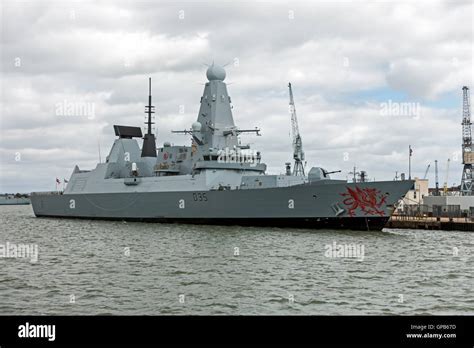
This layered posture complicates adversary planning. A drone launched toward coalition infrastructure may face detection by forward-deployed F-35Bs, interception by Typhoon patrols, engagement by naval air-defence missiles, or neutralisation by specialised ground teams. Multiple engagement windows reduce the probability of a successful strike.
Importantly, British officials have characterised these actions as defensive. The operations are framed as protection of sovereign airspace and coalition personnel rather than offensive strikes into adversary territory. In a region where escalation dynamics can shift rapidly, signalling defensive intent while demonstrating capability is a delicate balance.
Strategic Significance Amid Escalating Drone Warfare
Drone proliferation has transformed conflict dynamics across the Middle East. One-way attack drones and loitering munitions offer states and non-state actors a deniable, cost-effective means of exerting pressure. They can threaten airbases, energy infrastructure, shipping lanes, and urban centres without committing traditional aircraft or ground forces.
The RAF’s first F-35B combat kill illustrates how advanced air forces are adapting. Stealth fighters are no longer solely instruments of deep-strike penetration; they are increasingly guardians of contested airspace against small, networked threats.
For the United Kingdom, the engagement reinforces credibility. It demonstrates that investments in fifth-generation aircraft, tankers, naval air defence ships, and counter-UAS teams translate into operational effectiveness under real-world conditions. For regional partners such as Jordan and Qatar, it provides reassurance that British assets are actively contributing to shared security.
As drone warfare continues to evolve, the integration of stealth aircraft, legacy fighters, naval systems, and ground-based defences into a cohesive network will shape the balance between offense and defence. The RAF F-35B’s first confirmed combat kill is therefore not merely a single engagement over Jordanian skies. It is a signal that the architecture of modern air defence is already adapting — and that the United Kingdom intends to remain at the forefront of that transformation.