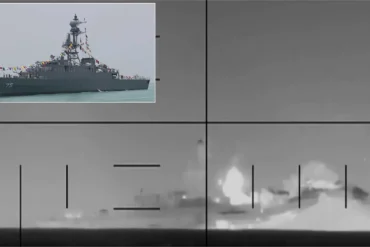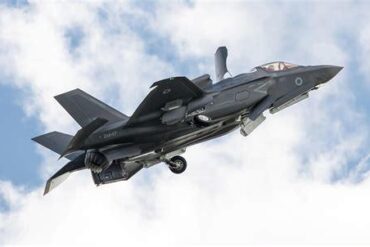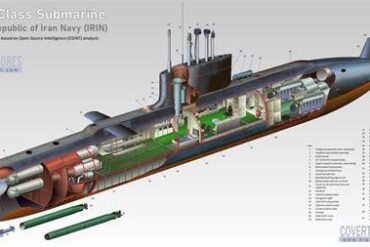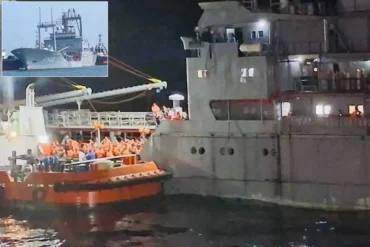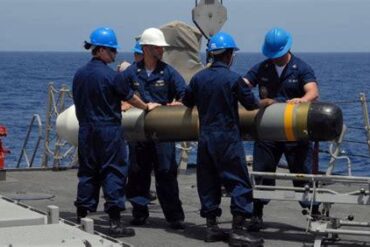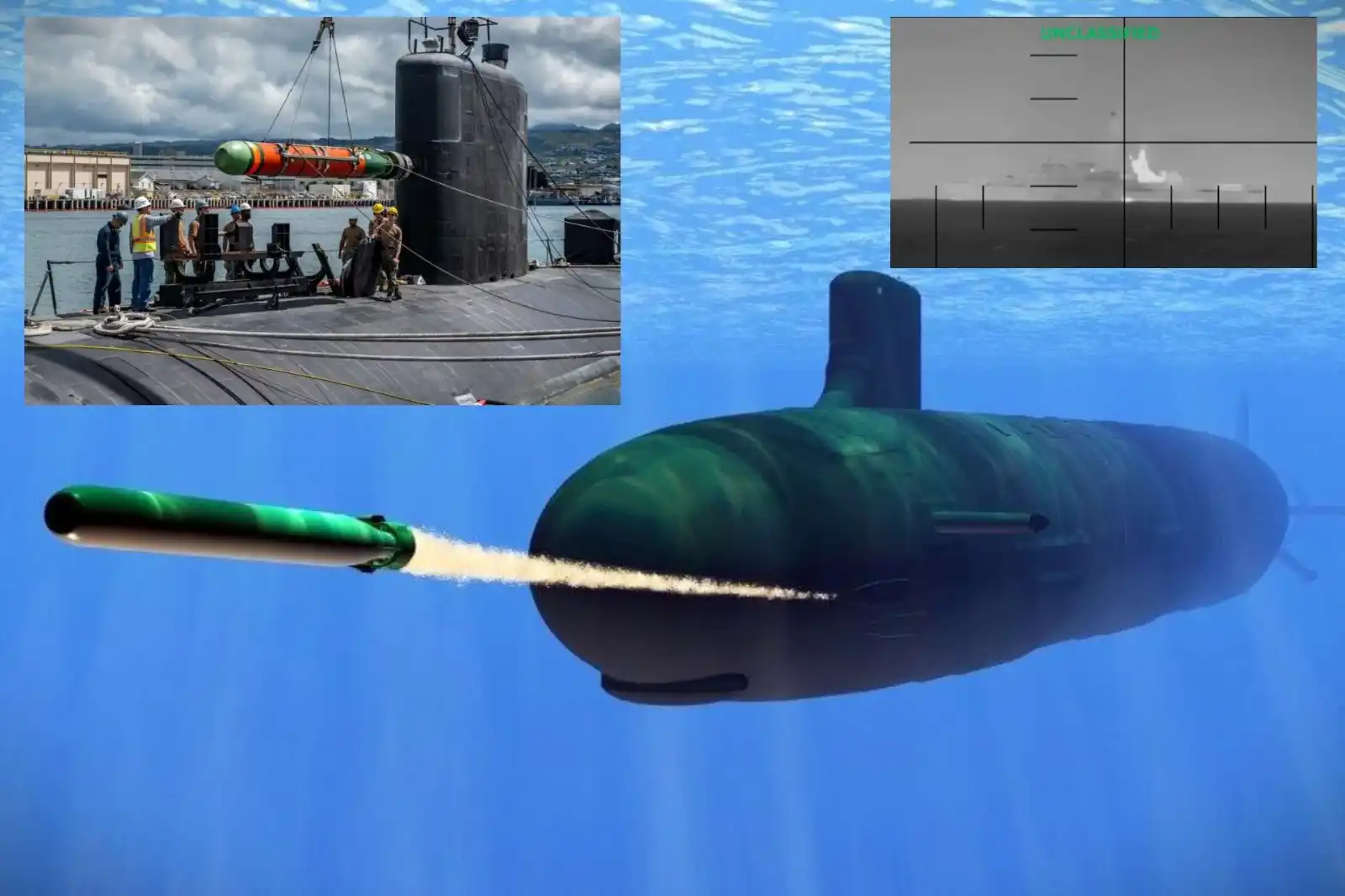
The modern battlefield beneath the ocean surface remains one of the least visible yet most decisive arenas of military power. On March 4, 2026, that hidden domain briefly surfaced in dramatic fashion when a U.S. Navy fast attack submarine destroyed an Iranian warship in the Indian Ocean using a single Mk-48 heavyweight torpedo. The strike, confirmed by Chairman of the Joint Chiefs of Staff Gen. Dan Caine, represents the first verified wartime sinking of an enemy surface combatant by a U.S. submarine since the end of World War II in 1945.
The engagement underscores a fundamental truth of maritime warfare: while aircraft carriers and missile destroyers dominate headlines, the quietest weapon systems often produce the most decisive outcomes. In this case, the combination of stealthy submarine operations and the lethal performance of the Mk-48 Advanced Capability (ADCAP) torpedo delivered a rapid and irreversible result.
Beyond the immediate tactical impact, the event offers a rare real-world demonstration of modern undersea warfare capabilities. The successful strike reveals how sensor networks, submarine stealth technology, and precision-guided torpedoes combine into a lethal system capable of detecting and eliminating naval threats thousands of miles from American shores.
Strategic Context of the Indian Ocean Engagement
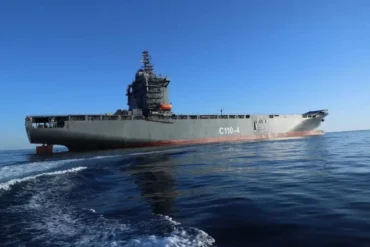
According to U.S. military officials, the Iranian warship was operating south of Sri Lanka in international waters when it was located and tracked by American forces. The vessel had reportedly deployed far from its usual operating area, an action that placed it outside the protective envelope of Iran’s coastal air defenses and naval support infrastructure.
This geographic detail matters more than it might appear at first glance. Surface warships are typically safest when operating within layered defensive zones supported by aircraft, missile batteries, and surveillance systems. Outside those zones, they become far more vulnerable to unseen threats—especially submarines.
In this case, the Iranian vessel was classified by U.S. officials as an “out-of-area deployer,” meaning it had ventured well beyond its normal patrol territory. That distinction played a critical role in the engagement. Without nearby escort ships or robust anti-submarine protection, the warship faced a formidable adversary it likely never detected.
Gen. Caine described the result succinctly during a press briefing: the torpedo achieved “immediate effect,” sending the vessel to the bottom shortly after impact. The phrasing reflects a grim reality of heavyweight torpedo strikes—when they work as designed, survival chances for the target ship drop dramatically.
The Mk-48 Torpedo: Backbone of U.S. Submarine Firepower
At the center of the incident sits a weapon system that has quietly defined U.S. submarine lethality for over half a century: the Mk-48 heavyweight torpedo.
Developed during the Cold War and entering service in the early 1970s, the Mk-48 was engineered as a dual-role weapon capable of destroying both submarines and large surface combatants. Unlike lightweight torpedoes deployed by helicopters or patrol aircraft, the Mk-48 belongs to the heavyweight class designed for submarine launch through standard 533-millimeter torpedo tubes.
The weapon’s physical specifications reveal its destructive purpose:
- Length: approximately 5.8 meters
- Diameter: 533 millimeters
- Weight: about 1.6–1.7 tons depending on configuration
- Warhead: roughly 650 pounds of high explosive
Those numbers alone do not fully capture its lethality. The warhead is designed specifically to exploit a ship’s structural weaknesses, delivering explosive energy beneath the hull where it can cause catastrophic structural failure.
Advanced Capability Variant and Digital Sonar Systems
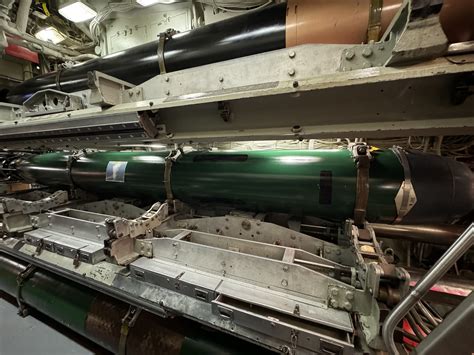
The torpedo used in the engagement was likely part of the Mk-48 Mod 7 Common Broadband Advanced Sonar System (CBASS) family. This modernized version incorporates fully digital guidance and acoustic processing technology, transforming the torpedo into something closer to an autonomous hunter than a simple projectile.
The CBASS upgrade dramatically improves the weapon’s ability to operate in complex underwater environments, including areas cluttered with shipping noise, thermal layers, and acoustic countermeasures.
Several features contribute to this capability:
- Wire-Guided Control: The launching submarine maintains a fiber-optic link to the torpedo, allowing the crew to adjust targeting data in real time.
- Active and Passive Sonar: The weapon listens for target signatures while also emitting sonar pings to refine tracking.
- Autonomous Targeting Algorithms: Once close enough, the torpedo can switch to independent guidance and pursue the target automatically.
The propulsion system is equally sophisticated. Powered by Otto Fuel II, a specialized monopropellant used in naval torpedoes, the Mk-48 drives a pump-jet propulsor that reduces noise and improves hydrodynamic efficiency. The result is a weapon capable of traveling tens of kilometers at high speed, closing the distance faster than most surface ships can respond.
How Under-Keel Detonation Breaks a Warship
Heavyweight torpedoes do not simply punch holes in ships; they attack structural integrity itself. The Mk-48 employs an under-keel detonation technique that turns water pressure into a devastating force multiplier.
When the torpedo passes beneath the target ship, its proximity fuze triggers the warhead. The explosion produces a massive gas bubble that rapidly expands and collapses beneath the hull. This process causes the vessel to bend upward and then snap downward, placing enormous stress on the keel—the backbone of the ship’s structure.
Naval engineers sometimes describe the effect bluntly: the explosion “breaks the ship’s back.”
Large vessels are especially vulnerable because their long hulls act like beams. When the keel fractures, the ship can lose structural cohesion within seconds. Compartmentalization and damage control become irrelevant once the main structure fails.
U.S. Attack Submarines and Global Reach
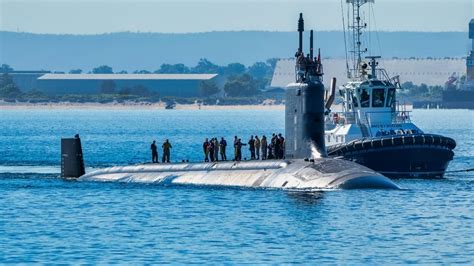
The torpedo’s effectiveness is inseparable from the platform that launches it. The U.S. Navy’s fast attack submarine fleet, including the Los Angeles, Seawolf, and Virginia classes, forms one of the most capable undersea forces ever assembled.
These submarines combine stealth, sensor integration, and endurance in ways that surface ships cannot replicate. Nuclear propulsion allows them to remain submerged for months, while advanced sonar arrays enable them to detect vessels at significant distances.
When operating in open ocean environments such as the Indian Ocean, an attack submarine can quietly patrol major shipping lanes and naval transit routes, monitoring activity without revealing its presence. In strategic terms, this ability creates a powerful deterrent effect.
An adversary’s surface fleet must assume that any region of ocean may already contain an undetected submarine capable of launching torpedoes or cruise missiles without warning.
Sea Control, Sea Denial, and the Submarine Advantage
The U.S. Navy structures its maritime doctrine around two closely related ideas: sea control and sea denial.
Sea control means ensuring friendly forces can operate freely across maritime regions. Sea denial focuses on preventing adversaries from doing the same. Submarines play a crucial role in both missions because they can threaten enemy vessels without exposing themselves to counterattack.
The recent engagement demonstrates the practical application of this doctrine. A single submarine successfully located, tracked, and destroyed a hostile warship operating far from its home base. The event highlights how modern undersea forces extend American military reach across vast ocean spaces.
Gen. Caine’s description of the mission emphasized exactly this capability. The operation proved the United States can “hunt, find, and kill” hostile naval assets even when they deploy thousands of miles from their home ports.
Strategic Implications for Iran and Global Naval Operations
For Iran and other regional powers, the sinking carries a clear strategic message. Surface combatants operating beyond protected littoral zones face significant risks when confronting advanced submarine forces.
Even modern ships equipped with radar, missiles, and electronic warfare systems struggle to defend against submerged threats. Anti-submarine warfare requires specialized sensors, escort ships, helicopters, and coordinated detection networks. Without those layers of protection, a warship can become dangerously exposed.
The engagement also illustrates the global mobility of U.S. naval forces. A submarine operating far from American territory was able to locate and engage a hostile vessel in open ocean waters, demonstrating a level of reach that few navies can match.
For allied nations that rely on maritime trade routes, the continued dominance of U.S. undersea forces reinforces confidence that critical sea lanes can be defended if tensions escalate.
The Enduring Relevance of Submarine Warfare
Despite the rise of drones, hypersonic missiles, and satellite surveillance, submarine warfare remains one of the most decisive elements of naval strategy. Beneath the ocean surface, physics still favors stealth over visibility. Sound travels far in water, but tracking quiet submarines remains notoriously difficult.
That reality has not changed since the Cold War. What has changed is the sophistication of sensors, digital processing, and weapons like the Mk-48 ADCAP torpedo.
The destruction of an Iranian warship by a single torpedo illustrates how modern technology has refined a centuries-old principle: the unseen attacker holds a profound tactical advantage.
In the vastness of the world’s oceans, the quiet presence of submarines continues to shape geopolitical calculations. Surface fleets may project power above the waves, but far below them lies a domain where a single, precisely guided torpedo can decide the fate of a warship—and alter the balance of maritime power in an instant.