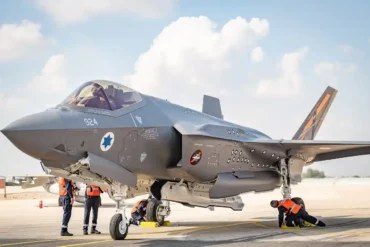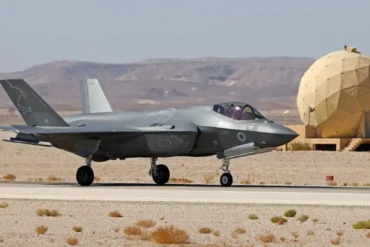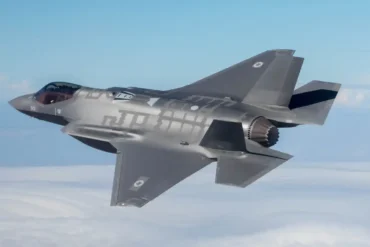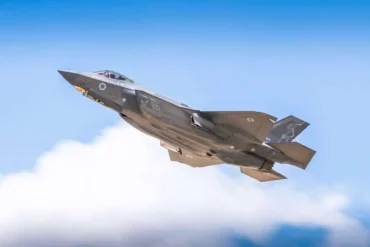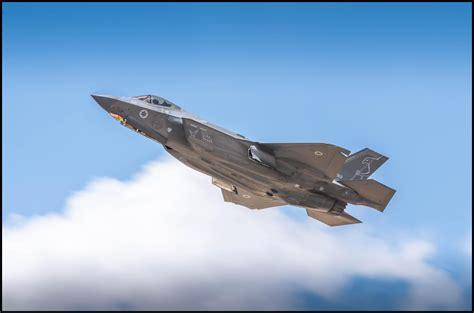
The Israeli Air Force has confirmed that an F-35I “Adir” stealth fighter shot down an Iranian Yak-130 aircraft over Tehran, marking what the Israel Defense Forces describe as the first documented air-to-air kill by an F-35 against a manned aircraft. The engagement occurred during an ongoing wave of Israeli strikes targeting Iranian military infrastructure in and around the capital, a campaign Israeli officials characterized as the tenth phase of sustained operations.
According to the IDF statement, the F-35I intercepted and destroyed the Russian-origin Yak-130 operated by the Islamic Republic of Iran Air Force (IRIAF). The shootdown represents a symbolic and operational milestone for the fifth-generation platform, long touted for its stealth, sensor fusion, and networked warfare capabilities but until now lacking a confirmed manned air-to-air victory.
The incident unfolded against the backdrop of intensified Israeli strikes described as “extensive” and strategically focused on degrading Iranian command nodes, logistics hubs, and air defense assets. The presence of an Iranian Yak-130 in contested airspace over Tehran underscores the seriousness of the confrontation and suggests Iran had begun employing the aircraft in an operational air defense or light combat capacity rather than restricting it to training duties.
The F-35I “Adir”: Israel’s Customized Stealth Spearhead
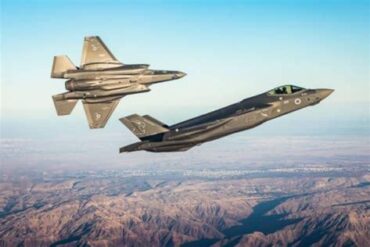
The F-35I “Adir” is Israel’s domestically tailored version of the Lockheed Martin F-35 Lightning II. While outwardly similar to other F-35 variants, the Adir incorporates Israeli-developed C4I systems—Command, Control, Communications, Computers, and Intelligence—that allow seamless integration with national networks and real-time data sharing across air, land, and sea domains.
This customization is not cosmetic. Israeli engineers have embedded indigenous electronic warfare suites and mission systems that enable rapid software updates and mission tailoring without reliance on external modification pipelines. In practice, this gives Israeli pilots a uniquely flexible stealth platform capable of operating deep inside contested airspace while maintaining constant digital connectivity with other assets.
The F-35’s defining advantage remains its low observable design, which reduces radar cross-section and complicates detection by enemy air defenses. Combined with advanced sensor fusion—merging radar, infrared, and electronic intelligence inputs into a single coherent picture—the aircraft can often detect and engage adversaries before being detected itself. In a dense and heavily defended environment such as Tehran’s airspace, this advantage becomes decisive.
A former F-35 pilot familiar with the platform’s operational realities has previously emphasized the strategic calculus behind deploying such high-end assets. Stealth fighters require intensive maintenance and logistical support, and their use signals both capability and commitment. Choosing to employ the F-35I in this mission suggests Israeli planners assessed the operational payoff as outweighing the resource burden.
Yak-130: From Advanced Trainer to Light Combat Asset
The Yak-130, developed by Russia’s Yakovlev design bureau, was originally conceived as an advanced jet trainer designed to prepare pilots for fourth- and fifth-generation fighters such as the MiG-29 and Su-30. Iran received its first Yak-130 aircraft from Russia in September 2023, marking a significant step in Tehran’s effort to modernize its aging fleet.
Over time, the Yak-130’s role in Iran evolved beyond training. The aircraft has been adapted for light combat missions, capable of carrying air-to-air and air-to-ground ordnance. Social media imagery that surfaced in late 2025 showed an Iranian Yak-130 equipped with the R-73E short-range air-to-air missile, a Soviet-designed infrared-guided weapon known for high off-boresight capability.
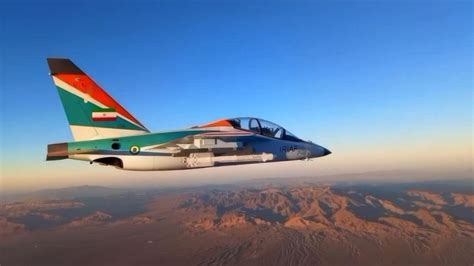
The Yak-130’s digital cockpit and fly-by-wire controls allow it to replicate the handling characteristics of frontline fighters. Although it is subsonic, with a top speed around 1,060 kilometers per hour, the aircraft boasts a respectable thrust-to-weight ratio and can sustain high angles of attack—up to 35 degrees—placing its maneuvering envelope closer to that of more capable fighters than its trainer label suggests.
Its operational ceiling of approximately 41,000 feet, a range of 1,600 kilometers, and compatibility with drop tanks and in-flight refueling extend its reach. The platform can carry KAB-500 guided bombs, Kh-29 missiles, various unguided rockets, and conventional bombs up to 500 kilograms. For an air force operating legacy F-4 Phantoms and F-14 Tomcats, the Yak-130 offered a flexible bridge between training and combat roles.
Airpower Dynamics Over Tehran
The aerial engagement between the F-35I and Yak-130 illustrates a stark technological contrast. On one side stood a fifth-generation stealth fighter built around sensor dominance and network-centric warfare. On the other was a versatile but fundamentally subsonic platform adapted for light combat duties.
In a beyond-visual-range scenario, the F-35’s ability to detect, track, and target adversaries without revealing its own position provides a critical edge. Even in a visual engagement, the Adir’s advanced helmet-mounted display system and data fusion architecture offer superior situational awareness. The Yak-130, while agile and capable of carrying infrared-guided missiles like the R-73, lacks the stealth and sensor integration necessary to level the playing field against a modern F-35 variant.
The reported shootdown therefore carries strategic implications beyond a single aircraft loss. It demonstrates that Israel is willing to project stealth airpower directly over Tehran and engage Iranian aircraft in contested skies. It also highlights the evolving role of the Yak-130 within Iran’s force structure—no longer merely a trainer, but an active participant in air defense and combat operations.
For the F-35 program globally, this event marks a watershed moment. The aircraft, long validated in simulations and limited operational scenarios, now has a confirmed manned air-to-air victory attributed to its name. In the unforgiving arithmetic of modern air combat, real-world outcomes matter. The skies over Tehran have delivered a result that will be studied closely by air forces and defense planners worldwide.